
Search for Cosmic Life: Are We Alone in the Universe?
Introduction
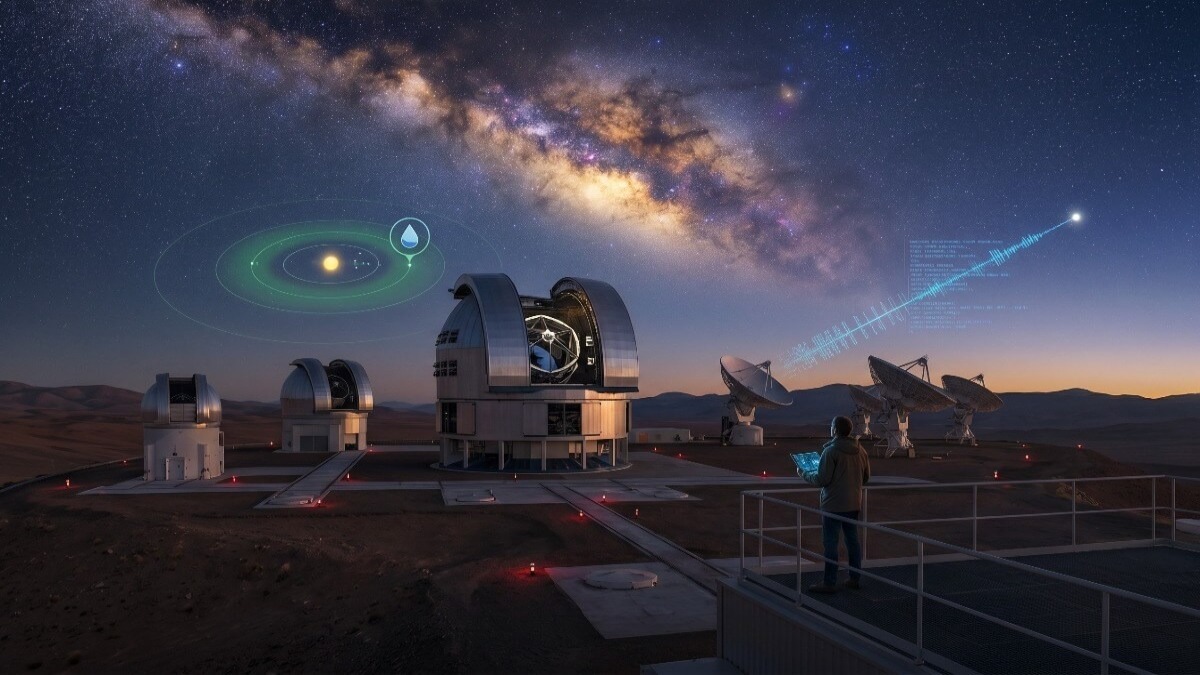
When we look up at a clear night sky, a single question often crosses our minds. Are we alone in this vast universe? For ages, humans have asked this profound question about our existence and our place in the cosmos. Gazing at endless constellations and galaxies makes us wonder if the pulse of life exists on only one planet amid such immense emptiness.
This question is not just for philosophers but is also one of the greatest mysteries for modern scientists. In today’s blog post, we will discuss how researchers are actively searching for cosmic life. We will learn about the scientific methods behind this search and what the future holds for us. Let us embark on a thrilling journey into the mysteries of the cosmos.
Humanity’s Fascination with Life Beyond Earth
Since ancient times, humans have looked at the stars and woven webs of imagination. Various folklore and mythologies speak of beings from other worlds. Our science fiction books and movies are also filled with stories about alien creatures.
The main reason for this fascination is our innate curiosity. We want to know if there are other intelligent beings like us out there. We want to know what their civilizations might look like. This curiosity has served as the greatest inspiration for our research into outer space.
Why the Search for Cosmic Life Matters
The search for cosmic life is not just about satisfying curiosity. It helps us understand ourselves more deeply. If we find signs of life beyond Earth, it will be the most groundbreaking discovery in human history.
This discovery would bring massive changes to our science, philosophy, and religious thought. It would prove that the process of life creation is not a rare event in the universe. Furthermore, space exploration continually leads to the invention of new technologies that greatly benefit our daily lives.
What is Cosmic Life?
Hearing the term “cosmic life” or “extraterrestrial life” often brings to mind strange green aliens from movies for many people. However, in scientific language, its meaning is much broader.
Cosmic life refers to any form of life that has originated and evolved outside of Earth. It could be something as simple as a tiny bacterium, or an intelligent civilization far more advanced than humanity.
Defining Life Beyond Earth
Defining exactly what life is beyond Earth is a difficult task for scientists. This is because we are only familiar with one type of life: Earth-based life. All life on Earth is carbon-based and requires liquid water to survive.
However, scientists believe that life elsewhere in the universe could be based on completely different chemical elements. Perhaps there is life made of silicon instead of carbon. Therefore, the definition of life is kept as broad as possible.
From Microbes to Advanced Civilizations
The search for cosmic life is divided into two main streams. The first is the search for simple or microbial life. Scientists are primarily looking for this type of life on the planets and moons within our own solar system.
The second stream is the search for intelligent civilizations that use advanced technology and can send radio signals into space. Scientists believe that, given the vastness of the universe, both types of life are likely to exist.
The History of the Search for Cosmic Life
Scientific inquiry into whether we are alone in the universe is relatively new. However, its philosophical foundations were laid hundreds of years ago. Ever since humans realized that the stars are actually giant glowing spheres like our Sun, the idea of life on other planets has gained strength.
Many ancient Greek philosophers believed there were many other Earth-like worlds in the universe. As our telescopes and technology have improved over time, this search has become much more science-based.
Early Theories on Alien Worlds
In the sixteenth century, philosophers like Giordano Bruno suggested that the universe was infinite. They argued that the stars in the sky were actually suns and had planets orbiting them as well.
Expressing such ideas was quite dangerous at the time. But slowly, thanks to the discoveries of scientists like Galileo and Copernicus, human thought began to change. People realized that Earth was not the center of the universe.
The Evolution of Modern Astrobiology
By the mid-twentieth century, the search for cosmic life emerged as a genuine science. Scientists began using radio telescopes to listen for signals coming from space.
In 1960, Frank Drake launched “Project Ozma,” the first modern attempt to detect signals from intelligent aliens. Since then, a new scientific discipline called astrobiology has been born. This field combines biology, astronomy, and geology.
Why Scientists Believe Cosmic Life Might Exist
Scientists do not believe in the existence of cosmic life out of mere emotion. Their belief is backed by strong mathematical probabilities and scientific observations. The sheer scale of the universe and the billions of planets in our galaxy are the main foundations of this belief.
Scientists note that the laws of physics and chemistry are the same throughout the entire universe. So, if life could arise on Earth, it can happen elsewhere given the right environment.
The Vastness of the Universe
Our universe is so large that its size is beyond human imagination. Just our Milky Way galaxy contains 100 to 400 billion stars. And scientists estimate that there are about 2 trillion galaxies in the observable universe.
Having life exist on only one planet among such a vast number of stars and galaxies seems highly improbable on statistical grounds. This infinite vastness of the universe is the strongest argument for the existence of alien life.
Billions of Potentially Habitable Planets
Previously, scientists did not know whether planets existed around other stars. But since the 1990s, researchers have discovered thousands of exoplanets.
Today we know that almost every star we see in the night sky has at least one planet orbiting it. Among these are billions of planets whose sizes and temperatures are very close to Earth’s.
The Potential for Life Beyond Earth
The potential for life beyond Earth is not limited to distant galaxies alone. There are places within our own solar system where life might possibly exist.
Scientists are constantly finding chemical compounds in space that are essential for life. Complex organic molecules like amino acids have been found in space dust and meteorites. This proves that the basic building blocks of life are scattered throughout the cosmos.
Astrobiology: The Science of Life in the Universe
Astrobiology is an interdisciplinary branch of science. It deals with the origin, evolution, distribution, and future of life in the universe. This field is highly modern and continually enriched by new discoveries.
NASA’s Astrobiology Program conducts the majority of research in this area. To understand how life might survive on other planets, scientists study extreme environments right here on Earth.
What Astrobiologists Study
Astrobiologists primarily seek answers to three big questions. How did life begin? Is there life elsewhere in the universe? What is the future of life on Earth?
To answer these questions, they study fossils. They test microorganisms that survive near volcanic vents on the ocean floor or beneath the ice in Antarctica. Through this, they try to understand how life can endure in the hostile environments of space.
Key Conditions Required for Life
The type of life we see on Earth requires certain specific conditions to survive. The first and most critical requirement is liquid water. No Earthly life can survive without water.
The second requirement is energy. This energy can come from sunlight or from chemical reactions. The third condition involves certain basic chemical elements like carbon, hydrogen, nitrogen, oxygen, phosphorus, and sulfur. Scientists look for these three conditions on other planets.
The Search for Habitable Worlds
The biggest step in the search for cosmic life is finding a planet where life can survive. We call these types of planets habitable worlds.
Scientists are looking for planets around distant stars that share characteristics with Earth. Modern space telescopes have made this search significantly easier.
The Discovery of Exoplanets
Planets that orbit stars other than our Sun are called exoplanets. Scientists discovered the very first exoplanet in 1992.
Since then, NASA’s Kepler Space Telescope and the Transiting Exoplanet Survey Satellite (TESS) have discovered thousands of exoplanets. These discoveries have shown us just how diverse worlds outside our solar system can be.
Understanding the Habitable Zone Around Stars
Whether a planet is habitable depends on how far it is from its host star. Around every star, there is a specific distance where the temperature is neither too hot nor too cold.
This specific region is called the “habitable zone” or “Goldilocks zone.” Any rocky planet located in this region has a chance of having liquid water on its surface. Scientists primarily focus on planets in this zone.
Earth-Like Planets and Their Potential
Not all exoplanets are suitable for life. Many planets are giant spheres of gas like Jupiter. Scientists are looking for planets that are rocky and close in size to Earth.
Some planets like this have already been discovered, such as Kepler-186f and Proxima Centauri b. These planets are located in their stars’ habitable zones and have brought us a lot of hope.
The Search for Life Within Our Solar System
We might not need to go very far to find cosmic life. There are planets and moons within our own solar system where scientists suspect life once existed or still exists.
Conducting missions to these places is relatively easy compared to reaching distant exoplanets. Therefore, NASA and other space agencies are sending robotic spacecraft to these locations one after another.
Mars and the Search for Ancient Microbial Life
Mars is one of the primary targets in the solar system. Scientists have confirmed that billions of years ago, there were rivers, lakes, and oceans on the Martian surface.
Although the surface of Mars is dry and cold today, fossils of past life might be hidden there. NASA’s Perseverance rover is currently searching for signs of ancient microbes on the Martian surface and collecting soil for future analysis.
Europa’s Hidden Ocean
Europa is a moon of Jupiter. It is a world entirely covered in ice. But scientists strongly believe that beneath this layer of ice lies a massive ocean of liquid water.
This ocean on Europa contains more water than all of Earth’s oceans combined. Jupiter’s strong gravitational pull generates heat inside Europa, keeping the water liquid. This warm ocean could be an ideal place for life.
Enceladus and the Evidence of Water Plumes
Saturn’s moon Enceladus is a favorite destination for astrobiologists. The Cassini spacecraft discovered giant plumes of ice and water shooting out into space from the south pole of Enceladus.
These plumes prove that there is liquid water beneath its icy shell. Scientists have found organic molecules essential for life within these water plumes, which is highly encouraging.
Titan’s Unique Environment
Titan is Saturn’s largest moon and the only moon in the solar system with a dense atmosphere. Like Earth, Titan has rivers and lakes on its surface, but instead of water, they are filled with liquid methane and ethane.
Scientists think that if life exists on Titan, it would be completely different from Earth’s carbon-based life. They might even breathe methane to survive.
How Scientists Search for Extraterrestrial Signals
Besides looking for microbes, scientists are also trying to communicate with intelligent aliens. This effort is known as the Search for Extraterrestrial Intelligence or SETI.
Intelligent civilizations might use radio waves or laser beams to communicate. Scientists are using the world’s most powerful radio telescopes to listen for these types of artificial signals from space.
Radio Astronomy and Communicating with Aliens
Radio waves can easily travel across the vast distances of space. Therefore, scientists believe that advanced civilizations on other planets might communicate with each other using radio frequencies.
The SETI Institute and many other organizations are constantly recording and analyzing radio signals coming from space. They are looking for patterns that are impossible to create naturally.
The Search for Technosignatures
Another way to look for intelligent civilizations is to find technosignatures. A technosignature is a sign that proves advanced technology is being used.
For example, if a large amount of artificial pollutants is found in a planet’s atmosphere, it could be evidence of an advanced civilization. Scientists try to find these kinds of abnormal chemical compositions using telescopes.
Detecting Artificial Signals from Distant Civilizations
Detecting artificial signals is not an easy task at all. There are many natural objects in space, such as pulsars and quasars, that emit regular radio signals.
Scientists have to be extremely careful to differentiate between natural and artificial signals. In 1977, researchers received a mysterious signal called the ‘Wow! signal,’ which remains a massive mystery to scientists to this day.
The Role of Space Telescopes and Advanced Technology
Space telescopes are the most powerful tools in the search for cosmic life. Earth’s atmosphere often creates obstacles for observing space. Therefore, telescopes located outside the atmosphere can provide the clearest images and data.
As technology improves, our telescopes are becoming much more powerful. They can now analyze the atmospheres of distant planets.
Observing Distant Worlds
The Hubble Space Telescope and the Kepler Space Telescope initiated a new era in space observation. They showed us just how varied the universe is.
Using these telescopes, scientists observe the light of distant stars. When a planet passes in front of its star, the star’s light dims slightly. By measuring this change in light, scientists can learn about the planet’s size and orbit.
Analyzing Planetary Atmospheres for Biosignatures
Recently, the James Webb Space Telescope (JWST) has brought a revolution to space research. This telescope is so powerful that it can analyze the atmospheres of distant exoplanets.
Scientists use it to look for biosignatures like oxygen, methane, or water vapor in a planet’s atmosphere. If these gases are found together in large quantities in an atmosphere, it could be strong evidence of life there.
Future Missions Designed to Detect Life
Scientists are planning many more advanced space missions for the future. NASA’s ‘Europa Clipper’ mission will launch in 2024, heading for Jupiter’s icy moon Europa.
Additionally, NASA is building new telescopes, the ‘Nancy Grace Roman Space Telescope’ and the ‘Habitable Worlds Observatory.’ These telescopes will be able to take direct pictures of exoplanets and analyze their atmospheres with greater precision.
The Drake Equation and the Probability of Alien Civilizations
In 1961, astronomer Frank Drake created a famous equation. It is known as the ‘Drake Equation.’ It is not a magic formula but rather a way to estimate how many intelligent civilizations might exist in our galaxy.
This equation depends on several factors or variables. Through this, scientists were able to initiate a scientific discussion about the probability of cosmic life.
Understanding the Drake Equation
The Drake Equation contains several parts. First, the rate of star formation in our galaxy is considered. Then it looks at the percentage of those stars that have their own planets.
Next, it considers how many of those planets are habitable. Among habitable planets, it asks how many of them have actually seen life emerge and evolve into an intelligent civilization. Finally, it looks at how many of those civilizations have developed communication technology and how long they might survive.
Estimating Intelligent Life in the Galaxy
We do not know the exact value for every part of the Drake Equation. Therefore, scientists use different values based on their own estimates.
According to some scientists, there could be millions of intelligent civilizations in our galaxy. On the other hand, other scientists use very strict values and believe we might be entirely alone in this galaxy. However, this equation teaches us that intelligent life’s existence depends on many rare events.
The Fermi Paradox: Where is Everybody?
If the Drake Equation says there should be many alien civilizations in the universe, a massive question arises. Italian physicist Enrico Fermi asked this exact question in 1950.
He stated that the universe is so vast and ancient that by now many advanced civilizations should have spread across the entire galaxy. So why are we not seeing any signs of them? This unsolved question is known as the ‘Fermi Paradox.’
Why Haven’t We Found Aliens Yet?
The Fermi Paradox makes scientists think deeply. We are searching for radio signals and monitoring the sky with telescopes, but we still have not found any confirmed evidence of an intelligent civilization.
There could be several reasons for this. Perhaps communication is impossible due to the immense distances of space. Or maybe our technology is not yet advanced enough to catch their signals. It is also possible that they are simply not interested in communicating with us.
Popular Explanations for the Great Silence
There are many explanations for the Fermi Paradox. A popular theory is ‘The Great Filter.’ According to this theory, even if life starts easily, reaching an advanced stage of civilization is extremely difficult. Perhaps civilizations are destroyed by cosmic disasters or weapons of their own making.
Another theory is the ‘Zoo Hypothesis.’ This theory suggests that advanced aliens are observing us but intentionally not making contact. They want us to grow naturally on our own.
Biosignatures and Technosignatures Explained
When scientists search for cosmic life, they primarily look for two types of evidence. These are biosignatures and technosignatures. Understanding the meaning of these two terms is very important.
Scientists look for these signatures directly in planetary soil or in a planet’s atmosphere using telescopes.
Signs of Microbial Life
A biosignature is any substance or element that is not formed naturally but can only be created by living organisms. For example, Earth’s atmosphere has a large amount of oxygen produced by plants.
If we detect oxygen and methane together in another planet’s atmosphere, it would be a strong biosignature. Scientists also consider specific types of minerals or fossils in planetary soils to be biosignatures.
Indicators of Advanced Civilizations
On the other hand, a technosignature is proof of advanced technology. It could be a radio signal, a laser beam, or an artificial structure built around a planet.
For example, scientists consider a theoretical structure called a ‘Dyson Sphere.’ A highly advanced civilization might build a massive structure around their star to capture all of its energy. Scientists try to find signs of such megastructures using telescopes.
Challenges in the Search for Extraterrestrial Life
The search for cosmic life is one of the most difficult tasks in human history. It is not as simple as just pointing a telescope at the sky and waiting. Scientists face numerous challenges at every step.
Because of these hurdles, scientists take their time before confirming anything. Let us look at some of these major challenges.
Immense Distances in Space
The biggest obstacle is the unimaginable distance in space. Our closest star, Proxima Centauri, is located about 4.24 light-years away.
This means that even traveling at the speed of light, it would take more than four years to get there. It would take thousands of years to reach there with our current spaceflight technology. These vast distances make it nearly impossible to go and explore other planets directly.
Technological Limitations
Our telescopes and sensors have improved a lot, but they are still not adequate. Finding an Earth-sized planet next to the bright light of a distant star is a remarkably tough job.
Furthermore, we need much more powerful technology to perfectly analyze the gases in another planet’s atmosphere. Space missions are also highly expensive, making it impossible to run many missions simultaneously just because we want to.
Interpreting Ambiguous Evidence
Often, scientists find evidence that suggests life might exist. But later it turns out they were the result of normal chemical reactions.
For example, scientists found phosphine gas in Venus’s atmosphere, which on Earth is usually produced by microbes. But later, other scientists showed that this gas could also be produced by volcanic eruptions or other natural causes. Therefore, any evidence must be verified with extreme caution.
What Happens If We Find Alien Life?
Let us assume that tomorrow morning NASA scientists announce they have found bacteria on Mars or a radio signal from a distant star. This news would spread across the entire world instantly.
This discovery would have a massive impact on human civilization. It would bring changes not only in the world of science but also to our culture and society.
Scientific Significance
For scientists, this would be the greatest discovery of all time. It would prove that biology is a universal rule, not just a phenomenon unique to Earth.
Scientists would try to analyze the DNA or genetic structure of alien creatures to understand how they function. This would open new doors of possibilities in our medicine and biology.
Social, Cultural, and Philosophical Impacts
This discovery would raise deep philosophical questions in the minds of everyday people. Religious thoughts might need new interpretations.
Many might fear that advanced aliens could harm us. However, most people would receive the news with a sense of thrill and wonder. It would give the entire population of Earth a new perspective, helping us understand that we are all one in this vast universe.
International Protocols for Contact
If we receive an intelligent signal, we should not answer them immediately. There are some international protocols or rules established for this.
First, scientists would thoroughly verify the signal. Next, discussions would take place with governments of all countries on Earth and the United Nations. Steps to send a reply would be taken only after a collective decision on behalf of all humanity.
Common Misconceptions About Extraterrestrial Life
Alongside curiosity, people hold many misconceptions about alien life. These false ideas spread even further due to the internet and movies.
Understanding the difference between science and science fiction is strictly necessary. When scientists talk about cosmic life, they are not talking about made-up stories.
Separating Science from Science Fiction
Movies frequently show aliens attacking Earth or walking around disguised as humans. These are pure fiction.
Real science is much slower and methodical. Scientists are looking for methane gas on planets billions of miles away or using microscopes to find bacterial fossils in rocks. In reality, dramatic events like those in Hollywood movies are highly unlikely to happen.
UFOs, UAPs, and Scientific Inquiry
Many people believe that UFOs or modern-day UAPs are spacecraft belonging to aliens. There are many reports of unidentified flying objects seen in the sky.
However, when scientists and space agencies have investigated these, most cases turned out to be weather balloons, drones, or optical illusions. As of now, no confirmed scientific proof of aliens visiting Earth has been found. Scientists are continuing their search out in space.
Future Prospects in the Search for Alien Life
The future of the search for cosmic life is exceptionally bright. We live in an era when technology is advancing at an unimaginable pace. Within the next few decades, we might just find the answer to our biggest question.
The new generation of scientists is continuing the effort to unlock the universe’s mysteries using increasingly innovative methods.
Upcoming Space Missions and Observatories
Several important space missions will be conducted in the next few years. The European Space Agency’s JUICE mission will look for life on the icy moons of Jupiter.
NASA’s Dragonfly mission will send a drone to Saturn’s moon Titan to search for chemical elements necessary for life. Extremely powerful radio telescopes are also being built on Earth, capable of catching very faint signals from deep space.
The Next Generation of Astrobiology Research
Today’s young students studying astronomy or biology will be the astrobiologists of tomorrow. They will analyze massive amounts of data from space using artificial intelligence and machine learning.
These new technologies will be able to find signals or biosignatures much faster and more accurately than humans.
Is Discovery Possible in Our Lifetime?
Many famous scientists believe that we will get confirmed proof of life beyond Earth within the next 20 to 30 years.
It could be a fossil hidden in a rock on Mars or the presence of oxygen in the atmosphere of a distant planet. Either way, scientists are highly optimistic that we are not alone in the universe, and we will find our neighbors very soon.
Frequently Asked Questions (FAQs)
Is there any proof of extraterrestrial life?
So far, scientists have not found definitive proof of life beyond Earth. However, the presence of past water on Mars and liquid oceans beneath the ice of moons like Europa and Enceladus have created strong possibilities for the existence of life.
What are the most promising places to find alien life?
Within our solar system, Mars, Jupiter’s moon Europa, and Saturn’s moon Enceladus are the most promising places for finding life. Outside the solar system, rocky, Earth-like planets located in the habitable zones of various stars are primary targets.
What are biosignatures and technosignatures?
A biosignature is a substance that indicates the existence of life, such as oxygen or methane gas in an atmosphere. On the other hand, a technosignature is an artificial signal created by an advanced civilization, such as radio waves or artificial structures in space.
Why is the search for extraterrestrial life so difficult?
The massive distances of space and the limitations of our current technology are the main reasons. It would take thousands of years just to reach our closest neighboring star system. Furthermore, perfectly analyzing subtle atmospheric changes in distant planets using telescopes is very challenging.
Could intelligent alien civilizations exist right now?
According to scientists and estimates from the Drake Equation, it is entirely normal for other intelligent civilizations to exist given the vastness of the universe. However, we have not been able to connect with them yet due to immense distances and communication difficulties.
Conclusion
The search for cosmic life is the most thrilling and important science-based expedition in human history. It teaches us to rethink our own existence and our place in the universe.
We might not have found any aliens or bacteria yet. But our journey has only just begun.
What We Know So Far About Life Beyond Earth
We know that the universe is full of potentially habitable planets. We know that the chemical elements required to create life are scattered everywhere in space.
Science has shown us that even within our solar system, there are strange places where life could survive. Every new exoplanet discovery brings us closer to the answer.
The Ongoing Quest to Answer Humanity’s Biggest Question
We cannot say for certain when we will find cosmic life. But we do know that our search will not stop.
Scientists are working tirelessly, building new telescopes and sending out spacecraft. The great silence of the universe might one day be broken, and on that day, we will know that we are not alone in this endless festival of stars.