
Almond Milk: Benefits, Nutrition, and Homemade Recipe
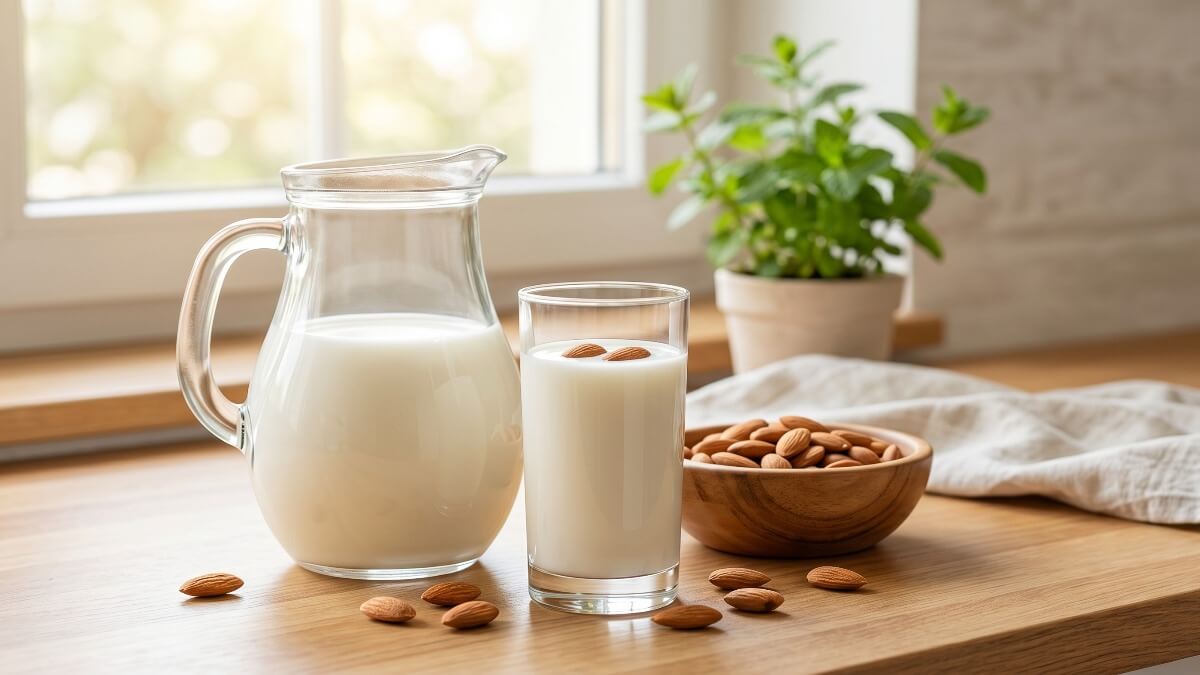
Nowadays, we are seeing a major shift in the diets of health-conscious people. Many individuals are looking for alternatives to regular cow’s milk. This is exactly where almond milk has opened up a new horizon. It is not only delicious but also nutritious.
If you want to avoid dairy products or are looking for a new healthy beverage, this article is for you. Today, we will discuss everything you need to know about this special drink.
Almond Milk: What Is It?
Almond milk is a completely plant-based beverage. It is made from a simple mixture of almonds and water. The almonds are first soaked in water. After that, they are blended, and the liquid portion is separated using a strainer. This liquid looks and tastes very much like regular milk.
It naturally has a sweet, light, nutty flavor. It is extremely popular among those following a vegan diet. The reason is that it contains no animal products. You can easily buy it from the market or make it right at home to drink.
Why Almond Milk Has Become So Popular
Over the past few years, the popularity of this beverage has skyrocketed. There are several logical reasons behind this. First of all, in modern lifestyles, many people are leaning towards healthier and lower-calorie foods.
Secondly, the number of people with lactose intolerance or dairy allergies is increasing day by day. This drink is a safe and excellent alternative for these individuals.
Thirdly, due to growing environmental awareness, many people are reducing their reliance on animal products. Being plant-based, its production has a much lower impact on the environment. For all these reasons, it has become a daily companion for health-conscious people around the world.
Nutritional Value of Almond Milk
Almond milk is not only unmatched in taste but also rich in nutrients. It can make a significant contribution to your daily diet. Below is a detailed discussion of its various nutritional properties.
Calories and Macronutrients
Compared to regular cow’s milk, it contains far fewer calories. One cup of unsweetened almond milk can have only 30 to 40 calories. It is an ideal drink for those who want to keep their weight in check.
In terms of macronutrients, it is also low in carbohydrates and fat. However, the fat it does contain is primarily healthy unsaturated fat. This type of fat is highly beneficial for our bodies. Although the protein content is somewhat low, it is unique in its other nutritional elements.
Vitamins and Minerals
Almonds are naturally an excellent source of vitamin E. Therefore, the milk made from them also contains a large amount of vitamin E. Vitamin E is a powerful antioxidant. It protects our cells from damage.
It also contains magnesium, potassium, and a small amount of calcium. These minerals help keep our bones and muscles healthy. Drinking it in moderation every day helps fulfill the body’s need for essential minerals.
Fortified vs. Unfortified Almond Milk
The almond milk available in the market is mainly of two types. One is fortified, and the other is unfortified. Fortified means that extra vitamins and minerals have been added to it during the production process.
Most commercial brands add extra calcium, vitamin D, and vitamin B12 to their milk. As a result, its nutritional value comes very close to that of cow’s milk. On the other hand, homemade or unfortified milk retains only the natural nutritional value of the almonds themselves.
Main Health Benefits of Almond Milk
Drinking almond milk regularly has various benefits for our bodies. It not only quenches thirst but also helps prevent various physical problems. Let us explore its main health benefits. To learn more in detail, you can read this article by Healthline.
Dairy-Free Alternative for Lactose Intolerance
A massive portion of the global population has trouble digesting lactose. Lactose is a type of natural sugar found in cow’s milk. Lactose-intolerant individuals suffer from stomach pain or digestive issues when they drink cow’s milk.
Since almond milk is made entirely from plants, it contains no lactose. It is a completely safe and healthy alternative for lactose-intolerant individuals. Drinking it causes no digestive problems.
Low in Calories and Weight-Friendly
Counting calories is very important in a weight-loss diet. A glass of regular milk contains about 146 calories. In contrast, a glass of unsweetened almond milk contains only 39 calories.
This means that drinking it does not introduce excess calories into the body. It helps keep your stomach full for a long time. Therefore, it can be a great companion on your weight loss journey.
Helps Maintain Heart Health
Almond milk contains no cholesterol. At the same time, its saturated fat content is absolutely zero. Instead, it contains healthy polyunsaturated fatty acids.
These healthy fats help reduce bad cholesterol levels in the blood. As a result, the risk of heart disease is greatly reduced. Drinking it regularly keeps your heart healthy and strong.
May Support Healthy Skin
It has been mentioned earlier that this drink contains a high amount of vitamin E. Vitamin E plays a magical role for the skin. It protects the skin from the sun’s harmful ultraviolet rays.
In addition, it helps retain the skin’s moisture and removes wrinkles. Nourishing the skin from the inside enhances its natural glow.
Suitable for a Vegan Diet
A vegan diet is a lifestyle in which all animal-based foods are avoided. Finding sources of protein and calcium can sometimes be difficult for vegans.
Almond milk is an excellent option for vegans. By drinking fortified almond milk, they can easily get the necessary calcium and vitamin D. It adds a new dimension to their daily diet.
Almond Milk vs. Cow’s Milk: Key Differences
Many people wonder what the main differences are between cow’s milk and almond milk. The biggest difference is their source. One comes from animals, and the other comes from plants.
In terms of calories and fat, cow’s milk contains much more of both. Almond milk is much lighter in comparison. Cow’s milk takes the lead in protein. One cup of cow’s milk contains about 8 grams of protein. In contrast, almond milk contains only about 1 gram.
However, the amount of calcium and vitamin D in fortified almond milk can be equal to or sometimes even higher than that of cow’s milk. You can choose either one based on your physical needs and preferences.
Almond Milk vs. Other Plant-Based Milks
Nowadays, there are many alternatives to almond milk on the market, such as soy milk, oat milk, and coconut milk. Each of them has its own unique characteristics.
Soy milk is almost equal to cow’s milk in terms of protein. Oat milk tastes a bit sweeter and pairs wonderfully with coffee. However, oat milk has a higher carbohydrate content.
Coconut milk is much thicker and has more fat. For those looking for a very light and low-calorie alternative, almond milk is the best choice. Its mild flavor makes it suitable for use in any recipe.
How to Make Almond Milk at Home (Step-by-Step Guide)
Making almond milk at home is much healthier than buying it from the store. This is because it contains no preservatives or added sugar. The process of making it is extremely easy and fun.
Below is a step-by-step description of the easiest method to make it at home.
Soaking the Almonds Properly
First, take one cup of raw almonds. Soak the nuts in a bowl of clean water. It should be soaked overnight or for at least 8 to 12 hours.
Soaking makes the nuts soft and swollen. This makes the nutrients inside the nuts more accessible. Soaking them for a long time ensures a very smooth texture when blending.
Blending Almonds and Water
In the morning, discard the water from the soaked almonds and wash them well. Now, place the almonds in a blender. Add four cups of pure water to it.
If you want the milk a bit thicker, reduce the water to 3 cups. Now turn on the blender and blend at the highest speed for about 1-2 minutes. The mixture will become completely white and frothy.
Straining for a Smooth Texture
The blended mixture must now be strained. To do this, place a clean cotton cloth or a nut milk bag over a large bowl. Pour the entire mixture onto the cloth.
Now, use your hands to squeeze all the liquid out of the cloth. The liquid that collects in the bowl is your fresh and healthy almond milk. Do not throw away the almond meal left in the cloth, as you can use it in cooking or baking.
Storing Homemade Almond Milk
Homemade milk does not contain any chemical preservatives. Therefore, it does not last as long as regular milk. Use a clean glass bottle or an airtight container to store it.
Keep the bottle in the refrigerator. When kept in the fridge, it usually stays good for 3 to 4 days. Make sure to shake the bottle well before drinking. This is because homemade milk tends to separate into liquid and solid parts.
Easy Homemade Almond Milk Recipe
Following the method described above, you can easily make simple almond milk. Let us take a quick look at the complete recipe.
Ingredients:
-
1 cup raw almonds
-
4 cups clean water
-
A pinch of salt (to enhance flavor)
Instructions:
Soak the almonds overnight. Wash them the next morning, then blend them with 4 cups of water in a blender for 2 minutes. Strain the mixture using a cotton cloth. You can add a little salt to enhance the taste if you want. That is it, your fresh almond milk is ready.
Different Flavors of Almond Milk
Drinking the same flavor of milk every day can get boring. So, you can add different flavors to your homemade or store-bought almond milk. This will make the beverage even more delicious and tempting.
Here are the methods for making some popular flavors.
Vanilla Almond Milk
The vanilla flavor is universally loved. It is very easy to make. Add 1 teaspoon of good-quality vanilla extract to your almond milk mixture while blending.
The aroma of vanilla will give the drink a whole new dimension. It tastes great with coffee or cereal.
Chocolate Almond Milk
This is a great option for kids or chocolate lovers. Mix 1 to 2 tablespoons of unsweetened cocoa powder with 1 cup of your prepared almond milk.
Blend it with a little honey or maple syrup. Your incredibly delicious chocolate almond milk will be ready.
Sweetened Almond Milk with Dates
For those who want to avoid sugar and get a naturally sweet taste, dates are the best ingredient. Add 2 or 3 soft, pitted dates along with the almonds and water while blending.
Dates bring a caramel-like flavor and a beautiful sweetness to the milk. This is an extremely healthy method.
Cinnamon Almond Milk
Cinnamon not only enhances the aroma but is also great for health. Mix half a teaspoon of cinnamon powder into your almond milk.
On a winter morning, slightly warm cinnamon-almond milk helps refresh and energize the body.
How to Use Almond Milk in Daily Life
Almond milk is a highly versatile beverage. You can use it in almost every area just like regular milk. Below are some ways to include it in your daily diet.
In Coffee and Tea
You can use it instead of cow’s milk in your morning coffee or tea. Keep in mind that adding cold almond milk to very hot coffee might cause it to curdle.
Therefore, slightly warm the milk before mixing it into the coffee. It will give your coffee a wonderful nutty flavor.
In Smoothies and Shakes
It works great in making any fruit smoothie or protein shake. You can easily make a healthy breakfast by blending almond milk with bananas, strawberries, or mangoes.
Since it is low in calories, it helps keep your diet on track while maintaining the smoothie’s great taste.
In Cooking and Baking
You can safely use almond milk as a liquid ingredient in making cakes, pancakes, or muffins. It makes bakery items soft and tasty.
It even works well in making various creamy soups or pasta sauces. Just make sure the recipe’s sweetness is balanced.
As a Cereal Milk Alternative
Cereal, oats, or granola is a popular choice for breakfast. You can pour almond milk over these instead of regular milk.
This will make your breakfast more nutritious and entirely plant-based.
Potential Side Effects of Almond Milk
Like any food, almond milk can have some potential side effects. It may not be equally suitable for everyone. It is important to be cautious about certain things.
Nut Allergies
Those who are allergic to tree nuts or nut-based foods should definitely avoid almond milk. Drinking it can cause a severe allergic reaction.
Symptoms such as skin rashes, shortness of breath, or swelling of the throat may occur. Therefore, one should consume it only after being certain about allergies.
Low Protein Content
Compared to cow’s milk or soy milk, it has very little protein. Children need plenty of protein for their physical growth.
Therefore, almond milk should not be given to young children as a complete substitute for cow’s milk. It can cause a protein deficiency in them. It is primarily suitable for adult diets.
Additives in Store-Bought Almond Milk
Many commercial brands add sugar, preservatives, and a thickener called carrageenan to their milk. Excess sugar is harmful to health.
Carrageenan can sometimes cause stomach issues or inflammation. Therefore, it is wise to read the label when buying in the store and choose unsweetened, carrageenan-free milk.
How to Choose the Best Almond Milk
When you go to the store, you will see various brands of almond milk. Choosing the healthiest one from among them can be a challenge.
The best way is to carefully read the product label. Always buy the unsweetened option. This is because flavored or sweetened milk contains a lot of refined sugar.
Also, try to choose a brand that sells fortified milk. This way, you will get extra calcium and vitamin D. The fewer chemical names on the ingredient list, the better it is.
How to Store Almond Milk Properly
Commercially processed and packaged almond milk can be kept at room temperature before opening. It remains good until the expiration date printed on the package.
However, once the package is opened, it must be stored in the refrigerator. An open package stays good for 7 to 10 days in the fridge. On the other hand, homemade milk contains no preservatives, so it only lasts for 3 to 4 days in the fridge. Always shake well before drinking, and throw it away if it smells bad.
Frequently Asked Questions About Almond Milk
Is almond milk healthier than cow’s milk?
This mostly depends on your nutritional needs. If you are looking for a low-calorie, plant-based option, it is a better choice than cow’s milk. However, if you need more protein, cow’s milk will take the lead.
Can you drink almond milk every day?
Yes, you can drink it every day. It can be an excellent part of your daily diet. Just make sure you are drinking the unsweetened version.
Is homemade almond milk better than store-bought?
Homemade milk has no chemical additives or preservatives, so it is much purer. However, store-bought fortified milk contains additional vitamins and calcium not found in homemade milk.
Final Thoughts on the Benefits and Uses of Almond Milk
Almond milk is not just a trend today; it is part of a healthy lifestyle. It has brought variety to our daily dietary habits. Its benefits and uses are multifaceted.
Key Takeaways
This beverage is low in calories, packed with vitamin E, and completely lactose-free. It makes a significant contribution to everything from weight loss to protecting heart health. Making it at home is also incredibly easy.
Why Almond Milk is a Great Dairy Alternative
Being eco-friendly and free from animal ingredients has given it an ideal position in modern diets. It is the best blessing for the lactose-intolerant and vegans. Because it is light in taste, it easily blends with other foods.
Simple Ways to Add Almond Milk to Your Diet
You can very easily start using it with cereal in the morning, in a smoothie in the afternoon, or with tea in the evening. Through small changes, you can enjoy all the health benefits of almond milk. It can be a wonderful step on your path to a healthy life.