How to Learn Spanish Fast? A Complete Guide
Learning a new language is a wonderful experience. Many people want to know how to learn Spanish fast and speak fluently. Spanish stands as one of the most popular languages in the world. Learning opens doors to new cultures, opportunities, and friendships.
If you are a content creator or blogger, knowing Spanish helps you build a completely new audience for your website. Learning Spanish is not too difficult if you use the right strategies. In this guide, we will discuss the most effective ways to learn Spanish quickly.
Why Learning Spanish Is One of the Best Language Skills You Can Acquire
More than 460 million people around the world speak Spanish as their native language. It ranks as the second-most-spoken language globally. You can easily communicate with people in Latin America and Spain when you learn Spanish.
The Spanish language is also in high demand in the professional world. Many international companies prefer to hire bilingual employees. This language works great for creating new career opportunities.
Knowing Spanish is a blessing for travel lovers. Your travel experiences become much more enjoyable when you can speak the local language. You can easily blend in with the local culture and people.
Is It Really Possible to Learn Spanish Fast?
Yes, you can definitely learn Spanish fast if you follow the right methods. However, you must practice regularly. Your learning speed depends on your level of interest in the language.
You need to spend some time with the language every day to become fluent. You can acquire the necessary conversational skills in just a few months. Consistency is the most important factor here.
A specific plan helps you learn faster. Set your goals and move forward with small steps every day. Success comes quickly when you make the language learning process enjoyable.
How Long Does It Take to Become Conversational in Spanish?
According to the Foreign Service Institute (FSI), an average English speaker takes about 600 hours to learn Spanish. This means you will see good results in a few months if you dedicate two hours every day.
Of course, everyone has a different learning speed. How fast you learn also depends on your previous experience. You can easily reach the 600-hour goal by practicing routinely every day.
You do not need much time to gain the skills to hold a basic conversation at the beginner stage. You can easily speak Spanish after three to six months of intensive practice.
Common Mistakes That Slow Down Spanish Learning
Many students try to memorize grammar rules right at the beginning. This makes the language learning process slow and boring. You should focus on vocabulary and common phrases instead of grammar.
Another big mistake involves trying to translate everything into your native language. Translating every word slows down your conversation speed. You will never speak Spanish naturally if you do this.
Not speaking out of fear of making mistakes is a huge barrier. You will definitely make mistakes when learning a new language. You become fluent quickly only if you learn from your mistakes and move forward.
Building a Strong Foundation in Spanish
Learn the Most Common Spanish Words and Phrases First
Knowing common words is essential at the beginning of learning any language. You can manage about 85% of daily conversations with just the 1000 most common words in Spanish.
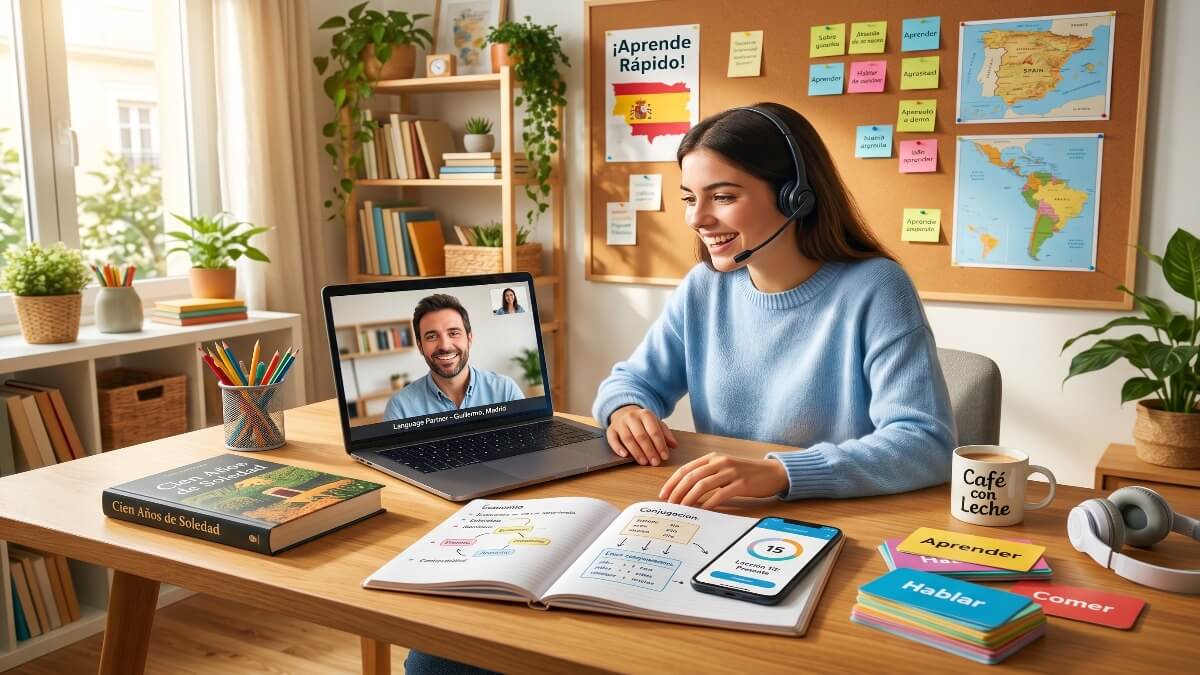
Set a goal to learn a few new words every day. You can write Spanish names on sticky notes and attach them to household items. You easily remember the words by seeing them repeatedly.
Learn basic words like food, colors, numbers, and directions first. This foundational vocabulary gives you confidence.
Master Essential Spanish Greetings and Daily Expressions
Speaking in Spanish usually starts with greetings. Learn common greetings like “Hola” (Hello), “Buenos días” (Good morning), and “¿Cómo estás?” (How are you?)
Short sentences used in daily life are very helpful. For example, people use “Gracias” to say “thank you” and “Adiós” to say “goodbye”. These help you build relationships with locals.
It is a good idea to learn sentences for shopping at a store or ordering food at a restaurant. These expressions increase your practical knowledge.
Why Pronunciation Matters From the Beginning
Wrong pronunciation can completely change the meaning of your words. Focus on learning the correct Spanish pronunciation right from the start.
The pronunciation of Spanish vowels differs from English and sounds much clearer. You can learn the correct pronunciation by watching videos of native speakers on YouTube.
Practice reading out loud. You can easily catch your pronunciation mistakes by recording and listening to your own voice.
Understanding Basic Spanish Grammar Without Feeling Overwhelmed
There is no reason to fear grammar. You can easily master some basic rules of Spanish grammar.
Learn the simple structures of the present, past, and future tenses first. You do not need to memorize hundreds of rules for every tense. Learn only the forms of the most commonly used verbs.
You can create many sentences yourself once you understand the basic rules of sentence structure, like Subject + Verb + Object.
How to Think in Spanish Instead of Translating
A major step in learning a language is learning to think in that language. Do not think “Apple” in your mind and then translate it to “Manzana” when you see an apple. Try to think “Manzana” directly upon seeing the apple.
Create Spanish sentences in your mind to describe your surroundings. Discuss what you see in Spanish with yourself while walking down the street.
This method might seem a bit difficult at first. Your brain gets used to working directly in Spanish with regular practice.
Improve Your Spanish Speaking and Listening Skills
The Fastest Ways to Practice Speaking Spanish Daily
Try to speak in Spanish for at least 15 minutes every day. You can talk to yourself if you do not have anyone around to speak Spanish with.
Practicing in front of a mirror boosts your confidence. You can talk about your daily plan or a favorite topic in Spanish.
Shadowing is an excellent method. Repeat the sentences aloud, just like a native speaker, while listening to the audio.
How to Improve Your Spanish Listening Skills Quickly
You need to listen to a lot of Spanish audio to improve your listening skills. Keep Spanish radio or audiobooks playing in the background, even if you do not understand the language.
You can listen to short audio clips from websites like BBC Languages Spanish. Creators make these specifically for beginners.
You can slow down the audio speed a bit at first. Try listening to audio at a normal speed as your fluency gradually increases.
Learning Spanish Through Podcasts, Videos, and Music
Spanish podcasts are great tools for learning the language. You can listen to popular podcasts like “Coffee Break Spanish” while commuting or taking a break.
YouTube has many excellent Spanish tutorial channels. You can easily learn new words and sentence structures from them.
Listen to your favorite Spanish songs and try to sing along with the lyrics. Remembering new words becomes very easy through songs.
Why Conversational Practice Is the Key to Fluency
You can learn a language by reading books. However, there is no substitute for talking to become fluent. You understand the true form of the language only by speaking in real situations.
You learn to think and react quickly during conversations. This increases your brain’s language processing power.
Keeping the conversation going is important even if you make mistakes. You easily correct your mistakes when people point them out.
How Language Exchange Partners Can Accelerate Your Progress
A language exchange partner can multiply your learning speed. You can teach them English, and they teach you Spanish in return.
You can easily connect with Spanish speakers using apps like HelloTalk or Tandem. Chat with them or make video calls regularly.
You learn about the slang and natural speaking styles they use by talking to native speakers.
Reading and Writing for Faster Spanish Learning
Best Books and Stories for Spanish Beginners
The habit of reading enriches your vocabulary. Do not try to read difficult novels at the beginning.
Books like “Short Stories in Spanish for Beginners” are very helpful for new learners. Storybooks written for children also provide great support in learning the language.
You can read short articles or the news. Reading the Spanish translation of a familiar story helps you understand the plot easily.
How Reading Spanish Daily Expands Your Vocabulary
You see new words in different contexts while reading. This makes it easier to understand the correct use of words.
Do not look up a dictionary immediately when you find a new word. Try to guess the word by understanding the meaning of the sentence. Check the word in the dictionary later.
Underline your favorite sentences while reading. Try to use them in your own writing later on.
Simple Writing Exercises to Improve Spanish Quickly
Practice writing at least a few sentences in Spanish every day. This helps fix your grammar and spelling.
You can write a short message or email to your friend in Spanish. Making short posts on social media in Spanish is also a good exercise.
Create sentences using newly learned words. This simple exercise cements the words in your memory.
Keeping a Spanish Journal to Build Confidence
Keeping a Spanish journal is a highly effective method. Write down your daily experiences in Spanish every night before going to sleep.
Write very simple sentences at first. Examples include “I went to the market today” or “Today was a beautiful day”.
Your writing quality improves gradually. You will be surprised to see your own progress when you read old entries a few months later.
Effective Study Strategies
Using Flashcards and Spaced Repetition for Spanish Vocabulary
Spaced repetition is a scientific method for memorizing words. This method reminds you of old words at specific intervals.
The Anki app is best for creating flashcards and doing spaced repetition. You can create custom flashcards for yourself.
Adding pictures to flashcards makes them even more effective. Practice flashcards for at least 10 minutes every day.
How to Learn Spanish Through Immersion at Home
You do not have to go to Spain to learn the language. You can create a Spanish language environment right in your own home.
Change the language of your mobile phone and computer to Spanish. This lets you see technical Spanish words every day.
Try to do everything in Spanish, from watching the news to enjoying entertainment. Immerse yourself in the Spanish language as much as possible.
Best Apps and Online Resources for Learning Spanish
Many excellent apps exist today for learning languages. Duolingo teaches the language like a game for beginners. This makes the process quite enjoyable.
Babbel acts as a great alternative for learning grammar and sentence structure. You can use iTalki to speak directly with professional teachers.
You can find many free resources and PDF books online. Collect them and use them in your learning journey.
Creating an Effective Daily Spanish Study Routine
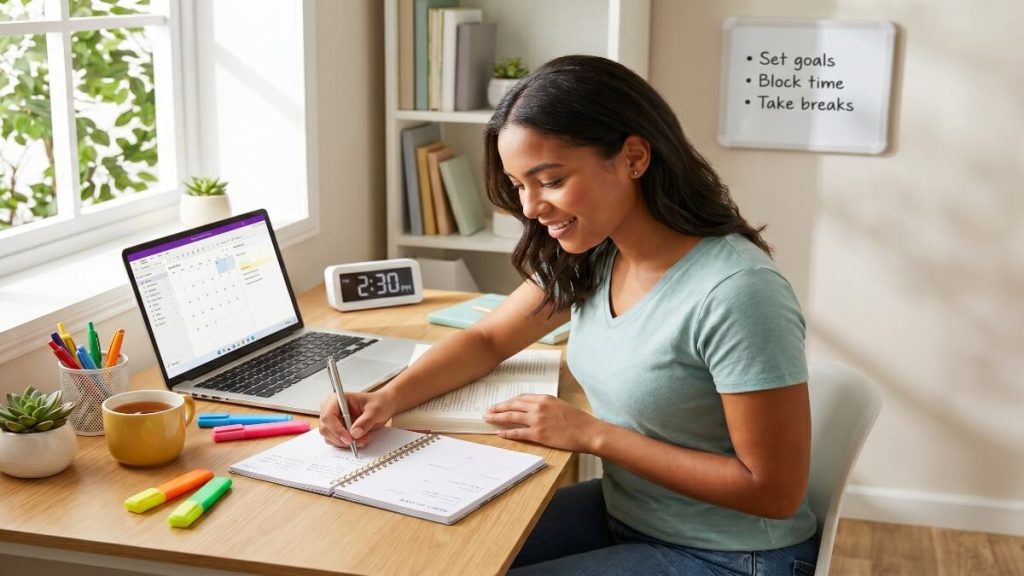
Following a routine is essential for achieving your goals. Try to study Spanish at the same time every day.
Keep a balance of reading, writing, listening, and speaking in your routine. You can build a habit of listening to podcasts in the morning and writing a journal at night.
Your study sessions must be regular, even if they are short. Studying for half an hour every day is much more beneficial than studying for five hours once a week.
How to Stay Motivated While Learning Spanish
Learning a language takes a long time. Your desire to learn may occasionally decrease. This is perfectly normal.
Remember your goals to stay motivated. Imagine all the things you can do after learning Spanish.
Enjoy the fun aspects of Spanish culture. Try cooking delicious Spanish food or learn about Spanish festivals.
Advanced Techniques for Rapid Progress
Watching Spanish Movies and TV Shows for Natural Learning
Watching movies and TV shows represents one of the most fun ways to learn a language. Netflix has many excellent Spanish series.
Watch movies with Spanish subtitles at first. This allows you to listen and read at the same time.
Turn off the subtitles when your listening skills improve. Pay attention to the characters’ speaking styles and emotions.
Following Spanish Content Creators and Social Media Accounts
Follow Spanish content creators on Instagram or TikTok. They make short videos about daily life that are quite easy to understand.
You can follow Spanish pages related to travel, food, or lifestyle. Try to leave comments in Spanish in the comment section.
These short-form contents help you learn modern Spanish words and slang.
Practicing Spanish in Real-Life Situations
A significant difference exists between textbook language and real-life language. Try to use Spanish in real situations whenever you get the chance.
Go to Spanish restaurants in your city and order in Spanish. You can attend community events hosted by Spanish speakers.
Talk to people whenever you find an opportunity. Real-life experiences eliminate your fear and boost your confidence.
Tracking Your Progress and Celebrating Small Wins
Tracking your progress keeps your motivation intact. Set a few small goals at the beginning of every month.
Celebrate when you send a message in Spanish for the first time or when you understand an entire Spanish movie.
Reward yourself. These small successes lead you towards your ultimate goal.
FAQ Section
Frequently Asked Questions About Learning Spanish Fast
Many people have questions before they start learning Spanish. We provide answers to some common questions below. These will help clear your doubts.
What is the fastest way to learn Spanish?
Complete immersion in the language serves as the fastest method. You learn quickly by listening, speaking, and reading a lot of Spanish every day. Regular practice with language exchange partners is equally important.
Can I learn Spanish in three months?
You can build a strong foundation in Spanish in three months. You can master basic conversational skills and the essential sentences for daily life. However, achieving complete fluency requires a bit more time and practice.
How many hours a day should I study Spanish?
Determine this based on your time and goals. Dedicating 1 to 2 hours every day works perfectly for fast results. However, you will see improvement if you do quality practice for 20 to 30 minutes a day when you are busy.
Is learning Spanish hard for English speakers?
No, learning Spanish is relatively easy for English speakers. The roots of many English and Spanish words come from Latin. This creates many similarities between the words. Furthermore, Spanish pronunciation follows much stricter rules than English.
What are the best apps to learn Spanish?
Duolingo is great for expanding a beginner’s vocabulary. Babbel works well for learning grammar. Anki remains very popular for memorization through flashcards. You can use iTalki to speak directly with teachers.
How can I improve my Spanish speaking skills quickly?
You must speak regularly to improve your speaking skills. Do language exchanges with native speakers. Speak out loud to yourself and repeat along with the audio using the shadowing technique.
Should I focus on grammar first, or conversation?
You should focus more on conversation and vocabulary at the beginning. Start talking using simple sentences. The whole process feels easier if you gradually learn the grammar rules after becoming familiar with the language.
How do I stay motivated when learning Spanish?
Keep your learning goals in mind. Change your learning methods to beat boredom. Watch Spanish movies, listen to songs, or cook Spanish food alongside reading books. Keep yourself encouraged by celebrating small wins.
Conclusion
Final Thoughts on Learning Spanish Fast
No magic wand exists for learning Spanish fast. It depends entirely on your goodwill and the right methods. Start your learning journey today without fear.
A new language expands your world of thought. Learning each new word brings you closer to a new culture. The Spanish language adds a new dimension to your life.
Key Takeaways for Achieving Spanish Fluency
Patience and consistency are the keys to achieving fluency. Small daily efforts eventually bring big success.
Do not fear making mistakes. People learn from their mistakes. Immerse yourself in a Spanish language environment and enjoy the process.
How Consistent Practice Leads to Long-Term Success in Spanish
The language becomes a part of your routine if you practice a little bit every day. Regular practice improves memory and cements the words in your mind.
You realize how worthwhile your hard work was after a few months. This journey of becoming fluent in Spanish makes you confident and paves the way for future success.