10 Daily Stretches to Improve Posture and Reduce Back Pain Naturally
In our busy modern lives, many of us spend most of our day sitting at a desk or staring at screens. This habit frequently damages our physical posture. Over time, this poor posture becomes the root cause of back pain, neck tension, and various spinal problems.
The good news is that you can solve this problem very easily. There is no need for expensive equipment or a gym membership. Just a few minutes of simple daily stretching can work like magic to improve your posture and reduce back pain naturally. In this blog, we will learn why proper posture is important and discuss 10 effective daily stretches to keep your spine healthy.
Why Good Posture is Important for Overall Health
Good posture not only makes you look confident but is also absolutely essential for your body’s internal functions. Maintaining correct posture keeps our body’s bones and joints in proper alignment. As a result, no extra stress is placed on the muscles.
When you sit or stand up straight, your lungs get the chance to expand fully. This makes breathing much easier and increases the flow of oxygen throughout the body. The digestive system can also function properly when there is no unnecessary pressure on your stomach or chest.
Additionally, good posture positively affects mental health. Standing up straight sends signals to the brain that reduce stress and boost confidence. Overall, maintaining correct posture is essential for both physical and mental well-being.
The Connection Between Poor Posture and Back Pain
There is a very deep and direct connection between poor posture and back pain. When we slouch or walk with our heads and shoulders forward, the natural curve of our spine is disrupted.
This abnormal position puts extra strain on the ligaments, discs, and muscles of the spine. Remaining in this state for a long time causes the lower back or neck muscles to become tired and weak. According to reliable health platforms like Spine-Health, chronic poor posture can cause wear and tear on spinal discs, leading to severe back pain.
When your body weight is not distributed properly, certain muscles have to work overtime to maintain balance. This extra work is primarily what causes muscle tension and pain.
Common Causes of Posture Problems in Modern Life
Our modern lifestyle affects our physical posture in various ways. While technology has made our lives easier, it has also caused physical problems in some cases.
First, excessive smartphone and laptop use is the biggest culprit. When we lower our necks to look at a screen, the pressure on our necks increases severalfold. In medical terms, this is called “text neck.”
Second, sitting at an office desk for long periods is a major factor. Due to uncomfortable chairs and incorrect table heights, we frequently find ourselves leaning forward.
Third, a lack of physical labor or exercise plays a huge role. If the muscles are weak, they cannot support the spine properly. Furthermore, sleeping in the wrong position at night or using an overly soft mattress is also a major cause of back pain and poor posture.
Benefits of Daily Stretching for Your Spine and Muscles
Stretching daily can be a wonderful gift for your body. Regular stretching increases blood circulation in the muscles. Increased blood circulation means the muscles receive more oxygen and nutrients.
Stretching increases the flexibility and elasticity of your muscles. As a result, the risk of muscle strain or injury during normal activities is greatly reduced. When the muscles surrounding the spine are flexible, the spine can maintain its natural curvature.
Also, the lactic acid that builds up in our muscles after a long day of work can be flushed out with stretching. This removes muscle fatigue and relaxes the body.
How Stretching Helps Reduce Back Pain Naturally
While medication or painkillers offer temporary relief for back pain, the long-term solution is physical exercise. Stretching does this job naturally.
When we stretch, our body releases hormones called endorphins. Endorphins are the body’s natural painkillers. Along with reducing pain, they also help improve your mood.
When back muscles are contracted or stiff, they put pressure on the nerves. Stretching elongates these stiff muscles and relieves the pressure on the nerves. As a result, back pain gradually subsides naturally. Research from Harvard Medical School has shown that regular stretching is highly effective in curing chronic back pain.
Safety Tips Before Starting a Stretching Routine
Before starting any exercise, you should follow some basic safety rules. This ensures there is no chance of harm instead of benefit.
First, prepare your body. You should not stretch cold muscles. Do some light walking for 5 to 10 minutes before starting your stretching session. This will warm up the muscles and increase flexibility.
Second, never stretch to the point of pain. While stretching, you will feel a mild pull in the muscle, but it should never turn into sharp pain. Stop immediately if you feel pain.
Third, do not hold your breath. Many people mistakenly hold their breath while stretching. It is extremely important to continue breathing normally and deeply during stretches to deliver oxygen to the muscles.
10 Best Daily Stretches for Improved Posture and Back Health
Below is a list of 10 simple, highly effective stretches to strengthen your spine and reduce back pain. You can easily do these at home every day.
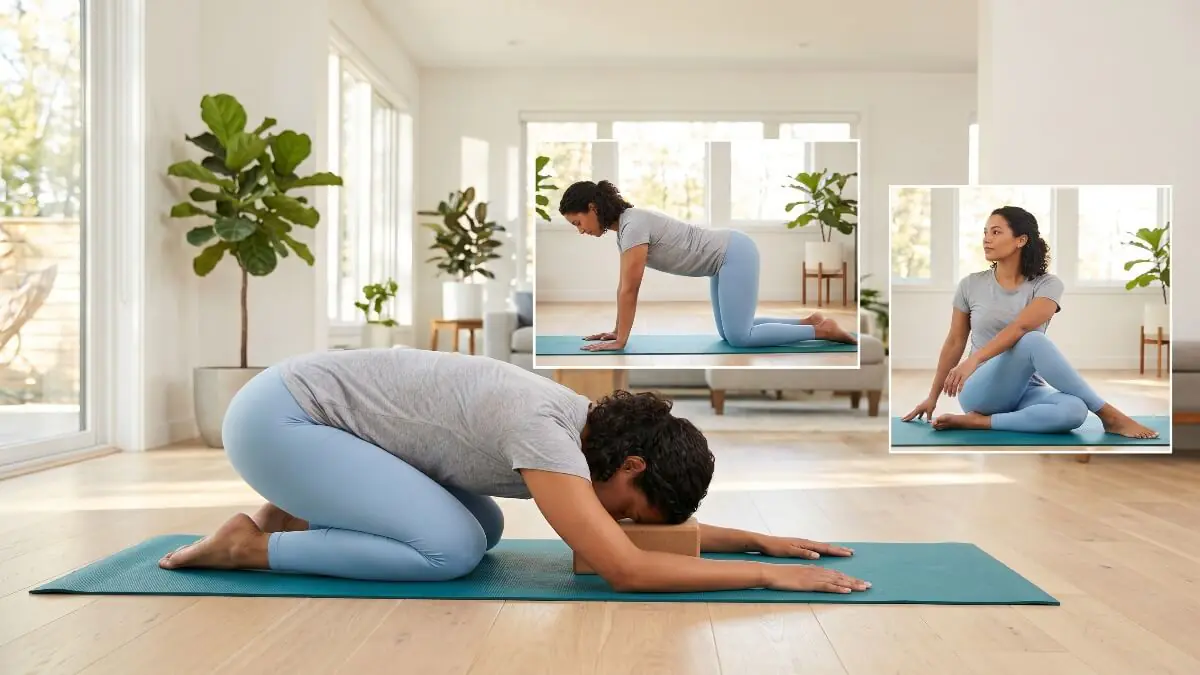
Stretch #1: Cat-Cow Stretch for Spinal Flexibility
The Cat-Cow stretch is a wonderful yoga pose that stretches the entire spine and increases flexibility. It works well for removing stiffness in the back.
How to do it:
First, sit on the floor on all fours. Your wrists should be directly under your shoulders, and your knees under your hips. Now slowly inhale and let your stomach drop toward the floor. At this time, lift your head and tailbone upward. This is the ‘Cow’ pose. Next, slowly exhale and arch your back upward toward the ceiling. Bring your head down toward your chest. This is the ‘Cat’ pose.
Repeat this entire process very slowly 10 to 15 times. You will feel relief in every part of your spine.
Stretch #2: Child’s Pose for Lower Back Relief
Child’s Pose is a resting stretch. It works like magic to reduce lower back pain or waist pain.
How to do it:
Kneel on the floor. Keep your big toes together and spread your knees slightly apart. Now sit your hips back onto your heels. Slowly lean your upper body forward and touch your forehead to the floor. Stretch your arms straight out in front of you on the floor.
Relax your body completely in this position. Close your eyes and take deep breaths. Hold this pose for at least 30 seconds to 1 minute. It will completely relax your spine, neck, and shoulder muscles.
Stretch #3: Seated Chest Opener Stretch for Slouching
When we work in front of a computer all day, our chest muscles become contracted, and our shoulders hunch forward. This stretch stretches the chest muscles and helps prevent slouching.
How to do it:
Stand up straight or sit up straight on a chair. Now take your hands behind your back and interlock your fingers. As you inhale, expand your chest forward and pull your interlocked hands backward and slightly upward.
Keep your head straight or look slightly upward at this time. Stay in this position for 20 to 30 seconds. You will feel a comfortable pull in your chest muscles and the front part of your shoulders.
Stretch #4: Standing Forward Bend for Full Body Flexibility
This stretch is highly beneficial for the hamstrings, leg muscles, and lower back. It stretches the entire posterior chain.
How to do it:
Stand straight with your feet hip-width apart. Slowly bend forward from the waist as you exhale. Your knees can be slightly bent (there is no obligation to keep them completely straight). Try to touch your hands to the floor or hold onto your ankles.
Relax your neck and head completely, letting them hang. Stay in this position for 20 to 30 seconds and keep taking deep breaths. Stand up very slowly to avoid getting dizzy.
Stretch #5: Knee-to-Chest Stretch for Lower Back Comfort
For those with persistent pain in the waist or lower back, this stretch is very beneficial. It wonderfully relaxes the lower back muscles.
How to do it:
Lie flat on your back on the floor. Now slowly bend your right knee and pull it toward your chest. Use both hands to hold the knee and try to bring it closer to the chest. Keep your left leg straight on the floor.
Stay in this position for 20 to 30 seconds. Then lower the right leg, bring the left knee to your chest, and stretch in the same way. Finally, you can stretch by bringing both knees to your chest. This will give great relief to your lower back.
Stretch #6: Seated Spinal Twist for Back Flexibility
This stretch increases spinal mobility and relieves tension in the muscles on the sides of the back. It also helps boost digestion.
How to do it:
Sit on the floor with your legs straight out in front of you. Now bend your right leg and place it on the floor on the outside of your left knee. Hug your right knee with your left arm and place your right hand on the floor behind your body for support.
Slowly exhale and twist your upper body and head to the right. Try to look behind you. Hold this position for 20 seconds. Then return to the normal position and repeat on the other side.
Stretch #7: Hip Flexor Stretch to Improve Pelvic Alignment
Because of sitting all day, our hip flexor muscles become short and tight. This pulls the pelvis forward and causes lower back pain.
How to do it:
Kneel on the floor. Now bring your right leg forward so that the right knee is at a 90-degree angle and the foot is flat on the floor. Your left knee will remain on the floor. Keep your body straight and slowly push your hips forward.
You will feel a stretch in the front part of your left thigh. Keep your back straight, do not lean forward. Stay in this position for 30 seconds and then switch legs to stretch the other side.
Stretch #8: Cobra Stretch to Elongate the Spine
The Cobra Stretch, or Bhujangasana, stretches the abdominal muscles and strengthens the lower back. It helps tremendously in breaking the habit of slouching.
How to do it:
Lie face down on the floor. Place your palms flat on the floor on either side of your chest. Keep your elbows close to your body. Now slowly inhale and lift your head and chest upwards off the floor, using your palms for support.
Your pelvis or lower abdomen will remain on the floor. Keep your neck straight and look forward. Do not lift your shoulders toward your ears; keep your shoulders pressed down and relaxed. Stay in this position for 15 to 20 seconds and slowly lie back down on the floor.
Stretch #9: Shoulder Roll Stretch to Relieve Neck and Shoulder Tension
Due to excessive mental stress or work pressure, tension builds up in our shoulder and neck muscles. The shoulder roll is a very simple exercise that removes this tension.
How to do it:
Stand up straight or sit in a chair. Let your arms hang naturally by your sides. Now lift both shoulders toward your ears, then roll them backward and lower them.
Roll your shoulders in a circular motion like this. Complete this cycle slowly 5 times backward and 5 times forward. Do not forget to breathe deeply while stretching.
Stretch #10: Wall Angels for Proper Body Alignment
The Wall Angel stretch is very effective for keeping your spine straight and strengthening the back muscles of your shoulders. It helps you understand what a correct posture should feel like.
How to do it:
Stand with your back against a flat wall. Your heels will be a few inches forward from the wall. Make sure your hips, upper back, and head are touching the wall.
Now bend both your arms at the elbows and place them against the wall so they form a ‘W’ shape. Your palms will face forward. Now, without moving your arms away from the wall, slowly raise both arms straight up above your head. Slowly bring them back down to the previous ‘W’ position. Make sure your body does not lose contact with the wall. Do this 10 times.
How to Build a Regular Daily Stretching Routine
To get the best results from stretching, you must make it a part of your daily life. Stretching for a short time every day is much more effective than stretching for a long time all of a sudden.
To create a routine, first pick a specific time of day. This could be in the morning after waking up, during a break at noon, or at night before going to sleep. You can set a reminder. You don’t need to do all the stretches at the beginning. Start with 5 stretches initially and slowly increase the number. Setting small goals makes it easier to stick to the routine.
How Long Should You Hold Each Stretch?
You should not rush while stretching. To get the maximum benefit from a stretch, each pose should be held for at least 20 to 30 seconds. During this time, the muscle fibers get the chance to stretch slowly.
If you feel more tension or stiffness in a specific muscle, you can stretch it for a little longer (45 seconds to 1 minute). However, never pull with a jerk or use force.
Morning vs. Evening Stretching: Which is Better?
Both morning and evening stretching have their own distinct benefits. In the morning, after waking up, our muscles are usually a bit stiff. Morning stretching gets the body moving, increases blood circulation, and provides energy for the day’s work.
On the other hand, evening or nighttime stretching helps relieve accumulated mental and physical fatigue from the day. It relaxes the muscles and helps you sleep well. You can choose any time that suits your convenience and needs. Even doing it for 5 minutes at both times will give you great benefits.
Additional Lifestyle Habits for Better Posture
Along with stretching, some small lifestyle changes can further improve your posture. Drink plenty of water. Adequate water helps keep the spinal discs hydrated.
Make a habit of walking regularly. Break the bad habit of sitting for long periods by standing up and walking for at least 2 minutes every hour. Also, you can do strength training or muscle-strengthening exercises a few days a week. If the core muscles (stomach and back muscles) are strong, they automatically keep your spine straight.
Ergonomic Tips for Desk Workers and Students
For those who work sitting at a desk, having the correct workspace setup is absolutely essential. Keep your computer screen at a height so that your eye level is directly at the top part of the screen. As a result, you won’t have to lower your neck.
Keep your back straight while sitting in a chair, and use a small cushion behind your waist to support the natural curve of your spine. Make sure your elbows are at a 90-degree angle while typing. Keep your feet flat on the floor, and use a footrest if necessary.
Common Stretching Mistakes That Can Worsen Back Pain
Although stretching is good for the body, doing it incorrectly can cause harm instead of benefit. The most common mistake is bouncing or jerking while stretching. This is called ballistic stretching. It can tear the delicate muscle fibers and increase pain.
Another major mistake is stretching beyond the limit of pain. Many people think that more pain means more benefit. This is a completely wrong idea. Forcing a muscle beyond its natural limit can cause injury. Additionally, holding your breath during stretching is a common mistake. As a result, adequate oxygen cannot reach the muscles, and instead of relaxing, the muscles become tighter.
When to Consult a Healthcare Professional for Back Pain
Stretching is highly effective for general muscle tension and posture-related problems. But not all types of back pain can be cured with stretching. In some cases, consulting a doctor is essential.
If the pain does not subside even after stretching, or if it worsens, you must definitely consult a doctor. If your back pain spreads to your legs or hips, or if you feel numbness or tingling in your legs, it could be a sign of a nerve problem.
Furthermore, if back pain starts after an injury, or if symptoms like fever or weight loss appear along with the pain, you should not delay in any way. A physiotherapist or orthopedic specialist can diagnose the correct disease and advise you on the appropriate treatment.
Frequently Asked Questions About Stretching for Posture and Back Pain
Can stretching really improve posture?
Yes, absolutely. Stretching elongates our stiff, contracted muscles and improves the efficiency of weak muscles. It restores the joints’ proper alignment, which automatically improves our posture.
How often should I stretch to reduce back pain?
For the best results, you should stretch every day. Allocate at least 10 to 15 minutes a day for your stretching routine. If you work sitting for long periods, you can do light stretches for 2-3 minutes during breaks.
What is the best stretch for lower back pain?
Child’s Pose and the Knee-to-Chest Stretch are the most effective for lower back pain. These wonderfully relax the lower back muscles.
How long does it take to see improvements in posture?
This depends on the person’s physical condition and consistency. However, if you stretch regularly and try to maintain proper posture, you will begin to notice positive changes within 2 to 4 weeks.
Is it safe to stretch every day?
Yes, mild to moderate stretching every day is completely safe. However, you must refrain from forcing the stretches or pushing into the pain zone.
Can stretching be a substitute for exercise for back health?
Stretching increases flexibility, but it is not a complete substitute for muscle-building exercises. For the best back health, you should do core-strengthening exercises (like planks or weight training) alongside stretching.
What is the main cause of poor posture?
Leaning towards a smartphone or computer for long periods, sitting in an uncomfortable chair, a lack of physical activity, and weak core muscles are the primary causes of poor posture.
When should I seek medical advice for back pain?
If the pain persists for several weeks, spreads down the leg, causes numbness or weakness in the leg, or if sleep and daily activities are disrupted due to the pain, you must seek medical advice quickly.
Conclusion
Final Thoughts on Improving Posture and Reducing Back Pain
Poor posture and back pain do not develop overnight. These problems take root due to years of sitting, standing, or moving incorrectly. Therefore, solving these problems also requires some time and patience. However, the hopeful news is that with the right guidance and willingness, it is possible to improve body posture at any age. Stretching is not just an exercise; it is a way to take care of your own body.
Key Takeaways for Building a Healthy Daily Stretching Habit
The most important thing is consistency. Stretching for 10 minutes every day is much more effective than stretching for an hour on a single day. Learn to listen to your body. Your body will tell you which stretch works well for it and which one makes it feel uncomfortable. Never force the muscles. A healthy habit is not built overnight, so start with small steps.
How Regular Stretching Helps Maintain Long-Term Spinal Health and Mobility
Your spine is the main pillar of your body. Keeping it healthy will allow you to remain active and mobile for a long time. Regular stretching keeps the spinal discs healthy, increases the joints’ range of motion, and reduces the harmful effects of age-related bone degeneration.
Start your new and healthy lifestyle today with these 10 stretches. Gradually, these small habits will remove your back pain and gift you a confident, straight, and beautiful posture. Stay healthy and take care of your body.