Asafoetida (Hing): Benefits, Uses, and Nutrition Guide
What is Asafoetida (Hing)?
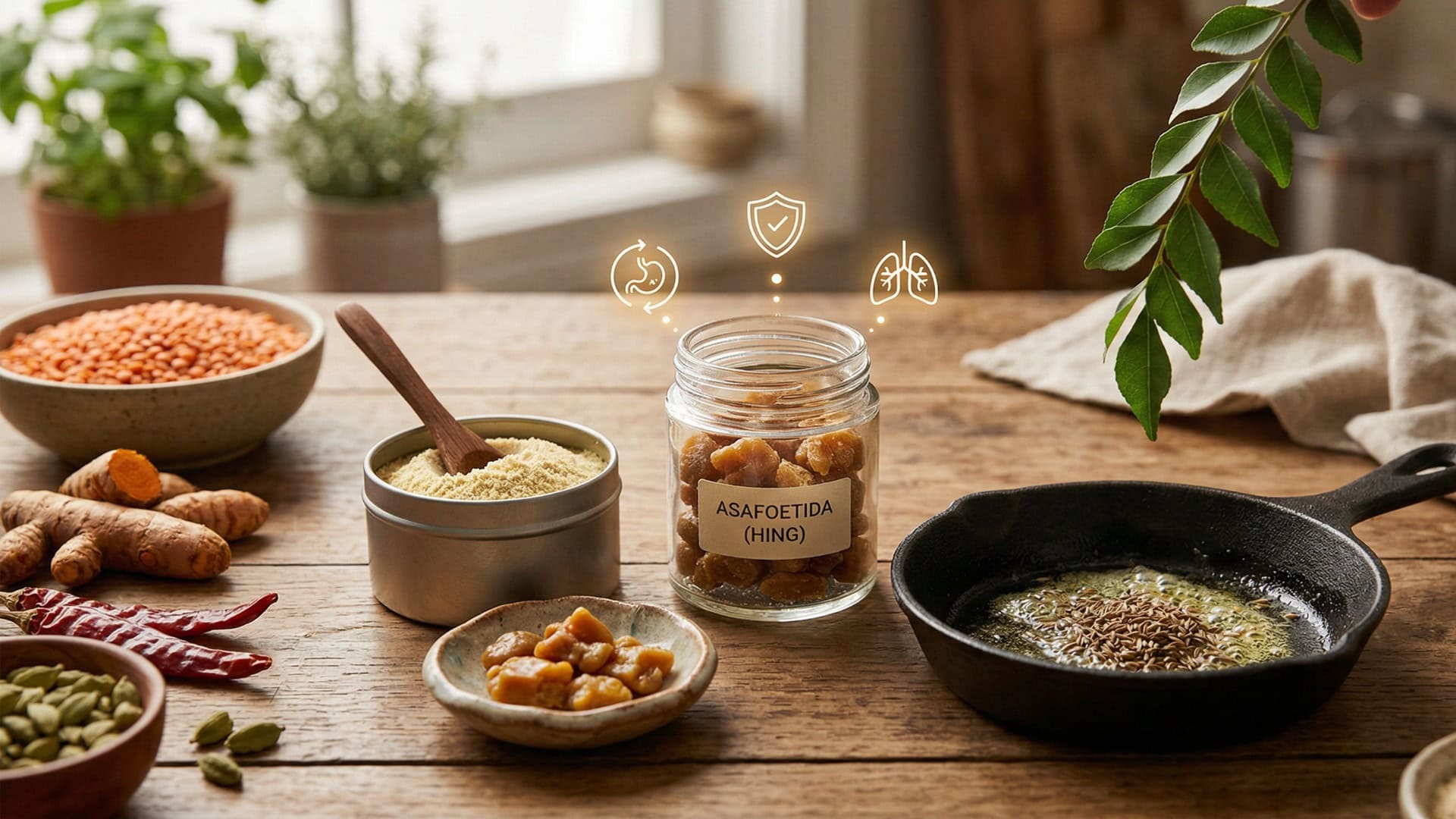
Asafoetida, commonly known as hing, is an extremely popular and potent aromatic spice. It is primarily derived from the roots of a perennial plant called Ferula. This spice is known worldwide for its intense and pungent odor.
While its smell is quite strong in its raw form, it creates a wonderful aroma once cooked. It multiplies the flavor profile of any dish. It is an especially familiar name to those who prefer vegetarian cuisine.
Hing not only enhances the taste of food but also possesses numerous medicinal properties. It has been used since ancient times to solve various physical ailments. It truly is one of the most important ingredients in our kitchen.
History and Origins of Hing
Hing originated primarily in the Middle East. The Ferula plant grows naturally in the dry and mountainous regions of Afghanistan and Iran. From there, this spice slowly spread across the globe.
According to historians, ancient Greeks and Romans knew how to use hing. They used it as a medicine and in cooking. It was a highly valuable commodity during the Roman Empire.
Later, it entered the Indian subcontinent through the Silk Route. After arriving in India, it became an integral part of the local culinary arts. Its usage gained massive popularity, particularly during the Mughal era.
Why Hing is a Staple in Indian and Middle Eastern Cooking
The use of hing in Indian and Middle Eastern cooking is undeniable. The main reason is that hing adds a flavor to food that can easily fill the void of onions and garlic.
Many communities avoid onions and garlic for religious or health reasons. Hing is an excellent alternative for them. It deepens the taste of food and makes it delicious.
In Middle Eastern cuisine, hing is used to enhance the flavor of meats and lentils. On the other hand, it is used as a tempering spice (tadka) in almost every vegetarian dish in India. It gives the food a completely new dimension.
How Hing is Made
The process of making hing is quite time-consuming and labor-intensive. It is a natural process that has been followed in the exact same way for centuries.
The Hing Plant and Resin Extraction
When the Ferula plant is four to five years old, the resin is collected from its roots. Just before spring, the lower part of the plant’s stem is cut off.
A milky white sticky sap oozes out from this cut section. This sap slowly dries up as it comes into contact with the air. After drying, it turns into a hard brown resin.
This resin or gum is raw hing. After collection, it is cleaned. Then it is prepared for further processing.
Pure Hing vs. Compounded Hing
Pure hing refers to the resin obtained directly from the tree. It is extremely potent and has a very strong smell. Pure hing usually looks like small pieces of stone.
Compounded hing is the common hing powder found in the market. It is made by mixing pure hing with rice flour or wheat flour.
A small amount of edible oil is also mixed in. This mixture makes the smell of hing somewhat tolerable and easier to use. Compounded oil is much more popular for household cooking.
Traditional Processing Methods
During the traditional processing of hing, special attention is paid to maintaining its quality. After the resin is collected, it is dried in the sun.
The dried resins are then crushed in large stone mortars. Flour or starch is mixed into this powder in accurate proportions.
The aroma is best preserved when the entire process is done by hand. Although it is now crushed by machines in modern factories, the ancient methods are still used in many places.
Nutritional Value of Hing
Hing not only enhances flavor, but it is also packed with various nutritional elements. Even though it is consumed in very small quantities, it provides significant nutritional benefits to our bodies.
Calories and Macronutrients
Hing is very low in calories. Only a few calories are found in 100 grams of hing. Therefore, it can be safely used in weight management diets.
It contains a small amount of carbohydrates and proteins. However, the fat content is almost zero.
Since we use a pinch or less of hing in our cooking, it has little to no impact on our daily calorie intake.
Essential Minerals and Trace Nutrients
Hing is a good source of several important minerals. It contains calcium and phosphorus, which are beneficial for bone health.
Additionally, iron and potassium are found in it. Iron helps prevent anemia. Potassium plays a role in regulating blood pressure.
Small amounts of magnesium and zinc are also present in hing. These minerals help maintain the normal functions of our body.
Antioxidants and Bioactive Compounds
Hing is extremely rich in antioxidant compounds. It contains a powerful antioxidant called ferulic acid.
Antioxidants protect our body’s cells from the harmful effects of free radicals. This helps prevent premature aging.
It also contains flavonoids and tannins. These elements play an important role in boosting the body’s immune system.
Sulfur-Based Plant Compounds
The main reason for the strong smell of hing is the sulfur-based compounds it contains. Because of these elements, its smell resembles onions or garlic.
These sulfur compounds have several medicinal properties. They naturally act as antimicrobials.
These elements help destroy harmful bacteria in the body. They also accelerate the digestion process.
Top Health Benefits of Hing
The health benefits of hing are vast. From ancient Ayurveda to modern science, many have acknowledged its virtues. For detailed information, you can refer to reliable sources such as Healthline.
Helps Boost Digestion
Hing is famously known for improving digestion. It stimulates the production of digestive juices in the stomach.
As a result, food is digested quickly. Having a little something after a heavy or oily meal helps prevent digestive issues.
It increases the efficiency of the stomach. Consuming moderate amounts of hing regularly eliminates indigestion.
May Help Reduce Bloating and Gas
Hing works like magic for bloating and gas problems. It helps to expel accumulated gas from the stomach.
Hing acts as a natural carminative. It relaxes the intestinal muscles and relieves gas pain.
Tempering gas-producing foods like lentils or beans with hing reduces the likelihood of experiencing gas.
Rich in Antioxidant Compounds
As mentioned earlier, hing is full of antioxidants. It protects our body from oxidative stress.
Consuming hing regularly reduces the risk of chronic diseases. It helps keep the heart and liver healthy.
Antioxidants are also helpful in repairing cellular damage. Therefore, keeping hing in your diet is a very smart choice.
Helps Promote Respiratory Health
Hing is traditionally used to solve various respiratory problems. It provides relief from conditions like asthma and bronchitis.
It helps clear out phlegm. Thinning the mucus accumulated in the chest normalizes breathing.
Mixing a little hing with warm water and drinking it can provide a lot of relief when you have a cold or a cough.
May Help Reduce Inflammation
Hing is effective at reducing inflammation throughout the body. The bioactive compounds in it act as anti-inflammatory agents.
Using heat for joint pain or arthritis provides relief. Sometimes a paste of hing is applied directly to the painful area.
It also helps reduce internal inflammation. It is also beneficial in inflammatory bowel diseases.
Contributes to Overall Wellness
Apart from the above benefits, hing ensures our overall wellness. It can also help reduce mental stress.
Hing plays a role in relieving menstrual pain in women. It improves blood circulation.
Overall, it strengthens our immune system. The use of hing in daily life helps keep us healthy.
Hing and Digestive Health: Why It is So Popular
Hing is popular worldwide as a natural solution to digestive problems. It has proven extremely beneficial, especially for conditions such as Irritable Bowel Syndrome (IBS). Various studies by the National Institutes of Health (NIH) have shown that hing promotes a healthy gut.
Hing is a blessing for those with weak digestion. It prevents stomach bloating.
Mixing a little hing with food balances stomach acid. This easily prevents problems like acidity or heartburn.
Hing in Traditional Ayurvedic Medicine
Hing is a highly important medicine in Ayurvedic practice. According to Ayurveda, it helps pacify the “Vata” dosha in the body. Hing is used to reduce nerve or joint pain caused by an aggravated Vata.
Ayurvedic practitioners recommend consuming hing as a remedy for stomach pain and as an anthelmintic (anti-parasitic). It is also used to calm the nervous system.
Since ancient times, applying a paste of hing around the navel has been a common practice for colic or stomach aches in infants. It is a proven and safe home remedy.
Potential Antimicrobial Properties of Hing
According to science, hing has powerful antibacterial and antifungal properties. It can fight against various harmful germs.
Hing helps prevent the growth of bacteria that cause food poisoning. Therefore, using hing in cooking helps food last longer without spoiling.
It can also work to prevent certain fungal skin infections. In ancient medicine, water mixed with hing was used to clean wounds.
What Does Hing Taste and Smell Like?
The taste and smell of hing are different from any other spice. Many people might feel uncomfortable with its smell the first time. But its character completely changes after cooking.
Understanding the Unique Aroma of Hing
The smell of raw hing is extremely pungent and sulfurous. Many compare its smell to overripe onions or garlic.
Because of its intense smell, it is sometimes called “Devil’s Dung” in English. However, its true culinary magic hides behind this strong odor.
The smell of high-quality hing spreads very quickly. Hence, it should always be kept in an airtight container.
How the Flavor Changes When Cooked
When hing is tempered in hot oil or ghee, its smell changes like magic. Its pungency completely disappears.
After cooking, it creates a sweet, savory, and earthy taste in the food. It gives a smoky flavor similar to leeks or roasted onions.
It does a great job of blending the flavors of all the ingredients in a dish together. Its presence makes even ordinary food extraordinary.
Why a Little Goes a Long Way
Hing is a highly concentrated spice. Its taste and smell are so strong that only a very small amount is needed in food.
Usually, a pinch or a quarter teaspoon of hing is enough for a large pot of curry. Using more than this can make the food bitter.
When used in the right amount, it does not overpower the other spices. Instead, it balances the flavors perfectly.
How to Use Hing in Cooking
Knowing the correct rules for using hing will make your cooking much tastier. It cannot be added directly to raw food. It must always be exposed to heat.
In Dal and Bean Curries
Using hing in any kind of dal (lentils) or bean curry is almost mandatory. It multiplies the taste of the dal.
First, heat oil or ghee in a pan. Then add a pinch of hing. Once the hing is lightly fried, pour in the dal or curry.
It neutralizes the gas-producing compounds in the lentils. As a result, the dal becomes very easy to digest.
In Curry and Vegetable Recipes
Hing blends wonderfully into vegetable curries. It brings an excellent flavor, especially to potato, cauliflower, or cabbage dishes.
Hing is indispensable in curries cooked without onions or garlic. It creates a deep aroma without altering the vegetables’ natural taste.
..It should be added to the oil, along with other dry spices, at the beginning of cooking. ..It makes the curry gravy highly flavorful.
In Spice Tempering (Tadka)
“Tadka” or tempering is a popular method in Indian cooking. A tadka remains incomplete without hing.
Adding a little hing along with cumin, dried chilies, and curry leaves in hot ghee spreads a wonderful aroma. This tempering can also be added to yogurt or raita.
While tempering, care must be taken so the hing does not burn. Frying it for just a few seconds brings out its true flavor.
In Gluten Free and Vegetarian Cooking
Since regular compounded hing contains wheat flour, use caution if you have a gluten allergy. For gluten-free cooking, pure hing or hing mixed with rice flour must be used.
Hing is unparalleled at bringing umami to vegetarian cooking. It prevents you from missing the taste of meat.
It is also a highly popular flavor enhancer for those following a vegan diet.
Popular Recipes Using Hing
Hing acts as a magical ingredient in many of our familiar recipes. A few such popular recipes are discussed below.
Dal Tadka
Dal tadka is one of the most popular dishes in the Indian subcontinent. Moong or masoor dal is boiled and tempered with garlic, cumin, and hing.
This single pinch of hing gives the dal a restaurant-like taste. It is served with hot rice or flatbreads.
Because of the hing, there is no fear of gas after eating this dal.
Aloo Jeera
Aloo Jeera is a very simple and delicious recipe. Boiled potatoes are fried in oil with cumin, green chilies, and hing.
Here, the hint of the potatoes’ sweetness is reduced, and a beautiful flavor emerges. It tastes great with parathas for breakfast.
Even though it is made with just a few ingredients, it turns out incredibly tasty thanks to hing.
Sambar and Rasam
South Indian dishes like Sambar and Rasam are unimaginable without hing. The sourness of the tamarind and the lentil mixture creates a wonderful harmony with hing.
Hing is also used in making sambar powder. It takes the food’s aroma to a different level.
Tempering hot rasam with ghee-roasted hing fills the entire house with its fragrance.
Spiced Vegetable Curries
Adding hing to any mixed vegetable curry doubles its taste.
When cooking eggplants, pumpkins, or pointed gourds, temper the oil with a little hing and nigella seeds. You will see how beautifully the vegetables’ flavor develops.
It removes the blandness of the vegetables and adds a strong aroma.
Hing vs. Garlic and Onion: Key Differences
Hing is often considered a substitute for onions and garlic. However, there are some clear differences between them. Onions and garlic are bulbous vegetables.
On the other hand, hing is a plant sap or resin. Although their smells are similar in their raw state, they create completely different flavors after cooking.
Onions or garlic create texture or thickness in food. But hing only adds aroma and flavor. From a digestive perspective, hing is much lighter and more beneficial than onions and garlic.
Pure Hing vs. Compounded Hing: Which to Choose?
You need to choose your ingredients based on your cooking style and needs. The smell of pure hing is very intense.
It is a bit difficult to use because determining its quantity is tricky. However, it is long-lasting and suitable for gluten-free diets.
On the other hand, compounded hing or hing powder is extremely convenient for daily use. It can be easily measured and used directly in cooking. Keeping compounded hing is the smartest choice for standard households.
Potential Side Effects and Precautions
Hing is generally completely safe as a food. However, as with anything else, excessive use can cause problems.
Allergic Reactions
Though very rare, some people might be allergic to hing. This can cause issues like skin rashes, itching, or swelling.
Also, since compounded hing contains wheat flour, those with celiac disease might experience an allergic reaction.
If you experience any discomfort after your first use, it is best to avoid it.
Digestive Discomfort from Overconsumption
Even though hing is good for digestion, overeating it can have the opposite effect. Consuming too much hing can cause stomach pain, diarrhea, or nausea.
Due to its potent properties, it can cause inflammation in the stomach lining.
Therefore, it should always be used in moderate amounts, usually a pinch or slightly more.
Pregnancy and Medical Considerations
Pregnant women should refrain from consuming excessive hing. According to Ayurveda, hing can stimulate the uterus.
This could potentially lead to complications during pregnancy or even a risk of miscarriage. Therefore, it is safe not to use hing during pregnancy without consulting a doctor.
Nursing mothers should also be careful because it can enter the baby’s body through breast milk.
Who Should Exercise Caution?
Those with blood pressure issues should be careful before using hing. Hing can lower blood pressure.
Therefore, eating excessive hing while taking high blood pressure medication can cause blood pressure to drop abnormally low.
Additionally, those who have blood-clotting disorders or are facing an upcoming surgery should avoid hing.
How to Choose High Quality Hing
There are many types of hinges available in the market. Choosing correct and high-quality ingredients is essential to ensure the taste of your cooking.
The smell of high-quality hing will be very sharp. As soon as you open the container lid, a strong aroma will hit your nose.
Its color might be light brown or yellowish. When buying, make sure to read the ingredients listed on the packet. This will help you understand the proportion of mixed ingredients. Buying hing from a trusted brand is always safe.
Proper Storage Tips for Maximum Freshness and Potency
The real magic of hing is hidden in its aroma. Therefore, proper storage is extremely important.
Best Containers for Storage
Hing should always be stored in an airtight container. Glass jars or high-quality plastic containers are best.
The smell of hing is so intense that, if left open, it can spread to other spices throughout the kitchen.
Make sure the lid of the container is fitted very tightly.
Protecting Hing from Moisture
Like any spice, hing can be ruined by exposure to moisture or water. Therefore, it must always be kept in a dry place.
You should never scoop out honey with a wet spoon.
Do not open the hinge container directly above the stove while cooking. The hot steam can cause the hing powder to clump up.
Extending Shelf Life
If stored correctly, hing stays good for a long time. Pure hing can remain good for years.
Compounded hing has a specific expiration date printed on the packet. Store hing in a cool and dark place, away from direct sunlight.
There is no need to keep it in the refrigerator. Normal room temperature is sufficient for it.
Frequently Asked Questions About Hing
Can hing be used every day?
Yes, it is completely safe to use hing in your daily cooking. However, it must be used in moderation. One to two pinches of hing every day will help keep your digestion healthy.
Is this good for digestion?
Absolutely. Hing is one of the best natural ingredients for digestion. It aids gastric juice secretion and relieves gas and bloating. It works like magic to ease digestive discomfort.
Why is hing used as a substitute for garlic and onion?
Hing creates a deep, aromatic flavor in cooking that adds an umami profile to food, similar to onions or garlic. For those who do not eat onions and garlic for religious or health reasons, hing is the best alternative to bring the right flavor to their meals.
Hing in Cuisines Around the World
Although hing is more popular in certain specific regions, its use is gradually spreading around the world.
Hing in Indian Cooking
Hing is an integral part of Indian cooking. Its use is seen in vegetarian cooking across almost all states, from Kashmir to Kanyakumari.
Hing is widely used as a preservative and flavor enhancer in making pickles.
Hing is also added to chaat masala and various spice blends. It is one of the hidden secrets behind the taste of Indian street food.
Hing in Middle Eastern Food
Although hing originated in Iran and Afghanistan, its use there is somewhat different. There, hing is primarily used to mask the strong smell of meat.
It is used in making certain traditional stews and soups.
Additionally, a small amount of hing is used in certain types of bread and bakery items, adding a distinct dimension to the food.
Its Use in Modern Global Cuisine
Modern chefs are now rethinking the qualities of hing. With vegetarian and vegan diets gaining popularity in Western countries, the appreciation for hing is growing.
In many modern restaurants, chefs are using hing to enhance the flavor of mushroom dishes or plant-based proteins.
It has become a fascinating ingredient in global fusion cuisine worldwide.
Final Thoughts on Hing
Although hing might seem like a very ordinary spice, its benefits are extraordinary. It might just be a small container sitting on your kitchen shelf, but its power is immense.
Key Takeaways
Hing is essentially the resin from the roots of the Ferula plant. It is an excellent substitute for onions and garlic.
Hing improves digestion, reduces bloating, and is packed with antioxidants.
It should always be used in small quantities and tempered in hot oil.
Why Hing is a Valuable Culinary and Traditional Health Ingredient
Hing not only enhances the taste of food but also supports our well-being. Its medicinal properties and versatile culinary uses truly make it an invaluable ingredient.
It has earned people’s trust over centuries. Modern science has also proven its various health benefits.
Simple Ways to Add Hing to Your Daily Cooking
You can easily incorporate hing into your daily routine. Fry a pinch of hing in oil while cooking lentils.
Use it in potato curries or any vegetarian stir-fries.
You can even mix a little hing and black salt into lemon juice and drink it as a digestive aid beverage. Add hing to your kitchen today and enjoy its extraordinary taste and benefits.