The Ultimate Guide to Bell Peppers: Nutrition, Health Benefits, and Culinary Magic
What is a Bell Pepper?
The bell pepper is a highly popular and delicious vegetable. Many of us know it as capsicum. It scientifically belongs to the species Capsicum annuum. This vegetable generally has a sweet taste.
It contains plenty of seeds inside. However, it lacks the heat found in other chili peppers. Bell peppers come in various colors and sizes. You can eat them both raw and cooked.
You will find them in everything from salads to main courses. They enhance the flavor and visual appeal of any dish. From a nutritional standpoint, they are truly remarkable vegetables.
History and Origin of Bell Peppers
Bell peppers originally come from Central and South America. People in these regions have cultivated them for thousands of years. Christopher Columbus discovered this vegetable when he reached the Americas.
He took the seeds back to Europe. The vegetable then slowly spread across the globe. Europeans added the word “pepper” to its name. They were actually looking for something spicy, like black pepper.
However, the sweet taste of bell peppers quickly made them popular everywhere. Today, China, Mexico, and Turkey stand out as the top bell pepper-producing countries. Farmers in our country also grow capsicum in large quantities now.
Why Bell Peppers are a Colorful Superfood
We can confidently call bell peppers a superfood. They contain very few calories. At the same time, they are packed with essential vitamins and minerals.
Colorful bell peppers look beautiful and benefit your body equally well. Each color carries its own unique nutritional profile. This vegetable helps keep your body fresh and healthy.
Eating bell peppers regularly can keep many complex diseases at bay. Nutritionists highly recommend adding this vegetable to your daily diet.
Types of Bell Peppers
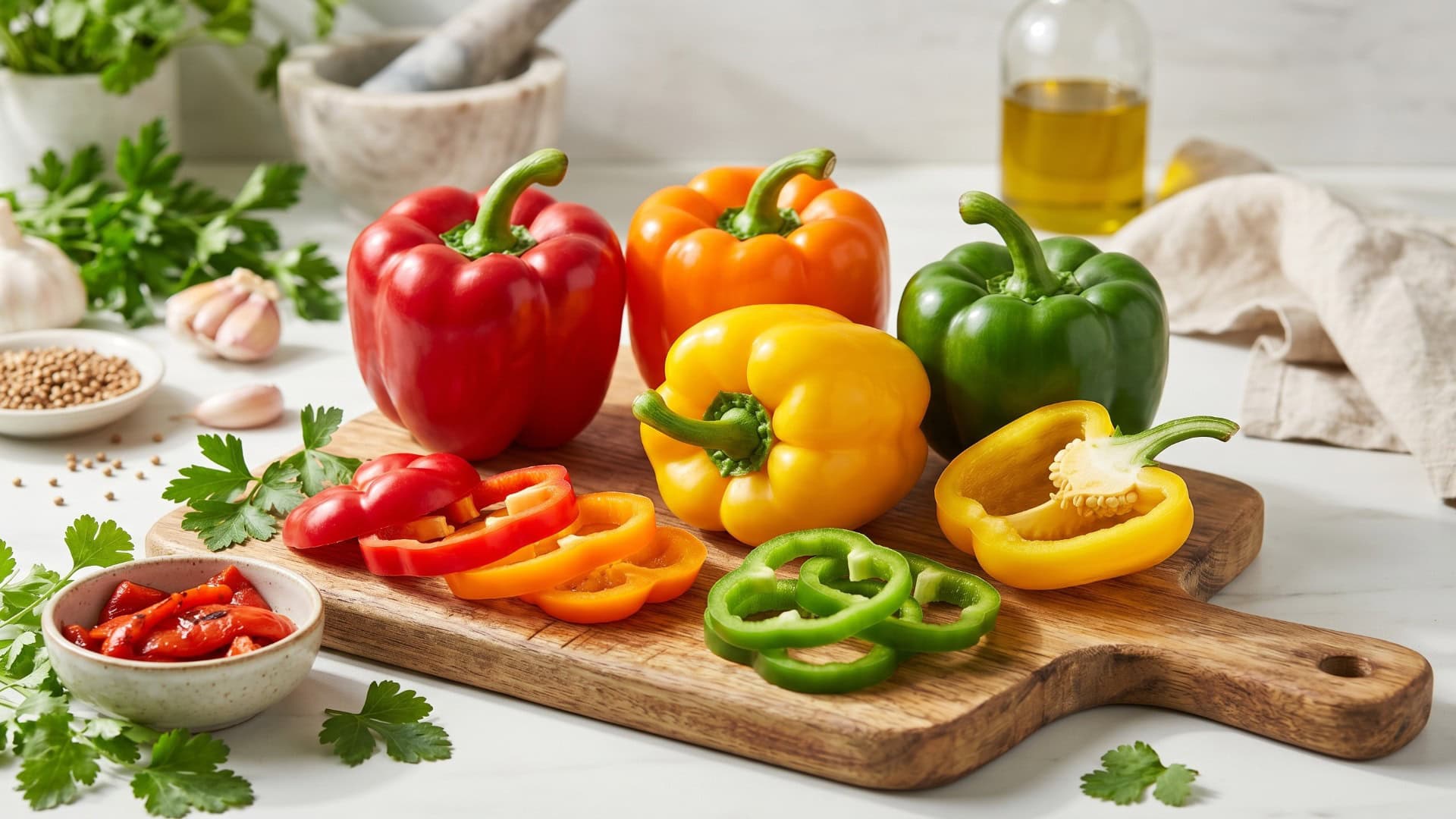
We see various colors of bell peppers in the market. Each color has its own taste and nutritional value. Let us learn about these different varieties.
Green Bell Peppers
Green bell peppers are actually unripe capsicums. Farmers harvest them before they fully ripen. Their taste can be slightly bitter or pungent.
They still add a wonderful flavor to cooked dishes. Green bell peppers have less sweetness compared to other colors. They are also usually the most affordable option.
Red Bell Peppers
Red bell peppers are fully mature vegetables. They spend the longest time ripening on the vine. This makes them the sweetest variety available.
Red capsicums contain the highest level of nutrients. They are rich in beta-carotene and vitamin C. They are the perfect choice for raw salads or roasting.
Yellow Bell Peppers
Yellow bell peppers sit right in the middle of the ripening process. They taste sweeter than green peppers. However, they are slightly less sweet than red ones.
Their beautiful color adds a bright appeal to any meal. They provide a great source of vitamin C and antioxidants. Yellow peppers work wonderfully for light cooking or grilling.
Orange Bell Peppers
Orange bell peppers are a cross between yellow and red varieties. They taste quite sweet and have a fruity flavor profile.
You can easily chew them raw. Children often find the sweet taste very appealing. People frequently use orange peppers in fresh salads.
Purple and Specialty Bell Peppers
You do not see purple bell peppers in the market very often. They are a specialty variety of capsicum. They have a slightly earthy flavor.
Farmers also grow white, brown, or chocolate-colored bell peppers. Chefs mainly use them for food decoration or special recipes. They often turn green when you cook them.
Nutritional Value of Bell Peppers
Bell peppers are a massive storehouse of nutrition. They contain a wide variety of essential nutrients. We have discussed the detailed nutritional breakdown below.
Calories and Macronutrients
Bell peppers have an incredibly low calorie count. One cup of chopped bell peppers contains only 30 to 40 calories. Water makes up the majority of their weight.
The carbohydrate content is also quite low. They contain almost zero fat. This makes them an ideal food for weight management.
A Vitamin C Powerhouse
We usually eat lemons or oranges for vitamin C. However, bell peppers contain more vitamin C than oranges. Red bell peppers specifically hold the highest amount.
They can easily fulfill your daily vitamin C requirement. Eating them regularly keeps your skin glowing. They also strengthen your teeth and gums.
Vitamin A and Carotenoids
Bell peppers provide a high amount of vitamin A. This nutrient is extremely beneficial for your eyes. The beta-carotene in them converts into vitamin A inside your body.
Trusted health portals like Healthline highlight bell peppers as excellent for eye health. They actively help prevent night blindness.
Antioxidants and Plant Compounds
These colorful vegetables contain antioxidants like quercetin and luteolin. These compounds protect your body cells from damage.
Antioxidants destroy free radicals in the body. This reduces the risk of severe diseases like cancer. You need to eat them for long-term health and wellness.
Fiber and Essential Minerals
Bell peppers contain a good amount of dietary fiber. This keeps your digestive system healthy. Fiber actively helps eliminate constipation.
They also contain minerals like potassium, folate, and iron. Potassium plays a key role in controlling blood pressure. Folate is absolutely essential for pregnant women.
Top Health Benefits of Bell Peppers
Adding bell peppers to your diet brings amazing health benefits. We have highlighted the main benefits below.
Boosts the Immune System
Your immune system needs to be strong to keep you healthy. The vitamin C in bell peppers does this job perfectly. It helps produce white blood cells.
White blood cells protect your body from various infections. You can eat capsicum regularly to avoid winter colds and coughs. It will also help you recover faster.
Improves Eye Health and Vision
Our eyesight tends to weaken as we age. The lutein and zeaxanthin in bell peppers help preserve your vision.
These components protect your eyes from harmful blue light. They also help reduce the risk of cataracts. Eat colorful capsicums daily to support your eye health.
Packed with Antioxidants
The antioxidants in bell peppers clean your body from the inside out. They help delay the aging process. They prevent wrinkles and early signs of aging on your skin.
Antioxidants are necessary to ensure normal cell growth. Regular consumption of bell peppers will help you maintain your youthfulness for a long time.
Supports Heart Health
A healthy diet is essential for a strong heart. The potassium in bell peppers keeps blood pressure in check. It helps relax your blood vessels.
The fiber in them lowers bad cholesterol in the blood. This significantly reduces the risk of heart attacks or strokes. It is a very safe food for heart patients.
May Help Reduce Inflammation
Chronic body inflammation causes many diseases. Arthritis or joint pain is a major one. Bell peppers contain powerful anti-inflammatory properties.
These elements reduce body pain and swelling. You can find relief from various bodily inflammations by eating capsicum regularly.
Aids in Healthy Weight Management
You need to choose low-calorie foods if you want to lose weight. Bell peppers are a top choice for this. The fiber in them keeps your stomach full for a long time.
As a result, you do not feel hungry frequently. You can easily avoid eating extra food. This greatly assists in healthy weight loss.
Bell Peppers and Immunity: Why Vitamin C Matters
Vitamin C is a crucial nutrient for our body. Our body cannot produce vitamin C on its own. We must get it through our food.
Bell peppers are one of the best natural sources of vitamin C. Vitamin C strengthens our immune system. It produces collagen to maintain the structure of skin, blood vessels, and bones.
Collagen is a protein that helps heal wounds quickly. Your body needs vitamin C to dry up cuts or sores. You can easily get this vitamin by mixing raw bell peppers into your salad.
Bell Peppers for Eye Health and Healthy Aging
Our eyes are a priceless asset. Issues like macular degeneration often appear as we age. Capsicum can prevent this problem.
The vitamin A in it keeps the retina of the eye healthy. The eye cells get nourishment when you eat colorful capsicums regularly. It is highly beneficial for people who work continuously on computers.
Your body needs adequate nutrition for healthy aging. The vitamins and minerals in capsicum keep older people feeling fresh. It boosts their digestion and keeps their bodies active.
The Antioxidant Power of Colorful Bell Peppers
Antioxidants are magical compounds that cleanse the body from the inside. Each color of capsicum carries different antioxidants.
Red capsicums contain a special compound called capsanthin. This creates their red color and acts as a strong antioxidant. Yellow capsicums contain violaxanthin.
These different elements work together to protect the body. They reduce oxidative stress and save the body from diseases like cancer. Mixing different colored capsicums in your food is a smart idea.
Explaining the Different Colors of Bell Peppers
Many people wonder why capsicums have different colors. Let us simply understand the science behind this color variation.
Green vs. Red Bell Peppers
A green capsicum is basically a raw or unripe vegetable. It starts to ripen when left on the plant longer. Chlorophyll decreases, and red pigments form during ripening.
It has slightly fewer nutrients while in its green state. Both its vitamins and sweet taste increase when it turns red. Therefore, red capsicum is ahead in terms of nutritional value.
Yellow and Orange Bell Peppers
Yellow and orange capsicums are primarily varieties of the crop. Sometimes they also turn yellow or orange as they transition from green to red.
They contain higher amounts of lutein and beta-cryptoxanthin. These colored capsicums fit perfectly in salads or light cooking. They have a very fresh and sweet taste.
Which Bell Pepper is the Most Nutritious?
Red capsicum is the absolute best when judged by nutritional value. It ripens in the sun for the longest time. Because of this, it stores the maximum amount of vitamin C and antioxidants.
However, this does not mean other colors are useless. Green or yellow capsicums also have their own great benefits. You can choose any color based on your preference and recipe.
Ways to Use Bell Peppers in Cooking
Capsicum is a highly versatile vegetable in the kitchen. You can add it to your meals in many different ways.
In Salads and Fresh Dishes
Raw capsicum is wonderfully crunchy. You can chop it and mix it into a salad. Adding lemon juice and olive oil enhances its flavor even more.
You can add sliced capsicum inside sandwiches or burgers. It brings a refreshing vibe to the food. You can also eat raw capsicum with dipping sauces for an afternoon snack.
In Stir-Fries and Sautéed Recipes
Capsicum is very popular in Asian and Chinese cuisines. It fits perfectly in stir-fries or quick-sautéed recipes. You can fry it with chicken or beef.
It cooks very quickly. It is best to add it at the very end of cooking. This preserves the capsicum’s nutrition and crunchiness.
In Soups and Stews
You can use capsicum to enhance the flavor of soups. It makes the soup thick and tasty. Its flavor feels amazing, especially in hot winter soups.
You can cut capsicum into large pieces and add them to stews or meat gravies. It makes the meat smell much more appetizing. It melts during cooking, making the broth delicious.
Stuffed Bell Pepper Recipes
Stuffed capsicum is a brilliant and popular dish. First, remove the seeds from the capsicum. Then you fill it with a mixture of meat, cheese, or vegetables.
You then bake it in the oven. It tastes just as good as it looks. Guests will highly appreciate this item if you serve it at a party.
Roasted Bell Peppers for Extra Flavor
The flavor completely changes when you roast or char a capsicum. The heat from the fire beautifully brings out its sweet inner flavor.
You can roast it on a gas stove or in an oven. You must discard the thin charred skin on top after roasting. This roasted capsicum adds a wonderful taste to pasta or pizza.
Popular Bell Pepper Recipes
Here are some popular capsicum recipes that you can easily make at home.
Stuffed Bell Peppers
This recipe is very easy to make. First, take a few large capsicums. Cut off the top and clean out the seeds inside.
Now mix cooked minced meat, rice, and cheese together to make a filling. Stuff the capsicum with this filling and bake in the oven for 20 minutes. Your delicious stuffed capsicums will be ready.
Bell Pepper Stir-Fry
Heat a little oil in a pan. Add chopped onions and cubed capsicums of various colors. Fry for 2 to 3 minutes with a little soy sauce, black pepper, and salt.
You can add boiled chicken pieces to this if you want. It tastes great with rice or bread. You can make it very quickly when you are short on time.
Roasted Bell Pepper Soup
Roast a few red capsicums in the oven or on the stove. Peel off the charred skin and blend it into a paste. Fry minced garlic with a little butter in a pot.
Now add the capsicum paste and chicken broth, and boil for a while. Drizzle a little fresh cream on top before taking it off the stove. Your delicious, healthy soup is ready.
Fresh Bell Pepper Salad
Chop the cucumber, tomatoes, and capsicum into small pieces in a bowl. Mix a little lemon juice, salt, black pepper, and olive oil with it.
This is a perfect salad for those on a diet. It is very refreshing and extremely low in calories. You can easily make and eat it for lunch or dinner.
Raw vs. Cooked Bell Peppers: Which is Better?
Capsicum is beneficial in both raw and cooked forms. There is a slight difference in nutrition, however. Vitamin C remains intact in raw capsicum.
Heat destroys vitamin C. You should eat it raw if you want to get the most vitamin C. On the other hand, cooking breaks down its cell walls.
As a result, your body can easily absorb the lycopene or beta-carotene present in it. You should eat capsicum both raw and cooked for optimal health.
Bell Peppers vs. Chili Peppers: Key Differences
Bell peppers and chili peppers belong to the same family. There is one major difference between them, though. Chili peppers contain a chemical compound called capsaicin.
This capsaicin is primarily responsible for the spicy taste of chilies. Bell peppers do not contain this compound at all. Because of this, bell peppers are sweet and do not taste spicy.
In terms of size, bell peppers are usually much larger and rounder. Chili peppers, on the other hand, tend to be elongated and smaller in shape.
How to Choose Fresh Bell Peppers
Buying good-quality capsicums from the market is very important. There are a few simple ways to pick the right capsicums.
Signs of Freshness
The skin of a fresh capsicum is very smooth and shiny. It will feel slightly heavy when you hold it. Its stem should remain green and fresh.
Do not buy it if the skin is wrinkled. Avoid soft or bruised capsicums. The shiny, firm capsicums are always of the highest quality.
Best Colors for Different Recipes
The color of capsicum you need depends on what you are cooking. Red or yellow colors are best for salads or eating raw. This is because they are naturally sweet.
Green capsicum works wonderfully for cooking or frying. Its pungent flavor suits curries perfectly. You can choose any large-sized capsicum for stuffing.
Avoiding Common Buying Mistakes
Many people think that the largest capsicums are the best. The flavor can actually decrease if it is excessively large. It is better to buy medium-sized capsicums.
Also, check carefully before buying pre-packaged capsicums. Sometimes rot can start on the inside of the package. Hand-picking them from an open market is the safest option.
Proper Tips for Storing Bell Peppers
You need to know proper storage methods to keep capsicums fresh for longer. Here are some effective tips.
Refrigerator Guidelines
You should keep whole capsicums in the crisper drawer of your refrigerator. Wrap them loosely in a plastic bag. Make sure to poke a few holes in the bag to allow air circulation.
They will stay good for one to two weeks this way. After cutting, wrap the capsicum in a paper towel and store it in an airtight container in the fridge. It is best to eat chopped capsicum quickly.
Freezing Bell Peppers
You can also store capsicums in the deep freezer. First, wash and dry the capsicums thoroughly. Then cut them into your preferred shapes.
Put the cut pieces in a ziplock bag and place them in the deep freeze. They will stay good for several months if stored this way. You cannot eat them in salads after taking them out of the freezer, but they work perfectly for cooking.
Extending Shelf Life
Never store capsicums while they are wet. They will rot very quickly if they come into contact with water. Wipe them thoroughly dry before putting them in the fridge.
Do not store them with other fruits like apples or bananas. The ethylene gas released from the fruits can ripen the capsicums too quickly and ruin them.
Potential Side Effects and Precautions
While bell peppers are extremely healthy, they might not be equally beneficial for everyone. You need to take precautions in some specific cases.
Nightshade Sensitivity
Bell peppers are a plant in the nightshade family. Potatoes, tomatoes, and eggplants also belong to this family. Many people have sensitivities to these nightshade vegetables.
Some people with arthritis or joint problems believe that eating nightshades increases their pain. There is no solid scientific proof for this yet. You should consult a doctor if you suspect an issue.
Digestive Considerations
Eating too much raw capsicum can cause gas or bloating in some people. Green capsicums, in particular, are hard for many people to digest.
This happens because they contain a lot of fiber. You should eat well-cooked capsicums if you face such problems. Cooking softens the fiber and makes digestion easier.
Allergic Reactions
An allergy to capsicum is very rare. However, some people might be allergic to it. Eating it might cause skin rashes, itching, or breathing difficulties.
People who have pollen allergies often experience cross-reactivity. You should immediately visit a doctor if you notice any such symptoms.
Frequently Asked Questions About Bell Peppers
People often have some common questions about capsicums. Here are the answers to a few such questions.
Is it healthy to eat bell peppers every day?
Yes, eating bell peppers every day is completely healthy. It helps meet your daily vitamin and mineral requirements. You should eat every food in moderation, though.
Which color of bell pepper is the healthiest?
All bell pepper colors are healthy. Red bell peppers, however, take the lead in terms of nutritional value. They contain the highest amounts of vitamin C and antioxidants.
Can bell peppers help with weight loss?
They definitely can. They have very low calories and high fiber. This keeps the stomach full and helps boost metabolism. Therefore, they are highly effective for a weight-loss diet.
Bell Peppers Around the World
Bell pepper is an essential ingredient in cuisines all around the world. Let us look at how different culinary traditions use it.
Bell Peppers in Mediterranean Cuisine
Mediterranean food uses a lot of vegetables. They roast capsicums and serve them with olive oil and garlic. The presence of raw capsicum in Greek salads is very noticeable.
Bell Peppers in Asian Food
Asian food, especially Chinese and Thai cuisines, seems incomplete without capsicum. It is a main ingredient in sweet-and-sour chicken or chili paneer. It brings a beautiful color and crunch to the dishes.
Bell Peppers in Latin American Cooking
It is also widely used in Mexican and Latin American cuisine. Capsicum is absolutely essential for making fajitas or salsa. They love to eat it fried with various meats.
Final Thoughts on Bell Peppers
We learned a lot about the qualities of bell peppers from our discussion today. Let us look at a quick summary of the whole topic.
Key Takeaways
A bell pepper is not just a tasty vegetable; it is a nutritional powerhouse. The vitamin C, vitamin A, and antioxidants in it keep the body healthy. You can eat it both raw and cooked.
Why Bell Peppers Deserve a Place in Your Diet
Eating good food is necessary for leading a healthy and disease-free life. Bell peppers protect your body from various complex diseases. They keep your heart healthy, your eyes strong, and your skin glowing.
Simple Ways to Enjoy More Bell Peppers Daily
You can easily add it to your daily meals. Chop it up and add it to your morning omelet. Eat it with a salad for lunch. Enjoy raw capsicums with a dipping sauce as an afternoon snack. You can eat this wonderful superfood every day with just a little creativity.