The Future is Now: Top 10 Technology Trends Shaping the World
Introduction
Technology is no longer just a sci-fi concept of the future. It has become the most important and inseparable part of our present reality. Every single day, new innovations are making our lifestyles easier, faster, and significantly better.
We are currently living in an era where the pace of change is faster than at any other time in history. From smartphones to artificial intelligence, everything is shifting the way we go about our daily routines. To survive and thrive in this rapidly changing world, staying up to date on the latest technological trends is essential.
Why Technology Trends Matter More Than Ever
Today, technology trends are not just for IT experts. They are equally important for business owners, professionals, students, and ordinary people. Understanding these trends makes it possible to anticipate future opportunities and challenges well in advance.
For example, those who understood the importance of cloud computing or digital marketing a few years ago are far ahead in their businesses today. New technologies increase our working efficiency and save valuable time. Therefore, keeping up with technological trends is a necessity to remain competitive in today’s global landscape.
How Innovation is Accelerating Global Change
Innovation is no longer confined to a specific laboratory or country. It is now a global process transforming the world simultaneously. New software or hardware created in one country spreads across the globe in a matter of moments.
These innovations are bringing revolutionary changes to fundamental sectors like healthcare, education, agriculture, and communication. Alongside developed nations, developing countries are advancing rapidly thanks to technology. As a result, the standard of living for people is improving, and entirely new employment opportunities are being created.
What Defines a Major Technology Trend?
When we talk about a technology trend, we generally refer to a technology that has a long-lasting impact on society and the economy. It is not just a temporary hype or a passing gadget. It is a powerful current that completely alters our methods of working, communicating, and thinking.
Major technology trends usually emerge from combining multiple smaller innovations. When these work together, they trigger a massive shift or a revolution. The internet, smartphones, and social media are prime examples of major technology trends, both past and present.
Understanding Disruptive vs. Incremental Innovation
In the world of technology, innovation primarily happens in two ways. One is disruptive innovation, and the other is incremental innovation. Understanding the difference between these two is highly important.
Disruptive innovation is something that completely changes the entire market system. Digital cameras replacing film cameras is a perfect example of this. On the other hand, incremental innovation refers to the gradual improvement of an existing technology. A new smartphone model or a software update represents incremental innovation.
How Trends Shape Industries and Daily Life
Any major technological trend rapidly changes the workflow of various industries. From factory production lines to the banking sector, the touch of technology is visible everywhere. As a result, work speed increases and the margin of error decreases significantly.
The impact on daily life is also massive. How we shop, how we enjoy entertainment, and how we commute all depend on these trends. Smart home devices and online shopping platforms have made our lives far more comfortable than ever before.
1. Artificial Intelligence (AI) Everywhere
Artificial intelligence, or AI, is no longer an imaginary concept. It has entered almost every aspect of our daily lives. From waking up in the morning to going to sleep at night, we are using AI in one way or another.
Currently, smartphone face unlock features, voice assistants, and social media news feeds are all controlled by AI. It analyzes data to understand our preferences and needs. Consequently, our daily tasks have become much easier and highly personalized.
Integration of AI Across Industries
Artificial intelligence has brought a massive revolution across various industries. In the healthcare sector, AI is being used to detect early signs of diseases and to research new life-saving drugs. The World Health Organization (WHO) has repeatedly mentioned the immense potential of AI in the health sector in its various reports.
In the manufacturing industry, AI-controlled robots are working with absolute precision. Retailers are using AI to understand customer demand and manage their stock efficiently. The banking sector is also heavily utilizing artificial intelligence to prevent fraud and improve customer service.
How AI is Becoming an Everyday Tool
In our personal lives, AI is now a common and indispensable tool. When we use Google Maps to find the fastest route to our destination, it is primarily AI doing the work. The video recommendations provided by YouTube or Netflix, tailored to our tastes, are the result of advanced AI algorithms.
Furthermore, smart home devices are listening to our commands to turn off lights or play music. From filtering spam emails to helping us find the right products while shopping online, AI is constantly assisting us. It is slowly becoming a trusted companion in our everyday lives.
2. Generative AI and Creative Automation
Generative AI technology has completely changed the concept of creative worldwide. It is a technology that can generate human-like text, images, audio, and code. Tools like ChatGPT and Midjourney are fantastic examples of this capability.
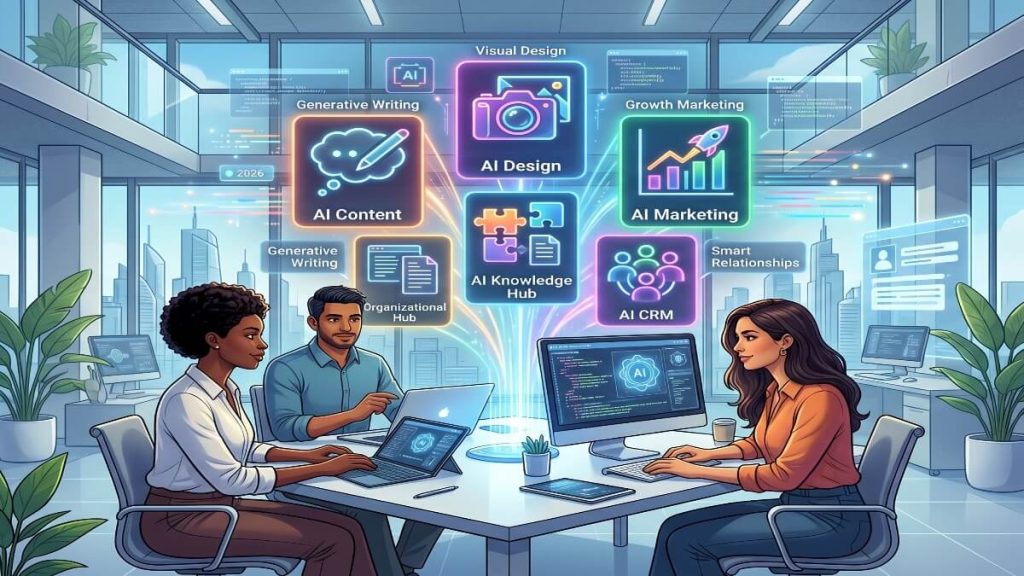
This technology does not just provide pre-programmed answers; it can create something entirely new. As a result, creative tasks can be completed much faster and at a significantly lower cost. Writers, designers, and programmers are actively using generative AI to enhance the quality of their work.
Content Creation, Design, and Code Generation
Generative AI has brought a massive shift in the field of content creation. It is now possible to write a complete article or a professional email within seconds. It helps writers generate new ideas and quickly draft their initial write-ups.
Designers are creating amazing images and graphics using generative AI. By simply providing a few instructions or prompts, the AI delivers flawless designs. Similarly, programmers are using AI tools to write code and detect bugs, which greatly speeds up their workflow.
The Rise of AI-Driven Creativity
Creativity was once considered a uniquely human trait. However, the rise of AI-driven creativity is challenging this very notion. AI is now writing beautiful poetry, composing great music, and painting dazzling artworks.
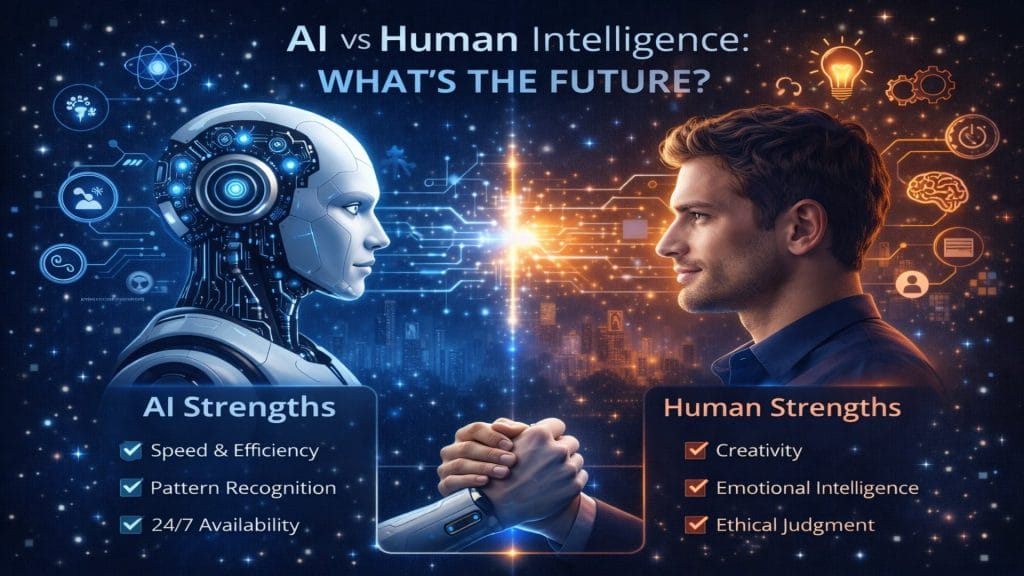
Of course, AI is not completely replacing human creativity. Instead, it is acting as a supportive tool. Artists are using AI to give new shapes to their imagination. It is expanding creativity and providing it with a completely new dimension.
3. Internet of Things (IoT) and Smart Ecosystems
The Internet of Things (IoT) is a technology that connects everyday objects to the internet. When your home refrigerator, air conditioner, or car can be controlled via a smartphone through the internet, that is IoT in action.
This technology creates a smart ecosystem where devices can communicate with each other seamlessly. It makes our lifestyle much more automated and convenient. By using IoT technology, we can save significant time and energy.
Connecting Devices, Homes, and Cities
IoT technology started with small devices, but today it is connecting entire cities. With a smart home system, you can control lights, fans, or security cameras from outside your house. This is a groundbreaking solution for home security.
Similarly, smart cities are using IoT sensors to monitor traffic control, waste management, and power supply. According to Gartner, billions of IoT devices will be active worldwide within the next few years. As a result, cities will become much more livable and eco-friendly.
Real-Time Data for Smart Living
The biggest advantage of IoT devices is that they provide real-time data. Your smartwatch constantly measures your heart rate and step count to provide you with instant information. Through this, you can instantly know about your current health status.
Farmers are using IoT sensors to get real-time data on soil moisture and weather conditions. This helps them apply irrigation and fertilizer at exactly the right time. Real-time data plays a crucial role in helping us make the right decisions and solve any problems quickly.
4. 5G and Next-Generation Connectivity
5G or the fifth generation of mobile networks has initiated a new era in the world of internet connectivity. It is many times faster and more powerful than the previous 4G network. 5G is not just providing high-speed internet, but it is also paving the way for brand-new technologies.
Through this network, massive files can be downloaded in seconds. It has simplified high-data tasks like virtual reality and cloud gaming. 5G technology is connecting the modern world much more deeply and seamlessly.
Ultra-Fast Internet and Low-Latency Networks
The biggest features of the 5G network are its ultra-fast speed and low latency. Low latency is the minimum time it takes for a command to be executed after it is issued. In 5G, latency has dropped to almost zero.
Because of this, sensitive tasks like robotic surgery from a remote location can be performed flawlessly. There is no longer any buffering or lag during video calls or live streaming. This ultra-fast internet is completely changing the way people work and consume entertainment.
Enabling Smart Cities and Autonomous Systems
The successful implementation of modern technologies like smart cities and driverless cars is almost impossible without 5G. An autonomous or driverless car needs to exchange data with surrounding cars and traffic signals within milliseconds. The 5G network guarantees this rapid communication.
In a smart city, thousands of sensors and cameras work together simultaneously. 5G is absolutely essential to quickly process the massive amount of data coming from these devices. It provides a strong foundation for modern urbanization and automated systems.
5. Cloud Computing and Edge Computing
Cloud computing technology has changed our concept of data storage and software usage. Large hard drives or overly powerful computers are no longer strictly necessary. As long as you have internet, you can work from anywhere via cloud servers.
On the other hand, edge computing is an advanced form of cloud technology. Instead of sending data to a distant central server, it processes it closer to the device, at the “edge.” The combination of these two technologies has significantly strengthened the current global IT infrastructure.
Scalable Digital Infrastructure for Businesses
For business organizations, cloud computing is a true blessing. It gives companies the ability to scale their IT resources up or down as needed, a capability known as scalability. From small startups to massive corporate enterprises, everyone is using cloud servers today.
As a result, companies do not have to spend a fortune building their own servers or data centers. Platforms like Amazon Web Services (AWS) and Google Cloud are storing data with extreme security. This reduces business costs and multiplies work efficiency.
Faster Data Processing at the Edge
Sending all data to a remote cloud server for processing takes time. But through edge computing, data is processed right where it is generated. As a result, data processing becomes much faster, reducing strain on the internet.
Edge computing is extremely important for smart cameras, drones, and industrial robots. This is because these devices need to make split-second decisions. Using edge computing allows these devices to operate with near-zero latency.
6. Cybersecurity and Digital Privacy
As technology advances, the risk of cyberattacks is increasing every day. Hackers are constantly trying to steal people’s personal data and bank accounts using new methods. Therefore, cybersecurity is now one of the major topics of discussion in the tech world.
Maintaining digital privacy has now become a fundamental right for every individual. Everyone needs to be aware so that their personal information does not fall into the wrong hands. Large organizations are now investing huge amounts of money to keep their customers’ data secure.
Data Protection in an Increasingly Connected World
Almost every device we own is now connected to the internet. Consequently, hackers can gain access to an entire network through a single weak device. Ensuring data protection in this increasingly connected world is a massive challenge.
Tools like data encryption, two-factor authentication, and firewalls play a vital role in protecting data. Users also need to be conscious about using strong passwords and not clicking on suspicious links. A safe internet environment is absolutely essential for everyone.
Zero-Trust Security Models and Advanced Protection
In the field of cybersecurity, the “Zero-Trust” model has become increasingly popular. The core principle of this model is “trust no one, always verify.” This means that even a company’s own employee is strictly verified before accessing the system.
In this method, every user and device is continuously monitored. Using AI, it is possible to predict cyberattacks and detect unusual activity very quickly. For advanced protection, this is now the first choice of top organizations worldwide.
7. Blockchain and Decentralized Technologies
Many people understand blockchain to mean only Bitcoin or cryptocurrency. However, it is actually a completely new method of data storage. A blockchain is a decentralized ledger in which information is linked together in blocks, much like a chain.
Once any information is stored on a blockchain, it is almost impossible to alter or delete it. It is extremely secure and very difficult to hack. This decentralized technology is bringing a massive shift to traditional banking and data management systems.
Beyond Cryptocurrency Applications
The use of blockchain is no longer limited just to digital currency. Its widespread application has begun in supply chain management. Where a product was manufactured and how it reached the buyer can be tracked flawlessly through a blockchain.
In the healthcare sector, blockchain is being used to securely store patients’ medical records. Additionally, smart contracts enable agreements or transactions to be completed without the help of any third party. This saves both time and money in business operations.
Trust, Transparency, and Digital Identity
Trust is a major factor in any transaction or contract. Blockchain technology ensures this trust and transparency 100%. All information here remains open to everyone involved, leaving no room for fraud.
Blockchain is also bringing a revolution in creating digital identities. We often have to share a lot of personal information to prove our identity online. But through blockchain, we can use a digital identity while perfectly maintaining the privacy of our actual data.
8. Robotics and Automation
Robots and automated systems are the primary driving forces behind the current industrial revolution. There was a time when robots were only used for heavy lifting in factories. But today, modern robots can perform highly delicate and intelligent tasks.
Due to advancements in artificial intelligence and sensor technology, robots are now working side by side with humans. Automation is freeing people from the monotony of repetitive tasks. It is significantly increasing the speed and accuracy of any job.
Smart Machines in Industry and Daily Life
In industrial factories, smart machines rule everywhere from car manufacturing to packaging. According to a Forbes report, many companies are now using fully robotic systems for logistics and warehouse management. They can transport goods much faster and more safely than humans.
We are also seeing robots used in our daily lives. Robot vacuum cleaners for house cleaning are now present in many homes. Small robots are even being used for tasks like serving food in restaurants and delivering medicine to patients in hospitals.
The Future of Work and Automated Systems
There are many questions in people’s minds regarding what the future of work will look like due to automation. Some traditional jobs will indeed become extinct due to automation. However, alongside this, many new employment opportunities are being created.
Future workers will need to learn new skills to manage robots and AI systems. People will be able to leave routine tasks to machines and focus much more on creative and strategic work. This is opening the door to new possibilities for human civilization.
9. Augmented Reality (AR) and Virtual Reality (VR)
Augmented Reality (AR) and Virtual Reality (VR) technologies are redefining our very definition of reality. By putting on a VR headset, you can enter a completely different virtual world. It gives you the experience of actually being present in that specific environment.
On the flip side, AR technology overlays digital information or images onto the real world around us. Pokémon Go and Snapchat filters are common examples of AR technology. These technologies are not just for entertainment; they are incredibly effective for learning and professional work.
Immersive Digital Experiences
AR and VR technologies offer users a completely immersive digital experience. E-commerce websites are now using AR technology to improve the shopping experience. You can use AR from your home to see exactly how a new sofa will look in your living room.
Real estate companies are using VR to give clients virtual tours of houses from afar. Museums and historical sites are providing detailed information to visitors using AR guides. These digital experiences are making the lives of everyday people much more enjoyable.
The Future of Entertainment, Education, and Work
The use of VR technology is highest in the gaming and entertainment industries. It literally takes gamers inside the game. However, its role in education is also extraordinary. Medical students can use VR to practice virtual surgeries without any real-world risks.
In the workplace, engineers wearing AR smart glasses can see the blueprints of complex machines right in front of their eyes in real-time. For remote work, VR meeting rooms give colleagues the feeling that everyone is sitting at the very same table. This has made remote collaboration much easier and highly realistic.
10. Green Technology and Sustainable Innovation
Green technology, or green tech, is the most necessary technological trend in the world today. There is no alternative to this technology if we want to save the Earth from the harmful impacts of global climate change. It is technology that fulfills human needs without harming the environment.
Green technology is doing an excellent job in reducing carbon emissions, managing waste, and preventing pollution. Major companies are now adopting sustainable methods to run their operations. This is the best way to ensure a livable planet for our future generations.
Climate-Centric Technological Solutions
Technology is currently the most powerful weapon in the fight against the climate crisis. Using carbon-capturing technology, harmful carbon dioxide is being absorbed directly from the air. Electric vehicles (EVs) have gained massive popularity worldwide, significantly reducing air and noise pollution.
Smart grid technology is being used to prevent electricity waste. Through precision farming, it is possible to produce more crops using much less water and fertilizer. These solutions are directly contributing to environmental protection.
Renewable Energy and Eco-Friendly Systems
The main goal of green technology is to reduce reliance on fossil fuels and increase the use of renewable energy. Solar power and wind power are now much more affordable and accessible than before. By installing solar panels on rooftops, many people are now generating their own necessary electricity.
Advanced battery technology is helping to store this renewable energy for long periods. Moreover, the use of biodegradable plastics is greatly reducing environmental pollution. These eco-friendly systems will be the foundation of our future Earth.
Benefits of Emerging Technology Trends
New technologies have brought countless positive changes into our lives. They have not only made work easier but have also multiplied the standard of living for humans. It is through the proper use of technology that human society has reached the peak of development so quickly.
From the expansion of education to modern medical services, everything is a contribution of technology. The biggest advantages of these technology trends are discussed in detail below.
Increased Efficiency and Productivity
The greatest benefit of technology is that it magically increases human work efficiency and productivity. Tasks that used to take days to complete can now be done in hours using automation and AI. This saves both valuable time and physical labor.
Companies can use data analytics to figure out their business weaknesses. This makes it easier to make correct decisions and minimizes waste. In our personal lives, too, we can manage our time effectively by using various productivity apps.
Enhanced Connectivity and Global Collaboration
The internet and cloud technology have turned the whole world into a small village, often referred to as a global village. You can sit in any corner of the world and communicate or work instantly with people on the other side of the planet. This enhanced connectivity has given a new dimension to global collaboration.
Scientists and researchers can now exchange information online and solve problems very quickly. Employees of multinational companies are based in different countries around the world and work together on the same project. This is playing a tremendous role in cultural exchange and maintaining global peace.
Innovation-Driven Economic Growth
New technologies create new markets and entirely new business opportunities. The startup culture is essentially the product of this technological innovation. E-commerce, ride-sharing, and fintech organizations have generated employment for thousands of people.
These technology-based businesses are making a massive contribution to national economic growth. Digital payment systems have made the economy more dynamic and transparent. Thanks to technology, even small entrepreneurs now have the opportunity to sell their products in the international market.
Barriers to Rapid Technological Advancement
While technology has numerous benefits, its rapid advancement also brings drawbacks and barriers. If we cannot tackle these challenges effectively, technology might harm us rather than help us.
The biggest concern is whether technology is slipping out of human control. World leaders and tech experts must work together to solve these issues. Some of the major barriers are discussed below.
Ethical Concerns and AI Regulation
As artificial intelligence becomes more advanced, ethical concerns surrounding it are also increasing. AI systems often learn biased behaviors from human-generated data. This can lead to discrimination in hiring processes or even legal decisions.
Furthermore, using generative AI to create fake news and deepfake videos has become extremely easy now. These are major threats to society. Therefore, it is highly urgent to create strict international laws and regulations to ensure the proper and ethical use of AI.
Job Displacement and Workforce Transition
Because of automation and robotics, many traditional jobs are going extinct. The jobs of ordinary factory workers, data entry operators, and cashiers are being taken over by machines. As a result, there is a big fear of rising unemployment in society.
To handle this situation, workers need quick upskilling or the ability to learn new technologies. But not everyone can adopt new technology quickly. This is creating a major crisis or a transition period in workforce management.
Privacy and Security Risks
In the digital world, there is no 100% guarantee of the security of our personal information. Social media platforms collect our data without our full knowledge and sell it to various advertisers. This is a severe violation of human personal privacy.
Additionally, hackers breach the databases of various organizations to steal the sensitive information of millions of people. Smart home devices are sometimes hacked, completely destroying a family’s home privacy. Adopting advanced security measures to withstand cyberattacks is now one of our biggest challenges.
How Businesses Can Adapt to Future Technology Trends
The primary condition for survival in the business world is keeping up with the times. Companies that are slow to adopt new technologies disappear from the market very quickly. Famous companies like Nokia or Kodak are prime examples of this.
To adapt to future technology trends, businesses must make long-term plans. They need to step out of their traditional workflows and adopt digital methods. The processes of this adaptation are discussed below.
Investing in Digital Transformation
Digital transformation is no longer just an option; it is an absolute necessity. Business organizations must abandon their old software and manual methods and embrace modern cloud-based systems.
Although this requires some investment initially, it significantly reduces business costs in the long run. AI chatbots, data analytics, and ERP systems make business operations much more dynamic. Investing in the right technology is the ultimate key to a company’s future.
Upskilling and Workforce Development
Just bringing new technology into a company is not enough; employees must be skilled to use it. Therefore, organizations need to provide regular training to upskill and develop their workforce.
Employees must be made to understand that new technology is not a threat to their jobs, but a tool to make their work easier. If a tech-friendly work environment can be created, employees become much more confident. Without employee development, no company can become fully digital.
Building an Agile and Innovative Organization
To be prepared for the future, a company must definitely be agile. Agility refers to the ability to adapt very quickly to change. If there is a shift in the market or in technology, business strategies must be modified immediately.
An innovative environment must be heavily encouraged inside the organization. Employees should be allowed to share new ideas freely. The more a company embraces innovative thinking, the more successful it will be in the coming years.
The Future Beyond Current Technology Trends
The technologies we consider cutting-edge today will likely become outdated in 10 years. The evolution of technology is an ongoing process. Scientists are already working on technologies that are beyond our current imagination.
Future technologies will be even more precise, powerful, and environmentally friendly. Concepts like quantum computing and brain-computer interfaces will turn into reality very soon. These technologies have the potential to completely change the trajectory of human civilization.
Convergence of AI, Robotics, and Connectivity
The biggest change in the future will come through the convergence of various technologies. When AI, advanced robots, and 6G networks work together seamlessly, unbelievable magic will be created.
Imagine a city where autonomous cars talk to each other to bring traffic jams down to absolute zero. Direct connections are being established between the human brain and computers. These are no longer scenes from a science fiction movie; this will be our reality tomorrow.
What the Next Decade Might Look Like
The next decade will be the most thrilling time in human history. Space tourism might just come within the reach of ordinary people. According to MIT Technology Review, it will be possible to cure diseases from within the human body using nanotechnology in medicine.
The gap between humans and machines will decrease even further. Education, entertainment, and work environments could become completely virtual or holographic. In the next decade, technology will change our lives in ways we can’t even imagine today.
Frequently Asked Questions (FAQs)
What are the biggest technology trends right now?
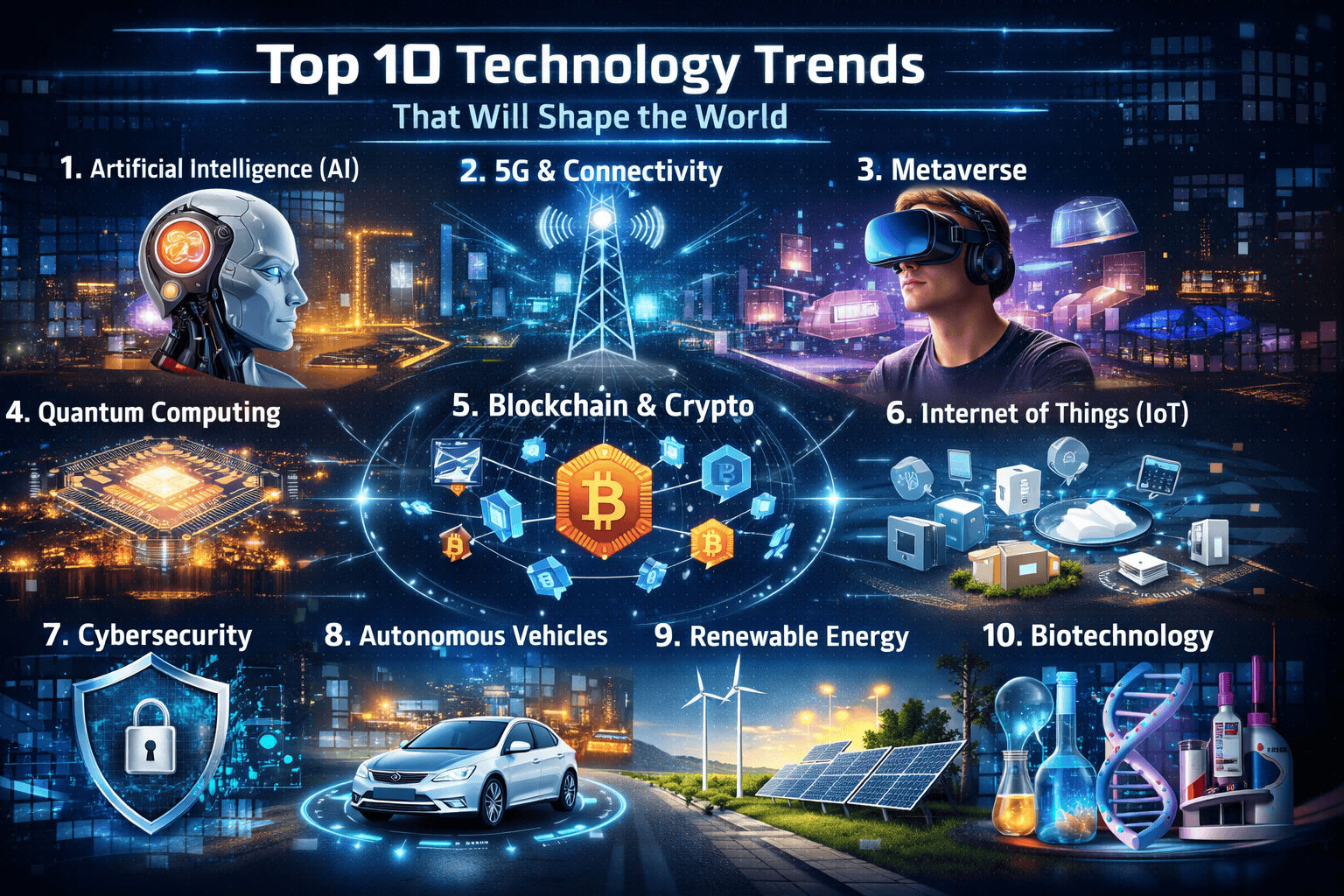
Currently, the most discussed and massive technology trends include Artificial Intelligence (AI), Generative AI, the Internet of Things (IoT), Cloud Computing, and 5G networks. In addition, green technology and cybersecurity are also considered highly critical trends.
How will AI change the future?
AI will automate repetitive human tasks and make the decision-making process far more accurate. It will create new discoveries in healthcare, automated transportation systems, and advanced personalized education. Simply put, AI will make every industry more efficient and much faster.
Which technologies will dominate the next decade?
In the next decade, technologies like quantum computing, advanced augmented and virtual reality (the metaverse), brain-computer interfaces, and 6G networks will dominate. Alongside this, fully automated robotics and genome editing technologies will have a massive impact.
How can businesses prepare for future trends?
Businesses need to invest in digital transformation right away. By adopting cloud technology, providing regular technical training to employees, and strengthening cybersecurity, they can remain fully prepared to face any future challenges.
What is the most important emerging technology?
Currently, Artificial Intelligence (AI), including Generative AI, is considered the most important emerging technology. This is because it multiplies the capabilities of other technologies (such as IoT, robotics, and data analytics) and can be applied across almost every sector.
Conclusion
We are passing through a truly historic time in this amazing journey of technology. From our discussion on the top 10 technology trends, it is crystal clear that the future is already standing at our doorstep. Artificial intelligence, 5G, or green technology, every innovation is reshaping our lives in new ways.
Instead of fearing these technologies, we must use them as tools for our own development. If we adopt the right technology at the right time, doors to limitless possibilities will open before us.
Key Takeaways from Global Tech Trends
Our biggest lesson from these trends is to build a mindset that adapts smoothly to change. Technology never stands still, so our learning process must also remain continuous. Instead of just being users of technology, we need to understand exactly how they work.
Technological development must happen while keeping ethics and the environment firmly in mind. Ensuring cybersecurity and the protection of personal data is no longer optional; it is mandatory. By utilizing these lessons, we can definitely create a secure future.
Preparing for a Rapidly Changing Digital Future
Now is the absolute best time to prepare yourself for the future digital world. Acquire new skills and study upcoming technology regularly. Business organizations must integrate continuous innovation into their operations.
We must always remember that technology cannot change anything on its own. The success of technology depends entirely on how humans choose to use it. Building an inclusive, secure, and sustainable digital future is a shared responsibility for all of us. Let us welcome new technology and fully prepare for the future.