Ajwain (Carom Seeds): Benefits, Uses, and Nutrition Guide
Our kitchens hide many ingredients that not only enhance the taste of food but also offer incredible health benefits. Ajwain or carom seeds are exactly this kind of magical spice. These tiny seeds possess a strong aroma, and their health benefits are equally extensive.
In this blog post, we will discuss all the details about Ajwain. If you want to stay healthy using natural methods, this spice can become your everyday companion. Let us explore the remarkable world of Ajwain in detail.
What is Ajwain (Carom Seeds)?
Ajwain is primarily a highly aromatic spice. It is the seed of a plant belonging to the Apiaceae family. Its scientific name is Trachyspermum ammi. Although it looks a lot like cumin, its taste and smell are completely different.
The taste of carom seeds is somewhat pungent and slightly bitter. Its fragrance carries a subtle hint of thyme leaves. This is because both spices contain a special compound called thymol.
These small, oval-shaped seeds are usually gray or green. In their raw form, they taste quite strong. However, when cooked or lightly roasted, their flavor becomes much softer and delicious.
History and Traditional Uses of Ajwain
Ajwain has been used in ancient medicine for thousands of years. It is highly valued, especially in Ayurvedic and Unani medicine. Ancient sages relied on this spice to cure various stomach ailments.
Traditionally, Ajwain is considered a digestion-boosting ingredient. In ancient India, it was a common practice to chew a pinch of Ajwain after a heavy meal. This helped digest the food quickly and prevented gas from building up in the stomach.
Additionally, Ajwain water was given to mothers after childbirth to keep their bodies healthy. It was believed to cleanse the body from the inside and boost immunity.
Why Ajwain is Popular in Indian and Middle Eastern Cuisines
Ajwain is an essential ingredient in the cuisines of the Indian subcontinent and the Middle East. Its intense aroma can make any ordinary dish extraordinary. However, this popularity is not just due to its taste but also to its health benefits.
In Indian cooking, Ajwain is used in lentils, vegetables, and various fried foods. A little Ajwain is mixed into the dough when making samosas or puris. As a result, these heavy foods are easily digested and do not cause stomach discomfort.
Carom seeds are also used in traditional breads and meat dishes in various Middle Eastern countries. It helps mask the strong odor of meat. At the same time, it helps preserve the food’s nutritional value.
Nutritional Value of Ajwain
Although Ajwain is small, it is a nutritional powerhouse. The various elements it contains help keep our bodies healthy in many ways.
According to the USDA and various nutrition scientists, Ajwain contains plenty of essential vitamins and minerals. Let us learn in detail about its nutritional value.
Calories and Macronutrients
The calorie content in Ajwain is quite low. Therefore, those who want to manage their weight can safely consume it.
Every 100 grams of Ajwain contains roughly 305 calories. However, we usually use a very small amount, like 1 or 2 grams. So, there is no need to worry about the calories coming into your body from it.
It contains an adequate amount of carbohydrates, proteins, and healthy fats. These proteins and fats help build our body’s cells and provide energy.
Essential Oils and Active Compounds
The most important part of Ajwain is its essential oil. The main component of this oil is thymol. Thymol is a highly potent antioxidant.
It is thymol that gives Ajwain its intense smell. It helps the body fight against harmful bacteria.
Additionally, it contains other active compounds like pinene, limonene, and gamma-terpinene. These ingredients are highly effective in reducing inflammation and relieving body pain.
Fiber and Micronutrients
Ajwain contains a high amount of dietary fiber. This fiber smooths our digestive process. Fiber is absolutely necessary to eliminate constipation.
It also contains important minerals like calcium, phosphorus, iron, and potassium. Calcium and phosphorus strengthen our bones.
On the other hand, iron helps treat anemia and improves blood circulation. Potassium plays a vital role in keeping our hearts healthy and controlling blood pressure.
Top Health Benefits of Ajwain
By consuming Ajwain regularly, we can avoid many health problems. Some of its main benefits are discussed below.
Helps Boost Digestion
Ajwain is best known for improving digestion. It stimulates the secretion of gastric juices in our stomach.
When gastric juices are secreted properly, food is broken down quickly and easily. Those who suffer from indigestion will get great results if they consume this regularly. Chewing a little Ajwain after eating heavy food relieves stomach discomfort.
Helps Reduce Bloating and Gas
Many people experience gas buildup and bloating after eating slightly heavy meals. Carom seeds are extremely effective in solving this type of problem.
Its anti-spasmodic properties relax the stomach muscles. As a result, trapped gas can easily escape. It also works like magic to reduce gas- and acidity-related stomach pain.
May Support Respiratory Health
Ajwain is quite beneficial for patients with various respiratory problems, such as asthma or bronchitis. It acts as a natural bronchodilator.
A bronchodilator is a medication that helps expand our airways. This makes the airflow to the lungs easier and relieves shortness of breath. Inhaling steam from Ajwain boiled in hot water quickly clears a blocked nose.
Possesses Antimicrobial Properties
The thymol and carvacrol present in Ajwain act as powerful antibacterial and antifungal agents. These help destroy harmful microbes.
Various studies by the National Institutes of Health (NIH) have shown that thymol helps prevent fungal infections. Applying Ajwain paste to minor cuts or skin infections speeds up healing.
It also keeps gut health in check by destroying harmful bacteria in our intestines. It is also effective in preventing food poisoning.
May Alleviate Cold and Cough Symptoms
During weather changes, it is rare to find someone who does not suffer from colds and coughs. A great natural solution for this common problem is Ajwain.
It acts as an excellent expectorant. This means it helps bring up mucus from the chest. Boiling Ajwain, basil leaves, and ginger together to make tea provides relief from sore throats and coughs.
Ajwain for Digestion: How It Works
It is quite fascinating to know how Ajwain simplifies our digestive process. Our stomachs produce various enzymes and acids to digest food.
When we eat Ajwain, its active compounds signal the stomach. Upon receiving this signal, the stomach begins producing digestive juices more rapidly. When the volume of digestive juices increases, food breaks down quickly.
As a result, food does not remain in the stomach for long and does not have a chance to undergo fermentation. Without fermentation, gas is not produced in the stomach either. This is how it keeps our digestive system healthy in a simple, natural way.
Ajwain and Weight Management: What You Need to Know
Nowadays, many people are looking for various ways to lose weight. Ajwain can be a helpful ally in your weight-loss journey.
First, it improves digestion. When food is digested well, the tendency for fat to accumulate in the body decreases. Second, it helps increase our metabolism or metabolic rate. When the metabolic rate is high, the body can burn calories quickly.
Furthermore, Ajwain has mild diuretic properties. This means it helps flush out excess water and toxins from the body. As a result, the extra weight or bloating caused by water retention in the body is reduced. However, it is not possible to lose weight just by eating Ajwain. It is essential to pair it with healthy food and regular exercise.
How to Use Ajwain in Daily Life
Ajwain can be easily added to our daily routine. Some of its common uses are discussed below.
In Cooking and Tempering
Ajwain is widely popular as a tempering spice (tadka) in Indian and Bengali cuisine. Adding a little Ajwain to hot oil or ghee at the start of cooking enhances the food’s aroma.
You can use it in fried potatoes, various lentils, or vegetable curries. It is especially smart to add it to foods that are likely to cause gas, like cabbage or chickpeas.
You can also add some Ajwain when preparing dough for parathas, luchi, or other flatbreads. It will enhance the bread’s taste and aid digestion.
Ajwain Water (Home Remedy)
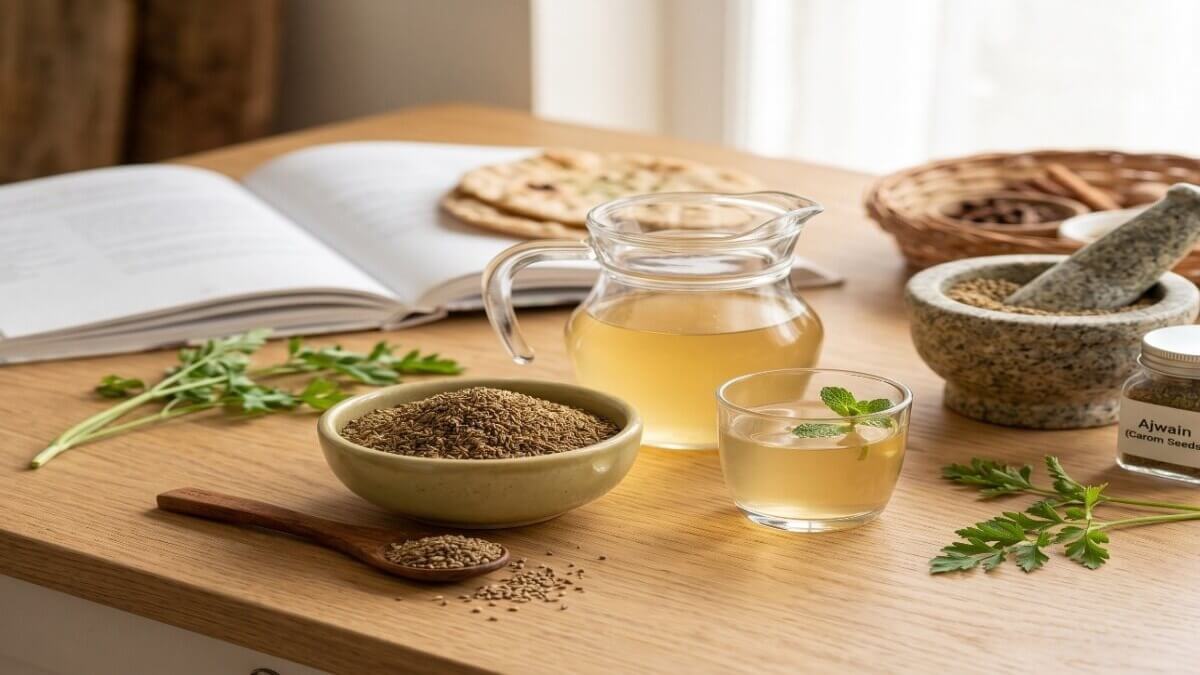
Making Ajwain water, or carom water, is very easy and great for your health. To make it, soak half a teaspoon of Ajwain in a glass of water overnight.
Wake up in the morning, strain this water, and drink it on an empty stomach. You can also slightly warm it up if you prefer.
Drinking this water regularly provides relief from constipation, indigestion, and gas problems. It also helps flush out harmful toxins from the body.
Ajwain Tea Recipe
For those who prefer no caffeine in their tea, Ajwain tea is a great alternative. It refreshes the body and helps cure colds and coughs.
Take two cups of water in a pot and add half a teaspoon of Ajwain. When the water starts boiling, lower the heat. Turn off the stove when the water is reduced to about 1 cup.
Now strain the tea and mix in a few drops of lemon juice and a spoonful of honey. There you go, your healthy Ajwain tea is ready.
Ajwain Remedy with Honey or Salt
If you suddenly get a stomachache or a severe cough, you can apply a simple home remedy. Lightly roast a little Ajwain in a pan.
Then, mix this roasted Ajwain with a pinch of black salt or regular salt, chew it, and swallow it. Follow this with a glass of warm water. This gives quick relief from gas pain.
For coughs, you can crush the roasted Ajwain, mix it with a little honey, and eat it twice a day. This helps clear the throat and reduce the severity of the cough.
Ajwain vs. Other Spices: A Comparison
Our kitchens contain many other spices, such as cumin, fennel, and fenugreek. Although these spices share some similarities with Ajwain, each has its own unique qualities.
Cumin generally adds an earthy flavor to food and cools the body. On the other hand, Ajwain slightly warms the body, and its smell is much more intense.
Fennel has a sweet taste and is more popular as a mouth freshener. Ajwain is bitter and pungent, so it is rarely eaten directly as a mouth freshener. Both cumin and fennel are good for digestion, but Ajwain works fastest for severe gastric pain.
Ajwain Seeds vs. Leaves: Key Differences
Many people might not know that Ajwain leaves are also edible. However, there is a difference in the taste and use of the seeds and the leaves.
Ajwain seeds are mainly used as a spice at various stages of cooking. Because they are dry, they can be stored for a long time. Their aroma is highly concentrated.
On the other hand, Ajwain leaves look a lot like mint or oregano leaves. These leaves are quite juicy and thick. Their smell is similar to the seeds but slightly milder. You can make delicious fritters or pakoras using fresh leaves. Additionally, using fresh leaves in various chutneys gives a beautiful fragrance.
Potential Side Effects of Ajwain
Eating too much of any beneficial thing can cause harm. Ajwain is no exception. While safe when eaten in moderation, excessive use can cause some side effects.
Risks of Overconsumption
Eating too much Ajwain can generate excess heat in the stomach. As a result, problems like heartburn or acidity can actually worsen.
In many cases, excessive consumption causes nausea or dizziness. If the level of thymol in the body becomes too high, it can put pressure on the liver. Therefore, one should not consume more than 1-2 grams of Ajwain per day.
Who Should Avoid Excess Ajwain
People with severe ulcers or gastric wounds should be cautious before eating Ajwain. Its pungent qualities can worsen ulcer pain.
Also, those who have major liver diseases should not consume it regularly without consulting a doctor. Ajwain consumption should be stopped at least two weeks before any major surgery because it can slow blood clotting.
Pregnancy and Medical Precautions
Special caution is needed before using any herb or spice during pregnancy. Pregnant mothers should avoid excessive consumption of Ajwain.
Some of its components can cause uterine contractions, which is risky during pregnancy. However, using a small amount as a spice in food usually does not cause any problems. Even so, one must consult a specialist doctor before adding it regularly to the diet during pregnancy and breastfeeding.
How to Store Ajwain Properly
Knowing the correct storage method is essential to preserving the spice’s aroma and quality. Storing Ajwain is not very difficult.
Always store Ajwain in airtight glass or food-grade plastic containers. If kept in a container that allows air to enter, its essential oil evaporates, ruining the smell.
Keep the container in a cool and dry place away from direct sunlight. Do not keep the spice jar right next to the stove, as excess heat can destroy its nutritional value.
How to Choose High-Quality Ajwain Seeds
Different qualities of Ajwain are available in the market. To get the best results, it is necessary to choose fresh, high-quality seeds.
When buying, pay attention to the color of the seeds: they should be dark gray or light green. Seeds that are too brown or pale might be very old.
Take a few seeds in your hand, rub them slightly, and take a smell. If you get a strong, fresh, thyme-like scent, you will know it is of good quality. If possible, try to buy packaged, organic Ajwain to avoid any dust or chemical contamination.
Frequently Asked Questions About Ajwain
Can I eat Ajwain every day?
Yes, you can eat Ajwain every day in moderation. For healthy adults, consuming half to one teaspoon (1-2 grams) of Ajwain daily is safe and beneficial. However, if you have any chronic diseases, consult your doctor.
Is Ajwain good for acidity?
Absolutely. The active ingredients in Ajwain work very quickly to reduce stomach gas and acidity. Mixing a little Ajwain and black salt with warm water provides immediate relief from acidity-related discomfort.
Does Ajwain help with weight loss?
Ajwain will not directly reduce your weight. However, it helps increase your metabolic rate and improves the digestive process. Additionally, due to its detoxifying properties, excess water is flushed from the body. So, when paired with the right diet and exercise, Ajwain can be a helpful companion in your weight-loss journey.
Final Thoughts on Ajwain (Carom Seeds)
Ajwain is a gem in our kitchen that we often underestimate. It not only spreads the aroma of food but also serves as a natural shield to keep our bodies healthy.
Key Takeaways
From this blog post, we learned how effective Ajwain is at boosting digestion, eliminating gas and bloating, and supporting a healthy respiratory system. Its nutritional value and powerful antioxidants support our overall well-being. However, it should always be consumed in moderation.
Why Ajwain is a Powerful Everyday Spice
It is a powerful part of daily life precisely because of its availability and versatile uses. Whether it is a stomach ache or a common cold, having Ajwain on hand means you do not always have to rely on expensive medicines. It naturally provides solutions to our minor physical problems.
Simple Ways to Add Ajwain to Your Diet
Make small changes to your diet starting today. You can start the day with a cup of Ajwain water. Mix a little carom seeds into the dough for roti or parathas. These small steps will provide a solid foundation for your health in the long run.
Make this extraordinary element of nature a part of your daily life and live a healthy, beautiful one.