The Indispensable Role and Future of Science in Modern Society
Introduction
Science is intertwined with every part of our lives. From waking up in the morning to going to sleep at night, we enjoy various benefits of science. Imagining modern society without science is absolutely impossible.
In this blog post, we will discuss how science has transformed our society. We will learn in detail about the advancements of science, the obstacles in its path, and its future possibilities. Let us begin this wonderful journey of science.
Why Science is Essential for Modern Civilization
The foundation of modern civilization stands on scientific discovery. Our homes, communication systems, and medical sciences are all gifts of science. Without science, our current comfortable lifestyle would come to a standstill.
Science helps us understand the world around us. It provides forecasts of natural disasters and shows us how to survive them. In short, science is our greatest tool for survival.
Science not only provides convenience, but it also broadens our thinking. Science plays an essential role in building a society based on logic by eliminating blind faith. There is no alternative to it in building a civilized society.
The Strong Connection Between Science and Human Progress
The history of human civilization is essentially the history of scientific progress. Everything from the invention of the wheel to today’s space exploration is a milestone in human progress. Every new discovery has taken us one step forward.
Thanks to science, average human life expectancy has increased. Science has found simple solutions to diseases that once took the form of epidemics. This has greatly increased the chances of human survival.
Furthermore, science’s contribution to the spread of education is undeniable. With the help of modern technology, knowledge is now at people’s fingertips. This free flow of information is taking human society toward progress at an even faster pace.
Understanding the Role of Science in Society
To understand the role of science in society, we must look at our daily lives. Science is involved in every task we do in one way or another. It has made our work easier and faster.
Science is not limited to machinery alone. It has also changed the way we think. Scientific principles work wonderfully to establish society on an organized structure.
The Contribution of Science in Daily Life
Our daily life is surrounded by the magic of science. Smartphones, the internet, electricity, and modern vehicles are all contributions of science. They have made our lives unimaginably easier.
From the microwave oven in the kitchen to the television in the living room, science is everywhere. We can now communicate with anyone anywhere in the world in an instant. Thanks to science, the world has now become a small village.
Even the foundation of healthy living and nutrition relies on scientific research. Science tells us what nutrients are in which foods. Scientific guidelines for staying healthy are useful to us every single day.
How Scientific Knowledge Shapes Human Development
Scientific knowledge is the biggest driver of human development. It has revolutionized agriculture, industry, and education. Thanks to science, it is now possible to produce enough food to feed a massive population.
Modern machinery has been introduced in factories to make work easier for laborers. This has increased production and improved people’s standard of living. Scientific knowledge also indirectly helps alleviate poverty.
Scientific knowledge is also guiding us in environmental protection. Science gives us ideas for how to develop without destroying nature. It serves as a guide to humanity’s overall development.
The Historical Impact of Science on Civilization
Looking at history, science has turned the tide of civilization time and time again. Tasks once considered impossible have become possible today thanks to science. This impact of science is written in golden letters in the pages of history.
The journey of science from simple calculations in ancient times to today’s quantum physics is thrilling. Throughout this long journey, science has repeatedly reshaped human civilization.
Major Scientific Revolutions That Changed the World
The agricultural revolution was the first major scientific step in human civilization. Then came the Industrial Revolution, which replaced human physical labor with machines. These revolutions radically changed the social system.
In the twentieth century, we witnessed the information technology revolution. The invention of the computer and the internet connected the whole world like a web. It completely changed the concept of human communication and information exchange.
We are currently going through the fourth industrial revolution. Artificial intelligence and robotics are leading this revolution. In the coming days, this revolution will present the world with even more amazing things.
From Ancient Discoveries to Modern Innovations
In ancient times, controlling fire and inventing the wheel were huge scientific achievements. These made human life relatively safer and more dynamic. The practice of science and mathematics began in ancient Greek and Egyptian civilizations.
Much progress was made in medicine and chemistry during the Middle Ages. After that, the journey of modern science began with scientists like Galileo and Newton. Their formulas still serve as the foundation of science today.
Today’s modern innovations are a continuation of that ancient knowledge. Innovations like smartphones, satellites, and genome sequencing have taken human achievement to new heights.
The Evolution of Scientific Thought
In ancient times, people considered many mysteries of nature to be supernatural. But with advances in science, people’s rational thinking developed. People learned to ask questions and started looking for evidence.
The scientific method emerged through observation, experimentation, and conclusion. This method helps establish the truth by removing blind faith. It has elevated human intellect to a new dimension.
Today’s scientific thinking is much more structured and open. Scientists from any part of the world can now share information with each other. This is accelerating scientific research even further.
Science as the Driver of Technological Progress
Technology is the practical form of science. Science discovers new theories, and technology uses those theories to build machines. Science is the main driver of technological progress.
The existence of technology cannot be imagined without science. New scientific discoveries always give birth to new technologies. These technologies make our lives more comfortable and safer.
The Transformation of Communication and Connectivity
Previously, people communicated through letters or messengers. But science has completely changed this system. Everything from the telegraph to today’s smartphone is a contribution of science.
The invention of the internet has brought the biggest revolution in communication. We can now make video calls anywhere in the world instantly. Social media has brought people closer together.
This improvement in information technology has accelerated globalization. Seamless connectivity is now essential in business, education, and entertainment. This contribution of science has woven human society together.
Advancements in Computing and Artificial Intelligence
The invention of the computer is one of the greatest achievements of human civilization. It has simplified the work of the human brain. Computers are essential for everything from complex calculations to data storage. Since you work with web development and website performance, you certainly know how powerful modern computing is.
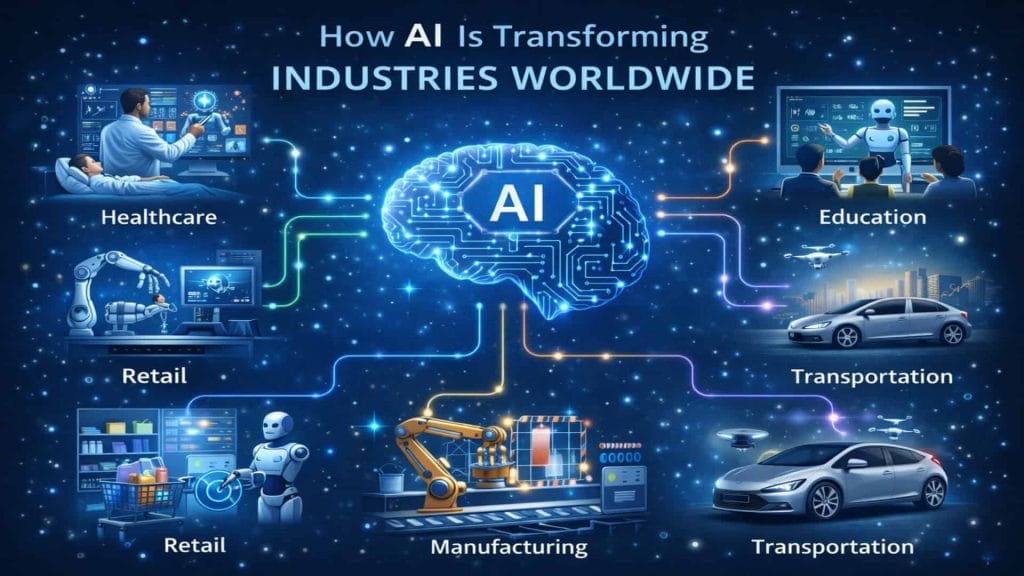
Currently, Artificial Intelligence (AI) has opened a new horizon. Through machine learning and deep learning, computers can now make decisions like humans. It is bringing revolutionary changes in the health, education, and industrial sectors. You have worked with platforms like PlayAI, which is a fantastic example of AI technology.
In the future, quantum computing will make this field even stronger. It will be millions of times more powerful than current computers. Science is leading us to a future we only imagined before.
Innovations Powering the Digital Age
The invention of silicon chips and semiconductors laid the foundation for the digital age. Thanks to these tiny chips, we can use such powerful smartphones and laptops today. This has brought a massive change to the electronics industry.
Fiber-optic cables have enabled high-speed internet. This has made data transfer incredibly fast. Cloud computing allows us to securely store vast amounts of information. The way you ensure website speed and security using Cloudflare is a direct application of this technology.
Blockchain and cryptography have made digital transactions secure. Advanced technologies like zero-knowledge proofs and fully homomorphic encryption are playing a vital role in maintaining data privacy, areas you also work with. These technologies are strengthening the digital economy.
Science and Healthcare Advancements
The contribution of science to healthcare is perhaps the most important. It saves human lives and increases longevity. There is a long journey of science from ancient herbal medicine to modern surgery.
Due to advances in medical science, the infant mortality rate has dropped significantly today. People are now living much healthier lives than before. Science continues to work on making healthcare accessible to everyone.
Life-Saving Medical Breakthroughs
The discovery of antibiotics was a major breakthrough in medical science. Alexander Fleming’s discovery of penicillin has saved millions of lives. It is a powerful tool against bacterial infections.
Imaging technologies like X-rays, MRIs, and CT scans help us understand the body’s internal condition. As a result, disease diagnosis has become much easier and more accurate. Diagnosing a disease at the right time plays a major role in saving lives.
The discovery of anesthesia has made surgery painless. Modern surgery is now much safer and more effective. Complex surgeries like organ transplants are now possible thanks to science.
Vaccines, Medicine, and Disease Prevention
The invention of vaccines is one of science’s greatest contributions. Deadly diseases like polio, smallpox, and measles have been almost eradicated today due to vaccines. They act as a massive shield in protecting public health.
During the COVID-19 pandemic, scientists saved the world by creating the COVID-19 vaccine in record time. For more detailed information, you can visit the World Health Organization (WHO) website. This proves how quickly science can work to protect humanity.
The discovery of new medicines makes it possible to treat many incurable diseases. Scientific rules of health awareness and hygiene help people stay healthy and prevent diseases.
The Future of Personalized Medicine
The medical science of the future will be personalized. Every human being has a different genetic makeup, so their treatments will be different too. Science is trying to turn this concept into reality.
Through genome sequencing, it is possible to analyze a person’s DNA and determine their disease risk. Then, specific treatment methods will be adopted accordingly. This will multiply the effectiveness of treatments.
Targeted therapy is yielding good results in treating diseases like cancer. It only destroys harmful cells and does not harm healthy ones. Personalized medicine will usher in a new era in healthcare.
The Role of Science in Economic Growth
There is no alternative to science for strengthening a country’s economy. Technological innovation changes the nature of business and increases productivity. Science keeps the economy moving by creating new industries and jobs.
Developed countries invest heavily in scientific research. As a result, they can supply new technologies to the global market. Science is one of the main drivers of the global economy today.
Encouraging Innovation and Entrepreneurship
Science encourages young people to think innovatively. With the help of new technology, small startups are now competing with large companies. Tech-based entrepreneurs are making great contributions to the economy.
New sectors such as e-commerce, fintech, and edtech have emerged as a result of innovation. These have expanded the scope of business and made it easier for customers to get services. Innovative ideas breathe new life into the economy.
Governments and various institutions are now providing grants for innovation and research. As a result, a healthy environment for developing entrepreneurs is emerging in society. Science is thus paving the way for economic development.
Creating New Industries and Employment Opportunities
With advances in science, new industries are constantly emerging. Sectors like renewable energy, robotics, and data science have become massive industries today. A lot of skilled manpower is required in these sectors.
As a result, millions of new jobs are being created worldwide. Although automation is making some traditional professions extinct, science is creating far more new opportunities. People are joining these new professions through skill development.
You yourself develop websites and create digital content, which are direct technology-driven professions. This is how modern science is opening new paths for human livelihood. The role of new industries in diversifying the economy is immense.
Research and Development as an Economic Driver
Research and Development (R&D) is the backbone of any country’s economy. The more advanced a country is in research, the stronger its economy. They establish their dominance in the global market by inventing new technologies.
Private companies also spend a large part of their income on research. Because they know that it is impossible to survive in a competitive market without innovation. This creates a healthy competition.
There is no alternative to scientific research for long-term economic growth. It not only creates new products but also makes the entire production system more cost-effective and efficient.
Science and Environmental Sustainability
Our planet is currently facing major challenges, such as climate change. Science is our only hope for dealing with this challenge and building a sustainable environment. ..Science shows us ways to protect nature.
Science is working everywhere, from preventing environmental pollution to protecting biodiversity. Scientific solutions are essential to leave a habitable world for our future generations.
Understanding Climate Change Through Research
Scientists are monitoring climate change using satellite data and various models. They are letting us know how global warming is harming the Earth. These data points help us become aware.
We have learned about issues like rising sea levels, extreme weather, and melting ice through scientific research. It is impossible to solve climate change without identifying its exact causes.
These scientific warnings are forcing policymakers to take the right steps. Science shows us how terrible the future can be if we do not take effective action right now. You can read the reports by the United Nations Environment Program (UNEP) for detailed information.
Renewable Energy and Green Technology
Science has developed various renewable energy methods to reduce reliance on fossil fuels. Solar power, wind power, and hydropower are major sources of eco-friendly energy today. These play a great role in reducing carbon emissions.
Electric Vehicles (EVs) are one of the best examples of green technology. They do not pollute the environment and are fuel-efficient. Besides, advanced battery technology has made it easier to store electricity.
Emphasis is being placed on using eco-friendly technology in industrial factories. Science is teaching us how to balance economic development and environmental protection.
Scientific Solutions for a Sustainable Future
Efforts are underway to remove excess carbon dioxide from the atmosphere through carbon capture and storage technology. This can be an effective scientific solution to prevent climate change. Scientists are conducting relentless research on this.
Biodegradable materials have been invented to prevent plastic pollution. Advanced desalination technology is being used to make seawater drinkable. All of these are the foundation of a sustainable future.
Scientists are emphasizing reducing the use of harmful pesticides in agriculture and increasing the use of organic methods. These innovative solutions will help keep the Earth habitable for a long time.
Science in Education and Knowledge Creation
Science is not limited to laboratories; it is also the foundation of our education system. ..Science teaches people to be rational and keeps them away from superstitions. The importance of science education is immense in building a knowledge-based society.
From primary school to university, science education teaches people to think differently. It broadens people’s knowledge and helps them see the world in a new light.
Promoting Critical Thinking and Problem Solving
Science education develops critical thinking among students. They learn to look for evidence rather than believe blindly. This improves human judgment.
The scientific method is very effective in solving any problem. First, they identify the problem, gather information, and then find a logical solution. This method is also useful for solving everyday problems.
This problem-solving skill from science makes people confident. They can handle any difficult situation intelligently. It makes society more aware and progressive.
Building Scientific Literacy for Future Generations
The world of the future will be completely dependent on technology. Therefore, it is extremely important to equip future generations with scientific skills. Scientific literacy among children is being increased through STEM (Science, Technology, Engineering, and Mathematics) education.
Schools are emphasizing hands-on science education. This makes it easier for students to understand complex scientific concepts. Scientific literacy prepares them to face the challenges of the future.
Even those who do not study science should know the basics. Basic scientific knowledge is essential for survival in the digital age.
Fostering Curiosity and Lifelong Learning
Science awakens people’s natural curiosity. Science gives us the courage to ask “why” and “how”. This curiosity gives birth to new discoveries.
Science museums, science fiction books, and documentaries make people interested in learning about science. These are excellent mediums of education for people of all ages.
There is no substitute for lifelong learning. Constant new scientific discoveries force us to learn new things regularly. This desire to learn keeps people mentally young and active.
The Role of Science in Public Policy
Science should influence how a country’s government is run and what policies it adopts. Formulating policies based on accurate information and evidence benefits society.
It is the government’s responsibility to seek advice from scientists on important issues such as health, the environment, and technology. This coordination of science and public policy can take a country to the peak of progress.
Evidence-Based Decision Making
When the government makes any law or policy, it must rely on scientific data. Taking decisions based on assumptions can often invite disaster. Evidence-based decision-making is always safe.
For example, traffic laws and road safety rules are based on physics and the behavioral sciences. By analyzing data, the government can understand what measures are needed in which areas.
Evidence-based policies are not only effective, but they also gain public trust. When people see that decisions have been made based on scientific research, they accept them easily.
Science and Global Health Policy
Science plays a key role in shaping global health policies to address pandemics and other infectious diseases. Scientists analyze viral strains and advise governments to implement measures such as lockdowns or quarantines.
International guidelines for vaccine distribution and disease prevention are created through the joint efforts of the World Health Organization and scientists. These scientific policies save millions of lives.
Policies regarding clean water, sanitation, and nutrition to protect public health are the result of scientific research. It is crucial to follow these policies strictly to build a healthy nation.
Solving Social and Environmental Obstacles
Science works indirectly to solve social problems like poverty, hunger, and inequality. It is possible to eliminate hunger by increasing food production through advanced agricultural technologies.
Environmental laws, such as obligations to reduce carbon emissions or forest conservation policies, are based on scientists’ warnings. These are essential for sustainable development.
Urban planners draw on science and engineering to make cities habitable. It is possible to build a beautiful society by using scientific methods to alleviate traffic jams and manage waste.
Obstacles Facing Science in Modern Society
Despite its many contributions, science faces several challenges in modern society. These obstacles are hindering the progress of science. We must solve these problems for the welfare of humanity.
Misinformation, unethical practices, and inequality are the biggest enemies of science. To make science equally beneficial for all, it is necessary to overcome these hurdles.
Misinformation and Public Trust
In the age of social media, misinformation or fake news spreads very quickly. Often, unscientific or harmful information is spread in the name of science. This creates confusion among the general public.
Anti-vaccine campaigns are a prime example of this. Due to misinformation, people lose faith in scientists. This is a serious threat to public health.
To solve this problem, scientists must communicate with people in simpler language. It is urgent to deliver accurate information to the general public quickly and engagingly.
Ethical Concerns in Scientific Research
Certain scientific discoveries have raised ethical questions in people’s minds. For example, many are worried about the misuse of cloning and genetic engineering. If these technologies fall into the wrong hands, they can be destructive.
The issue of ethics is also being strongly discussed in the case of artificial intelligence. If robots or AI lose human control, it can be harmful to society. The issue of privacy violation is also a major cause for concern. Since you work on creating privacy policies and security measures, you certainly know how important the ethical aspects of data protection are.
Scientists should strictly adhere to ethical standards during research. The work of science should be to do good for people, not harm them in any way.
Funding, Accessibility, and Global Inequality
Scientific research requires a lot of money. While developed countries can invest heavily in research, developing countries lag. This is creating a massive global inequality.
The benefits of new scientific discoveries often do not reach the people of poor countries. Expensive medicines or advanced technologies are not within everyone’s purchasing power.
Science must be universal. International organizations and rich countries should help transfer technology to poor countries. True human progress is only possible if we ensure that the benefits of science reach everyone.
Artificial Intelligence and the Future of Science
Artificial Intelligence (AI) is reshaping the future of science. It is completely changing research methods. With the help of AI, scientists can now do things that once seemed impossible.
Since you have created content on zero-knowledge proofs and advanced AI automation, you are aware of this massive potential of AI. It is impacting every scientific field.
Accelerating Research Through Machine Learning
Machine learning can analyze vast amounts of data very quickly. Where it used to take humans years, AI is finding solutions in a matter of days. It has revolutionized areas such as protein folding and drug discovery.
Scientists are now relying on AI to forecast the weather or analyze massive space data. It reduces the margin of error and increases the accuracy of research.
AI is also helping researchers generate new hypotheses or ideas. It has unimaginably accelerated the pace of scientific discovery.
Opportunities and Risks of AI-Driven Discoveries
AI-driven discoveries are bringing countless new opportunities before us. It can solve complex mathematical problems and create new materials. Its use in medicine and engineering will bring wonderful things for humanity.
However, its risks cannot be ignored. If an AI system is fed incorrect data, it can make biased or wrong decisions. This can create discrimination in society.
Furthermore, AI can pose a major cybersecurity threat. Hackers can use AI to launch advanced attacks. Therefore, the issue of its security must be ensured alongside AI development.
Human Skills in an Automated World
Due to automation, many routine jobs are being taken over by machines. This has become a major source of fear about employment. However, AI cannot be a complete substitute for humans.
In an automated world, human creativity, empathy, and complex problem-solving skills will become even more valuable. Machines can never possess human emotions or moral judgment.
We should adapt ourselves to new technologies. Instead of fearing technology, we must acquire the skills to use it as a tool. Only then will automation be a blessing for us.
Science and Global Collaboration
Science is not the property of any specific country or nation. It is a collective effort of all humanity. Global collaboration is absolutely necessary to solve major scientific problems.
In the modern era, international communication among scientists has become much easier. Through the internet, they can easily connect and exchange information with each other.
International Research Partnerships
The European Organization for Nuclear Research (CERN) or the International Space Station (ISS) are excellent examples of international research partnerships. Scientists from different countries around the world work together here.
Such large projects are impossible for any single country to implement alone. Countries come together to share finances, talent, and technology. This is an excellent medium of science diplomacy, which builds good relations among countries.
Such international partnerships must be expanded for future major space missions or preventing global pandemics.
Solving Global Problems Through Collective Knowledge
Global problems like climate change, pandemics, or food crises do not belong to a single country. Solving them requires collective scientific knowledge. Fast solutions are only possible if scientists work together.
International climate agreements like the Paris Agreement are signed based on information provided by scientists. Scientists provide correct guidelines to world leaders.
A complete picture is obtained by combining data from laboratories around the world. Collective knowledge is our best tool for keeping the Earth secure.
The Importance of Open Science
The core idea of open science is to keep scientific research and data open to everyone. As a result, people from anywhere in the world can read and use the research data.
Open-access journals play a significant role in spreading knowledge. Researchers should share information with everyone rather than keep it hidden. This reduces research duplication and saves money.
During the COVID-19 pandemic, scientists made the virus’s genome sequence publicly available. This is why rapid vaccine discovery was possible. Open science accelerates human progress.
Emerging Scientific Fields
Science is constantly creating new branches. Some emerging fields will change the world in the near future. The potential of these fields is infinite.
From quantum mechanics to genetics, these new fields are thrilling scientists. Let us learn about a few such important fields.
Quantum Computing and Advanced Physics
Quantum computing will completely change the concept of ordinary computers. It can compute at incredible speeds by exploiting the properties of subatomic particles. It will bring a revolution in the analysis of large datasets and in cryptography.
In advanced physics research, scientists are trying to learn about dark matter and dark energy. This research will help uncover the mystery of the universe’s origin.
Quantum technology will make communication systems completely hack-proof or secure. This new aspect of data protection is extremely important for national security and the economy.
Biotechnology and Genetic Engineering
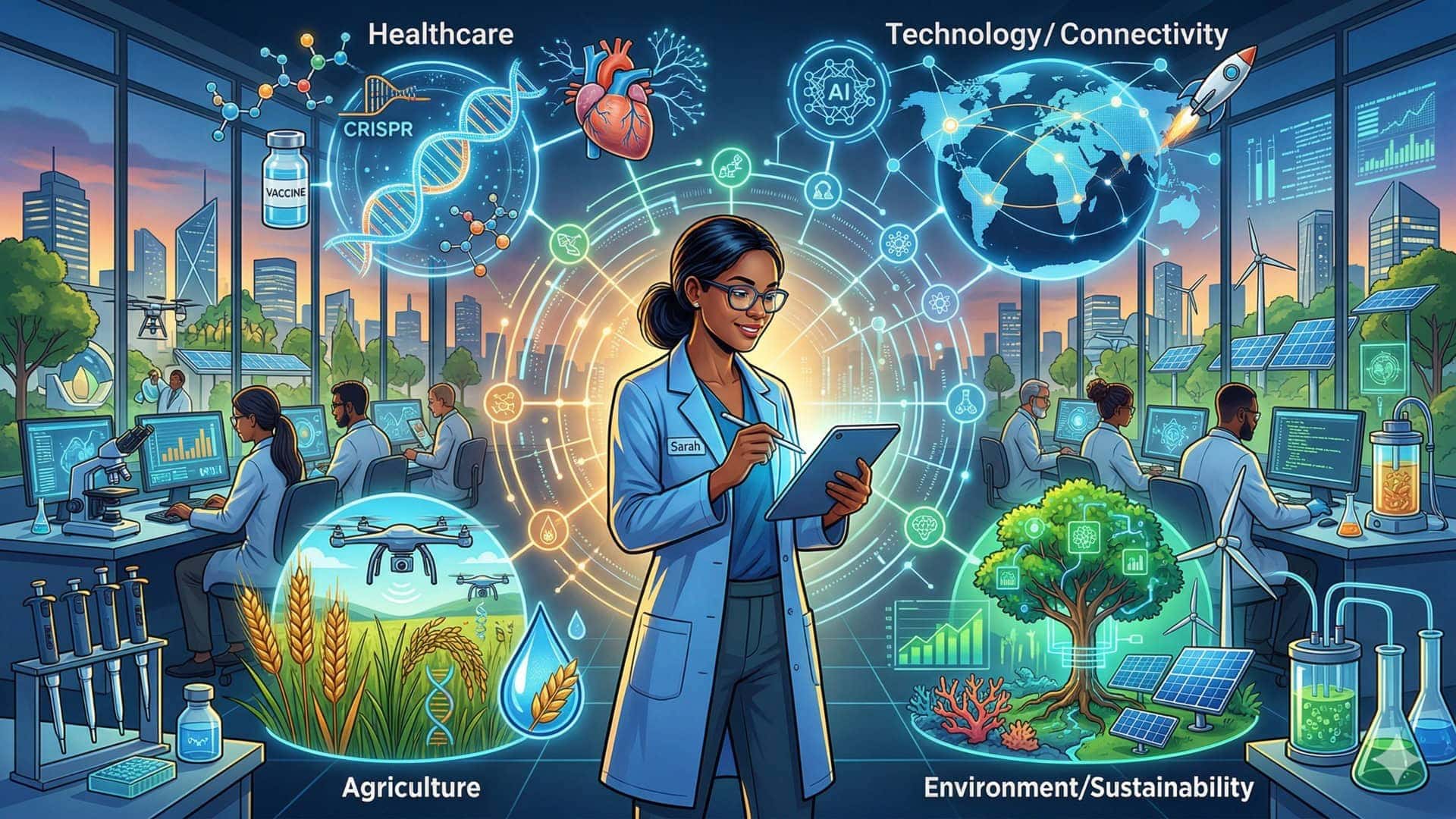
Using biotechnology, scientists are creating new crop varieties and advanced medicines. Gene-editing technologies like CRISPR are allowing scientists to alter DNA directly.
Through this, it might be possible to permanently eradicate hereditary diseases. By creating drought or disease-resistant crops in agriculture, global food security can be ensured.
However, scientists must also remain cautious about the ethical aspects of this technology. Interfering too much with the natural laws of nature often invites disaster.
Space Exploration and the Search for New Worlds
Space exploration is one of the most fascinating fields of science. State-of-the-art instruments like the James Webb Space Telescope are showing us pictures of the farthest edges of our universe. We are constantly finding new planets and stars.
Organizations like NASA and SpaceX are working tirelessly to establish human settlements on Mars. In the near future, humans might start living on multiple planets. You can visit NASA’s website to learn more in detail about this.
Scientists are conducting searches to find out if life exists outside Earth. This discovery would be the most groundbreaking event in human history.
How Science Improves Daily Life
Science is not limited to the pages of books or laboratories. It helps us in every step of our daily lives. With the touch of science, our lives have become much more comfortable.
The imprint of science is clear in our homes, roads, and workplaces. It saves us time and reduces effort.
Improved Health, Transportation, and Communication
It has already been discussed how much science has improved healthcare. You can now consult a doctor from home through telemedicine. Fitness trackers monitor our physical condition.
In the transportation system, the use of bullet trains and electric cars has made travel fast and eco-friendly. Very soon, we might even see flying cars.
In communication systems, the internet and smartphones have turned us all into global citizens. Communicating with loved ones far away is now just a matter of moments.
Smart Technology and Modern Conveniences
The Internet of Things (IoT) has turned our houses into smart homes. Smart lights, smart ACs, and security cameras have made our lives comfortable and safe. We can control these via voice commands or smartphones.
Household appliances like robot vacuums have made our daily chores easier. Kitchen appliances save a lot of time in the kitchen.
The modern themes and customizations you use on your websites (like OceanWP or Kadence) are also part of this digital technology. They vastly improve the user experience.
Improving the Standard of Living Through Innovation
Science has ensured pure drinking water and improved sanitation systems for us. This is helping keep cities habitable.
Science has brought a massive change in the field of entertainment. Virtual Reality (VR) and Augmented Reality (AR) are giving us new kinds of experiences. High-definition movies and video games make people’s leisure time enjoyable.
Above all, science has enabled humans to live safer, healthier, and improved lives.
The Future of Science and Society
In the coming days, society will become even more dependent on science. Science is leading us toward a future that will be smarter, more connected, and automated.
In this future, we will have to face many new challenges alongside new possibilities. We can conquer these challenges only through proper planning.
Predicting the Next Wave of Discovery
Scientists expect that clean and infinite energy sources like fusion energy will come into human hands in the future. This could be a permanent solution to the Earth’s energy crisis.
Brain-computer interfaces like Neuralink will directly connect the human brain to a computer. This will help enhance memory and cure neurological diseases.
With the help of nanotechnology, scientists will create tiny robots that can enter human blood vessels to deliver medical treatment. This next wave of discovery will be truly astonishing.
Balancing Innovation with Ethics and Responsibility
Along with inventing new technologies, we must also increase our sense of moral responsibility. We must ensure that science does not in any way cause humanity’s destruction.
There needs to be strict global policies for sensitive technologies like AI and genetic engineering. Maintaining the right balance between innovation and safety is extremely critical.
Scientists should present the results of their research transparently to society. Science must move forward by taking the general public along.
Preparing for a Science-Driven Future
We must prepare for this science-driven future. The very first thing needed for this is modernizing the education system. The future generation must be developed to be technologically skilled.
Governments must invest more heavily in science and research. Along with that, mental preparation is also required to adapt to new technologies.
Instead of fearing change, we must welcome it. By holding the hand of science, humanity will reach its next destination.
Frequently Asked Questions (FAQs)
Why is science important in modern society?
Science is extremely important in modern society because it improves our standard of living. The contribution of science is essential in making every task in our daily lives easier and faster, including medicine, communication, education, and transportation. It shows the logical path to solving problems.
How does science contribute to economic growth?
Science gives birth to new technologies and innovations. As a result, new factories and jobs are created. Advanced technology increases productivity and reduces business costs. In this way, through research and development, science strengthens a country’s economy.
What challenges does modern science face?
The main challenges of modern science include the spread of misinformation or fake news. There are also ethical concerns in fields like artificial intelligence and genetic engineering. The massive disparity in research funding and access to technology between developed and developing countries is also a major obstacle.
How does science help solve global problems?
Science identifies the exact causes of major problems like climate change, global pandemics, and food crises. Then, through research, it provides effective solutions such as eco-friendly technologies, new vaccines, and advanced agricultural methods. Science assists policymakers in making evidence-based decisions.
What is the future of science and technology?
The future of science and technology is extremely promising. In the coming days, revolutionary changes will occur in artificial intelligence, quantum computing, and biotechnology. These will take disease diagnosis, energy production, and space research to completely new dimensions.
Conclusion
Science is not just a subject; it is a force deeply intertwined with our existence. From the wheel of ancient times to today’s artificial intelligence, science has always advanced human society.
Key Takeaways on the Role of Science in Society
From this discussion, we can understand how much easier and safer science has made our daily lives. It is having a positive impact on everything from healthcare to the economy. The contribution of science behind every achievement of modern society is undeniable.
However, we must keep an eye out to ensure that scientific progress benefits everyone. The use of technology must be ensured with ethics and a sense of responsibility.
Why Science is Essential for Human Progress
There is no alternative to science for human progress or the survival of the human race. Science is our only shield against impending dangers like climate change or any new pandemic.
Through curiosity, research, and innovation, we can build a bright and beautiful future. With science as a companion, humanity will conquer all the challenges of tomorrow.