The Role of Technology in a Digital World: Navigating Our Interconnected Future
Introduction
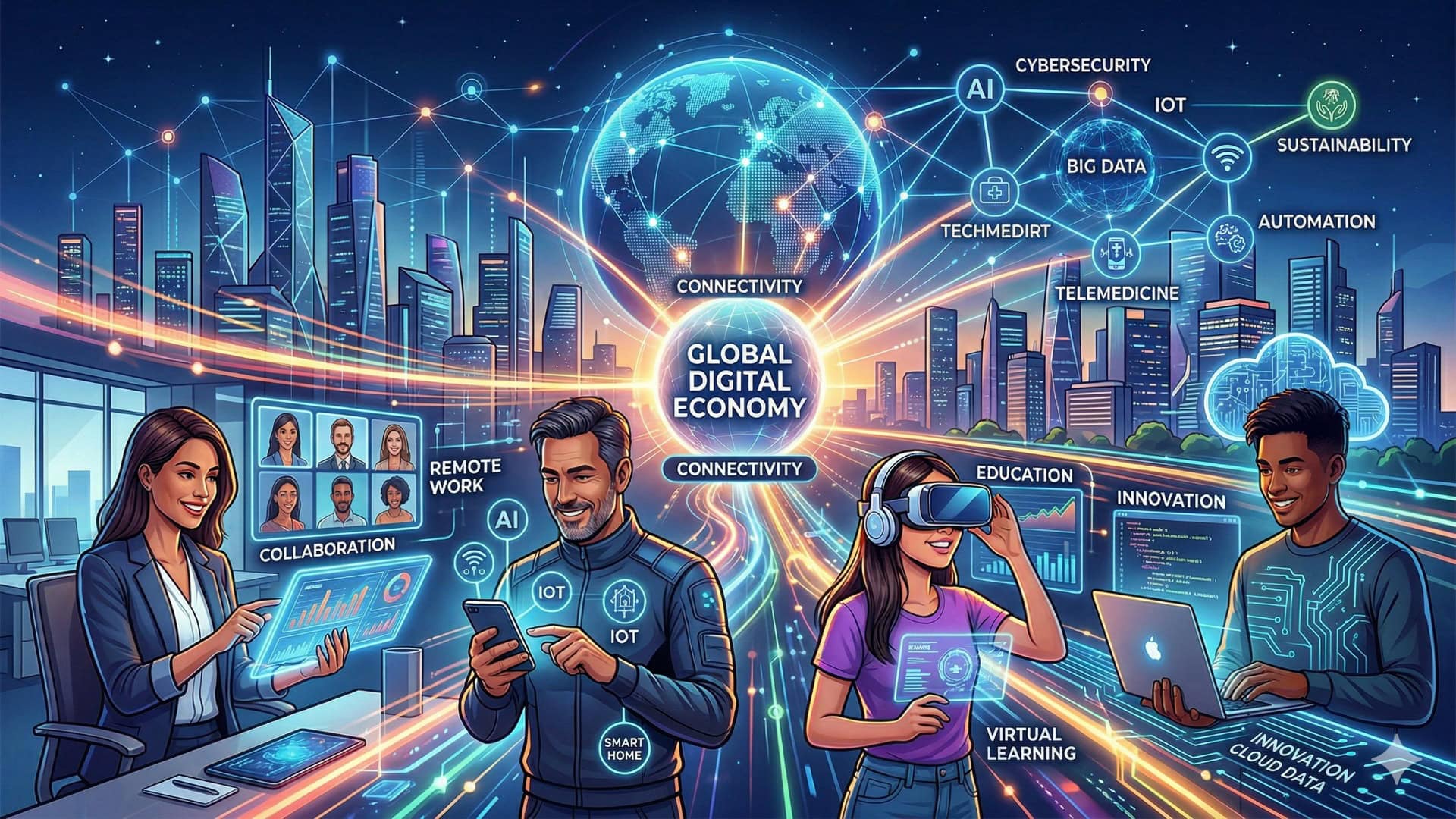
We are currently living in a time where the line between the physical and digital worlds is slowly fading. From waking up in the morning to going to sleep at night, every action we take is somehow connected to technology. In today’s interconnected world, the role of technology is immense, and it is redefining the path of our future.
Understanding the Digital Transformation Era
Digital transformation does not just mean using new devices or software. It is a completely new way of thinking and working. Moving past the era of paperwork, we have now entered the age of cloud storage and real-time data processing. This transformation has made our personal lives, businesses, and government operations faster, more transparent, and highly effective. In modern society, information has become the most valuable asset. Thanks to the internet and smart devices, exchanging information is now possible in the blink of an eye.
Why Technology Shapes Modern Society
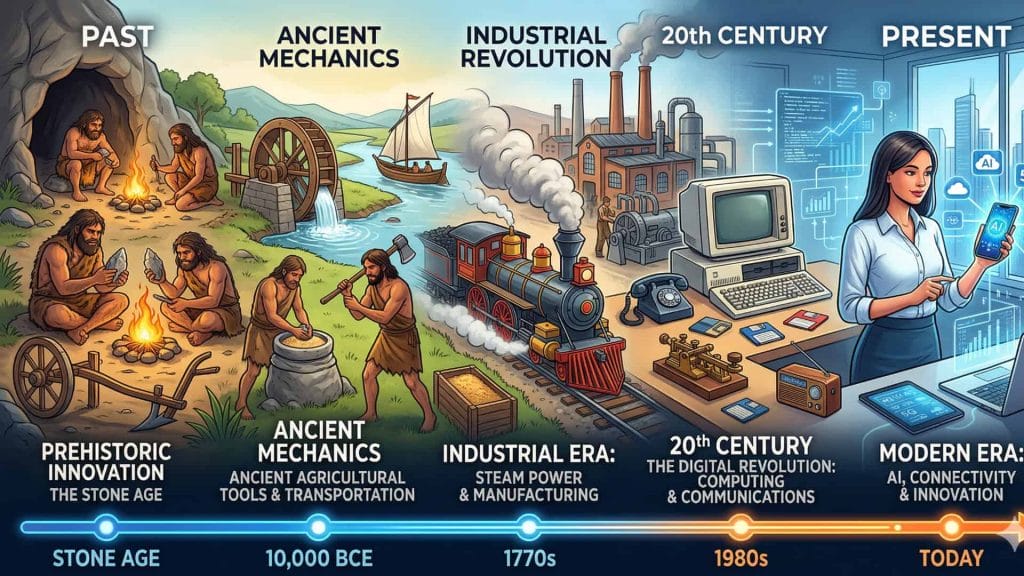
Society has always been influenced by the greatest technologies of its time. From the invention of the wheel to today’s artificial intelligence, every innovation has improved the standard of human living. In the modern era, technology is reshaping the core structure of our society. It has radically changed our communication systems, education methods, medical science, and media of entertainment. Technology has transcended our geographical boundaries, turning the whole world into a global village.
The Evolution of Technology in the Digital Age
The history of technology is incredibly fascinating, and this evolutionary journey is still ongoing. To reach today’s sophisticated stage, humanity had to cross many stepping stones.
From Analog Systems to Digital Innovation
Even a few decades ago, almost everything around us was analog. Letters, telephones, radios, and black-and-white televisions were the main media of communication. However, with the invention of computers and the development of microprocessors, we transitioned from the analog to the digital age. The massive computers of the past have shrunk and now fit into the palms of our hands as smartphones. This transformation was not just a change in size; it was an unimaginable improvement in processing speed and capability.
Major Technological Milestones That Changed the World
Several milestones in the history of technology altered the course of the entire world. Among these, the invention of the internet is perhaps the most significant. The internet gave people access to an ocean of information. Then came the World Wide Web, making it easier to search for and share information. The invention of smartphones, the rise of social media, and most recently, the application of artificial intelligence have taken our daily lives to a completely new dimension.
How Technology Connects the Modern World
In today’s world, no one is truly alone. Technology has tied us all together with an invisible thread, making our lives much easier and more dynamic.
The Rise of Global Connectivity
Thanks to the internet, the earth is now more connected than ever before. Communicating instantly with someone on the other side of the world from your living room is no longer science fiction. According to World Bank data, more than half of the global population currently uses the internet regularly. This connectivity is not limited to a personal level; it has also facilitated international trade, education, and cultural exchange.
Communication Technology Bridging Distances
In the past, communicating with loved ones in distant places was a time-consuming affair. Today, platforms like WhatsApp, Messenger, or Zoom make it possible to have direct video calls with people thousands of miles away. Communication technology is not only strengthening personal relationships but also making it easier to conduct business meetings and close contracts on an international scale.
The Impact of Technology on Daily Life
The influence of technology is clearly visible in every step of our daily lives. It has made our tasks more precise and time-efficient.
Smart Devices and Digital Convenience
Smartphones, smartwatches, smart TVs, and smart home appliances have made our lives incredibly comfortable. From setting a morning alarm to monitoring our health and controlling home security, everything is now possible through smart devices. Voice assistants like Google Assistant or Amazon Alexa listen to our commands and perform tasks, something that could only be imagined once upon a time.
The Influence of Technology on Everyday Activities
Because of technology, the way we do our daily chores has completely changed. Online shopping makes it possible to buy any necessary item from the comfort of our homes. Digital payment systems and mobile banking have reduced the use of cash, making financial transactions safer and faster. Even ordering food or booking a ride can now be done with just a few taps on a smartphone.
Technology in Business and the Modern Workplace
Technology has brought a revolutionary change to the business and workplace environment. To stay competitive and ensure growth, businesses have become heavily dependent on technology.
Digital Transformation and Business Growth
Digital transformation has enabled businesses to better understand their customers. By using data analytics, companies now get specific insights into customer preferences and demands. E-commerce platforms have created opportunities for everyone, from small merchants to large corporations, to reach a global customer base. As a result, the scope of business is expanding, and growth is accelerating.
Automation, AI, and Workplace Innovation
The use of automation and artificial intelligence in the modern workplace is increasing day by day. According to Forbes Magazine, completing repetitive tasks through robots or software saves employees time, allowing them to focus on more creative work. AI-driven chatbots have revolutionized customer service. With the creation of remote work opportunities, employees can now fulfill their responsibilities from anywhere in the world.
The Role of Technology in Education
Technology has brought the education system out of the four walls of the classroom. Learning is no longer confined to a specific place or time.
E-Learning and Virtual Classrooms
Due to the internet and the availability of digital devices, e-learning, or online education, is now widely popular. Through virtual classrooms, students can learn from the best teachers in the world right from their homes. Especially during the global pandemic, virtual classrooms played a crucial role in keeping the education system running.
Expanding Knowledge Through Technology
Information technology has opened the path of knowledge acquisition for everyone. Anyone can learn about anything through Wikipedia, YouTube, and various ed-tech platforms. Multimedia content, interactive simulations, and online libraries have made the learning process much more enjoyable and effective.
Advancements in Technology and Healthcare
The use of technology in the healthcare sector is making an incredible contribution to increasing human life expectancy and improving the quality of medical care.
Telemedicine and Remote Patient Care
Thanks to telemedicine, patients can now consult specialist doctors from home. This is a blessing, especially for people in rural and remote areas. Wearable technology now makes it possible to continuously monitor heart rate, blood pressure, and oxygen levels, helping doctors make the right decisions at the right time. According to the World Health Organization (WHO), digital healthcare will be the foundation of future medicine.
Artificial Intelligence in Modern Healthcare
The use of artificial intelligence in medical science has made disease diagnosis more accurate. In analyzing MRI or X-ray reports, AI is now often capable of detecting minute flaws better than humans. Data processing tasks in drug discovery and genetic research are being completed at incredibly high speeds with the help of technology.
The Importance of Cybersecurity in a Connected World
Alongside the benefits of technology, there are also some negative aspects. The more digital our lives become, the greater the need for cybersecurity increases.
Protecting Personal and Business Data
Our personal information, financial transaction records, and business secrets are now stored in digital formats. This massive amount of data is a primary target for hackers. The use of strong passwords, two-factor authentication, and encryption technology is absolutely necessary for data protection. Businesses must adopt specific cybersecurity measures to protect their customers’ information.
Emerging Cybersecurity Challenges
As technology advances, cybercriminals are also inventing new methods. Phishing, ransomware, and malware attacks have become everyday occurrences. As the use of Internet of Things (IoT) devices increases, the risk of cyberattacks also grows. Therefore, constantly updating security measures and raising awareness is highly necessary.
Social Media and Digital Communication
Social media has completely redefined our communication style and social relationships.
Transforming Human Interactions
Platforms like Facebook, X (formerly Twitter), Instagram, and LinkedIn have created new ways for people to stay connected with each other. We can now easily find old friends and build new communities with like-minded individuals.
Benefits and Risks of Online Connections
Information can be spread very quickly through social media, which often works wonderfully for raising public awareness. However, it also carries certain risks. Spreading fake news, cyberbullying, and privacy violations are the harmful sides of social media. Therefore, we need to be highly responsible when using these media.
Emerging Technologies Shaping the Future
Technology does not stand still. Several new technologies are currently being developed that will completely transform our world in the coming days.
Artificial Intelligence and Machine Learning
Artificial intelligence, or AI, is the most talked-about technology of the present time. Machine learning algorithms analyze massive amounts of data to make human-like decisions. The use of AI is increasing everywhere, from self-driving cars to personalized recommendation systems.
The Internet of Things (IoT)
The Internet of Things, or IoT, is a concept where our everyday household items are connected to the internet. Smart homes, smart cities, and smart factories are excellent examples of IoT. As a result, devices can communicate with each other, and many tasks can be completed automatically without human intervention.
Blockchain and Decentralized Systems
Blockchain technology is essentially a decentralized digital ledger system. It is a method of storing data that is nearly impossible to hack or alter. Beyond cryptocurrencies, blockchain has created huge potential in supply chain management, smart contracts, and secure data sharing.
Virtual Reality and Augmented Reality
Virtual Reality (VR) transports the user to a completely artificial three-dimensional world. On the other hand, Augmented Reality (AR) overlays digital information onto the real world. Beyond gaming and entertainment, the use of VR and AR in education, medical training, and real estate is growing daily.
Challenges of Living in a Digital World
Along with the countless benefits of the digital world, we are also facing several major challenges that cannot be ignored.
Digital Privacy Concerns
Every action we take online is tracked. What we search for, where we go, and what we buy are all stored in some database. This data is often sold to advertising agencies or third parties without our permission. As a result, protecting digital privacy has currently become a major concern.
The Digital Divide and Accessibility Issues
Not everyone is receiving the benefits of technology equally. While developed countries are advancing rapidly in technology, developing nations are struggling to keep up. Even if cities have high-speed internet, accessibility remains limited in rural areas. If this digital divide cannot be eliminated, inequality in society will take a more severe form.
Tech Dependency and Screen Time
Excessive use of technology is increasing people’s tech dependency. Addiction to smartphones and social media is harmful to everyone, from children to the elderly. Excessive screen time is negatively impacting people’s physical and mental health. Eye problems, sleep disturbances, and reduced face-to-face social interactions are its primary symptoms.
Building a Responsible Digital Future
Technology was created for the welfare of humanity. Therefore, its use must also be responsible and ethical.
Ethical Technology Development
Technology companies must keep ethics in mind when creating new products or services. Care must be taken to ensure that artificial intelligence does not make decisions harmful to humans. It is essential to ensure that the use of technology does not harm the environment or create inequality.
Promoting Digital Literacy and Inclusion
To bridge the digital divide, everyone must be educated in technological skills. Digital literacy is not just learning how to operate a device; it is acquiring the ability to stay safe online and verify the accuracy of information. We must work towards ensuring that technology can easily reach people from all walks of life.
Technology and the Future of Global Society
We are moving towards a future where technology will remain an inseparable part of every moment of our lives.
Trends That Will Define the Next Decade
In the next decade, we will witness the development of technologies like quantum computing, more advanced AI, and 6G internet. These technologies will accelerate research and bring about unimaginable innovations. The dream of space travel and human settlement on other planets is slowly becoming a reality, thanks to advances in technology.
Preparing for an Increasingly Connected World
We must start preparing now for the connected world of the future. Acquiring new skills, maintaining a mindset of adaptability to change, and upholding ethical values are extremely important to us. Technology is our tool, but it is up to us to decide how we use it.
Frequently Asked Questions (FAQs)
Why is technology important in the digital world?
Technology makes our daily tasks easier, faster, and more accurate. It helps establish communication with people anywhere in the world and brings groundbreaking developments in business, education, and healthcare. In short, modern living is completely dependent on technology.
How does technology impact society?
Technology ensures the free flow of information in society. It changes the way people work, creates new employment opportunities, and improves living standards. However, excessive use can also lead to problems like social isolation and stress.
What are the benefits of digital transformation?
The main benefits of digital transformation include increased speed and efficiency, reduced costs, advanced data analysis, an excellent customer experience, and the ability to easily expand globally.
What challenges come with rapid technological advancement?
Rapid advancement increases cybersecurity risks, threatens data privacy, and leaves behind those who cannot keep up with technology. In addition, there is a fear of job loss for people in certain professions due to automation.
How can individuals stay safe online?
To stay safe online, you must use strong and unique passwords. Enabling two-factor authentication on all accounts, avoiding suspicious links, and being cautious before sharing personal information are absolutely essential.
Conclusion
Key Takeaways on the Role of Technology in the Digital Age
There is no denying the role of technology in the digital world. It has made our lives much more comfortable and dynamic. In every field, from communication, education, and health to entertainment, technology has opened a new horizon. However, we must remember that technology is a medium created for our well-being.
Embracing Innovation While Tackling Future Challenges
In this journey of technological change, we will face many challenges. Issues like cybersecurity, the digital divide, and privacy protection must be considered with the utmost importance. While welcoming innovation, we must build a responsible and inclusive digital society where everyone can equally enjoy the benefits of technology. May our journey towards an interconnected future be safe, beautiful, and humane.