The Future of Technology: What to Expect in the Next 10 Years
Introduction
We are living in an era of unprecedented technological revolution. Every day, new discoveries are changing how we live, how we work, and how we communicate with one another. However, what we have seen so far is only the beginning.
Looking toward the future, it is clear that technology will not just remain an assistant. It will merge deeply with every part of our existence. The technological transformation over the next decade will be faster and more extensive than we can imagine.
Why the Next Decade Will Be a Groundbreaking Moment for Technology
The next ten years will be one of the most critical periods in human history. The technological foundation we have built over the past few decades is now reaching maturity. Everything from smartphones to internet connectivity is now at our fingertips.
Standing on this strong foundation, new innovations are taking on massive proportions. Subjects like artificial intelligence, quantum computing, and biotechnology are no longer confined to research labs. They have started working directly to solve our real-world problems.
How Innovation Is Accelerating Faster Than Ever
The pace of innovation is no longer linear. It is now growing at an exponential rate. As soon as a new technology is invented, it paves the way for another new technology to be created.
For example, high-speed processors and advanced cloud computing systems have combined to make machine learning algorithms much more powerful. As a result, we are getting software that can learn and make decisions on its own. According to the World Economic Forum, this rapid evolution of technology will bring about radical changes to the global economy and society.
Key Drivers of Future Technological Change
Several key drivers are behind this rapid technological change. These forces will fundamentally determine what the world of tomorrow will look like. Let us look at these primary driving forces.
The Growth of Artificial Intelligence and Machine Learning
The biggest driving force of the future will be artificial intelligence and machine learning. Computers are now becoming capable of thinking and learning like humans. By analyzing massive amounts of data, these systems are finding patterns that are impossible for the human eye to see.
From healthcare to financial institutions, AI is becoming an essential part of every sector. It is not only making our work easier but also creating new job opportunities.
Global Connectivity and Digital Transformation
The Internet is no longer a luxury. It has reached the level of a fundamental right. Through satellite internet and high-speed fiber-optic networks, even the most remote areas of the world are now connected to the global network.
This universal connectivity is pushing business methods toward digital transformation. From small business owners to massive corporations, everyone is now dependent on digital platforms. This transformation is making our economy much more connected and dynamic.
Expansion of Data, Cloud, and Edge Computing
In today’s world, data is equivalent to the new oil. We are creating billions of bytes of data every single day. Cloud computing plays a crucial role in storing and processing this massive amount of data.
Alongside this, a new concept called edge computing is developing. Edge computing basically provides the advantage of processing data close to where it is generated. As a result, website speed increases, server pressure decreases, and users receive faster service. According to Gartner research, most data processing in the future will be performed at the edge.
1. Artificial Intelligence Will Become Omnipresent
Over the next 10 years, artificial intelligence will spread into every area of our lives. It will no longer exist as a separate technology but will become an integral part of every system we use.
Integration of AI into Everyday Tools and Services
In the future, almost everything we use daily will be controlled by AI. Your refrigerator will automatically detect when the milk is running low and order more. Your car will not only recognize you but will also control the interior environment according to your preferences.
Even the customer service we receive will mostly be handled by advanced AI chatbots. These will be able to understand the subtle nuances of human language and help exactly like a human would.
Smart Decision Making and Automation
AI will not just automate tasks. It will also help in making the right decisions. By analyzing massive datasets, AI can determine the optimal strategy for businesses.
In agriculture, AI will be able to tell exactly when to plant crops and how much irrigation to provide. In the medical field, it can warn in advance by analyzing disease symptoms. As a result, the likelihood of mistakes will decrease significantly, and maximum resource utilization can be ensured.
2. Generative AI and Autonomous Systems
Generative AI technology has already amazed the world. Over the next decade, its capabilities will multiply. It will be able to do everything from creative work to complex coding, all by itself.
Content, Code, and Design Creation by AI
We are moving toward a future in which AI can create excellent essays, images, videos, and even music based on human instructions. This will act as a powerful tool for content creators.
Web developers and software engineers will also gain massive benefits from this. AI will be able to write thousands of lines of code automatically, fix bugs, and point out the best ways to improve website performance. As a result, creative individuals will have more time to think about new ideas rather than routine tasks.
The Rise of Self-Improving Intelligent Systems
Future systems will not just follow commands given by humans. They will be able to constantly improve themselves. A piece of software will observe its users’ usage patterns and correct its own mistakes.
These self-improving systems will work wonderfully in cybersecurity and data protection. If a new virus or cyber attack appears, the system itself will find a way to prevent it.
3. Expansion of the Internet of Things (IoT)
The Internet of Things refers to the interconnection of various devices over the Internet. Over the next decade, billions of devices will connect with one another, making our environment much smarter.
Fully Connected Smart Homes and Cities
The concept of a smart home will take on a much more realistic form in the future. The lights, fans, ACs, door locks, and security cameras in your home will all be connected through a central network. You will be able to control these from anywhere in the world.
Not just homes, entire cities will become smart. Traffic lights will be automatically controlled based on vehicle traffic. When dustbins are full, automated messages will go to the cleaners. As a result, city life will be much more organized and eco-friendly.
Real-Time Data-Driven Environments
IoT devices will continuously collect huge amounts of data. Using this real-time data, we will get updates on any situation within moments.
For example, live data on the condition of factory machines will be available. Before a defect appears in a machine, sensors will issue a warning, enabling timely action to prevent accidents and losses.
4. The Arrival of 5G and 6G Networks
In the field of communication systems, 5G and 6G networks will bring a massive change. Internet speed and reliability will reach a level we have never imagined before.
Ultra-Fast Communication and Low Latency
The biggest advantage of a 5G network is its ultra-fast speed and very low latency. This means when you give a command on the Internet, the response will be received in the blink of an eye.
Because of this low latency, tasks such as controlling robots remotely or performing remote surgeries will be possible with complete accuracy. There will be no need for buffering or waiting when it comes to video streaming and downloading large files.
Enabling Next-Generation Digital Experiences
When the 6G network arrives, digital experiences will enter an entirely new dimension. It will not be limited just to smartphones or computers. Hologram technology and virtual reality will feel completely real.
Through these networks, we will be able to communicate with people anywhere in the world as if they were sitting right in front of us.
5. Breakthroughs in Quantum Computing
Quantum computing is much more powerful than the supercomputers of the current generation. Over the next decade, it will come out of the labs and begin to be applied in reality.
Solving Problems Beyond Classical Computers
The mathematical problems that ordinary or classical computers would take thousands of years to solve, a quantum computer can do in a few seconds. It can quickly solve complex equations in physics, chemistry, and other sciences.
Especially in analyzing massive datasets and creating new algorithms, quantum computing will open doors to infinite possibilities. Large organizations like IBM are already investing heavily in this technology.
Impact on Science, Medicine, and Security
Quantum computing will bring about a revolution in the discovery of new medicines. By analyzing the structure of various chemical molecules, it will be possible to create new and effective medicines very quickly.
Its impact on security will also be far-reaching. Many current encryption systems will become weak against quantum computers. Therefore, completely new cryptography or security systems that are impossible to hack will need to be created.
6. Robotics and Autonomous Machines
Robots are no longer just a part of science fiction movies. Over the next 10 years, the use of robots and automated machinery will increase manifold.
Smart Robots in Industry and Daily Life
Many risky and repetitive tasks in factories will be done by robots. This will reduce the risk to human life and increase production speed.
In daily life, too, robots will be our companions. Specialized robots for cleaning the house, helping with cooking, or looking after the elderly will become easily available in the market. These smart robots will be able to understand human emotions and instructions.
Self-Driving Vehicles and Automation Systems
Self-driving vehicles will become a common sight on the roads in the near future. Through AI and advanced sensors, these cars will be able to perfectly analyze the surrounding environment and reach their destinations safely.
As a result, road accidents will decrease significantly. Additionally, the use of automated drones and small robots in delivery systems will become widespread.
7. Augmented Reality (AR), Virtual Reality (VR), and Mixed Reality
AR, VR, and mixed reality will erase the differences between our physical and digital worlds.
Immersive Work, Education, and Entertainment
Students will be able to tour ancient Rome using VR headsets while sitting in the classroom, or see the human body’s internal organs in 3D models right in front of their eyes. This will make the education system much more engaging and effective.
In the workplace, designers or engineers can build and test models of anything in a virtual environment before actually building it. In terms of entertainment, games and movies will provide completely immersive or participatory experiences.
The Rise of Metaverse-Style Experiences
The metaverse is a digital world where people can mingle, work, and enjoy entertainment through virtual avatars.
Over the next decade, this concept of the metaverse will mature further. People will buy virtual real estate, attend digital concerts, and hold meetings in virtual office spaces.
8. Blockchain and Decentralized Digital Systems
Blockchain technology will not be limited to cryptocurrency alone. It will create a new layer of trust across the entire digital ecosystem.
Secured Digital Identity and Transactions
In the future, our identity cards, educational qualifications, and health records will be stored on blockchain. No one will be able to alter or forge this information.
In financial transactions, the need for intermediaries like banks will decrease. People will be able to transact with each other directly and in a completely secure way. This will reduce both the cost and time of transactions.
Beyond Cryptocurrency Applications
Blockchain will bring a major change to supply chain management. It will be possible to track every step of a product from the moment it is manufactured in the factory until it reaches the consumer’s hands.
Additionally, the use of smart contracts will increase. These contracts will execute automatically once the conditions are met, greatly reducing legal complications.
9. The Evolution of Cybersecurity and Digital Privacy
As technology advances, the risk of cyberattacks is also increasing. Therefore, cybersecurity systems will see massive improvements over the next decade.
Advanced Threat Protection Systems
AI-driven security systems will be able to detect hackers’ tactics even before they attack. Using machine learning, it will be possible to instantly detect any abnormal activity on the network.
Edge computing platforms like Cloudflare will provide an even stronger security perimeter for websites and servers. The Zero Trust Architecture model will require verifying user identity at every level.
A Privacy-First Digital Ecosystem
The issue of user data privacy will get the highest importance in the coming days. Advanced cryptographic methods like Zero-Knowledge Proofs and Fully Homomorphic Encryption will help keep data confidential.
This means you will be able to enjoy various digital services without showing your personal information to anyone. Users will have complete control over how their data is used.
10. Green Technology and Sustainable Innovation
Driven by the urge to protect the environment, the tech world is now leaning toward green technology. Technology must become eco-friendly.
Climate Tech and Renewable Energy Solutions
New technologies will be developed for the production and storage of renewable energy, such as solar and wind power. Advanced battery technology will make electric vehicles even more popular.
Technology for carbon capture, which absorbs carbon dioxide from the air, will improve. Smart grid systems will prevent electricity waste and ensure balanced power distribution.
Building a More Sustainable Digital Future
Data centers consume a huge amount of electricity. In the future, initiatives will be taken to make these data centers much more energy-efficient.
When manufacturing hardware, materials that can be easily recycled or reused will be utilized. Tech companies will work toward bringing their carbon footprint down to zero.
How Technology Will Transform Daily Life
Every moment, from morning to night, will become deeply intertwined with technology. It will make our lives much more comfortable and personalized.
Smart Homes, Workplaces, and Cities
Future homes will be like your personal assistant. Before you even wake up, the coffee machine will have coffee ready for you. In the workplace, smart sensors will control lighting and temperature to provide the best working environment for employees.
Traffic jams will be almost non-existent in cities. Advanced public transport systems and AI-controlled traffic systems will make commuting fast and safe.
Hyper-Personalized Digital Experiences
Digital experiences will be completely different for every single person. Websites will display relevant information and products tailored to your preferences, interests, and browsing history.
From education to healthcare, everything will be customized to your personal needs. This hyper-personalized experience will save us time and increase satisfaction.
How Technology Will Change Work and Professions
Technology is going to bring a massive revolution to the workplace. There will be extensive changes in the types of work and required skills.
New Jobs and the Need for Emerging Skills
While many old professions may disappear due to technology, plenty of new professions will be created. The demand for new roles such as AI prompt engineers, metaverse designers, ethics managers, and robot maintenance specialists will increase.
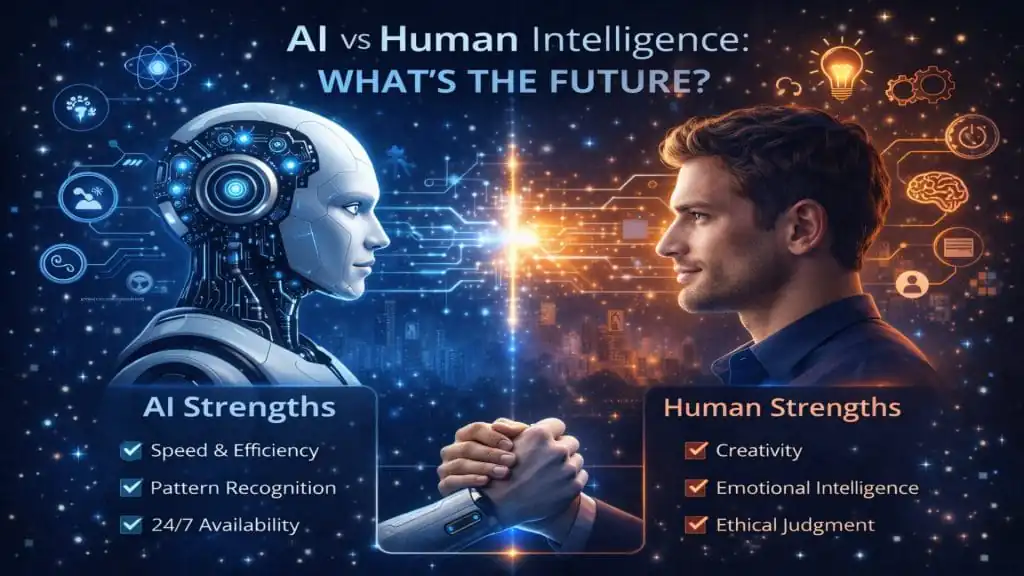
Alongside technical skills, human qualities such as creativity, problem-solving, and emotional intelligence will be highly valued.
Automation and the Future Workforce
Routine and repetitive tasks will become fully automated. As a result, workers’ primary responsibility will be to manage these automated systems and develop new strategies.
Humans and machines will work together as a hybrid workforce. Flexible working, or the opportunity to work from anywhere, will become an even more common concept.
Major Challenges of the Next 10 Years
This rapid technological development will bring serious challenges alongside many possibilities. We must tackle these challenges.
Ethical Issues and Bias in AI
If AI systems are built on flawed data, they can make biased decisions. This can create inequality in society.
Furthermore, the misuse of AI to spread deepfake videos and fake news is a major cause for concern. It is essential to create global guidelines for the use of AI.
Data Privacy and Cybersecurity Risks
The more dependent we become on the Internet, the greater the risk of our personal information being stolen. Hackers are constantly adopting new tactics.
Data breaches can cause fatal damage to both individuals and organizations. Therefore, keeping user data secure will become a massive challenge for tech companies.
Economic and Social Disruption
Due to automation, many people might lose their jobs in the initial stages. Those who cannot adapt to new technologies will fall behind economically.
There is a fear that the technological gap, or digital divide, between developed and developing countries will increase further. Eliminating this disparity and providing equal opportunities to everyone will be a difficult task.
How to Prepare for the Future of Technology
To keep pace with this rapidly changing future, we need to start preparing right now.
Building Digital and AI Literacy
The first condition for surviving in the future is understanding technology. Acquiring basic knowledge about coding, data analysis, and how AI works is necessary for everyone.
Schools and colleges must seriously include digital literacy in their curricula. Various initiatives must also be undertaken to raise public awareness.
Continuous Learning and Skill Development
The idea that the learning phase is over once formal education is completed will no longer work. Technology is constantly changing, so we must constantly learn new things as well.
You must always keep yourself up to date through online courses, workshops, and professional networking. Having the mindset to acquire new skills is the most important thing.
Adapting to Rapid Technological Change
We must embrace change rather than fear it. When a new technology or tool hits the market, we must have the interest to test it out.
The ability to adapt quickly to any situation will be the most valuable skill of the future. You must always keep your mind open and be ready to accept new challenges.
Frequently Asked Questions (FAQs)
Which technologies will dominate in the next 10 years?
Over the next decade, Artificial Intelligence (AI), generative AI, quantum computing, 6G networks, the Internet of Things (IoT), and blockchain technology will primarily dominate. These will directly impact almost every industrial sector.
How will AI change the future of work?
AI will automate routine and tedious tasks. It will help workers analyze data and make quick decisions. As a result, humans will get the opportunity to focus more on strategic thinking and creative work.
Will robots take away human jobs?
Robots will indeed perform certain manual and repetitive tasks, but they will not be a replacement for humans. Instead, robots and AI will create new types of work fields that will require technology management and human skills.
What is the most important technology of the future?
While many technologies are important, artificial intelligence is considered the most fundamental technology of the future. This is because AI multiplies the efficiency of other technologies such as cybersecurity, robotics, and data processing.
How can individuals prepare for future technological changes?
The best way to prepare is to build a mindset of continuous learning. Anyone can prepare for the future by improving digital skills, getting familiar with AI tools, and developing the ability to adapt quickly to new situations.
Conclusion
Key Takeaways on the Future of Technology
The future of technology is both thrilling and challenging. Over the next ten years, we will see innovations that will take our standard of living to unimaginable levels. There will be massive transformations in every field, from artificial intelligence to green technology. These technologies can provide solutions to the complex problems of our world if we manage them correctly.
Embracing the Rapidly Changing Digital World
We cannot just drift along with the tide of this change. We must take the helm. Technology is not our enemy. It is our most powerful tool. By moving forward with proper knowledge, ethical values, and an open mind, we can build a beautiful, secure, and inclusive digital future. Those who can quickly embrace these changes over the next decade will position themselves at the pinnacle of success.