
How Technology is Changing Everyday Life
Introduction
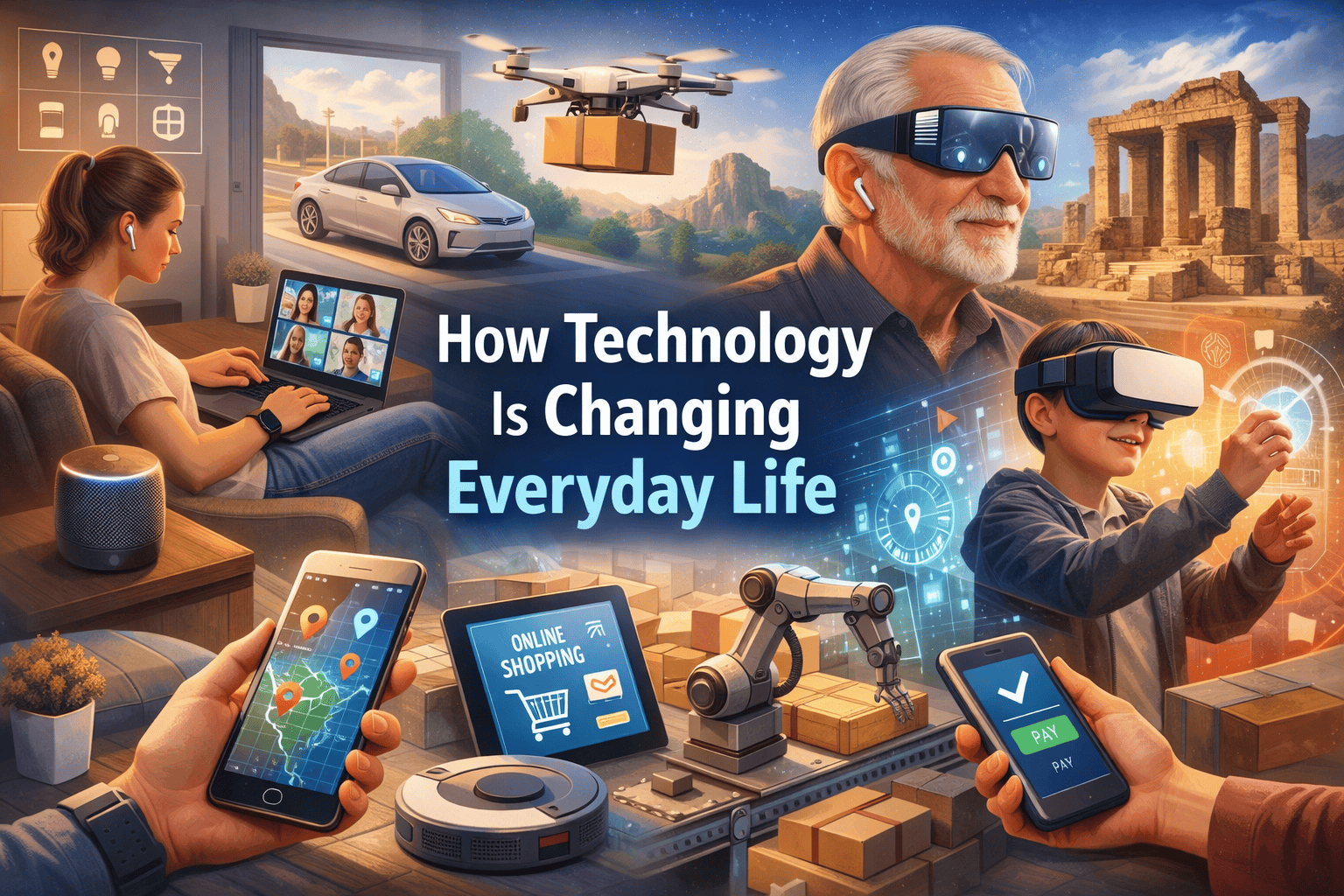
Technological advancement has become an inseparable part of human civilization. From waking up in the morning to going to sleep at night, there is a touch of technology in every task we do. We might not always notice it, but technology is quietly and effectively making our lives easier.
In today’s blog post, we will discuss how technology is reshaping our lives. We will explore its benefits, challenges, and the future.
Understanding the Digital Transformation of Everyday Life
Digital transformation means more than just buying new gadgets. It is a complete shift in how we work and think. There was a time when writing a letter took days or weeks to reach its destination. Today, we can communicate with people anywhere in the world in just a few seconds.
Basic needs like shopping, entertainment, education, and healthcare are now managed through digital platforms. This shift has improved our standard of living and opened up new possibilities.
Why Technology is More Important Today Than Ever
It is almost impossible to imagine a single day without technology in the modern world. It is no longer just a luxury but a fundamental element of our survival. Keeping up with technology is essential to staying competitive in this era of globalization.
Information and communication technology has made our work faster. It saves us time and boosts productivity. There is no alternative to technology when it comes to responding quickly to emergencies.
The Evolution of Technology in Everyday Life
The history of technological evolution is fascinating. From the invention of the wheel to today’s artificial intelligence, the human journey is truly remarkable. This evolution did not happen overnight but is the result of relentless human research over the ages.
From Manual Processes to Digital Convenience
Just a few decades ago, most of our tasks had to be done manually. We had to stand in long lines to deposit or withdraw money, buy train tickets, or pay bills. These tasks wasted a lot of time and effort.
Now we can complete these tasks with just a few clicks on a smartphone. Digital convenience has freed us from this exhausting routine. As a result, we can spend our valuable time on more creative pursuits.
Major Technological Milestones That Changed Society
Several major technological milestones have driven this societal shift. The invention of the Internet is probably the most important among them. The Internet has turned the whole world into a global village.
Then came personal computers and smartphones. These brought information technology directly to the general public. Wi-Fi technology and cloud computing have made storing and sharing information even easier.
How Technology Impacts Daily Routines
Our morning starts with a smartphone alarm. Then we read the news, check the weather forecast, and plan the day’s tasks. All of this happens through digital devices.
Smart Devices at Home and Personal Use
Our homes are now much smarter than before. Smart TVs, smart refrigerators, smart lights, and security cameras have made our daily lives comfortable. We can control these devices using voice commands.
For personal use, there are smartwatches and fitness trackers. These monitor our health and help us stay fit. The use of smart devices has made our lives much more organized.
Mobile Apps and On-Demand Services
Nowadays, there is an app for almost every need. We rely on mobile apps for ordering food, ride-sharing, grocery shopping, and booking doctor appointments. These on-demand services have made our lives unimaginably easier.
Suppose you feel hungry suddenly at night. You can open a food delivery app and order your favorite meal. The food will be at your door shortly. These conveniences have transformed our standard of living.
Automation in Daily Tasks
Automation has made many of our tasks effortless. Everything from washing machines to robot vacuum cleaners works automatically. We just need to give the command.
Because of this automation, our physical labor has decreased significantly. We can now accomplish much more work with less effort. Automation has made our daily routines smooth and seamless.
Communication in the Digital Age
The impact of technology is most visible in the field of communication. The digital age has completely changed our concept of staying in touch. Now there is no fear of losing contact with people due to distance.
Instant Messaging and Video Calls
With instant messaging apps like WhatsApp, Messenger, and Telegram, we can send messages anytime. We can share photos, videos, and important files instantly through them.
Video calls allow us to see our distant loved ones face-to-face. Platforms like Zoom or Google Meet have made our personal and professional communication more lively.
Social Media and Global Connectivity
Social media platforms like Facebook, Twitter, Instagram, and LinkedIn have reshaped our social lives. We can now easily connect with people all over the world.
Social media is not just a medium of communication; it is a massive platform for sharing news and expressing opinions. Through this, we can build communities with like-minded people.
Staying Connected Across Distances
Technology has erased geographical distances. Even if you are abroad, it feels like you are right there with your family. Expatriates can now easily share everyday moments with their families.
This uninterrupted connection gives us peace of mind. Technology’s contribution to eliminating loneliness and strengthening social bonds is undeniable.
Technology in the Workplace and Productivity
The modern workplace is completely dependent on technology. It is impossible to run a business or office without technology today. It has increased employees’ speed and efficiency.
Remote Work and Digital Collaboration Tools
During the COVID-19 pandemic, we saw how technology helped us keep our work going. The concept of remote work is now widely popular globally. People can now do all their office work from home.
Digital collaboration tools like Slack, Microsoft Teams, or Trello have made teamwork easier. Colleagues can work together smoothly even if they are in different parts of the world.
AI and Automation in the Workplace
The use of artificial intelligence and automation in the workplace is growing every day. Repetitive tasks such as data entry, customer service, and inventory management are now handled by AI.
As a result, the workload on employees has decreased. They can now focus on more complex and creative tasks. Automation reduces company costs and ensures accuracy.
Productivity Apps and Smart Workflows
Productivity apps have no equal when it comes to boosting personal and professional efficiency. Apps like Google Calendar, Evernote, or Notion help us build routines and track tasks.
Using smart workflows, the different stages of a task can be completed automatically. This saves time and reduces the chance of making mistakes.
Education and Learning in the Digital Age
The impact of technology on the education system is incredible. Alongside books and notebooks, laptops and tablets are now constant companions for students. Digital media have made education more enjoyable and accessible.
Online Learning Platforms and E-Learning Tools
A massive revolution in e-learning took place through online classes during the pandemic. Platforms like Coursera, Udemy, or Khan Academy are open to students worldwide.
Students can learn interactively through e-learning tools. Complex subjects can be easily mastered through video tutorials, quizzes, and games.
Access to Global Knowledge Anytime, Anywhere
Previously, one had to rush to the library for good books or references. Now, thanks to the Internet, all the world’s knowledge is at our fingertips. Any information can be found instantly from sites like Google Scholar or Wikipedia.
Students can now take courses from the world’s best universities right from their homes. Because of technology, education has no geographical boundaries.
Healthcare and Wellness Innovations
Technology has taken medical science to new heights. Diagnosis and treatment are now much easier due to advanced equipment and digital systems. It is also helping to increase human life expectancy.
Telemedicine and Virtual Healthcare
Through telemedicine, patients can consult specialist doctors from their homes. This is a blessing, especially for people in remote areas.
Virtual healthcare saves us both travel trouble and time. Telemedicine plays a highly effective role in getting basic treatment during emergencies.
Wearable Devices and Health Monitoring
Smartwatches and fitness bands act as our personal health monitors. They can track our heart rate, blood pressure, oxygen levels, and sleep patterns.
These devices help us monitor our health. If there are any abnormalities, they trigger an alarm, which can be life-saving.
AI in Medical Diagnosis and Treatment
AI has brought a revolution in diagnosing diseases. Artificial Intelligence systems can analyze X-rays or MRI scans to detect diseases quickly and accurately.
AI is greatly assisting doctors in treating complex diseases like cancer. It helps in creating personalized treatment plans for patients.
Entertainment and Digital Media Consumption
Our mode of entertainment has completely changed. Previously, entertainment meant TV, radio, or movie theaters. Now, entertainment means digital platforms.
Streaming Services and On-Demand Content
Streaming services like Netflix, Amazon Prime, or YouTube rule the entertainment world. We can now watch any movie, drama, or documentary at our convenience.
Because of on-demand content, we no longer have to wait for specific TV schedules. We can watch whatever we want, whenever we want.
Gaming and Immersive Digital Experiences
Video gaming is now a massive industry. People of all ages play games via smartphones, PCs, or consoles. Virtual Reality offers gamers a realistic, immersive experience.
These digital experiences take us to a different world. The popularity of gaming to relieve stress and fatigue is growing daily.
The Rise of Personalized Entertainment
Streaming platforms use artificial intelligence to understand our preferences. Based on the movies or songs we have consumed before, they suggest new content.
Because of this personalized entertainment, we can easily find what we love. It makes our entertainment experience much more enjoyable.
Smart Technology and Connected Living
Smart technology has connected our surrounding environment. Our homes, cars, and offices are all part of a network now.
Internet of Things (IoT) in Everyday Homes
The Internet of Things is the network connecting various devices. This means your refrigerator can automatically place grocery orders, or your car can open the garage door on its own.
This connected ecosystem has made our daily tasks much easier and automated. It ensures the proper use of resources and prevents waste.
Smart Assistants and Automation Systems
Amazon Alexa, Google Assistant, or Apple’s Siri act as our virtual helpers. We can tell them to perform various tasks using voice commands.
Playing music, setting alarms, or calling someone are tasks smart assistants handle effortlessly. It has brought a modern and smart touch to our lifestyle.
Fintech and Digital Payments
Fintech has brought a groundbreaking change to financial transactions. The use of paper money or coins has dropped significantly.
Mobile Banking and Digital Wallets
Digital wallets like PayPal, Google Pay, and local mobile banking services have made our daily transactions faster and more secure. Sending or receiving money from anywhere at any time is now a matter of seconds.
Paying utility bills, mobile recharges, or shopping bills are all possible through mobile banking. We can handle all financial tasks without ever visiting a bank.
The Growth of Online Shopping and E-Commerce
Shopping is now very easy thanks to e-commerce sites like Amazon and Alibaba. We can buy products from anywhere in the world while sitting at home.
Online shopping offers a huge variety of products and the opportunity to compare prices. We easily receive our favorite items in hand through cash on delivery or card payments.
Benefits of Technology in Everyday Life
The benefits of technology are endless. It has made our lives easier, better, and more comfortable in every sector.
Increased Convenience and Efficiency
Technology has increased our work speed. Tasks that used to take days can now be done in hours. It has multiplied our productivity many times over.
Technology gives us effective ways to solve any problem. From finding directions using GPS to searching for cooking recipes, technology gives us an advantage in everything.
Better Access to Information and Services
Information is no longer limited to a few people. Thanks to the Internet, everyone gets equal access to information and services. This helps bring equality to society.
Various government services are now available online. Passport applications, driving licenses, or tax return submissions can all be done online now.
Improved Communication and Connectivity
Technology has tied all the people of the world with an invisible thread. This ease of communication has deepened mutual understanding and relationships among people.
We can now quickly get news on any global issue and express our opinions. This helps build us into conscious citizens.
Challenges of a Tech-Driven World
Just as technology has many advantages, it also has some drawbacks. Addressing these challenges is absolutely necessary for our digital future.
Digital Addiction and Screen Time Concerns
Currently, everyone from children to the elderly spends too much time staring at screens. This addiction to smartphones or social media is negatively impacting our physical and mental health.
Excessive screen time is increasing eye problems, sleep deprivation, and depression. Overcoming this addiction requires a digital detox or taking temporary breaks from technology.
Privacy and Data Security Risks
The security of our personal information in the digital world is a big question. Cybercrimes like hacking, identity theft, and data leaks occur constantly.
Our bank accounts, passwords, and personal photos are often at risk. To ensure data privacy, we all need to be aware of cybersecurity.
The Digital Divide and Accessibility Issues
Not everyone benefits from technology equally. There is a huge gap in internet and device availability between urban and rural areas. This is called the digital divide.
Poor and marginalized communities are often deprived of the benefits of technology. Closing this divide is crucial to building an inclusive digital society.
The Role of Artificial Intelligence in Everyday Life
Artificial intelligence is no longer just a sci-fi concept. It has become an integral part of our daily lives.
AI-Powered Assistants and Smart Recommendations
Whatever we do online, AI keeps track of it. AI-powered assistants from Google or Amazon understand our likes and dislikes and act accordingly.
AI gives us smart recommendations on which YouTube video to watch or which product to buy on e-commerce platforms. This saves us time and helps us make decisions.
Personalization Through Machine Learning
Machine learning is a branch of AI that can learn from data. Through this, various apps or websites create personalized experiences for us.
Based on our language patterns, search history, and location, machine learning shows us relevant content. This has made the digital world much more user-friendly for us.
The Future of Everyday Technology
The advancement of technology is an ongoing process. Future technology will be more advanced, faster, and smarter. It will change our lifestyles in ways we cannot even imagine right now.
Smart Cities and Fully Connected Ecosystems
The cities of the future will be smart. Traffic control, waste management, and power supply will all run through sensors and the Internet.
The entire city will be under a connected ecosystem. As a result, citizens’ lives will become safer and more comfortable. Traffic jams and pollution will decrease significantly.
AI-Driven Lifestyles and Predictive Systems
In the future, AI will not just assist our work, it will make many important decisions in our lives. Predictive systems will warn us in advance about potential dangers or health risks.
Our diet, exercise, and medical routines will be controlled by AI. This will help us achieve healthier and longer lives.
Emerging Trends Shaping the Future
Emerging technologies like the metaverse, quantum computing, and blockchain will redefine our future. The line between the virtual and real worlds will slowly fade away.
These technologies will bring unprecedented changes to education, business, and entertainment. We are about to enter a completely new digital era.
How to Adapt to the Digital Future
Keeping up with the rapid pace of technological change can be challenging. However, by adopting a few strategies, we can easily adapt to this digital future.
Building Digital Literacy Skills
We all need to learn about new technology. Acquiring basic digital skills, such as using a computer, browsing the Internet, and making safe online transactions, is essential.
We must always stay aware of new tech updates. A continuous learning mindset will protect us from falling behind in this digital age.
Embracing Technology Responsibly
We need to be responsible when using technology. We must avoid fake news and online rumors. Maintaining decency and cyber etiquette on social media is vital.
We must ensure that technology does not control us, but rather that we control technology. Maintaining a healthy balance between offline and online life is an absolute necessity.
Frequently Asked Questions (FAQs)
How is technology changing our daily lives?
Technology has made every aspect of life faster, easier, and more efficient, including communication, work, education, and entertainment. Thanks to smartphones and the Internet, everything is now at our fingertips.
What are the benefits of modern technology?
The main benefits of modern technology include rapid communication, easy access to information and services, time and effort savings, and improved healthcare and education systems. It has vastly improved the human standard of living.
What are the risks of technology in daily life?
Excessive use of technology can lead to cybersecurity risks, privacy violations, social media addiction, and a decline in mental health. Additionally, the digital divide poses a risk of creating inequality in society.
How does Artificial Intelligence (AI) affect daily activities?
Artificial intelligence recommends content based on our preferences, automates daily tasks through virtual assistants, and helps diagnose diseases quickly in healthcare. It personalizes our digital experience.
What is the future of digital living?
The future of digital living will be fully connected and smart. Smart cities, autonomous vehicles, and AI-driven predictive systems will make our lives more comfortable, safe, and automated.
Conclusion
The advancement of technology is a blessing for human civilization. It has opened the door to infinite possibilities for us.
Key Takeaways on Technology and Daily Life
We have seen how technology is intertwined with every moment, from waking up in the morning to our evening entertainment. It has increased our efficiency and simplified our lives. However, we must also stay alert to the challenges that come with it, like data theft or digital addiction.
Embracing a Smarter, More Connected Future
Ultimately, there is nothing to fear about technology. We need to embrace this digital transformation with the right knowledge and awareness. Through responsible use, we can build a smart, secure, and connected future that will benefit everyone.