Why Water Is the Most Important Chemical on Earth
When you look at a photograph of Earth taken from space, what is the very first thing you notice? You likely see a breathtaking, vibrant blue sphere floating in the vast darkness. That stunning blue color comes from water. It covers about seventy-one percent of our planet’s surface. We drink it, we bathe in it, we swim in it, and we rely on it to grow our food. But have you ever stopped to wonder why this simple substance is so incredibly vital?
Water is not just a refreshing beverage. It is an extraordinary chemical compound. In fact, it is the most important chemical on Earth. Without it, life as we know it would be completely impossible. From the microscopic cells functioning inside your body to the massive weather systems that shape our global climate, water is the driving force behind almost everything that happens on our shared planet.
In this comprehensive guide, we are going to dive deep into the fascinating world of H2O. We will explore the unique chemistry that gives water its seemingly magical properties. We will look at how it supports all biological life, shapes the physical landscapes of our world, and has guided human civilization for thousands of years. Finally, we will discuss the urgent need to protect this precious resource so that future generations can continue to thrive.
Grab a refreshing glass of water, get comfortable, and let us explore why this remarkable chemical is the true unsung hero of our universe.
The Unique Chemistry of Water
To truly understand the importance of water, we first need to look at it through the lens of chemistry. The chemical formula for water is famously simple: H2O. This means that every single molecule of water is made up of two hydrogen atoms bonded to one oxygen atom. While this recipe sounds incredibly basic, the way these atoms connect and interact creates a substance with properties unlike any other on our planet.
The Power of Polarity and Hydrogen Bonding
The secret to water’s amazing abilities lies in its shape and its electrical charge. A water molecule is shaped a bit like a wide letter “V” or the head of a famous cartoon mouse. The large oxygen atom sits at the center, with the two smaller hydrogen atoms attached to the sides. Because oxygen is highly electronegative, it pulls the negatively charged electrons toward itself. This unequal sharing of electrons gives the oxygen end of the molecule a slight negative charge, while the hydrogen ends have a slight positive charge.
This creates what chemists call a “polar” molecule. Because water is polar, its molecules act like tiny magnets. The positive hydrogen end of one water molecule is drawn to the negative oxygen end of a neighboring water molecule. These connections are known as hydrogen bonds. While individual hydrogen bonds are relatively weak, the sheer millions of them interacting in a single drop of water create a powerful network. This network is responsible for almost all of water’s life-giving properties.
The Universal Solvent
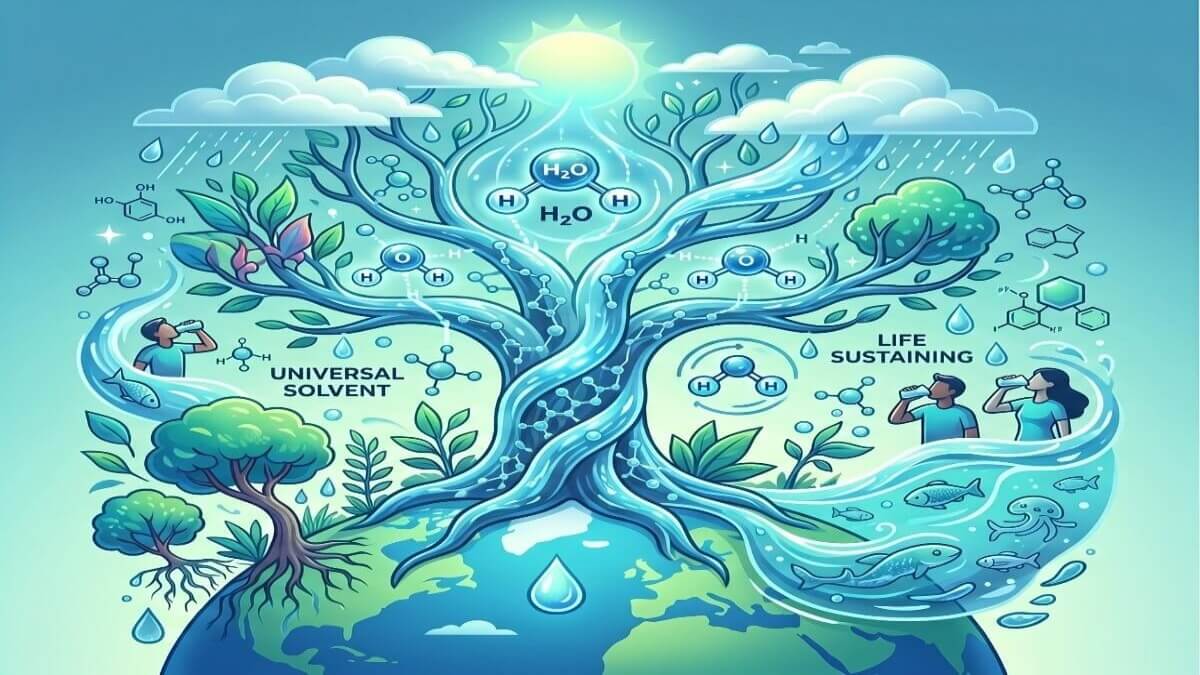
Because of its polarity, water is frequently referred to as the “universal solvent.” This means that water can dissolve more substances than any other liquid on Earth. When you stir a spoonful of sugar into your morning tea or add salt to a pot of boiling pasta, you are witnessing this remarkable property in action.
The positive and negative charges of the water molecules are attracted to the charged particles in other compounds. Water molecules surround these particles and gently pull them apart, absorbing them into the liquid. This ability to dissolve and carry a wide variety of chemicals, minerals, and nutrients is absolutely critical for all living organisms and natural ecosystems.
The Density Anomaly: Why Ice Floats
If you drop an ice cube into a glass of water, it floats. This might seem like a totally normal, everyday occurrence, but it is actually highly unusual in the world of chemistry. For almost every other substance in the universe, the solid state is denser than the liquid state. When most things freeze, their molecules pack tightly together, and they sink.
Water breaks this fundamental rule. When water cools down and begins to freeze, those hydrogen bonds we mentioned earlier push the molecules into a rigid, open, hexagonal crystal structure. This structure takes up more space than liquid water, making ice about nine percent less dense than liquid water. Therefore, it floats.
This quirky chemical feature is literally a lifesaver. If ice sank, lakes and oceans would freeze from the bottom up. During the winter, entire bodies of water would become solid blocks of ice, killing all the fish, plants, and other marine life inside. Because ice floats, it forms a protective, insulating layer on the surface of rivers and lakes, allowing life to survive in the liquid water safely tucked below.
High Specific Heat Capacity
Water has an incredibly high specific heat capacity. In plain terms, this means it takes a very large amount of heat energy to raise the temperature of water even slightly. Conversely, it takes a long time for water to lose its heat and cool down.
This property acts as a massive thermal buffer for our planet. The oceans absorb vast amounts of heat from the sun during the day and slowly release it during the night. This prevents our planet from experiencing extreme temperature swings. Without water’s high specific heat capacity, Earth’s days would be boiling hot, and its nights would be freezing cold, making it nearly impossible for humans or animals to survive. You can learn more about how oceans regulate our climate by visiting the National Oceanic and Atmospheric Administration (NOAA).
Water as the Foundation of Biological Life
We have established that water is a chemical marvel, but how does that translate into supporting life? The simple truth is that where there is water, there is life. When astrobiologists and astronomers search the universe for signs of alien life, they do not look for little green aliens. They look for liquid water. Let us explore exactly why biology is so dependent on this chemical.
Cellular Function and Metabolism
You are mostly made of water. Depending on your age and biological makeup, your body is composed of up to sixty percent water. It is the primary building block of your cells. The interior of every single cell in your body is filled with a watery fluid called cytoplasm. This fluid provides a stable environment where essential chemical reactions can occur safely and efficiently.
All of our metabolic processes rely heavily on water. Digestion, for instance, requires water to help break down the complex carbohydrates, proteins, and fats we eat into smaller, usable molecules. Without water to facilitate these enzymatic reactions, our bodies would not be able to extract energy or nutrients from our food.
The Ultimate Delivery System
Remember how water is the universal solvent? That property makes it the perfect biological transportation system. In humans and other animals, water is the primary component of blood plasma. As blood circulates through our veins and arteries, it carries dissolved oxygen, essential vitamins, vital minerals, and glucose to every cell in the body. Simultaneously, it picks up waste products and carries them to the kidneys and liver for safe filtering and disposal.
Plants rely on water in a very similar way. Trees and flowers draw water up from the soil through their root systems. Because water molecules like to stick together (a property called cohesion) and stick to other surfaces (adhesion), water can travel upwards against the force of gravity through tiny tubes inside the plant. This upward flow carries dissolved soil nutrients to the branches and leaves, keeping the plant healthy and allowing it to grow.
Temperature Regulation in Organisms
Just as water regulates the temperature of our planet, it also regulates the internal temperature of living creatures. As warm-blooded animals, humans need to maintain a very specific core body temperature to stay alive and healthy. When we exercise or spend time in hot environments, our bodies produce sweat, which is almost entirely water.
As the sweat sits on our skin, it begins to evaporate. Evaporation requires heat energy. Therefore, as the water turns into vapor and leaves our skin, it takes the excess body heat with it, effectively cooling us down. Dogs achieve a similar cooling effect by panting, which evaporates moisture from their tongues and respiratory tracts.
Photosynthesis and the Food Chain
If you enjoy breathing oxygen and eating food, you have water to thank. Plants use water as a key ingredient in the process of photosynthesis. Using energy from sunlight, plants combine water pulled from the ground with carbon dioxide absorbed from the air to create glucose (sugar) and oxygen.
This amazing chemical process is the foundation of almost every food chain on Earth. The plants provide energy for herbivores, which in turn provide energy for carnivores. The oxygen released during this process is what fills our atmosphere and allows us to breathe.
Water’s Role in Shaping Our Planet
Water does not just sustain life; it physically shapes the world we live in. Over millions of years, water has acted as a relentless sculptor, carving out deep canyons, building wide valleys, and shifting the very continents.
The Relentless Water Cycle
The Earth operates on a closed-loop system known as the water cycle. The amount of water on our planet right now is essentially the exact same amount of water that was here when the dinosaurs roamed the Earth. The water just continually changes states and moves around.
The cycle begins when the sun heats the oceans, lakes, and rivers, causing liquid water to evaporate into the atmosphere as an invisible gas called water vapor. As this vapor rises into the cooler layers of the atmosphere, it condenses back into tiny liquid droplets, forming clouds. Eventually, these droplets combine, become heavy, and fall back to the Earth as precipitation, such as rain, snow, or hail.
Once the water hits the ground, it flows into rivers, seeps deep into underground aquifers, or is absorbed by thirsty plants. Eventually, all of this water finds its way back to the oceans, and the glorious cycle begins all over again. The United States Geological Survey (USGS) provides fantastic, detailed educational resources about this continuous journey.
Erosion and Geological Sculpting
Water is a powerful physical force. As rivers flow over land, they slowly wear away rocks and soil in a process called erosion. The flowing water carries these tiny sediments downstream, depositing them in new locations. Over incredibly long periods, this slow, persistent action can dramatically alter the landscape.
The Grand Canyon in the United States is one of the most famous examples of water’s sculpting power. Over millions of years, the mighty Colorado River carved a massive gorge through layers of solid rock, creating a breathtaking natural wonder. Glaciers, which are basically massive rivers of slow-moving ice, have also shaped the Earth by grinding down mountains and carving deep U-shaped valleys as they advance and retreat over centuries.
The Human Element: Civilization and Water
The history of human civilization is intimately tied to water. Where there is a reliable source of fresh water, human communities have flourished. Where water is scarce, human progress has historically struggled.
The Birth of Civilizations
If you look at the earliest recorded human civilizations, you will notice a common theme. They all began along the banks of major rivers. The ancient Egyptians relied entirely on the annual flooding of the Nile River to bring nutrient-rich silt to their farming fields. The Mesopotamians built their thriving society between the Tigris and Euphrates rivers. The ancient Indus Valley civilization and early Chinese dynasties similarly blossomed along major waterways.
These rivers provided drinking water, a means of bathing, and a crucial transportation route for early trade and commerce. More importantly, they allowed early humans to transition from nomadic hunter-gatherer lifestyles to settled agricultural societies.
Agriculture and Food Security
Today, agriculture accounts for approximately seventy percent of all global freshwater usage. We use massive irrigation networks to turn dry, arid land into productive farms. Everything we eat requires a significant amount of water to produce. It is not just the fruits and vegetables that need watering. The grain used to feed livestock requires water, and the livestock themselves require drinking water.
Understanding the “water footprint” of our food is becoming increasingly important. For example, producing a single pound of beef requires significantly more water than producing a pound of potatoes or wheat. As the global population continues to grow, finding more efficient, sustainable ways to grow food with less water will be one of our most critical challenges.
Public Health and Sanitation
Clean water is fundamental to public health. Throughout history, waterborne diseases like cholera, typhoid, and dysentery have devastated communities. The development of modern water treatment facilities and safe sewage systems was one of the most significant public health achievements of the modern era.
Access to clean drinking water and proper sanitation facilities prevents illness and reduces mortality rates. It allows children to stay healthy enough to attend school and adults to remain healthy enough to work. We must remember that safe water access is a fundamental human right that everyone, everywhere, deserves.
Global Challenges and Water Conservation
Despite the abundance of water on our planet, very little of it is easily accessible for human use. About ninety-seven percent of the Earth’s water is salty ocean water. Another two percent is locked away in ice caps and glaciers. That leaves less than one percent of all the water on Earth available as fresh, liquid water for humanity and all terrestrial ecosystems to share.
The Threat of Water Scarcity
Because our freshwater supply is so limited, water scarcity is a growing global crisis. Climate change is altering weather patterns, leading to severe, prolonged droughts in some regions and devastating floods in others. Underground aquifers, which provide drinking water for billions of people, are being pumped dry much faster than nature can refill them.
Furthermore, industrial pollution, agricultural runoff, and plastic waste are contaminating the freshwater sources we do have. Microplastics and harmful chemical compounds are increasingly being found in municipal water supplies across the globe. Organizations like the World Health Organization (WHO) actively monitor these challenges and advocate for safer water policies worldwide.
How We Can Protect Our Most Important Chemical
The situation is serious, but it is certainly not hopeless. Every single person has a role to play in protecting our vital water resources. Conservation begins at home with simple, mindful changes to our daily routines.
Here are several highly effective ways you can help conserve water:
-
Fix Leaks Promptly: A single dripping faucet can waste thousands of gallons of clean water over the course of a year. Check your plumbing and repair leaks immediately.
-
Upgrade Your Fixtures: Install low-flow showerheads and water-efficient toilets in your home. These devices use significantly less water without sacrificing performance.
-
Be Mindful in the Bathroom: Turn off the tap while you are brushing your teeth or shaving. Limit your showers to five minutes or less.
-
Run Full Loads: Only run your dishwasher and washing machine when you have a completely full load to maximize water efficiency.
-
Landscape Responsibly: If you have a yard, consider planting native, drought-resistant plants that require very little additional watering. If you must water your garden, do so in the early morning or late evening to minimize evaporation.
-
Reduce Food Waste: Because agriculture uses so much water, throwing away food is exactly the same as throwing away the water used to grow it. Buy only what you need and compost your scraps.
By adopting these inclusive, community-minded habits, we can all contribute to a more sustainable future.
Conclusion
Water is so much more than just a drink to quench our thirst on a hot summer afternoon. It is an intricate, magical chemical compound perfectly designed by nature to sustain life. Its unique polarity, its impressive ability to dissolve other substances, and its strange habit of expanding when frozen all combine to make our planet a habitable oasis in a harsh universe.
From the microscopic inner workings of our cells to the majestic flow of the world’s greatest rivers, water connects all of us. It has shaped our historical civilizations, currently secures our global food supply, and will dictate the future of our climate.
We must never take this incredible resource for granted. By understanding the science of why water is the most important chemical on Earth, we can cultivate a deeper appreciation for it. Let us commit to conserving, protecting, and respecting our water, ensuring that our beautiful blue planet remains a thriving home for all living things for generations to come.
Frequently Asked Questions
Is water actually considered a chemical?
Yes, water is absolutely a chemical. In the field of science, a chemical is any substance that has a defined, consistent molecular composition. Because water is always made of two hydrogen atoms and one oxygen atom (H2O), it perfectly fits the definition of a chemical compound.
Why is water frequently called the “universal solvent”?
Water is called the universal solvent because it is capable of dissolving more substances than any other liquid on Earth. This is due to its polar nature. The slight electrical charges on the water molecules attract and pull apart the molecules of other substances, allowing them to dissolve completely.
If seventy-one percent of the Earth is water, why do we need to conserve it?
While our planet has a massive amount of water, roughly ninety-seven percent of it is saltwater found in the oceans, which humans cannot drink or use for farming. Another two percent is frozen in glaciers and polar ice caps. That leaves less than one percent of the Earth’s water available as easily accessible freshwater for all of humanity to use.
Can we simply create more water in a laboratory?
Technically, it is possible to create water in a laboratory by combining hydrogen and oxygen gases and adding a spark of energy. However, this reaction is highly explosive and incredibly dangerous. It is also completely impractical and far too expensive to do on a scale large enough to solve global water shortages.
What exactly is the water cycle?
The water cycle is the continuous, natural process by which water moves around our planet. It includes evaporation (water turning into a gas), condensation (gas turning into clouds), precipitation (rain or snow falling to the ground), and collection (water gathering in oceans, lakes, and aquifers). This closed system ensures water is constantly recycled across the Earth.
How does climate change affect our water supply?
Climate change disrupts the natural water cycle by warming the atmosphere. This leads to more rapid evaporation, which can cause severe droughts in certain areas. At the same time, a warmer atmosphere holds more moisture, which can lead to extreme, damaging rainfall and flooding in other regions. It also causes sea levels to rise, which can contaminate coastal freshwater supplies with saltwater.