Saffron (Kesar): A Complete Guide to the World’s Most Expensive Spice
Welcome to this blog, dear readers. Today, we will discuss a very special and valuable spice. This spice is saffron. Many people lovingly call it kesar. It beautifully enhances the taste of food. It also has some extraordinary health benefits. Let us learn all the details about this red gold.
What is Saffron (Kesar)?
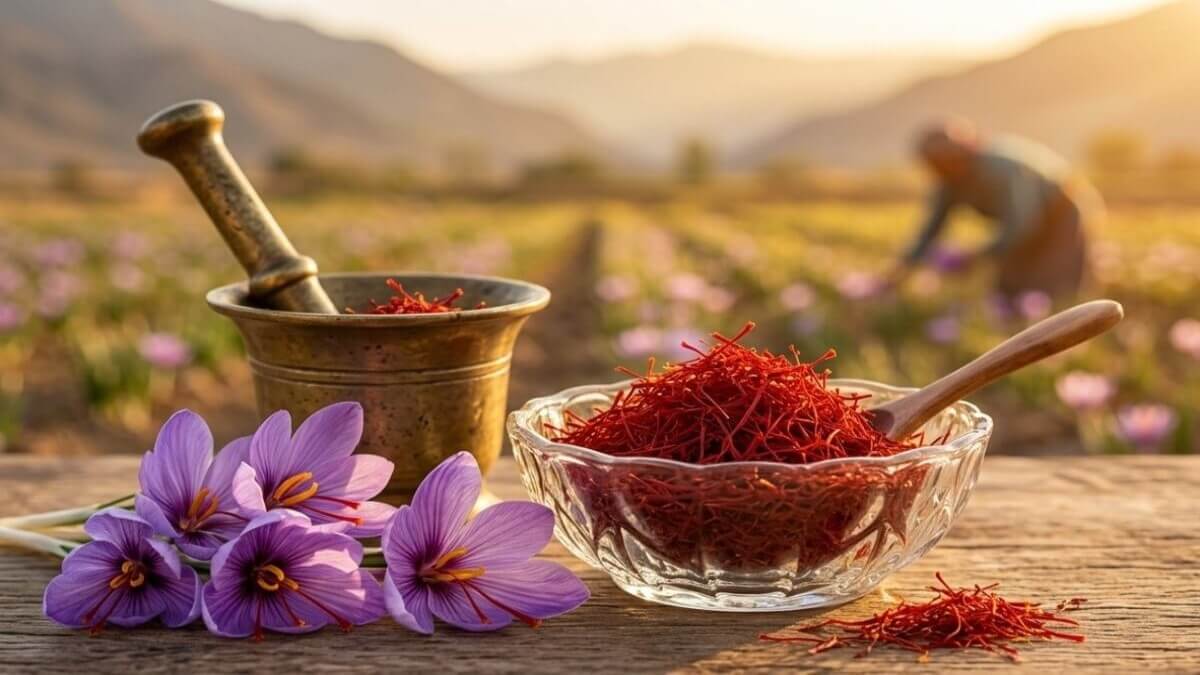
Saffron is a highly valuable and aromatic spice. Farmers harvest it from a beautiful flower called Crocus sativus. This flower has a striking dark purple color. Each flower contains only three small red threadlike parts. Botanists call these parts stigmas.
Producers carefully dry these stigmas to make saffron. Its bright red color and unique aroma easily fascinate everyone. Cooks around the world widely appreciate it in various cuisines. It creates a royal vibe in any sweet or savory dish. People have long respected this spice.
Why Saffron is the Most Expensive Spice in the World
Many people ask why this spice costs so much. The main reason is its extremely difficult production method. Using machinery for cultivation or harvesting is completely impossible. The entire process requires intricate human handwork.
Producing one pound of saffron takes a massive amount of hard work. Farmers must handpick about 75,000 to 80,000 flowers. Then they carefully separate the red threads from the flowers. This immense physical labor significantly increases its price. Additionally, the plant needs a specific climate and fertile soil. All these factors combine to make it the most expensive spice in the world.
History and Cultural Significance of Saffron
The history of this spice is very ancient and rich. Historians believe people began using it about 3,500 years ago. Ancient Greeks and Romans used it as perfume. They mixed it into their bathwater for a luxurious experience.
Queen Cleopatra reportedly used it in her beauty routines. It was a highly valuable trade commodity in the ancient Persian Empire. They also used it as medicine and fabric dye. Buddhist monks dyed their robes with this bright spice. It has maintained its position as a symbol of nobility and purity across various cultures throughout the ages.
How Saffron is Cultivated and Harvested
Saffron production is a true art. It demands a lot of patience and skill. Farmers cultivate it with great care during a specific time of the year.
The Saffron Crocus Flower
The saffron crocus flower is a very sensitive plant. This flower usually blooms in mid-autumn. It cannot tolerate extreme heat or heavy rain. It requires dry summers and mild winters to thrive. The soil drainage system must be excellent.
Handpicking the Precious Stigmas
Farmers must work very quickly after the flowers bloom. They wake up very early in the morning. They collect the flowers before the sunlight gets too strong. The petals can wilt easily under excessive sun. Then the whole family works together to separate the red stigmas from the flowers. They do this task very carefully using their fingers.
Major Saffron Producing Regions Around the World
Only a few countries in the world produce this spice commercially. Iran is currently the largest saffron-producing country in the world. They meet about 90 percent of the global demand. Spain comes next on the list. The kesar produced in the Kashmir valley of India is famous worldwide. Afghanistan, Greece, and Morocco also cultivate it in significant quantities.
Types of Saffron
You can find different types of saffron in the market based on origin and processing. Each type has its own distinct characteristics.
Kashmiri Saffron
Experts consider Kashmiri saffron to be the highest quality in the world. Its color is very dark red, and the threads are quite long. Its aroma is extremely intense and captivating. The special climate and soil of Kashmir give it these unique features. It is one of the most expensive varieties available in the market.
Persian (Iranian) Saffron
This variety from Iran is the most widely available in the global market. You can divide Iranian saffron into a few categories. Among them, Sargol and Negin are the most famous. Negin threads are completely red and slightly elongated. Its quality is excellent, and the price remains relatively affordable.
Spanish Saffron
Spanish saffron is quite popular in the culinary world. It usually has a slightly lighter color. It offers a sweet taste alongside its pleasant aroma. Spanish people use it to make their traditional dish called paella. Traders often refer to it as Coupe grade.
Afghan Saffron
Afghan saffron has made a strong name for itself in the international market in recent years. International taste and quality control organizations have recognized it as the best several times. The dry climate of Afghanistan is well-suited to its cultivation. Its threads are thick and brightly colored.
How Saffron is Graded
Saffron follows an international grading system to maintain quality. Organizations call it ISO 3632. This method precisely measures its color, taste, and aroma. An ingredient called crocin determines its color intensity. The grade improves as the crocin content increases.
Nutritional Value of Saffron
This spice is not just for taste but also provides great nutritional benefits. Using a very small amount of supplies provides our bodies with various nutrients.
Calories and Macronutrients
Saffron contains very few calories. You will get almost zero calories if you use a tiny pinch. It contains a small amount of carbohydrates and protein. The fat content is absolutely negligible. Therefore, you can safely include it in a weight loss diet.
Vitamins and Essential Minerals
It is a good source of several important vitamins and minerals. It contains vitamin C and vitamin B6. You will also find potassium, magnesium, and iron in it. These minerals help with blood circulation and bone formation in our bodies.
Crocin, Safranal, and Picrocrocin
These three elements basically give saffron its special identity. Crocin is responsible for its bright red color. Safranal provides its enchanting aroma. Picrocrocin imparts its slightly bitter, incomparable taste. Scientists have proven that these three compounds are highly beneficial for the human body.
Antioxidants and Bioactive Compounds
It is a huge storehouse of powerful antioxidants. Antioxidants effectively protect our body cells from damage. These compounds fight against harmful free radicals. Consuming it regularly naturally strengthens the body’s immune system.
Top Health Benefits of Saffron
You can get various health benefits by using this spice regularly and in the right amount. Let us learn about its main benefits.
Rich in Powerful Antioxidants
We already know that it contains plenty of antioxidants. These elements keep our body healthy from the inside. They help remove toxic substances from the body. As a result, the risk of many complex and chronic diseases decreases over time.
May Help Maintain Mood and Mental Well-being
People often call it the sunshine spice. This is not just for the color. It also helps lift people’s moods. Several studies have shown that it increases serotonin levels in the brain. Serotonin helps keep our minds cheerful and relaxed.
Improves Cognitive Health
Consuming saffron regularly can help boost human memory. It keeps brain cells healthy and active. Older people often suffer from memory loss issues like Alzheimer’s disease. Doctors believe this spice can be quite beneficial for them.
May Support Cardiovascular Health
It is incomparable for keeping the heart completely healthy. Its antioxidant compounds help clear blockages in blood vessels. It lowers bad cholesterol levels in the blood. This significantly reduces the risk of heart attacks.
Supports Eye Health
Human eyesight tends to decrease with age. Doctors call this condition macular degeneration. This spice increases blood circulation to the retina. This keeps the eye cells fresh and functioning well. Eating it regularly keeps eyesight good for a long time.
Contributes to Overall Wellness
In addition to the above benefits, it increases our digestive power. It is also quite effective in reducing menstrual pain for women. It helps increase skin glow and vitality. Overall, it plays an excellent role in human wellbeing.
Saffron and Mental Wellbeing: What the Research Says
Scientists constantly research saffron to uncover its secrets. A study from the National Library of Medicine showed that it works very well in reducing mental fatigue or depression. Doctors sometimes advise patients suffering from mild depression to consume it.
They have noticed that it can work just like many conventional medicines. The biggest advantage is that it has very few side effects because it is a natural ingredient. Patients can consume it regularly to maintain a positive mindset. However, you must always consult an experienced doctor first for any illness.
The Science Behind the Antioxidant Properties of Saffron
From a scientific perspective, saffron has an excellent chemical structure. Its main power lies in the compounds called crocin and crocetin. These are completely water-soluble antioxidants. They can mix into the bloodstream very quickly.
Some harmful molecules emerge during cell division inside the body. Scientists call these free radicals. Crocin destroys these free radicals rapidly. This protects the cells from aging quickly. The World Health Organization (WHO) always encourages people to eat foods containing natural antioxidants.
Saffron in Ayurveda, Unani, and Traditional Medicine
People in various parts of Asia have used it as medicine since ancient times. Ayurveda describes it as a powerful warming spice. Ayurvedic practitioners consider it an effective eliminator of phlegm and wind.
Unani doctors use it to solve heart and brain problems. Traditional medicine uses it to treat fever, colds, and stomachaches. Feeding it mixed with milk to increase the strength of new mothers is a very ancient custom. It remains an integral part of our ancient medical science.
What Does Saffron Taste Like?
Many people feel curious about its taste before trying it for the first time. Describing its taste is somewhat difficult. This is because it is completely different from any other spice.
Flavor Profile and Aroma
Its aroma is sweet and somewhat floral. Many people compare its scent directly to honey. However, its taste is not sweet at all. It has a slightly bitter, earthy taste. This mixture of sweet fragrance and slightly bitter taste gives it a unique dimension.
Color and Culinary Impact
Cooks appreciate it primarily for its magical color. Just a few threads can change the color of an entire plate of food. It gives the food a wonderful golden yellow hue. This color gives a royal look to any ordinary dish.
Why a Little Goes a Long Way
You do not need to use a lot of it in food. A pinch or three to four threads is enough for a standard recipe. Its taste and color remain extremely concentrated. Using too much can make the food bitter. Therefore, you must use it very sparingly.
How to Use Saffron in Cooking
You will not get its real taste and color if you do not use it properly. There are some special rules for adding it to cooking.
Steeping Saffron for Maximum Flavor
You should not put it directly into your cooking pot. You have to soak the threads in lukewarm water or milk before use. It is best to soak it for at least fifteen to twenty minutes. This allows the threads to release their full color and aroma. Then you need to add it to the food along with that liquid.
In Rice and Biryani Dishes
When we think of biryani or pulao, saffron comes to mind first. It is an integral part of these delicious dishes. You must sprinkle the soaked saffron water over the rice at the very final stage of cooking. Then you have to keep the pot on a low simmer for a while. This spreads its aroma throughout the entire dish.
In Desserts and Sweets
It works like absolute magic in sweet dishes. Cooks use it widely to make payesh, firni, or shemai. Sprinkling a couple of threads over rasmalai or sandesh makes it look great. It instantly multiplies the taste of the sweets.
In Milk, Tea, and Traditional Beverages
Drinking it mixed with warm milk is extremely healthy. It keeps the body warm and helps ensure good sleep. People in the Middle East and South Asia make a special type of tea with it. These drinks are very popular for warmly entertaining guests.
Popular Recipes Using Saffron
You can easily make great dishes at home using this spice. Below are some famous recipe ideas to try.
Saffron Rice
Making this is very easy. Cook basmati rice following the normal method. Soak a few threads of kesar in warm water in a small bowl. Sprinkle this yellow water over the rice shortly before taking it off the stove. Spread a little ghee and mix well. There you go, aromatic saffron rice is ready.
Kashmiri Kahwa
Kahwa is a traditional green tea of Kashmir. To make it, you have to boil cinnamon, cardamom, and saffron in water. Then you have to add green tea leaves to it. You mix honey and chopped almonds into it during serving. This is an excellent hot drink for the winter season.
Kesar Milk
This is a highly nutritious drink. Mix a pinch of kesar and a little sugar or honey in a glass of warm milk. You can crush some pistachios or cashew nuts into it if you want. Drinking this before going to sleep at night calms the mind wonderfully.
Saffron Kulfi and Desserts
Everyone loves kulfi on a hot summer day. Thicken the milk by boiling it, then mix in kesar, pistachios, and cardamom powder. Then pour the mixture into kulfi molds and let it freeze in the deep fridge. Its wonderful color and taste will delight everyone.
Saffron vs. Turmeric: Key Differences
Many people use turmeric instead of saffron to color their food. Many even get confused between them. But there is a huge difference between the two ingredients. Turmeric comes from an underground root. Saffron is a delicate part of a flower.
Turmeric has a somewhat pungent and strong taste. On the other hand, the taste of saffron is much more subtle and floral. Turmeric is much cheaper, and cooks use it as a primary cooking spice daily. However, cooks use saffron in small quantities, mainly to enhance aroma and elegance.
Pure Saffron vs. Fake Saffron: How to Tell the Difference
Since it is a very expensive item, there are many fake products in the market. Dishonest traders color corn silk or other plant threads and sell them. These fake items can be harmful to human health.
An easy way to identify fake saffron is the cold water test. Pure threads will slowly turn a golden yellow when dropped into cold water. The thread itself will remain red. But fake threads will spread a dark red color very quickly when dropped in water. After that, the thread will lose its color and become white or pale.
How to Identify High-Quality Saffron
You need to keep a few things in mind when buying a good product at the right price.
Color, Aroma, and Texture
High-quality threads will be completely dark red. They will not have any yellow or white parts attached. One end of the threads will be slightly wide, and the other end will be narrow. Its smell will be very fresh and intense. You should understand that it is quite old if its smell is very weak.
Understanding Saffron Grades
It is good to check the ISO grading when buying a packet. It is of the best quality if it says Grade 1 or Category 1 on the label. Buying from a familiar and trusted shop or brand is always safe. Checking the manufacturing date on the packet is also very important.
Common Signs of Adulteration
Traders sometimes coat it with oil or honey to artificially increase its weight. It might be adulterated if the threads stick together like glue. Pure threads will always be dry and completely separate from each other.
Proper Tips for Storing Saffron
Knowing the correct storage method is essential to keep this expensive spice fresh for a long time.
Best Containers for Storage
You must always keep it in a clean and completely dry glass jar. You absolutely should not use plastic containers. Air cannot enter a sealed glass container. Using small and dark-colored glass containers is the best approach.
Protecting Aroma and Potency
You must always keep the container out of direct sunlight or bright light. You cannot keep it near the stove or in a very hot place. A cool and dark cupboard is the most suitable place to store it safely. Moisture can accumulate in it when taking it out repeatedly if kept in the fridge. Therefore, it is better not to keep it in the fridge.
Shelf Life and Indicators of Freshness
It stays good for two to three years if stored properly. However, you get the best taste and aroma if you use it within the first year. You should understand that its shelf life is coming to an end if you notice its aroma has disappeared or its color has turned pale.
Potential Side Effects and Precautions
Just as everything has good sides, excessive use also has its downsides. The same rule applies to this spice.
Safe Consumption Guidelines
The amount we use in regular cooking is completely safe. A quantity of 30 to 50 milligrams is enough for an adult every day. There is absolutely no need to eat more than this daily.
Risks of Overconsumption
Eating too much at once can cause various physical problems. Consuming more than 5 grams can create toxicity. Eating too much can cause dizziness, nausea, or stomach issues like diarrhea. Therefore, you must always use a moderate amount.
Who Should Exercise Caution?
Pregnant mothers should be careful when eating it. Consuming it in excessive amounts can cause uterine contractions. Therefore, pregnant women should not eat it in large quantities without consulting a doctor. Those who have low blood pressure must also exercise caution when using it.
Frequently Asked Questions About Saffron
People constantly have various questions about this spice. We have tried to answer some common questions here.
Why is Saffron So Expensive?
The main reason is that workers must collect it entirely by hand. It takes about 150 flowers to get just one gram of spice. This extremely labor-intensive process and specific climate requirements drive up its price immensely.
How Much Saffron Should Be Used?
Just 3 to 5 threads or a small pinch is enough for a standard family recipe for four people. Adding more can make the food unpleasantly bitter.
Does Saffron Expire?
Yes, it does expire eventually. It does not rot easily, but it loses its aroma and nutritional value over time. It is best to use it within two years of purchase.
Saffron in Global Cuisine
We see this spice used in the traditional cuisines of various countries around the world. Every culture has adopted it in its own unique way.
Saffron in Indian Cuisine
The Indian subcontinent has used it since the Mughal era. It is essential for making dishes like biryani, korma, zarda, and rasmalai. It instantly brings a royal scent and festive vibe to the food. The Hindu religion also uses it as a sacred element in various rituals.
Saffron in Persian Cuisine
Iranian or Persian cuisine uses it the most globally. They use a lot of it in making their pulao or chelo kebab. They also make a special type of ice cream known as bastani. Cooks make this ice cream with saffron, rose water, and pistachios.
Saffron in Mediterranean and European Food
The famous Spanish dish paella is totally incomplete without it. The famous risotto alla milanese of Milan, Italy, uses this spice prominently. It is also a main ingredient in making bouillabaisse, a famous fish soup from the coastal areas of France. Europeans mix it into their cooking with great care and respect.
Final Thoughts on Saffron (Kesar)
We have reached the very end of our long discussion. We hope you have learned a lot about this wonderful spice today.
Key Takeaways
Saffron is not just a simple spice; it is a wonderful blend of history, culture, and nutrition. Its unique taste and health benefits set it apart from all other spices. You must definitely learn to identify the pure product when buying from the market.
Why Saffron Remains the King of Spices
It has held its throne as the absolute king of spices for thousands of years. Modern science has also proven its various beneficial properties. Its appeal has not diminished in the least, even after hundreds of years of use.
Simple Ways to Enjoy Saffron’s Taste, Aroma, and Benefits at Home
You can easily add it to your daily life if you want. Drop a few threads into a glass of warm milk or your favorite tea. It will keep both your body and mind completely refreshed. Absorb all the benefits of this red gold by using it the right way. Stay healthy and enjoy good food every day.