
Can Humans Live on Mars?
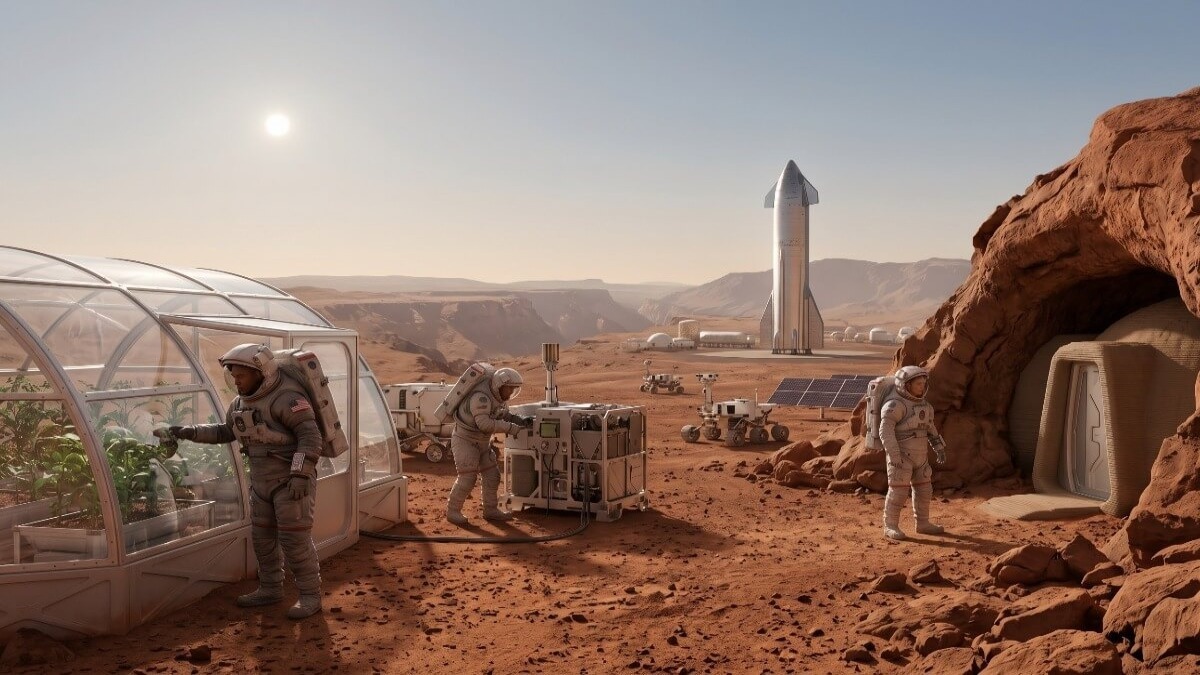
When we look up at the night sky, a reddish dot often captures our attention. That dot is the planet Mars. For centuries, this planet has sparked humanity’s imagination. What was once merely the subject of science fiction has now become one of the primary goals of modern science. With unprecedented technological advancements, a single question is on everyone’s mind today. Can humans live on Mars?
This is no longer just a theoretical question. Scientists, space agencies, and private organizations are taking it very seriously and searching for answers. In this guide, we will explore the possibilities, challenges, and future of establishing human settlements on Mars.
Why Mars is the Prime Candidate for Human Settlement
Even though our solar system has many other planets and moons, there are very logical reasons for choosing Mars. First, Mars is relatively close to Earth. Second, the length of its day and night is very similar to ours. A day on Mars (called a ‘sol’) equals 24 hours and 39 minutes on Earth.
The most important factor is the confirmed presence of water. Scientists are certain that large amounts of water exist as ice in the polar regions. Mars also provides a solid surface to land on, unlike the extreme heat of Venus or the gas giants. This makes the Martian environment comparatively more favorable for human survival than any other planet in our solar system.
Humanity’s Long-standing Fascination with the Red Planet
Since ancient times, Roman and Greek civilizations considered Mars the god of war. Later on, when telescopes were invented, scientists saw lines on the Martian surface. Many thought these were canals built by an advanced civilization. This idea gave rise to countless stories and movies about extraterrestrials, or “Martians.”
At the dawn of the space age in the 20th century, human curiosity about Mars grew even stronger. We realized that Mars was once warm and wet just like Earth. This discovery thrills us with the thought that life might have existed there once, and that humanity might be able to build a second home there in the future.
Understanding Mars: A Brief Overview of the Red Planet
Before going to Mars, we need to understand the planet thoroughly. It is not just a rocky sphere. It is a world full of its own unique characteristics and diversity.
Key Facts About Mars
Mars is the fourth planet from the Sun. In terms of size, it is about half the size of Earth. Its gravity is only 38% of Earth’s gravity. If you weigh 100 kg on Earth, you will weigh only 38 kg on Mars.
Mars has two small moons named Phobos and Deimos. The planet’s surface looks reddish because the soil is rich in iron oxide, also known as rust. The atmosphere is very thin and is made mostly of carbon dioxide. It lacks Earth’s atmospheric pressure, which poses a massive challenge for the human body.
Comparing Mars to Earth
Earth and Mars share some fascinating similarities, but their differences are severe.
| Feature | Earth | Mars |
| Atmosphere | 21% Oxygen, 78% Nitrogen | 95% Carbon Dioxide, 0.13% Oxygen |
| Average Temperature | 15°C | -60°C |
| Gravity | 100% (1g) | 38% (0.38g) |
| Year Length | 365 Days | 687 Days |
| Magnetic Field | Strong (protects from radiation) | None |
Like Earth, Mars experiences changing seasons because it tilts on its axis. Since a Martian year is nearly twice as long as ours, each season lasts almost twice as long.
Why Do Scientists Want to Send Humans to Mars?
Despite all these obstacles, why are scientists spending billions of dollars to send humans to Mars? There are several profound motives behind this effort.
Expanding Human Exploration Beyond Earth
According to famous scientist and entrepreneur Elon Musk, humanity needs to become a multi-planetary species. This means if we rely solely on one planet, a cosmic disaster could wipe out the entire human race. By establishing a colony on Mars, we aim to expand the boundaries of our existence.
This is also part of human curiosity and our relentless desire to explore the unknown. We have explored almost everything on Earth. Space is our next frontier, and Mars is the first realistic step in that journey.
Scientific Discovery and Long-term Survival Goals
Direct scientific research is another major reason for sending humans to Mars. While robots and rovers do excellent work, a human can analyze soil or rocks in minutes. The same task might take a rover several months.
Did life ever exist on Mars? Finding the answer to this question is one of science’s greatest goals. If we find fossils of ancient microbes there, it will prove that the creation of life is not a rare event in the universe. This mission will also help drive the invention of new technologies for the long-term survival of humanity.
Can Humans Survive on Mars?
The direct answer is yes. However, it will require highly advanced technology and endless caution. Mars is not naturally habitable for humans.
Basic Needs for Human Life
We primarily need four things to survive on Earth: oxygen to breathe, clean water to drink, nutritious food, and shelter. Every single one of these things is naturally available on Earth. None of them are easily accessible on Mars. Surviving on Mars means producing these basic needs artificially and entirely independently.
Obstacles to Living in the Martian Environment
If a person steps outside on Mars without a spacesuit, they will die within minutes. Due to the low atmospheric pressure, bodily fluids would begin to boil, and the lack of oxygen would cause immediate unconsciousness. Furthermore, extreme cold and cosmic radiation would slowly destroy the human body. To survive on Mars, humans must live in completely sealed, controlled environments.
Major Barriers to Human Life on Mars
The biggest hurdles to settling on Mars are physical and environmental. Let us explore these barriers in detail.
Thin Atmosphere and Lack of Oxygen
As mentioned earlier, 95% of the Martian atmosphere is carbon dioxide. Its atmospheric density is only 1% of Earth’s. Breathing in this condition is absolutely impossible. To solve this problem, NASA sent an instrument called MOXIE on its Perseverance rover. This device successfully pulled in Martian carbon dioxide and converted it into oxygen. This is a groundbreaking discovery that will play a huge role in generating breathable air and rocket fuel for future missions.
Extreme Temperatures and Harsh Weather
Temperatures on Mars fluctuate wildly. In the equatorial regions, daytime temperatures can rise to 20°C, but at night they can plummet to -73°C.
Mars also experiences terrifying dust storms. Sometimes these storms cover the entire planet and last for months. These dust storms can blanket solar panels and completely shut down power production. This exact scenario is why NASA’s Opportunity rover permanently stopped working in 2018.
Risks of Radiation Exposure
Earth’s magnetic field protects us from harmful radiation from space. Mars does not have this magnetic field, known as a magnetosphere. As a result, harmful solar flares and galactic cosmic rays constantly hit the Martian surface.
Prolonged exposure to this radiation heavily increases the risk of cancer for astronauts. It can also damage human DNA and affect the central nervous system. Surviving this radiation is one of the toughest challenges of living on Mars.
Low Gravity and Its Health Effects
Martian gravity is only 38% of Earth’s. From our experience on the International Space Station (ISS), we know that human muscles and bones weaken rapidly in low-gravity environments. As bone density decreases, bones become highly prone to breaking.
People living on Mars will need to exercise strictly for several hours every day. Even so, if a person returns to Earth after living there for a few years, Earth’s normal gravity might become unbearable for their body.
How Could Humans Build Habitats on Mars?
A habitat is the first and primary line of defense for humans on Mars. It must not only provide shelter but also ensure complete protection from the extreme external environment.
Safe and Sustainable Martian Home Design
Martian habitats must be completely airtight and pressurized. Their walls need to be incredibly strong to protect against external radiation and small meteorite impacts. Every habitat must feature an airlock system to prevent indoor air from escaping when someone enters or leaves.
Underground and Dome-based Colonies
According to scientists, building habitats directly on the surface of Mars is extremely risky. A much better approach is to build homes underground. Mars has many lava tubes, which are massive tunnels left by extinct volcanoes. Building human habitats inside these tunnels will naturally provide shielding from harmful radiation and extreme temperatures.
Another concept is building domes. These domes could be covered with a thick layer of Martian soil, known as regolith, which would act as an effective radiation shield.
Utilizing Martian Resources for Construction
Taking bricks or steel from Earth to build houses on Mars is impossible and insanely expensive. Therefore, we must use Mars’ own resources. This process is called In-Situ Resource Utilization (ISRU). Scientists are researching methods to create a special type of concrete using Martian soil. This concrete will make it possible to build houses directly on Mars.
Food, Water, and Energy on Mars
For long-term survival, relying on supplies sent from Earth will not work. A self-sustaining production system must be developed on the planet.
Growing Crops in Martian Conditions
You cannot just plant seeds in Martian soil and expect crops to grow. The soil contains toxic chemicals called perchlorates, which are dangerous to humans.
To grow crops, modern techniques like hydroponics (growing plants in nutrient-rich water without soil) or aeroponics will be required. Vegetables can be cultivated in sealed, controlled greenhouses with artificial light and precise temperature control. Human waste and leftovers will need to be recycled and used as fertilizer.
Finding and Producing Water
Water exists on Mars, but not in a liquid state. Huge layers of ice are buried beneath the surface in the polar regions. Scientists plan to send robots to dig up this ice, melt it, and purify it into drinking water. This water will be used not only for drinking but also for growing crops and for splitting it into oxygen and hydrogen to create rocket fuel.
Solar and Nuclear Power Solutions
Running machinery and life support systems on Mars requires immense amounts of energy. Solar power can be used initially, but severe Martian dust storms can reduce solar panel efficiency.
Therefore, a nuclear reactor will be necessary as a reliable power source. NASA is already working on a small, portable nuclear reactor called Kilopower, which can provide continuous electricity regardless of dust storms or the darkness of night.
Transportation to Mars
Even though Mars is our neighboring planet, getting there is no easy task. It is one of the toughest technological challenges in human history.
How Long Does It Take to Reach Mars?
Both Earth and Mars orbit the Sun. This means the distance between them is never constant. Every 26 months, Earth and Mars come closest to each other. This specific timeframe is called a launch window.
Launching a rocket from Earth during this window usually takes 7 to 9 months to reach Mars. During this long journey, astronauts will be confined to a small spacecraft, which will be incredibly taxing both physically and mentally.
Current and Future Spacecraft Technology
The most talked-about vehicle for sending humans to Mars today is SpaceX’s Starship. Elon Musk designed this massive rocket to carry 100 people and plenty of cargo to Mars at once. It is a fully reusable spacecraft.
On the other hand, NASA is utilizing the Space Launch System (SLS) rocket through their Artemis program. Their initial goal is to build a permanent base on the Moon, which will make traveling to Mars much easier in the future.
The Role of Technology in Colonizing Mars
Surviving a single day on Mars is impossible without technology. Several cutting-edge technologies will play a core role in making future missions successful.
Artificial Intelligence and Robotics
Long before humans arrive, robots will travel to Mars to set up base camps. Artificial Intelligence (AI)- controlled robots will automatically build habitats, extract water from ice, and set up solar panels. Even when humans are present, dangerous tasks will be handed over to robots. AI systems will monitor the temperature, air pressure, and power supply of the entire colony.
3D Printing and Resource Utilization
3D printing technology will be a game-changer on Mars. Massive 3D printers will be built on Earth and sent to Mars. These printers will use Martian soil to automatically print habitats, roads, and other essential structures. If a machine part breaks, we cannot order a replacement from Earth. It will have to be manufactured right there using a 3D printer.
Advanced Life Support Systems
Every single molecule of water and oxygen is incredibly precious on Mars. This requires an advanced Environmental Control and Life Support System (ECLSS). The International Space Station currently has a system that filters astronauts’ sweat and urine, converting it back into 98% pure drinking water. This system will need to be even more flawless and self-reliant on Mars.
Psychological and Social Barriers to Living on Mars
The Martian environment is not just physically hostile. It is psychologically brutal as well. The mental health aspects cannot be ignored.
Isolation and Mental Health Concerns
The distance from Earth to Mars is so vast that significant time delays occur in communication. A message from Earth can take anywhere from 3 to 22 minutes to reach Mars. This means direct phone calls or video chats with loved ones back home will be impossible.
Living for years in a small, enclosed space with just a handful of people, while being unable to step outside, can cause severe loneliness and depression. According to the World Health Organization (WHO), long-term isolation has a profound impact on human mental health.
Building a Community on Another Planet
Forming a small colony or community on Mars requires unity among people from various countries and cultures. Minor disagreements there could lead to massive disasters. This is why, before going to Mars, astronauts spend months living together in simulated Martian habitats in remote parts of Earth, such as Hawaii or Antarctica, to practice working as a team.
Making Mars Habitable: Science Fact or Fiction?
Many people dream of a day when humans will walk the surface of Mars without spacesuits. This concept is called terraforming.
What is Terraforming?
Terraforming is the theoretical process of artificially changing a planet’s environment, temperature, surface, and ecosystem to make it Earth-like and habitable. For Mars, this means raising the planet’s temperature and thickening its atmosphere so that liquid water can exist on the surface and humans can breathe open air.
Proposed Methods and Scientific Hurdles
Several methods have been proposed for terraforming. For example, placing giant mirrors at the Martian poles to reflect sunlight and melt the ice, or triggering nuclear explosions at the poles to release trapped carbon dioxide and create a greenhouse effect.
However, modern scientists believe that terraforming Mars is nearly impossible with our current technology. There is simply not enough carbon dioxide left on Mars to raise the temperature of the entire planet. Furthermore, since there is no magnetic field, solar winds would slowly strip away any new atmosphere we manage to create. It might be possible through advanced technology thousands of years from now, but for now, it remains in the realm of science fiction.
Current Mars Missions and Future Plans
The dream of sending humans to Mars is no longer confined to paper. Various space agencies are actively working toward this goal.
Robotic Exploration on Mars
NASA has conducted several highly successful robotic missions over the last few decades. The Curiosity and Perseverance rovers are currently roaming the Martian surface and sending back crucial data. A small helicopter named Ingenuity even made history by successfully flying in the thin Martian atmosphere. The European Space Agency (ESA) and China have also sent their own rovers. All these robotic missions are paving the way for human arrival.
Proposals for Upcoming Human Missions
NASA has set a goal to send the first humans to Mars in the 2030s or 2040s. Their current Artemis mission will establish a base on the Moon, which will serve as a testing ground for Mars missions.
Meanwhile, SpaceX founder Elon Musk’s goals are much more aggressive. He has expressed hope to send the first crewed Starship to Mars before the end of this decade. Although this timeline is highly ambitious, technological progress is moving at an incredibly fast pace.
The Path to a Permanent Human Presence
A step-by-step approach must be followed for a permanent presence on Mars. In the first phase, cargo and equipment will be shipped. ..In the second phase, a few astronauts will arrive, set up a base camp, and return to Earth. In the following phases, people will be sent in increments and begin living there permanently. Slowly, this will turn into a self-sustaining colony.
Potential Benefits of Living on Mars
After taking so many risks and spending massive amounts of money, what do humans actually gain by going to Mars? The answer is not limited to mere survival.
Scientific Advancement and Innovation
Space exploration constantly drives the creation of new technologies on Earth. Technologies developed during the Apollo missions are part of our daily lives today, like water filters and cordless tools. The advanced water purification systems, sustainable energy production, and medical science required to survive on Mars will be directly useful in solving environmental issues and improving the quality of life on Earth.
Ensuring the Long-term Survival of Humanity
As mentioned earlier, having a fraction of humanity on a planet outside Earth acts as a backup for our existence. Even if a massive asteroid strike, extreme climate change, or nuclear war makes Earth uninhabitable, the human race will not go entirely extinct.
Expanding Economic and Exploration Opportunities
A successful colony on Mars will open new doors for the space economy. Mining valuable resources from the nearby Asteroid Belt will be much easier from Mars. Because Mars has lower gravity, launching rockets from there will be significantly cheaper. This could become the hub of a massive future space industry.
Risks and Ethical Questions of Colonizing Mars
Alongside the thrill of conquering space, several serious ethical and legal questions arise.
Protecting the Martian Environment
If any primitive microbes or life forms exist on Mars, bringing Earth bacteria and germs could completely destroy the native Martian ecosystem. This is known as forward contamination. Scientists argue that before settling humans on Mars, we must ensure we are not harming any potential life there.
Extraterrestrial Governance and Human Rights
Who will govern Mars? According to the 1967 Outer Space Treaty, no single country can claim ownership of any planet in space. But when private companies build colonies there, what will the laws look like? Ensuring human rights and labor laws for the residents of Mars will require entirely new international treaties.
Balancing Costs and Benefits
Building a city on Mars will cost trillions of dollars. Many argue that spending so much money to go to another planet is illogical when we have massive problems like poverty, starvation, and climate change right here on Earth. This is a fierce debate. Supporters, however, argue that space exploration budgets are incredibly tiny compared to global military spending, and the long-term benefits are far greater.
What Will Daily Life on Mars Look Like?
If humans overcome all these hurdles and finally settle on Mars, what will their everyday lives actually look like?
Work, Education, and Entertainment in a Martian Colony
The main job of the Martian residents will be to keep the colony running. Repairing equipment, growing crops, and conducting scientific research will be their daily chores. Advanced Virtual Reality (VR) might be used for children’s education. For entertainment, there will be indoor games, movies, and libraries. To step outside the colony, wearing a heavy spacesuit will be absolutely mandatory.
Adapting to a New World
Future generations born on Mars might never see Earth. Growing up in lower gravity might alter their physical development, meaning they could potentially grow taller than humans on Earth. Mars will develop its own unique culture, language, and lifestyle, which will be entirely different from Earth’s.
Frequently Asked Questions (FAQs)
Can humans really live on Mars?
Yes, it is theoretically and technologically possible. However, it is extremely challenging and requires artificial habitats simulating Earth’s controlled environment, advanced technology, and massive resources.
How long could a human survive on Mars without protection?
Without protection or a spacesuit, a human would not survive for more than a few minutes in the Martian environment. The lack of atmospheric pressure and the extreme cold would cause rapid death.
Is there water on Mars?
Yes, there is plenty of water on Mars. However, it is not in a liquid state. It is frozen in massive ice caps at the poles and buried deep beneath the surface.
When will humans first set foot on Mars?
According to current plans by NASA and other space agencies, humans could first set foot on Mars in the late 2030s or the 2040s. Private company SpaceX, however, aims to achieve this mission much sooner.
What are the biggest challenges of colonizing Mars?
The biggest challenges include protection from cosmic radiation, generating breathable oxygen and water, dealing with the health impacts of low gravity, and managing psychological stress.
Conclusion
Is Mars Humanity’s Next Home?
Mars is not just a laboratory for scientists. It is a symbol of hope and a new possibility for human survival. Although living on Mars will not be as comfortable as life on Earth, the current trajectory of science and technology proves it is no longer an impossible dream. Despite massive hurdles such as extreme temperatures, lack of oxygen, and radiation, human innovation is paving the way to solve these challenges.
The Future of Human Exploration Beyond Earth
Our journey to Mars is not just a story of conquering a planet. It will prove that humans are capable of surviving in the infinity of the universe, extending beyond the borders of their home world. This journey will be extremely difficult, expensive, and risky. But through it, we will begin a chapter in human history that transforms us into a multi-planetary species. Mars may not be our original home, but for future generations, it could become a beloved one. Humanity’s next frontier is undeniably meant to be written in the dusty soil of the Red Planet.