
Exploring the Mysteries of the Universe: A Deep Dive
Introduction
Looking up at the night sky fills us with a profound sense of wonder. The vast emptiness, dotted with countless stars, planets, and galaxies, stretches our imagination to its limits. The universe is not just a physical space; it is a massive canvas hiding the most complex secrets of space and time. For ages, humans have tried to unravel these mysteries.
With advancements in science and technology, we have learned a great deal about the cosmos. Yet, it often feels like we are merely picking up pebbles on the shore of a cosmic ocean. In this blog post, we will discuss the deepest mysteries of the universe. We will explore everything from the origins of the cosmos to its ultimate fate.
Why the Universe Continues to Fascinate Humanity
Since ancient times, people have looked to the sky to navigate and keep track of time. Early civilizations guided their agricultural activities based on the positions of the stars. The sheer scale of the universe and the twinkling starlight have always sparked spiritual and philosophical contemplation. Questions about where we came from and the purpose of our existence have echoed throughout history.
The beauty and mathematical precision of the universe captivate scientists and everyday people alike. A bright meteor shower or a total solar eclipse in the night sky reminds us that we are just a tiny part of this grand cosmic play. This fascination is exactly what inspired humanity to invent telescopes and launch rockets into space.
Our curiosity is not confined to the borders of Earth. We want to know what lies beyond our solar system. This relentless curiosity and the desire to understand the unknown are the main reasons we remain so captivated by the universe. Humans are natural explorers, and the cosmos is the ultimate frontier.
The Endless Quest to Understand the Cosmos
The scientific quest to understand the universe took on a whole new dimension when Galileo Galilei first pointed a telescope at the sky. Since then, astronomers have continually used better technology to measure the depths of space. This exploration is not limited to scientists in laboratories; it is a collective effort of human civilization.
Today, we have highly advanced instruments like the Hubble and James Webb Space Telescopes. These telescopes are sending back images of the universe that were previously unimaginable. We constantly get updates on these new discoveries from official sources like NASA. This ongoing exploration pushes the boundaries of our science and technology.
This quest to understand the cosmos will never truly end. Every new discovery gives birth to a dozen new questions. The more we learn, the clearer the scope of our ignorance becomes. Nevertheless, we learn something new about the universe every single day on this endless journey.
What is the Universe?
Hearing the word “universe” usually brings to mind an image of a vast expanse of emptiness. However, the universe is much more than just emptiness. According to scientists, the universe is the sum total of everything that exists and everything that could possibly exist. It is an incredibly complex and dynamic system.
The vastness of the universe is beyond ordinary human imagination. The Earth we live on is smaller than a speck of dust in this massive cosmic arena. To truly understand the nature of the universe, we need to look at its core components.
Definition of the Universe and Its Vastness
Simply put, the universe is the collection of space, time, and all the matter and energy contained within them. This includes countless planets, moons, stars, galaxies, and interstellar clouds. According to the laws of physics, all these elements are connected to one another through the force of gravity.
Measuring the exact size of the universe is nearly impossible for humans. It is so vast that light takes billions of years to travel from one end to the other. Light travels at an astonishing speed of about 300,000 kilometers per second. Even at this incredible speed, crossing the entire universe is unimaginable.
We usually measure distance in kilometers or miles. However, these units are far too small for cosmic scales. That is why scientists use “light-years” to measure distance. A light-year is simply the distance that light travels in one Earth year.
How Big is the Observable Universe?
It is important to remember that we cannot see the entire universe. Light travels at a finite speed. Therefore, we can only see the parts of the universe from which light has had enough time to reach Earth. This specific region is called the “observable universe.”
According to scientific calculations, the observable universe has a diameter of about 93 billion light-years. This means that even if we could travel at the speed of light, it would take us 93 billion years to cross it from one edge to the other. It is estimated that there are around two trillion galaxies in this vast expanse.
What lies beyond the observable universe is something we do not know for sure. Many scientists believe the universe is infinite, meaning it has no end. Others suggest that there might be countless other universes beyond our own, a concept known as the “multiverse.”
The Origin of the Universe
How the universe was created is one of the biggest and most fascinating questions in science. Since ancient times, various religions and mythologies have shared stories about the creation of the cosmos. Modern science, however, attempts to answer this question based on evidence and observation.
Up until the early 20th century, many believed the universe was static, with no beginning or end. Later, groundbreaking observations by scientists completely changed this perspective. The most widely accepted scientific model for explaining the origin of the universe today is the Big Bang theory.
Understanding the Big Bang Theory
According to the Big Bang theory, the entire universe was compressed into an incredibly hot and dense point about 13.8 billion years ago. This point was smaller than an atom. For an unknown reason, this single point suddenly began to expand at an unimaginably rapid pace. This expansion is what we call the “Big Bang.”
It is important to clear up a common misconception here. The Big Bang was not like a regular explosion happening inside an empty room. Instead, space and time themselves were created through this expansion. This means words like “where” or “before” had no physical meaning before the Big Bang.
As the universe expanded, it gradually cooled. Energy slowly started converting into matter. Initially, only hydrogen and helium gases were formed. Gravity later pulled these gases together, giving birth to stars and galaxies.
What Happened in the First Moments of Creation?
The moments immediately following the Big Bang were highly dramatic. Within a fraction of a second after the expansion began, the universe grew exponentially in size. Scientists call this specific event “cosmic inflation.” The temperature during this time was so intense that the kind of matter we see today could not possibly exist.
For the first few minutes, the universe was like a super-hot soup filled with fundamental particles like quarks and electrons. As the universe cooled down slightly, these quarks combined to form protons and neutrons.
About 380,000 years after creation, the universe had cooled enough for protons and electrons to combine and form the first atoms. This was the moment light could finally travel freely through space. The universe transitioned from a state of darkness into a realm of light.
Evidence Supporting the Big Bang
In science, no theory is accepted without solid proof. There is strong evidence supporting the Big Bang theory. The first major piece of evidence was discovered by astronomer Edwin Hubble in 1929. He observed that almost all galaxies are moving away from us, meaning the universe is constantly expanding.
The second major piece of evidence is the Cosmic Microwave Background Radiation (CMBR). This is the leftover glow from the original light of the Big Bang. Scientists accidentally discovered this radiation, which permeates the entire universe, in 1965. Reliable science websites like Space.com provide detailed explanations of this phenomenon.
Furthermore, the abundance of light elements such as hydrogen and helium in the universe perfectly matches the mathematical predictions of the Big Bang theory. All these pieces of evidence combined have given the Big Bang theory a solid foundation in modern astronomy.
The Structure of the Universe
The components of the universe are not scattered randomly. It has a specific structure and arrangement. This structure formed step by step, from the smallest scales to the largest. Gravity plays the primary role in holding these structures together.
If we compare the universe to a large city, the stars and planets are the individual houses. The galaxies are the neighborhoods or districts. To truly grasp this massive cosmic architecture, we need to look at its various levels.
Galaxies, Stars, and Planetary Systems
The most familiar parts of the cosmic structure are stars and planetary systems. Our own solar system consists of one star (the Sun) and eight planets. The Sun and its surrounding planets are bound together by gravity. The universe is filled with countless stars and their own planetary systems.
Billions of stars, dust, and gas come together to form massive structures known as galaxies. The galaxy our solar system belongs to is called the Milky Way. That faint, cloudy white band you can see in the night sky is actually a part of our own galaxy.
An average-sized galaxy can contain anywhere from hundreds of millions to trillions of stars. Galaxies come in different shapes. Some are spiral-shaped, while others are elliptical. There are billions of such galaxies scattered throughout the cosmos.
The Cosmic Web and Large-Scale Structures
Galaxies do not exist in isolation either. Under the influence of gravity, multiple galaxies group together to form “galaxy clusters.” Our Milky Way is part of a small cluster known as the Local Group.
These clusters then group together to form “superclusters,” which are the largest structures in the universe. When scientists map out the entire universe, they see that these superclusters are arranged in a massive, interconnected pattern.
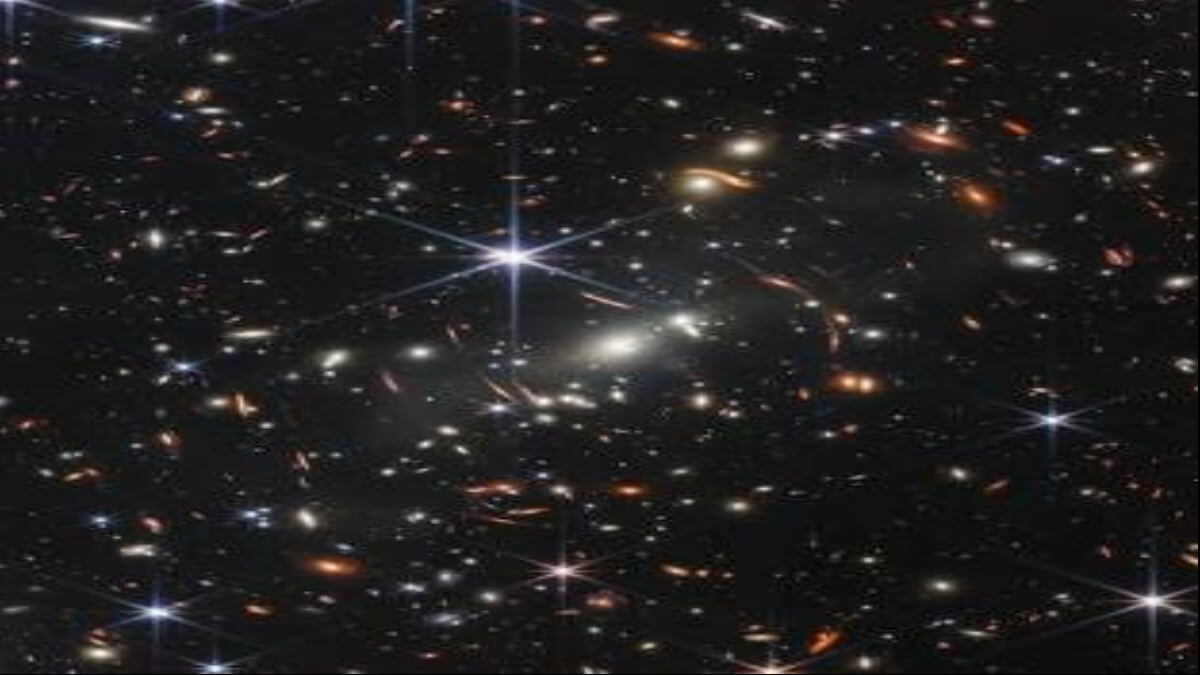
This giant, net-like structure is called the “cosmic web.” Galaxies are densely packed along the threads of this web. Between these threads lie vast, empty spaces known as “voids.” These voids contain almost no matter at all.
The Distribution of Matter Across the Universe
While the universe might seem packed with galaxies and stars to the naked eye, the vast majority of it is actually completely empty. Stars and planets make up only a tiny fraction of the total matter in the universe. This matter is not distributed evenly everywhere.
Following the layout of the cosmic web, matter is organized in a specific geometric pattern. Gas and dust accumulated in areas with stronger gravitational pulls. Those are the exact spots where new stars and galaxies were born. This uneven distribution is the direct result of tiny density variations present right after the Big Bang.
Fascinatingly, the ordinary matter we interact with (like protons, neutrons, and electrons) makes up only about 5 percent of the total mass of the universe. The rest is made entirely of things we cannot see or directly feel.
The Birth, Life, and Death of Stars
Stars are the primary sources of light in the universe. Just like humans, stars are born, live long lives, and eventually die. This life cycle is absolutely crucial for the chemical evolution of the universe.
A star’s lifespan depends entirely on its mass. A massive star burns through its fuel very quickly and dies young. On the other hand, smaller stars can continue glowing faintly for billions of years.
Star Formation in Stellar Nurseries
Stars are born inside massive cosmic clouds of gas and dust. These clouds are called nebulas. Scientists frequently refer to them as “stellar nurseries.” The famous “Pillars of Creation,” captured by the Hubble Space Telescope, is a prime example of such a nursery.
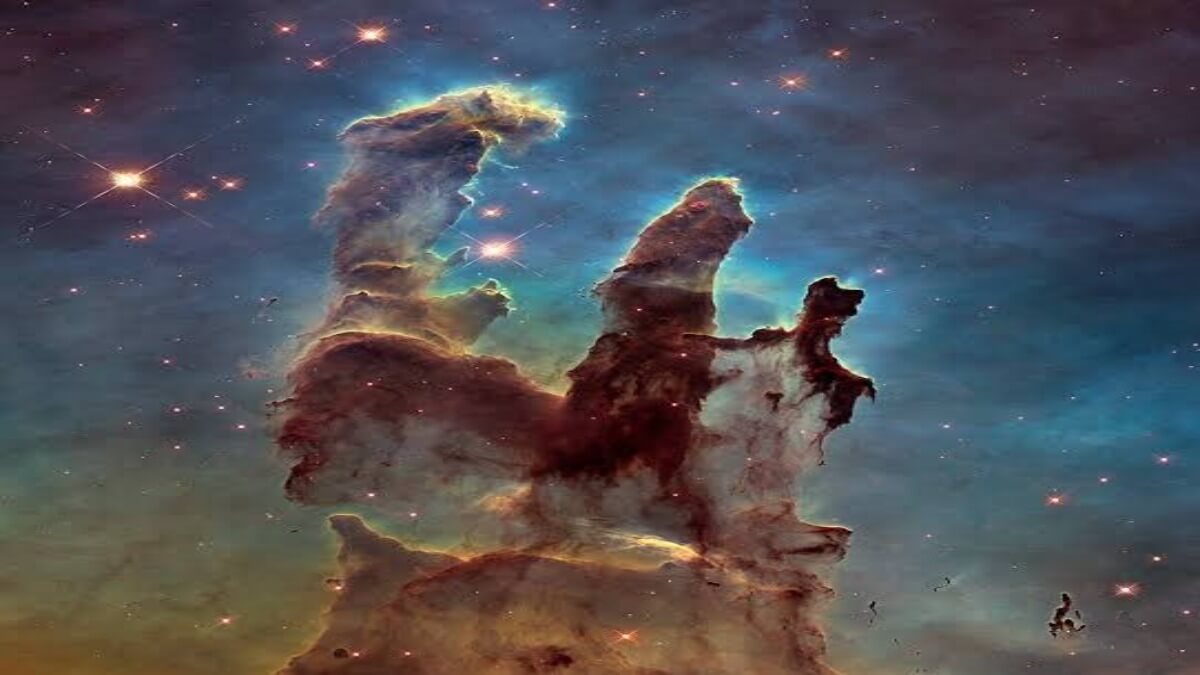
Inside these clouds, hydrogen gas slowly collapses under the pull of gravity. As it collapses, the temperature and pressure inside begin to rise. Once the core temperature reaches about 15 million degrees Celsius, nuclear fusion reactions ignite.
Through nuclear fusion, hydrogen atoms combine to form helium, releasing massive amounts of energy in the process. This incredible energy is what makes the star shine. A delicate balance is then established between the inward pull of gravity and the outward push of radiation pressure.
The Main Stages of Stellar Evolution
The longest phase of a star’s life is called the “main sequence.” Our Sun is currently in this phase. During this time, stars are incredibly stable and continuously burn hydrogen to produce energy. The Sun has been doing this for the past 4.5 billion years.
When a star runs out of hydrogen fuel in its core, it loses its balance. The core begins to contract while the outer layers expand. This expanded state is known as a “red giant.” During this phase, the star becomes much larger and cooler than before.
In the red giant phase, the star begins burning helium in its core, producing heavier elements such as carbon and oxygen. Small or medium-sized stars (like our Sun) eventually shed their outer layers into space. All that remains is a small, bright, and incredibly hot core called a “white dwarf.”
Supernovas, Neutron Stars, and Black Holes
The death of very large and heavy stars is incredibly dramatic. After carbon and oxygen, their cores fuse silicon, and finally, iron. Once iron is created, the nuclear fusion process can no longer continue. Due to its massive weight, the core then collapses in on itself.
This sudden collapse triggers a terrifyingly powerful explosion known as a “supernova.” A supernova explosion can be so bright that it outshines an entire galaxy for a short period. It is through these explosions that heavy elements like iron, gold, and uranium are scattered across the universe.
If the remnant left behind after a supernova is exceptionally heavy, it compresses further to become a “neutron star.” Neutron stars are unbelievably dense. And if the leftover core is even heavier, it collapses entirely to form a black hole.
Black Holes: The Universe’s Greatest Mystery
Black holes are among the most mysterious and terrifying objects in the universe. Just hearing the name brings to mind an image of deep, consuming darkness. While science fiction often portrays black holes as monstrous cosmic vacuums, the actual science behind them is far more fascinating.
Albert Einstein’s theory of general relativity was the first to mathematically predict the existence of black holes. Initially, even Einstein himself could not believe such things could exist in reality. Today, black holes are a proven astronomical fact.
What is a Black Hole?
A black hole is a region in space where the gravitational pull is so strong that absolutely nothing can escape from it. Not even light, which is the fastest-moving thing in the universe, can break free from a black hole’s grasp. Because light cannot escape, they appear completely black to us.
A black hole is not an empty pit. Rather, it is a place where a massive amount of matter has been compressed into an incredibly tiny point. This happens when a massive star exhausts its fuel and collapses under its own gravity.
Black holes come in different sizes based on their mass. “Stellar-mass black holes” are typically a few times heavier than our Sun. On the other hand, almost every large galaxy has a “supermassive black hole” at its center, which can be millions or billions of times heavier than the Sun.
The Event Horizon and Singularity
Every black hole has a boundary called the “event horizon.” This is the ultimate point of no return. If an object or light crosses this invisible boundary, it can never come back out.
What happens inside the event horizon is the greatest mystery in modern physics. Scientists theorize that all the mass of a black hole is crushed into an infinitely dense point right at the center. This point is called the “singularity.”
At the singularity, all our known laws of physics simply break down. Space and time lose their normal properties entirely. Understanding the singularity is a massive challenge for scientists because no information can ever escape from beyond the event horizon to tell us what is happening inside.
Recent Discoveries in Black Hole Research
Studying black holes is extremely difficult because they cannot be seen directly. Scientists prove their existence by observing the behavior of nearby gas and stars. When gas is pulled toward a black hole, it heats up to extreme temperatures and emits X-rays, which we can detect from Earth.
Recent years have brought unprecedented breakthroughs in black hole research. In 2019, scientists from the Event Horizon Telescope (EHT) collaboration captured the first-ever image of a supermassive black hole. This massive entity is located at the center of the M87 galaxy.
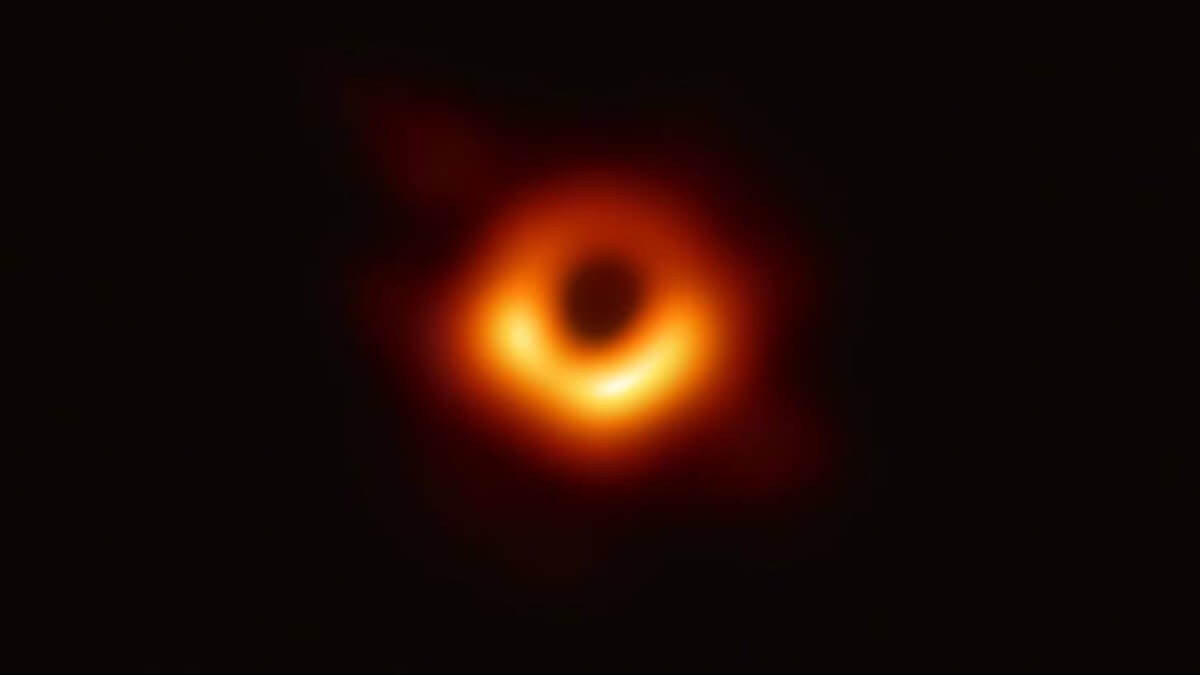
Later, in 2022, scientists released an image of “Sagittarius A*,” the supermassive black hole at the center of our very own Milky Way galaxy. Organizations like the European Southern Observatory (ESO) played a crucial role in these historic discoveries. These images serve as monumental proof of Einstein’s theories.
Dark Matter and Dark Energy
Everything we see around us, on Earth, and in space, is made of ordinary matter. Stars, planets, dust, and gas collectively make up only a tiny fraction of the universe. The vast majority of the cosmos is actually filled with two mysterious components that we cannot see or touch.
These invisible components are Dark Matter and Dark Energy. They play the most critical role in shaping the structure and determining the future of the universe. The true nature of these two phenomena remains one of the greatest unsolved puzzles in physics today.
What is Dark Matter?
When scientists observed the rotation of galaxies, they noticed something highly unusual. The stars on the outer edges of galaxies were spinning so fast that the gravitational pull of the visible matter was not enough to keep them in place. These stars should have been flung out into deep space. But in reality, they stayed put.
This observation led scientists to realize that galaxies must contain an invisible substance whose gravitational pull holds the stars together. This invisible substance is called “dark matter.” It does not absorb, emit, or reflect light, making it impossible to see directly with telescopes.
We only know dark matter exists because of its gravitational effects on visible matter. It does not interact with ordinary matter in any other way. Dark matter acts as the invisible scaffolding that helps build the cosmic web and the large-scale structures of the universe.
The Mystery of Dark Energy
In the late 1990s, scientists were trying to measure the expansion rate of the universe. They assumed that the collective gravitational pull of all the matter inside the universe would eventually slow down the expansion. But when they observed distant supernovas, they found the exact opposite.
Scientists discovered that the expansion of the universe is not slowing down; it is actually accelerating. Galaxies are moving away from each other at an ever-increasing speed. The mysterious force driving this cosmic acceleration is what we call “dark energy.”
Dark energy acts in complete opposition to gravity. While gravity pulls things together, dark energy stretches space itself, pushing things further apart. As the universe continues to expand, the amount and influence of dark energy only grow stronger.
Why Most of the Universe Remains Invisible
According to current scientific estimates, dark energy accounts for about 68 percent of the universe’s total energy density. Dark matter makes up about 27 percent. The remaining 5 percent is the ordinary matter that makes up us, the Earth, stars, and galaxies.
This means that a staggering 95 percent of the universe is completely invisible and unknown to us. The universe we see and comprehend is just the visible tip of a massive cosmic iceberg. The world’s top scientists are working tirelessly to figure out how these invisible components work and where they come from.
These hidden parts of the universe prove that nature still keeps many of its secrets closely guarded. The discovery of dark matter and dark energy was a major shock to modern science, but it also provided a brand new perspective on how we view the cosmos.
The Search for Extraterrestrial Life
A question that frequently crosses human minds is, “Are we alone in the universe?” Is Earth the only planet harboring life in this vast cosmos, or do intelligent beings exist on other worlds? The scientific study dedicated to answering this question is called astrobiology.
The search for extraterrestrial life is no longer just the stuff of science fiction; it is a highly active field of modern scientific research. Given the sheer scale of the universe, scientists strongly believe there is a high probability that life exists somewhere out there.
Are We Alone in the Universe?
In 1961, astronomer Frank Drake formulated what is now known as the “Drake Equation.” This equation estimates the number of intelligent civilizations in our galaxy that we might be able to communicate with. It highlights all the specific conditions that must be met for life to exist.
Our Milky Way galaxy alone contains over 100 billion stars. And the entire observable universe holds trillions of galaxies. If every star has its own planetary system, the number of potentially habitable planets stretches beyond human comprehension.
With such a vast playing field, it seems scientifically illogical to think that life only sparked on Earth. The main problem, however, is the immense distance. Even if life exists on another planet, contacting them or finding them is an incredibly difficult task given our current technological limits.
Habitable Worlds and Exoplanets
Planets that orbit stars outside our solar system are called exoplanets. Since the first exoplanet was discovered in the 1990s, scientists have found thousands of new worlds. The Kepler Space Telescope sparked a massive revolution in this specific field.
Scientists primarily look for planets that sit at a very specific distance from their host star, where conditions are just right for liquid water to exist on the surface. This specific orbital region is called the “habitable zone,” or sometimes the “Goldilocks zone.”
Water is the most crucial ingredient for life as we know it. Therefore, rocky planets within the habitable zone are the main targets for scientists. Recently, researchers have discovered several exoplanets with sizes and temperatures quite similar to Earth’s. Using advanced instruments like the James Webb Space Telescope, scientists are now analyzing the atmospheres of these planets to search for chemical signatures of life.
Ongoing Efforts to Find Alien Life
Scientists are taking two distinct approaches in the search for extraterrestrial life. The first approach is searching for life right here within our own solar system. There is strong evidence that liquid water once flowed on Mars. NASA’s Perseverance rover is currently scouring the Martian soil for fossils of ancient microbes.
Additionally, scientists believe massive oceans of liquid water lie beneath the icy crusts of Jupiter’s Moon Europa and Saturn’s moon Enceladus. In the future, researchers plan to send robotic submarines to these moons to actively hunt for signs of life.
The second approach involves searching for intelligent life beyond our solar system. Scientists involved in the SETI (Search for Extraterrestrial Intelligence) project use massive radio telescopes to listen for artificial radio signals coming from deep space. While we have yet to find concrete proof of an alien civilization, the search continues without pause.
The Role of Gravity in Shaping the Universe
Gravity is one of the most familiar, yet deeply mysterious, forces in the universe. It is the force that keeps our feet firmly planted on the ground. But on a cosmic scale, gravity’s role is far more extensive and powerful.
Gravity is the cosmic glue that holds the entire universe together. After the Big Bang, when matter was scattering outward, it was gravity that pulled that matter back together to forge the massive cosmic structures we see today.
How Gravity Forms Stars and Galaxies
Gravity acts upon the massive clouds of gas and dust scattered throughout space. When a specific region of a cloud becomes slightly denser than its surroundings, gravity pulls on that region even harder. This stronger pull causes more and more matter to clump together at a central point.
Slowly, the amount and density of this clumped matter increase until it eventually ignites, giving birth to a new star. Similarly, billions of stars are drawn together by their mutual gravitational pull to form a galaxy. Without gravity, the universe would simply be an empty, cold cloud of drifting gas.
Even entire galaxies are influenced by gravity, orbiting one another to form massive galaxy clusters. At every single level of the universe’s large-scale structure, gravity acts as an invisible sculptor.
Einstein’s Theory of Spacetime
In 1915, Albert Einstein published his theory of general relativity, which forever changed how humanity understood gravity. According to Isaac Newton, gravity was an invisible pull acting between two objects. But Einstein showed that gravity is not a standard force at all.
According to Einstein, space and time are not separate entities. They are woven together into a flexible, fabric-like structure called “spacetime.” Any object with mass naturally bends and warps this spacetime fabric.
Imagine placing a heavy bowling ball in the middle of a stretched-out trampoline. The fabric dips down around the ball. If you were to roll a small marble onto the trampoline, it would spiral down toward the dip created by the heavy ball. This is exactly how gravity works in the universe. Stars and planets warp spacetime, and other objects simply follow those curved paths.
Gravitational Waves and Modern Discoveries
Another astonishing prediction of Einstein’s theory was the existence of gravitational waves. He proposed that when extremely heavy objects (like two black holes) collide in space, they send massive ripples through the fabric of spacetime. These ripples travel outward across the universe at the speed of light.
Nearly a century later, in 2015, scientists using the LIGO observatories successfully detected gravitational waves for the very first time. This marked one of the greatest achievements in modern science. The discovery served as definitive proof that Einstein’s theory was absolutely correct.
Through gravitational waves, scientists now have an entirely new way to observe the universe. It allows us to gather information about the most violent and powerful events in the cosmos without relying on light.
The Nature of Time, Space, and Reality
When we delve deep into the universe, our everyday common sense often fails us. The laws of physics introduce us to a reality that is incredibly bizarre and fascinating. Time and space do not behave on a cosmic scale the way we experience them in our daily lives.
We generally think of time as a constant. We assume the clock ticks at the exact same rate everywhere in the universe. However, the theory of relativity proved that this assumption is entirely wrong.
Understanding Spacetime
Einstein’s spacetime theory taught us that the universe consists of three spatial dimensions (length, width, height) and one temporal dimension. These four dimensions are intricately linked together. To accurately describe any event, we must specify both its location in space and its position in time.
Nothing in the universe is absolutely stationary. Everything is relative. Depending on how fast you are moving and where you are located, your measurements of the universe will differ. This flexibility of spacetime deeply impacts our core understanding of reality.
Time Dilation and Explaining Relativity
Time dilation is one of the most mind-bending consequences of relativity. Simply put, if you travel close to the speed of light, time will slow down for you. You will age more slowly compared to someone sitting still on Earth.
Similarly, strong gravitational fields also cause time to slow down. If you were to hang out near a black hole, your watch would tick much more slowly than a watch back on Earth. This concept was beautifully illustrated in Christopher Nolan’s film Interstellar.
The speed of light (about 300,000 kilometers per second) is the ultimate speed limit of the universe. Nothing can travel faster than this. Because of this absolute limit, exchanging information between distant parts of the universe takes a significant amount of time.
The Possibility of Multiple Dimensions
General relativity and quantum mechanics both explain the universe exceptionally well in their respective domains. But merging these two theories into one cohesive framework remains a massive hurdle for scientists. To solve this problem, researchers have proposed String Theory.
According to String Theory, the fundamental particles of the universe are not dots, but incredibly tiny, vibrating strings. However, the math behind this theory only works if the universe actually has 10 or 11 dimensions. We can only perceive three dimensions of space and one of time.
Scientists hypothesize that the remaining dimensions are curled up so tightly and are so small that we simply cannot detect them. While String Theory has not yet been proven experimentally, it has sparked widespread curiosity among scientists about the hidden dimensions of our universe.
Exploring the Universe with Telescopes
Almost everything we know about the universe comes from telescopes. The human eye can only detect a very limited spectrum of light. Modern telescopes, however, can capture infrared rays, X-rays, radio waves, and other forms of invisible light.
Telescopes have essentially expanded the reach of our vision to a cosmic scale. They allow us to see objects located billions of miles away in deep space. The development of telescopes and the advancement of space science are deeply intertwined.
How Telescopes Help Us Look into the Past
The most magical ability of a telescope is that it literally allows us to look back in time. Light takes time to travel from the distant reaches of the universe to Earth. For example, light from the Sun takes about 8 minutes to reach us. So, when we look at the Sun, we are actually seeing it as it looked 8 minutes ago.
Similarly, when we use a telescope to look at a galaxy a million light-years away, we are seeing what that galaxy looked like a million years ago. The more powerful the telescope, the deeper into space and the further back in time we can look. With the James Webb Space Telescope, scientists have observed the very first galaxies that formed shortly after the Big Bang.
The Contributions of Modern Space Observatories
Earth’s atmosphere often blocks incoming cosmic light or blurs the images. To solve this problem, scientists have launched telescopes directly into space. The Hubble Space Telescope has been sending breathtaking images of the universe back to Earth for over 30 years.
Alongside Hubble, NASA’s Chandra X-ray Observatory has made groundbreaking contributions to the study of black holes and supernovas. The Spitzer Space Telescope used infrared light to capture images of stars hidden behind thick clouds of cosmic dust. Together, these space observatories have provided us with a comprehensive picture of the cosmos.
The Impact of Advanced Astronomical Technology
Ground-based observatories have also seen massive technological upgrades. A technology called adaptive optics uses lasers to cancel out the blurring effects of Earth’s atmosphere, allowing for incredibly sharp images.
Furthermore, in radio astronomy, scientists link multiple radio dishes to simulate a single, massive telescope. ALMA (Atacama Large Millimeter/submillimeter Array) in Chile is a prime example of a powerful radio telescope used to analyze cosmic dust and gas clouds. These advanced technologies are constantly unveiling new mysteries of the universe.
The Unsolved Mysteries of the Universe
Science has come a long way, but many of the universe’s secrets remain completely out of reach. For every answer scientists find, a new set of questions emerges. These unsolved mysteries are exactly what will drive the next generation of scientific research.
Our understanding of the universe is still in its infancy. Many things are happening on the cosmic stage that simply cannot be explained by our current laws of physics.
What Happened Before the Big Bang?
The Big Bang theory successfully explains how the universe began. But a natural question follows: what existed before the Big Bang? This question is incredibly perplexing for scientists.
According to the standard model, time itself was created during the Big Bang. Therefore, the concept of “before” is meaningless in this context. However, some scientists believe our universe might be part of a cyclical process. This means the universe will expand, eventually contract back into a single point, and trigger another Big Bang. We still do not have a definitive answer to this mystery.
The Ultimate Fate of the Universe
Just as the origin of the universe is a major question, there is intense debate among scientists about how it will all end. The future of the universe depends heavily on its density and the total amount of dark energy. Scientists have proposed a few potential scenarios.
The first possibility is the “Big Freeze.” The universe will continue expanding forever. Eventually, all stars will burn through their fuel, and no new stars will form. The cosmos will slowly turn cold and completely dark.
The second possibility is the “Big Crunch.” If the gravitational pull of all matter eventually overpowers the rate of expansion, the universe will start contracting and eventually collapse back into a single point. A third scenario is the “Big Rip,” where the accelerating force of dark energy becomes so strong that it literally tears the fabric of spacetime apart, shredding all matter in the process.
Questions Scientists Still Cannot Answer.
We still do not know what dark matter and dark energy actually are. Exactly what happens inside the event horizon of a black hole remains a profound mystery. Combining quantum mechanics and general relativity into a single “Theory of Everything” remains the ultimate dream for physicists.
The missing antimatter is another massive puzzle. During the Big Bang, equal amounts of matter and antimatter should have been created. But the universe we observe is dominated almost entirely by regular matter. Where all the antimatter went is a question scientists have yet to properly explain.
Future Missions and Cosmic Exploration
We are living in an incredibly exciting era for space exploration. Alongside government space agencies, many private companies have now entered the field of space research. In the coming decades, we will witness unimaginable changes in space science.
As technology improves, we will be able to conduct far more detailed research beyond our solar system. Human spaceflight is also on the verge of opening up entirely new frontiers.
Upcoming Space Telescopes and Probes
Following the massive success of the James Webb Space Telescope, scientists are already working on the next generation of observatories. NASA’s Nancy Grace Roman Space Telescope is expected to play a major role in research on dark energy and exoplanets. It will map out massive portions of the sky.
The European Space Agency’s (ESA) LISA mission will work to detect gravitational waves directly from space. At the same time, highly advanced robotic probes are being built to visit the planets and moons within our solar system. These probes are designed to land, collect soil samples, and return them directly to Earth.
Human Expeditions Beyond Earth
After a long hiatus following the Apollo missions, humanity is preparing to return to the Moon. NASA’s ArMoons mission aims to establish a permanent human base on the lunar surface. This will serve as a crucial testing ground for future missions to Mars.
Building human colonies on Mars is no longer just science fiction. Organizations like Elon Musk’s SpaceX are actively working to make humanity a multi-planetary species. Within the next few decades, we might just witness the first human footprints on Martian soil.
The Future of Astronomy and Space Science
Artificial Intelligence (AI) and machine learning are bringing revolutionary changes to space science. Telescopes send terabytes of data back to Earth every single day, an amount impossible for humans to sift through manually. AI can easily analyze this massive influx of data to discover new exoplanets or hidden galaxies.
In the future, space tourism will become much more accessible to everyday people. Scientists even have plans to build massive solar panels in space to beam clean energy down to Earth. Space science is poised to elevate our technology and daily lives to entirely new heights.
How the Universe Impacts Daily Life
Conducting space research is undeniably expensive. Many people ask why we should spend so much money on exploring space when we have thousands of problems right here on Earth. The answer is simple: the technology derived from space research has fundamentally transformed our daily lives.
Exploring the cosmos does more than just satisfy scientific curiosity; it has become an inseparable part of modern living.
Cosmic Influence on Technology and Science
The GPS system on your smartphone could not function without Einstein’s theory of relativity. Satellites orbit the Earth at high speeds and operate in slightly weaker gravity. Because of this, time ticks differently for them than it does for clocks on the ground. If we did not account for this time difference, GPS would constantly show us the wrong location.
The advanced camera sensors in modern smartphones were originally developed to capture images of space. In the medical field, MRI scanners, weather forecasting, and disaster management systems rely heavily on satellite technology developed through space exploration. Global high-speed internet and modern telecommunications exist today because of space technology.
What Humanity Learns from the Cosmos
Space teaches us profound humility. When the Voyager 1 spacecraft was billions of miles away, scientist Carl Sagan requested it turn around to take one last photo of Earth. In that image, our planet appeared as nothing more than a tiny “Pale Blue Dot.”
That single image reminds us just how small and fragile our home is in the grand expanse of the cosmos. Our minor geographical borders, wars, and egos are completely meaningless from a cosmic perspective. The universe teaches us that to protect this single habitable planet, humanity must work together.
Frequently Asked Questions (FAQs)
How old is the universe?
According to modern science and data collected from the Cosmic Microwave Background Radiation (CMBR), the universe is approximately 13.8 billion years old. This age is calculated starting directly from the Big Bang.
What is the biggest mystery of the universe?
The greatest mysteries of the universe are dark matter and dark energy. Together, they make up about 95 percent of the total energy density of the cosmos, yet scientists know almost nothing about their true nature. The conditions inside a black hole also rank among the top mysteries.
Is there life outside of Earth?
So far, no definitive proof of extraterrestrial life has been found. However, considering the sheer vastness of the universe and the existence of billions of exoplanets, scientists strongly believe that the probability of life existing elsewhere is incredibly high.
What are Dark Matter and Dark Energy?
Dark matter is an invisible form of mass whose gravitational pull holds galaxies together. Dark energy, on the other hand, is a mysterious force that opposes gravity, causing the expansion of the universe to accelerate.
How do scientists study the cosmos?
Scientists primarily study the universe using powerful telescopes located both on Earth and in space. They collect data by analyzing visible light, infrared rays, radio waves, X-rays, and gravitational waves to understand the structure and properties of planets, stars, and galaxies.
Conclusion
Exploring the mysteries of the universe is one of the boldest and grandest endeavors of human civilization. We have learned so much, from the fiery beginnings of the Big Bang to the life cycles of stars, the formation of galaxies, and the enigmatic nature of black holes. Yet, what we know is still just a tiny fraction of the whole picture.
Science does not just provide answers; it paves the way for asking better, more refined questions. To understand the cosmos is to truly understand the roots of our own existence.
Key Takeaways About the Universe’s Mysteries
Our discussion shows that the universe is a highly organized and dynamic system. It operates on a delicate balance between gravity, dark matter, and dark energy. The very elements we are made of were forged in extreme cosmic events such as supernovae. We are, quite literally, made of stardust. Realizing this connects us deeply to the cosmos.
Why Cosmic Exploration Will Never End
Human curiosity knows no bounds. The universe is so incredibly vast and diverse that new wonders are hidden in every corner. As new technologies emerge, we will be able to look deeper into the void. Perhaps in the near future, we will find signs of life on another world or finally crack the mystery of what happened before the Big Bang.
This exploration is a journey without an end. Solving one mystery simply pulls back the curtain on a completely new cosmic frontier. The universe constantly calls out to us, inviting us to discover its infinite beauty and secrets. And humanity, armed with intellect, technology, and sheer courage, will continue answering that call, venturing further into the deep cosmic ocean.