Black Cardamom (Badi Elaichi): A Complete Guide to Flavor and Health
Our kitchens are home to a wide variety of spices. We use some of them every day. Other spices are reserved for cooking on special occasions. One of these special spices is black cardamom. It does not just add a beautiful aroma to your food. It also has numerous health benefits.
In this detailed blog post, we will learn everything about black cardamom. We will explore what it is, its nutritional value, and how it can improve your health. Let us get started.
What is Black Cardamom?
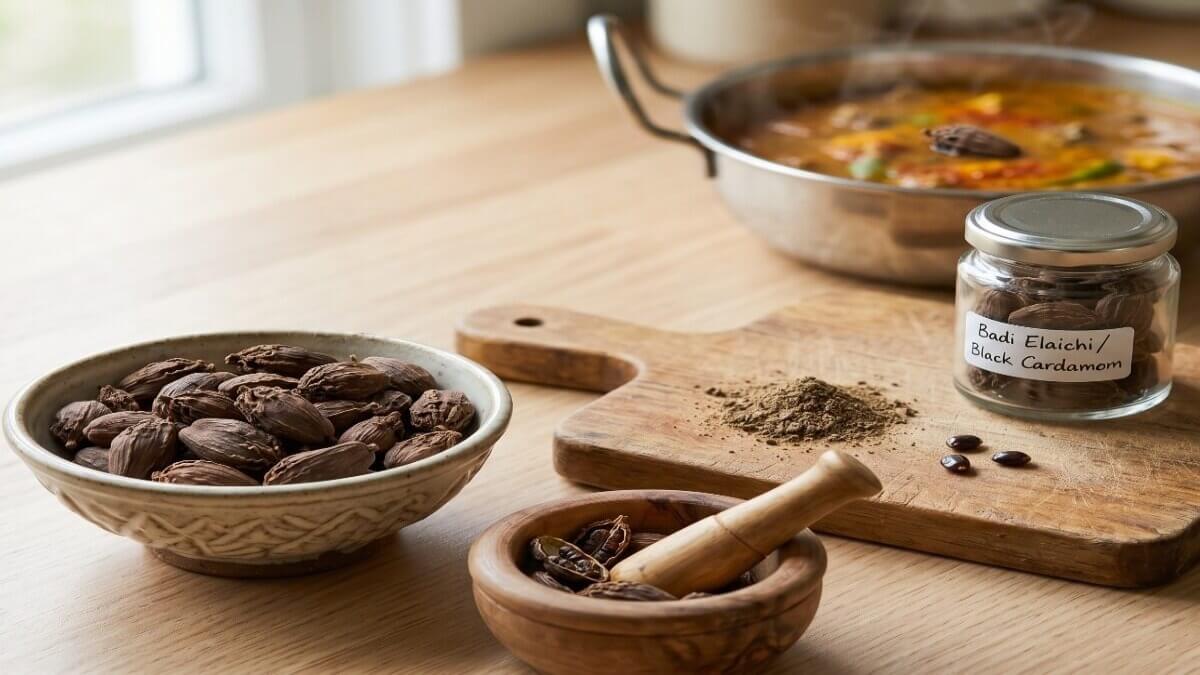
Black cardamom is a plant belonging to the ginger family, Zingiberaceae. Its scientific name is Amomum subulatum. It has a dark brown or black appearance. Its size is quite a bit larger than that of regular green cardamom.
In many South Asian regions, people call it badi elaichi or big cardamom. Its outer shell is quite hard and rough. Inside, it contains small sticky seeds. These seeds hold the core flavor and aroma.
Usually, it is used whole in cooking. You can easily remove it from the dish before eating. Its main characteristic is its smoky scent. This scent makes it completely different from other spices.
History and Origin of Black Cardamom
Black cardamom has a rich history. Its original home is the Eastern Himalayan region. It is widely cultivated specifically in Nepal, Bhutan, and the Indian state of Sikkim.
People in these mountainous areas have been using black cardamom in their cooking and medicine since ancient times. Gradually, it spread to other parts of the Asian continent.
Through traditional spice trade routes, black cardamom gained worldwide recognition. The cool, humid climate of the hilly regions is most suitable for its growth. Today, a large share of the world’s black cardamom comes from Nepal and India.
Why Black Cardamom is a Unique and Valuable Spice
Black cardamom is no ordinary spice. Its production process is quite complex and time-consuming. It is cultivated with great care on mountain slopes.
After harvesting, it is dried using a special method. The cardamom pods are dried over an open fire using a wire mesh. This process creates that famous smoky aroma inside the cardamom.
This long and labor-intensive process makes black cardamom highly valuable. Its unique flavor and aroma cannot be artificially replicated. That is why renowned chefs worldwide consider it a premium spice.
Nutritional Value of Black Cardamom
Black cardamom is famous not only for its taste but also for its nutritional value. It contains various vitamins and minerals. Including it in your regular diet provides your body with a lot of nutrition. Below is a detailed breakdown of its nutritional value.
Calories and Macronutrients
The calorie content in black cardamom is very low. Those who want to lose weight can use it without hesitation. It contains a small amount of protein and healthy fats.
However, it is primarily a good source of carbohydrates. These carbohydrates help provide energy to our bodies. Since it is used in very small quantities in cooking, its calories do not significantly impact your daily diet.
Essential Vitamins and Minerals
This spice is rich in vitamin C and riboflavin. Vitamin C boosts our immune system. In addition, it contains important minerals like calcium, potassium, and magnesium.
Potassium helps keep our blood pressure in check. On the other hand, calcium strengthens bones and teeth. Black cardamom can act as a natural source to replenish mineral deficiencies in the body.
Antioxidants and Plant Compounds
Black cardamom is a powerful source of antioxidants. The plant compounds in it protect our body cells from damage.
These antioxidants help flush out harmful toxins accumulated in the body. As a result, skin radiance increases, and signs of aging are delayed. Scientific research shows that the antioxidants in spices are highly effective in preventing chronic diseases.
Dietary Fiber Content
Dietary fiber is essential for maintaining a healthy digestive system. Black cardamom contains a good amount of dietary fiber.
This fiber slows down and improves the effectiveness of our digestive process. It helps eliminate constipation issues. Fiber-rich foods also help keep our stomachs full for longer.
Main Health Benefits of Black Cardamom
Black cardamom is a magical ingredient for our health. It is widely used in Ayurveda and other traditional medicines. Here are the most important health benefits of black cardamom.
Helps Boost Digestion
Black cardamom works wonderfully to solve digestive issues. It increases gastric juice secretion in the stomach. As a result, food is digested very easily.
Those who suffer from indigestion or stomach gas can benefit from eating this cardamom. It also helps reduce bloating and stomach pain. Drinking a cup of cardamom tea after a heavy meal speeds up digestion.
Rich in Antioxidants
As mentioned earlier, black cardamom contains plenty of antioxidants. These antioxidants destroy free radicals in the body. Free radicals are harmful elements that can cause deadly diseases like cancer in our bodies.
Eating black cardamom regularly significantly boosts the body’s immune system. According to a Healthline article, the antioxidants in spices like cardamom protect the body against chronic diseases.
Can Improve Respiratory Health
Black cardamom is highly effective for colds, coughs, and breathing problems. It helps keep our airways clear. It can serve as a natural remedy for patients with asthma.
Its warming effect helps clear the mucus congested in the chest. Inhaling the steam of water boiled with black cardamom during a cold clears a blocked nose very quickly.
Helps Maintain Oral Health and Fresh Breath
Bad breath is a very uncomfortable problem. Black cardamom works great to solve this issue. Its strong aroma destroys the odor-causing bacteria inside the mouth.
Chewing cardamom to freshen the mouth after eating has been a common practice since ancient times. It strengthens the gums and helps prevent tooth decay.
May Help Protect Heart Health
The role of black cardamom in maintaining heart health is significant. ..It helps control blood pressure. It also lowers the level of bad cholesterol in the blood.
It helps maintain normal blood circulation. As a result, the risk of heart attacks and strokes is greatly reduced. According to WebMD, the potassium in cardamom plays a crucial role in maintaining normal heart rhythm.
Contributes to Overall Well-being
The contribution of black cardamom to overall wellness is huge. ..It keeps the body warm from the inside. It works very well to keep the body warm during winter.
It also helps reduce stress. Its aroma calms our nerves and helps us get a good night’s sleep.
Black Cardamom for Digestion: Traditional Uses and Benefits
Black cardamom is a trusted name for solving digestive problems in South Asian countries. It has been used as a home remedy for ages.
Using black cardamom in heavy or oily food is almost mandatory. It not only enhances the taste of the food but also helps to digest that heavy meal. It assists in preventing stomach ulcers.
According to Ayurvedic texts, it balances the pitta and kapha doshas. Eating it regularly keeps the stomach clean and reduces any inflammation of the gastrointestinal tract.
Black Cardamom and Respiratory Health
The use of black cardamom yields magical results for respiratory inflammation or infection. Its antibacterial and antiviral properties eliminate sore throats and dry coughs.
Many people suffer from tonsillitis during winter. Gargling with black cardamom-infused water quickly reduces this pain. It also helps increase lung capacity.
Black cardamom tea is highly beneficial for smokers or people with weak lungs. It relaxes the airway muscles and normalizes breathing.
Black Cardamom in Traditional Herbal Medicine
In ancient herbal medicine, black cardamom is considered a panacea. There are numerous mentions of its use in Unani and Ayurvedic texts.
It was used as a medicine to reduce fever. Herbalists used to advise eating black cardamom to detoxify the body.
Even the use of its oil to cure toothaches is quite old. A paste made from it was also used externally to reduce muscle aches and joint pain.
What Does Black Cardamom Taste Like?
Describing the taste of black cardamom is quite difficult because it is very unique. Its taste and aroma are much more intense and longer-lasting than those of regular spices.
Smoky and Earthy Flavor
Its biggest feature is its smoky scent. Drying it over an open fire imparts a natural smoky flavor.
An earthy smell is also found alongside it. It adds a distinct depth to food. This smell can make any ordinary dish extraordinary.
Aroma and Culinary Properties
Its aroma is quite strong and pungent. When added to cooking, the whole kitchen is filled with its scent.
However, it is not a very sweet type of spice. It is mainly suited for spicy and savory foods. It slowly releases its flavor during cooking. Therefore, it works best in foods that are cooked for a long time.
Differences from Green Cardamom
The tastes of green cardamom and black cardamom are completely different. Green cardamom is quite sweet, and its scent is light like a flower.
Green cardamom is usually used more in sweet dishes. On the other hand, black cardamom is rough, smoky, and strong. So it is mainly used in meat or heavy spicy dishes. Although both are called cardamom, using one instead of the other can completely change the food’s taste.
How to Use Black Cardamom in Cooking
There are some specific rules for using black cardamom in cooking. If not used correctly, its real taste cannot be achieved. Below are some ways to use it.
In Biryani and Rice Dishes
Black cardamom is essential in cooking biryani or pulao. It slowly boils with the rice and meat, spreading a wonderful aroma.
At the start of cooking, whole black cardamom is added to hot oil or ghee to temper. This makes the oil fragrant. You can remove it when serving the rice, but its scent remains beautifully infused in the dish.
In Curries and Stews
Black cardamom works like magic in any meat curry, especially beef or mutton. It is highly effective in removing any gamey smell from meat.
In stew-type foods, which are cooked for a long time over very low heat, the use of spices adds a new dimension. It also helps darken the broth’s color.
In Spice Blends and Masalas
Black cardamom is a main ingredient of traditional garam masala. It is blended with other spices, such as cinnamon, cloves, and black pepper, to create this essential spice mix.
Its powder is also used in various tandoori spices or kebab marinades. It makes the spice mixture more aromatic and pungent.
In Soups and Slow-Cooked Recipes
Using black cardamom with hot soup in winter will give you great comfort. In dishes like nihari or paya, which are cooked all night, adding black cardamom is absolutely mandatory.
It mixes with the bone broth, creating a taste like nectar. Adding it whole to a boiling soup deepens the flavor.
Popular Recipes Using Black Cardamom
Many famous South Asian recipes are incomplete without black cardamom. Let us learn about some of these popular dishes.
Traditional Biryani
Whether it is Hyderabadi biryani or kacchi biryani, it is impossible to get the real taste without black cardamom.
Black cardamom powder is used when marinating the meat. Moreover, whole cardamom is added to the water for boiling rice. It spreads a royal aroma to every grain of the biryani.
Rogan Josh
Black cardamom is widely used in Rogan Josh, a famous dish from Kashmir.
It brings a beautiful dark color and a smoky taste to this mutton dish. The real secret of Rogan Josh lies in the correct use of this cardamom.
Dal and Lentil Dishes
Many of us think black cardamom is only used in meat. However, it is a key ingredient in the famous Dal Makhani or Tadka Dal of North India.
Black cardamom fried in ghee completely elevates the plain taste of lentils. It makes the dal much more delicious and complex.
Spicy Meat Curries
Black cardamom is always added to spicy meat cooked for festivals or occasions.
It helps tenderize the meat and balances the intensity of the spices. Its use in braised or roasted meat takes the taste to a whole other level.
Black Cardamom vs. Green Cardamom: Key Differences
Many people do not understand the difference between black and green cardamom. Although they belong to the same plant family, there are vast differences between them.
Flavor and Aroma Comparison
Green cardamom is smaller in size and sweet in taste. Its scent is very fresh and light.
On the other hand, black cardamom is quite large. Its taste is intense and pungent, and the smell is very smoky. Green cardamom can be chewed directly to freshen the mouth, which is quite difficult to do with black cardamom.
Culinary Uses
Green cardamom is used to make sweet dishes like rice pudding and desserts, as well as tea.
Conversely, black cardamom is used in meat dishes, biryani, and other spicy, savory dishes. One should never be used as a substitute for the other. Doing so can ruin the taste of the main dish.
Nutritional Differences
Both cardamoms have good nutritional value. However, green cardamom may have slightly higher amounts of vitamin C and potassium.
On the other hand, black cardamom is especially rich in antioxidants and fiber. In Ayurvedic medicine, both types of cardamom are used for completely different ailments.
Whole Cardamom vs. Ground Black Cardamom
It is usually best to buy black cardamom whole. Cracking or bruising the whole cardamom slightly during cooking releases its inner scent beautifully.
Whole cardamom can be stored for a long time. Its fragrance does not spoil easily.
On the other hand, ground black cardamom loses its original smell very quickly. However, it is convenient to use powdered cardamom for making garam masala blends or marinating kebabs. It is best to grind whole cardamom right before cooking, to taste.
How to Choose High-Quality Black Cardamom
Black cardamoms of various qualities are available in the market. It is important to keep a few things in mind when identifying authentic, high-quality cardamom.
Always choose large and plump cardamoms. Their color should be dark brown or black.
Take the cardamoms in your hand and smell them. If you get a clear, smoky smell, you will know they are of good quality. Avoid buying cardamom that is pale in color or very dry and light in weight, as it may have fewer seeds or be spoiled.
Potential Side Effects and Precautions
Although black cardamom has numerous benefits, it may also have side effects. It is good to follow some precautions while using it.
Allergic Reactions
Like any spice, some people may be allergic to black cardamom.
If you have allergies, eating it can cause skin rashes, itching, or shortness of breath. If you feel any discomfort after eating it for the first time, stop using it immediately and consult a doctor.
Concerns of Overconsumption
An excess of anything is harmful to the body. Eating black cardamom in very large amounts can cause a burning sensation in the stomach or acidity.
Its intensity can cause irritation in the inner lining of the stomach. Therefore, it should be used in moderation in daily cooking.
Who Should Exercise Caution?
Pregnant women and breastfeeding mothers must consult a doctor before eating black cardamom.
Eating a large amount of cardamom can be harmful to those who have gallstones. Furthermore, those who are regularly taking medicine for any chronic disease should also talk to their doctor before using it therapeutically.
Proper Storage Tips for Black Cardamom
Knowing the proper storage method is very important to retain the aroma of black cardamom for a long time.
It must always be stored in an airtight container. A glass jar is best for this purpose. The container must be kept in a cool and dark place away from direct sunlight.
Never pick up cardamom with wet hands or a wet spoon. If moisture touches the spice, fungus can grow on it, and its smell spoils very quickly. If stored properly, whole black cardamom stays good for over a year.
Frequently Asked Questions About Black Cardamom
Can black cardamom be eaten every day?
Yes, black cardamom can be used in cooking every day in moderate amounts. It helps improve digestion and maintain overall well-being. However, it is better not to chew it directly or consume it in excessive amounts.
Is black cardamom good for digestion?
Absolutely. Black cardamom increases gastric juice secretion to speed up digestion. It is a highly effective natural ingredient to relieve bloating, gas, and stomach pain.
Can black cardamom be used in tea?
Green cardamom is usually used more often in tea. However, those who like strong or smoky flavored tea, especially masala chai, can add a little crushed black cardamom. It provides great relief for a sore throat on a winter day.
Final Words on Black Cardamom (Badi Elaichi)
We have explored almost every aspect of black cardamom in this comprehensive guide. It is not just a spice, but a wonderful package of nutrition and taste.
Key Takeaways
Black cardamom is primarily known for its smoky taste and intense aroma. It is packed with antioxidants, fiber, and minerals. Its benefits are immense, ranging from boosting digestion to keeping the respiratory tract healthy to caring for the heart.
Why Your Spice Rack Needs a Spot for Black Cardamom
Black cardamom is unparalleled in making any ordinary dish special. Having it in your kitchen means you can make a simple meat curry or pulao taste like a restaurant meal anytime. Additionally, it will serve as a natural shield for your family’s health.
Easy Ways to Add Its Smoky Flavor to Everyday Meals
You can very easily add black cardamom to your daily meals. Toss a crushed cardamom in while cooking dal. Or use it as tempering in your weekly meat curry.
If you have a cold or a cough, you can boil a little black cardamom in hot water and drink the tea. It will refresh you and help you feel better.
Black cardamom is a unique gift of nature. With proper use, it can bring wonderful positive changes to both your food and your health. So add this invaluable spice to your pantry today. Stay healthy and enjoy delicious food.
(Reference: Various health and nutrition information was gathered from WebMD and Healthline, along with general knowledge and traditional Ayurvedic texts. Always consult a healthcare professional for any medical concerns.)