Role and Importance of Education in Personal Development
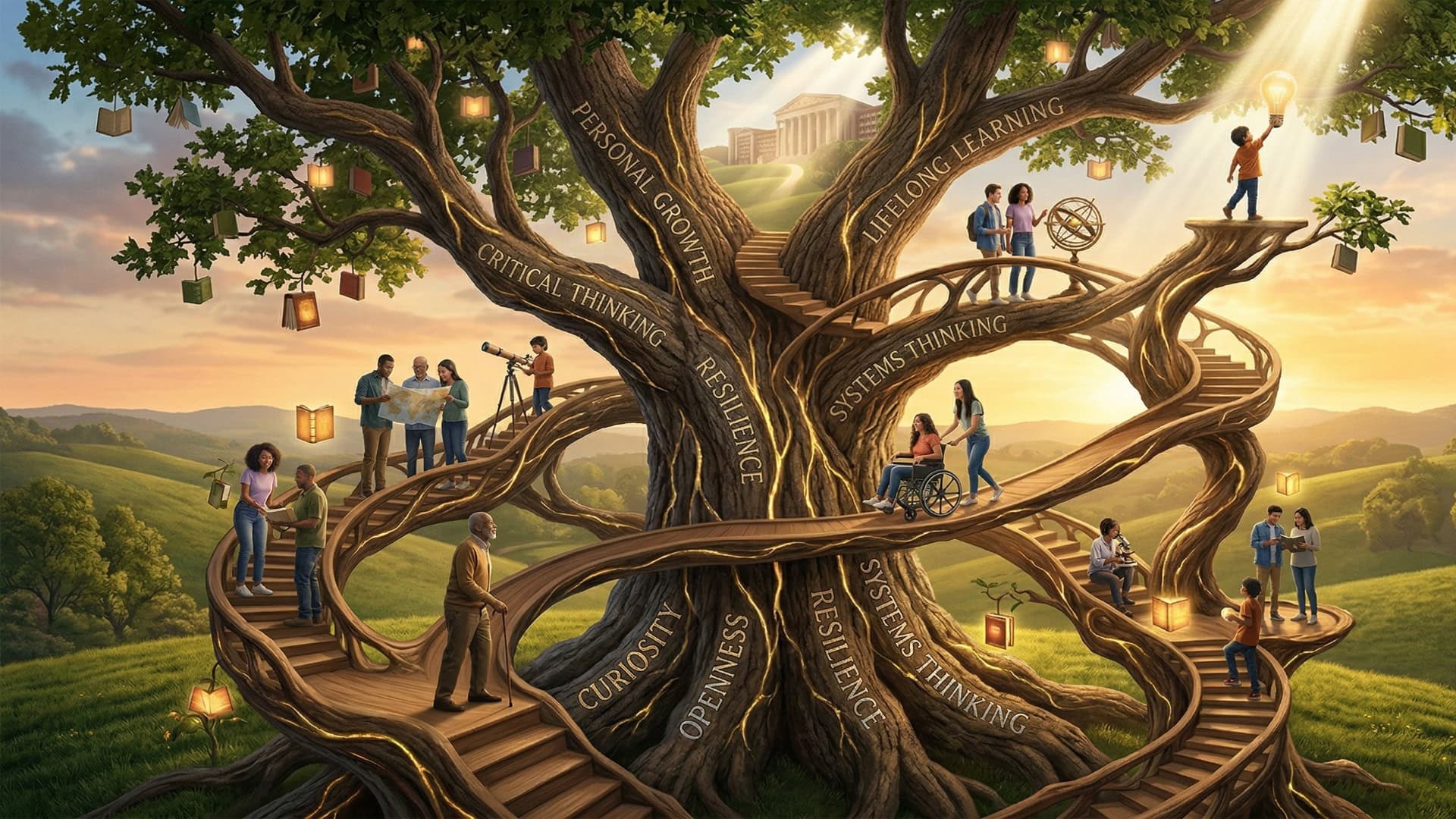
Human life is a continuous journey. The effort to constantly improve oneself on this journey is what we call personal development. We learn something new every day, and through that learning, we transform into a better version of ourselves. Therefore, the role of education in personal development is profoundly deep and significant.
Education is not just confined within the four walls of a school or college. It is a lifelong process that constantly refines our thoughts, behavior, and perspectives. A proper educational system not only makes a person successful in their professional life but also shapes them into an ideal, fulfilled human being.
When we learn something new, our brain’s capacity increases. We begin to look at the world around us from a fresh perspective. Our hidden talents get the opportunity to bloom through the touch of education.
Thus, education is the very foundation of personal development. It boosts our self-confidence, helps us make the right decisions, and prepares us to face any challenges in life. In today’s discussion, we will see how education supports our personal growth at every stage of life.
Understanding Personal Development and Its Connection with Education
The term personal development is quite popular these days. However, understanding its true meaning and how deeply it connects with education is essential. Personal development is an ongoing process in which a person improves their skills, knowledge, and mindset.
The connection between education and personal development is inseparable. Education provides us with the tools to identify our own shortcomings. Once we understand our weaknesses, it becomes easier to take the necessary steps to turn them into strengths.
In this process, education acts as our guide. It teaches us how to evaluate situations and adapt continuously to changing environments.
What is Personal Development?
In simple terms, personal development is the process of consciously improving oneself. This includes acquiring new skills, taking care of one’s mental health, and setting a specific goal in life. It is a journey that continues until the very last day of life.
There is no specific finish line for personal development. The attempt to reach a slightly better position tomorrow than where you are today is self-improvement. Through this, we can reach our full potential.
Enriching oneself physically, mentally, emotionally, and spiritually is part of personal development. It improves our quality of life and helps us become much happier and more self-satisfied.
How Education Shapes Personal Potential
Every person has some special potential hidden inside them. But due to a lack of proper guidance and practice, those potentials often die in the bud. Education acts as a catalyst to awaken those dormant possibilities.
Education gives us the opportunity for self-discovery. By learning about different subjects, we can understand exactly where our interests lie. From this interest comes passion, which drives us toward success.
For example, a person might not know that a great writer is hiding inside them. But when they study literature, their creative side is unveiled. This is how education gives our inner potential a beautiful shape.
Building Knowledge and Broadening Perspectives
Knowledge has no specific boundaries. The more we learn, the more the horizon of our knowledge expands. This process of building knowledge gives our perspective a completely new dimension. We learn to think on a broader scale, breaking free from narrow mindsets.
Education provides us with deep knowledge about the world around us. The more we know about society, culture, science, and history, the more logical our thinking becomes. As a result, we can judge any matter from a multidimensional perspective rather than a single angle.
A broad perspective helps us become much more tolerant and open-minded. We learn to respect others’ opinions and find unity even in diversity. This plays a highly crucial role in building a healthy and beautiful society.
The Importance of Lifelong Learning
The saying that learning has no age limit is absolutely true. Finishing formal education does not mean our learning process will also stop. In fact, the real education of practical life begins only after crossing the boundaries of school and college.
Lifelong learning keeps our minds youthful. The world is constantly changing, and new technologies are emerging every day. To keep pace with this changing world, acquiring new knowledge is indispensable.
According to the World Economic Forum, there is no alternative to lifelong learning to survive in the future workplace. Those who are always ready to learn something new will lead the world of the future. Therefore, we must cultivate the mindset of lifelong learning for the sake of our personal growth.
Gaining a Broader Understanding of the World
When we are stuck within a specific boundary, our thinking also becomes limited. Education breaks that boundary and allows us to know the whole world. With the help of books, the internet, and other educational mediums, we can learn about the lifestyles of people from all corners of the earth right from our homes.
This broad understanding of the world shapes us into global citizens. We realize that an event in one corner of the earth can impact another corner. This realization makes us responsible.
Knowledge about different cultures and histories frees our minds from prejudice. We start judging everything with logic instead of blind faith. Gaining this global perspective is a massive milestone in personal development.
Developing Critical Thinking and Problem-Solving Skills
In our daily lives, we constantly face various problems. To solve these problems successfully, we need proper analytical abilities. The education system helps us develop that critical thinking skill.
The ability to closely observe any situation and identify the underlying causes is critical thinking. Education teaches us to judge situations logically, without being controlled by emotions. This is the first step in solving any complex problem.
When this skill is developed in us, we can dive deep into the problem without fear. We consider possible solutions to the problem and choose the most effective path.
Learning to Analyze Information Effectively
The current era is the era of information. Thanks to the internet, we are surrounded by an abundance of data. But determining what is correct and what is wrong among all this is a major challenge. Education provides us with this information analysis skill.
When we study a topic, we have to collect information from various sources. Then, we must verify the authenticity of that information and reach a conclusion. This continuous practice helps protect us from false or incorrect information.
Being able to analyze information correctly is crucial in both personal and professional spheres. It keeps us from falling into the traps of rumors or propaganda. We become capable of forming our own logical opinions on any matter.
Better Decision Making Through Education
We have to make all kinds of decisions at every moment of our lives. Be it small or big, the impact of every decision falls on our lives. Education makes this decision-making process much more thoughtful and fruitful.
Ignorance often leads us down the wrong path. But when we have adequate knowledge, we can consider both the good and bad sides of any issue. We understand the long-term consequences of a specific decision.
The light of knowledge protects us from the confusion of darkness. A well-educated mind does not rush to a conclusion. Instead, they take the time to evaluate the situation and make a mature, correct decision.
Improving Communication and Interpersonal Skills
Humans are social beings. To live in a society, we must constantly maintain communication with others. A major condition for personal development is acquiring advanced communication skills. Education helps us tremendously in this regard.
How we speak, how we listen to others, and how we express our feelings are all parts of our communication skills. A good educational system enriches our vocabulary and helps us master the art of speaking articulately.
Moreover, interpersonal skills enable us to work collaboratively with others. From the workplace to family life, the need for this skill is immense everywhere.
The Role of Education in Effective Communication
Effective communication does not just mean talking fluently. It means ensuring that the person on the other side understands exactly what you are trying to convey. Education provides us with this clarity and fluency.
During our studies, we have to give many presentations and speak in front of many people. These exercises help us overcome our hesitation. We learn how to use the right word at the right time.
Body language is also a huge part of communication. Education teaches us how to reflect our self-confidence through gestures and eye contact. As a result, our words become much more acceptable to others.
Building Strong Relationships Through Social Skills
Maintaining good relationships with people is vital for a healthy and beautiful life. Education teaches us to be empathetic toward others. We learn to consider situations from another person’s perspective, which is the key to building strong relationships.
Social skills teach us how to debate respectfully, even with people who hold different opinions. We learn how to avoid quarrels and conflicts and solve problems peacefully. These are all signs of a mature mind.
Social skills are also incredibly useful for networking in the workplace. Those who can easily mix with people advance quickly in their careers. Therefore, acquiring social skills through education is essential for personal and professional success.
Education and Self-Confidence
Self-confidence is the first step to success. Someone who does not believe in themselves can never achieve anything great. In this journey of personal development, education is our greatest source of self-confidence.
When we learn something new, the fears and doubts inside our minds begin to fade. We realize that we have our own identity and capabilities. This realization teaches us to live with our heads held high.
Ignorance makes people dependent on others. But education makes us self-reliant. When you know that you have the necessary knowledge and skills, your self-confidence naturally multiplies.
How Knowledge Boosts Confidence
Knowledge is like light. It drives away all the darkness from the mind. When you have deep knowledge about a specific topic, you will never hesitate to speak about it. This fearless attitude is the expression of self-confidence.
Suppose you are learning a new language. Initially, you will feel a lot of hesitation. But when you master the language through regular practice, you will see that you are no longer afraid to speak it with anyone. This is how knowledge awakens our inner strength.
Knowledgeable people can adapt to any environment. They know that they can handle any adverse situation with their intellect and wisdom. This self-confidence keeps them ahead in every area of their lives.
Overcoming Obstacles Through Learning
Life never runs on a smooth path. We constantly face various obstacles and hurdles. Education teaches us to face these obstacles with courage rather than fear them.
When we read the biographies of successful people, we learn how they achieved success by overcoming numerous hurdles. These stories inspire us. We realize that failure does not mean everything is over; rather, it is an opportunity to start anew.
A learning mindset increases our resilience. Even if we fail once, we can learn from our mistakes and dive back into work with renewed vigor. This is a highly important aspect of self-improvement.
Fostering Creativity and Innovation
Creativity is not just limited to artists. There is a need for creativity in every aspect of life and in every profession. Education inspires us to go beyond conventional thinking and create something new.
Rote learning destroys our creativity. But true education teaches us to ask questions. It shows us the path to innovation by taking inspiration from our surroundings.
The higher the literacy rate in a society, the higher the level of innovation in that society. This is because an educated mind always seeks new possibilities. They see a problem as an opportunity and try to find a creative solution.
Encouraging Curiosity and New Ideas
Children are naturally very curious. But as we grow older, that curiosity often diminishes. A proper educational system helps us keep that childlike curiosity alive.
The “why” and “how” questions that constantly arise in our minds find their answers through education. When we are curious, we become interested in researching new ideas. This is an excellent way to develop personally.
The mindset to embrace new ideas protects us from boredom. We constantly feel the urge to do and learn something new. This enthusiasm makes our lives much more diverse and enjoyable.
The Relationship Between Education and Creative Thinking
Creativity does not spawn from nothing. It requires a lot of information and knowledge. Education supplies us with that necessary knowledge. When we can combine knowledge from different fields, a new creative thought emerges.
For example, when knowledge of technology and art mix together, extraordinary digital art or web designs are created. Education helps establish connections between different parts of our brain, which is extremely crucial for creativity.
According to Edutopia, creativity is a muscle that needs to be strengthened through regular practice. Education provides us with an ideal platform for that practice. Through this, we become capable of creating our own unique style or approach.
Developing Leadership and a Sense of Responsibility
The first condition to becoming a good leader is being responsible for one’s own actions. Through personal development, even an ordinary person can turn into an extraordinary leader. Education plays the biggest role in awakening this sense of leadership.
Leadership does not just mean ordering others around. Its real meaning is moving forward toward a specific goal while taking everyone along. Education builds our mindset to work as a team.
By participating in various projects or group work in school or college, we begin to develop leadership qualities. We learn how to manage people with different mindsets together.
Learning Accountability and Discipline
It is impossible to succeed in any work without discipline. Education helps us create a routine or discipline in our lives. Finishing tasks on time and following rules are habits that make us much more responsible.
When we take on a responsibility, it is very important to have the mindset to be accountable for its success or failure. Education teaches us to take responsibility for our own mistakes. This quality of correcting one’s own mistakes without blaming others is the sign of an ideal person.
The practice of discipline beautifies our personal lives too. We learn time management and become capable of making proper use of every moment. This multiplies our productivity.
Preparation for Leadership Roles in Society
Society is always waiting for capable leaders. Education prepares us to be those capable leaders. An educated person can easily identify society’s problems and take effective initiatives to solve them.
We have certain obligations towards society. Education makes us aware of those obligations. We understand that our acquired knowledge should not be used just for ourselves but also for the welfare of society.
Leadership requires strong self-confidence and clear vision. Education provides us with both of these qualities. As a result, we are not afraid to lead at any level, social or institutional.
Emotional Intelligence and Personal Growth Through Education
Nowadays, EQ, or emotional intelligence, is given equal importance to IQ, or general intelligence. Emotional intelligence is the ability to properly understand one’s own emotions as well as those of others. Education helps us develop this special intelligence.
Humans are not machines; they have all kinds of emotions, such as anger, sadness, and joy. But knowing how to control these emotions is very important. Proper education teaches us how to behave logically without being overpowered by emotions.
Emotional intelligence transforms us into much more mature individuals. We learn to respect others’ feelings, which makes our relationships much more beautiful and long-lasting.
Understanding Emotions and Empathy
Understanding one’s own emotions is a major part of personal development. It is crucial to find out why I am getting angry or feeling frustrated. Education gives us this ability to self-analyze.
Alongside this, being empathetic towards others’ emotions is also a great virtue. Various studies by Psychology Today have shown that those who can sympathize with others’ pain are much more socially successful. Education gives us this lesson in empathy.
Empathy removes our arrogance and makes us much more humble. We try to understand the reasons behind people’s external behavior, which improves our mutual understanding.
Managing Stress and Building Resilience
One of the biggest problems of modern life is excessive mental stress. Trying to manage studies, career, and family, we often feel overwhelmed. Education teaches us scientifically backed ways to cope with this mental stress.
When we read various psychology or self-help books, we learn how to keep the mind calm through relaxation or meditation. We learn how to break down work pressure into small chunks to complete it.
Mental resilience helps us stay stable even in difficult situations. We do not break down easily. Instead, we try to find solutions to problems with a cool head, which increases our personal capability.
The Role of Education in Career and Professional Development
Personal development has a massive impact on our professional lives. The biggest source of knowledge and skills required to succeed in a career is education. It paves the way to reach our dream professions.
To survive in the current competitive market, just having a degree is not enough. Employers now look for candidates with specialized skills and a problem-solving mindset. Education prepares us exactly in that way.
Those who constantly update themselves get promoted much faster in their careers. There is no substitute for education to create a distinct identity for oneself in the workplace.
Acquiring Valuable Skills for the Workplace
Every profession requires some specific hard skills and soft skills. For example, knowing how to code is a hard skill for a web developer, while being able to communicate well with a client is a soft skill. Education provides us with both types of skills.
We can acquire the latest knowledge in our fields from universities or various online courses, such as those on Coursera. We learn to use new tools and technologies, which brings speed to our work.
Skilled people never sit unemployed. Their intellect and qualifications are valued everywhere. Therefore, it is essential to continually acquire new skills to ensure professional security.
Adapting to the Changing Job Market
Due to technological advancements, the job market is changing rapidly. Many old professions are disappearing, and new professions are being created. For example, after the arrival of Artificial Intelligence, the nature of many jobs has completely changed.
Education helps us adapt to these changes. If we are interested in learning new technologies, no change will be a threat to us. Instead, we will be able to use that change to move even further ahead.
The main mantra for surviving in this changing world is flexibility and the interest to learn something new. Education gives our minds the flexibility to quickly adapt to any new environment.
Obstacles to Personal Development in Education
The path of education is not always smooth. In this journey of acquiring knowledge, we face various kinds of hurdles. But overcoming these hurdles is the real test of personal development.
For many, financial crisis can be a big obstacle. For others, a lack of proper guidance or time stands in the way of education. But with good intentions, any obstacle can be removed.
We must remember that personal development is not magic that will happen overnight. It is a long-term process that requires plenty of patience and perseverance.
Overcoming Barriers to Learning
The biggest barrier to learning is the laziness of our own minds. We often do not want to step out of our comfort zones. But to learn something new, we have to step out of this comfort zone.
Lack of time is a common excuse. But if we organize our daily routine a bit, making some time for learning is not difficult at all. Spending just half an hour a day learning something new can add up to a massive achievement by the end of the year.
To overcome financial barriers, there are plenty of free resources available online today. Anyone can acquire knowledge from the world’s best teachers through YouTube, blogs, or free courses if they wish.
The Importance of Continuous Self-Improvement
We often think that we have learned enough and we do not need to learn anything else. This complacency is the biggest enemy of personal development. We must remember that learning has no final destination.
Continuous self-improvement helps us achieve our life goals. The small improvements we make in ourselves every day bring about a massive change in the long run.
Instead of comparing ourselves with anyone else, we should compare today’s self with yesterday’s self. Whether I have become a little wiser or a little more skilled today than I was yesterday is the real thing to consider.
Practical Ways to Leverage Education for Personal Growth
It is essential to apply education in real life rather than confine it to the pages of books. We might know a lot of things, but until we use that knowledge, it has no value.
We must have a specific plan for personal development. ..We need to decide which areas we want to improve and choose the appropriate educational media accordingly.
This is a conscious process where we have to participate actively. Some practical ways to improve oneself by utilizing education are discussed below.
Setting Learning Goals
To succeed at any task, one needs a goal. In the case of learning too, we need to set specific goals. The goal must be SMART, meaning Specific, Measurable, Achievable, Realistic, and Time-bound.
For example, “I will learn English” is a vague goal. Instead, “I will learn to give a presentation fluently in English within the next three months” is a SMART goal.
After setting a goal, we need to create a routine. Maintaining consistency in moving a little bit towards that goal every day is the most important thing here.
Embracing Lifelong Learning Opportunities
For lifelong learning, we must always keep our minds open. We can learn a lot even from the small events of everyday life. There are many learning opportunities scattered all around us.
Reading books can be the best medium of learning. Besides, listening to educational podcasts, participating in various workshops or seminars, or taking a new course outside one’s own profession expands one’s worldview.
We must have the mindset to embrace any new experience with a smile rather than fear it. Because every new experience adds a new chapter to the book of our personal development.
Conclusion: Education as a Lifelong Journey of Personal Growth
In conclusion, education and personal development are two sides of the same coin. It is almost impossible to imagine one without the other. Education does not just give us information; it teaches us the techniques for building a beautiful life with that information.
At every stage of life, we face new challenges. Our acquired education and mental skills help us conquer those challenges. Therefore, we should always keep the interest to learn something new alive instead of locking ourselves within a specific boundary.
This journey of personal development never ends. It is a lifelong process where you are your own biggest competitor. So let us all cultivate the mindset of being a student for life and build ourselves into improved, enlightened human beings through education.
Frequently Asked Questions (FAQs)
How does education contribute to personal development?
Education expands our thoughts, helps us acquire new skills, and boosts our self-confidence. It enables us to dive deep into problems and develop logical solutions, which is the core foundation of personal development.
Why is lifelong learning important for personal growth?
The world and technology are constantly changing. To keep pace with this change and maintain mental youthfulness, lifelong learning is indispensable. It helps us adapt to new environments and stay relevant in our careers.
Can education boost self-confidence?
Yes, absolutely. Knowledge and skills make a person self-reliant. When you know and understand a subject deeply, your self-confidence naturally multiplies when working on or speaking about that subject.
Which skills acquired through education help in everyday life?
Critical thinking, effective communication skills, time management, and emotional intelligence acquired through education are the most useful in everyday life. These help us improve our relationships and make the right decisions.
How can individuals continue their development after formal education?
After formal education, individuals can continue their development by reading books, listening to educational podcasts, taking online courses, and learning from daily experiences. Learning a new hobby or skill is also a great way to do this.