
The Power of Self-Discipline: Guide to Reclaiming Focus
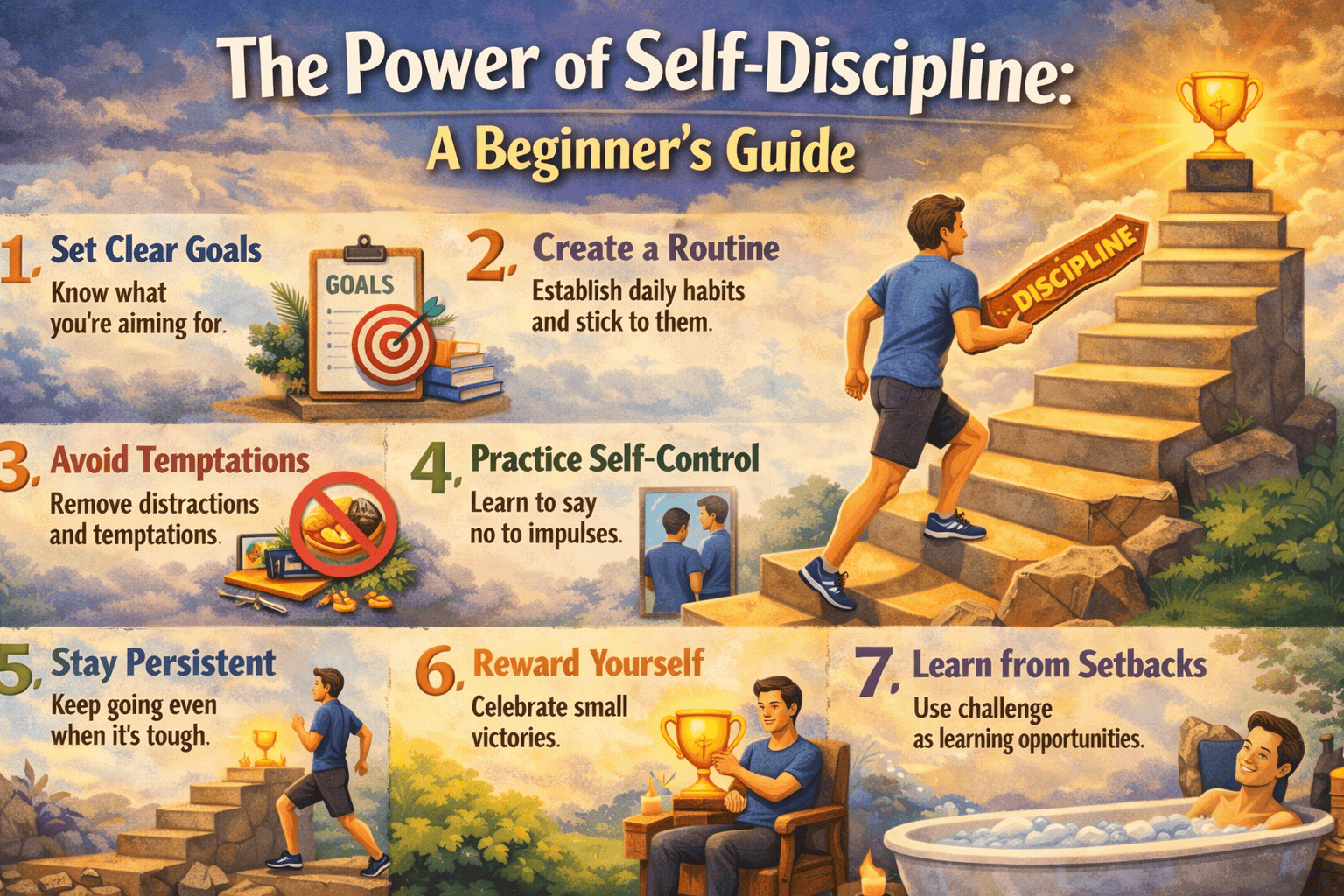
Maintaining focus has become a massive challenge in our fast-paced modern world. Smartphone notifications, social media updates, and endless work demands constantly distract us from our true goals. What is the way out of this endless cycle of distraction? The answer is simple in theory but challenging in practice. That answer is self-discipline.
You might think self-discipline means strict rules or punishing yourself. It is actually the exact opposite. Self-discipline is a liberating way to design your life exactly how you want it. In this comprehensive guide, we will explore how you can use self-discipline to reclaim your lost focus using straightforward and highly accessible language.
Why Self-Discipline is More Important Than Motivation
Many of us wait for motivation to strike before starting a new project. Motivation is simply a temporary emotion. It comes and goes without warning. For example, you might watch an inspiring video and decide to start exercising today. However, when your body feels tired two days later, that motivation will no longer be there to help you.
This is exactly where self-discipline steps in. Self-discipline does not rely on your current emotional state. It is the ability to make your brain execute the right actions even when your mind does not want to do the work. Motivation helps you get off the starting line. Self-discipline is the only thing that keeps you moving until you cross the finish line. Therefore, self-discipline is far more crucial for long-term success than fleeting motivation.
What is Self-Discipline and How Does it Work?
Self-discipline is your ability to control your emotions, temptations, and behavior in order to achieve your overarching goals. In simple terms, discipline is preparing yourself to do what you must do regardless of how you feel. It prioritizes long-term benefits over temporary, fleeting pleasures.
According to neuroscientists, a part of our brain called the prefrontal cortex is responsible for our decision-making and self-control. When you repeatedly force yourself to do a specific task, this part of the brain becomes much stronger. The American Psychological Association (APA) notes that willpower and self-discipline act very much like a muscle. Regular practice makes it stronger, while a lack of use leaves it weak and ineffective.
The Connection Between Focus, Habits, and Success
Your focus, your daily habits, and your ultimate success are deeply interconnected. Your energy flows directly to wherever you place your focus. Holding onto that focus becomes significantly easier when we rely on our established habits.
When you do something for the first time, it requires a massive amount of focus and willpower. But once that action turns into a habit, it happens almost subconsciously. World-renowned author James Clear explains in his book Atomic Habits how tiny positive habits compound into massive success over time. Self-discipline is the foundational tool that helps you build these good habits and break the bad ones.
Why Most People Struggle to Maintain Self-Discipline
Many people wonder why maintaining self-discipline feels so incredibly difficult. The primary reason lies within the natural structure of our brains. Our brains are hardwired to seek instant gratification and immediate rewards.
If there is a delicious cake in front of you, your brain wants to eat it quickly to experience immediate pleasure. It actively pushes away the long-term thought of losing weight. The inability to resist this temptation of instant joy is the main reason most people fall off the path of discipline. Furthermore, the excessive digital distractions around us are largely responsible for destroying our natural ability to focus.
Major Benefits of Building Self-Discipline
If you can successfully integrate self-discipline into your daily routine, you will witness its positive impacts in every single area of your life. Let us explore some of the most significant benefits.
Improved Productivity and Focus
The greatest advantage of discipline is that it multiplies your work productivity. When you know exactly what you need to do and when to do it, you stop wasting precious time.
Disciplined individuals can push away distracting elements and focus deeply on a single task. This concept is often referred to as “deep work.” As a result, it becomes entirely possible to complete much more work flawlessly in a fraction of the time.
Better Decision Making
We have to make countless decisions in our daily lives. When you practice self-control regularly, your tendency to make wrong decisions driven by sudden emotions decreases significantly.
Staying disciplined keeps your mind calm and collected. It develops your ability to judge the good and bad aspects of any situation before making the right choice. Consequently, the chances of making detrimental mistakes in both personal and professional spheres drop drastically.
Greater Mental Strength
Mental stress and anxiety are highly common problems in today’s world. Self-discipline actively helps you manage and overcome this stress. When you organize your life properly, your anxiety about an unknown future naturally diminishes.
You develop the mental toughness needed to fight through difficult situations without giving up. You begin to understand that the control over your actions rests entirely in your own hands. This realization dramatically boosts your self-confidence.
Long-Term Success and Consistency
Success is never the result of a single day of magic. It is the accumulation of small tasks completed every single day. Self-discipline helps you maintain this vital consistency.
You might feel sad today, and it might rain tomorrow. Because of discipline, you will not step away from your necessary work despite these hurdles. This relentless daily effort is exactly what eventually brings you to the ultimate peak of long-term success.
10 Actionable Steps to Reclaim Your Focus
These 10 practical steps will help you immensely if you want to start fresh and bring your lost focus back to life.
1. Start with Small, Manageable Commitments
Setting a massive goal right at the beginning is a major mistake when trying to build self-discipline. Start with a very small and highly manageable task first.
Why small wins build momentum:
When you successfully finish a small task, your brain releases a hormone called dopamine. This gives you a feeling of joy and provides the energy to tackle the next task. One small victory every day steadily increases your overall self-confidence.
How to avoid overcommitting early on:
If you want to read a book for an hour a day, start with just five minutes. Reading for five minutes will feel incredibly easy. These tiny commitments will not put any pressure on your brain. You can gradually increase the time as the habit solidifies.
2. Create a Daily Routine You Can Stick To
Having a specific routine means your brain does not have to repeatedly think about what to do next. This preserves a massive amount of mental energy.
Structuring your day for success:
Divide your day into a few distinct segments. Dedicate the first few hours after waking up in the morning to your most important tasks. Before going to sleep at night, prepare a list of the tasks you need to accomplish the following day.
Reducing decision fatigue:
Thinking about what clothes to wear or what to eat in the morning wastes a lot of energy. Having a routine frees you from this “decision fatigue.” Famous leaders like Mark Zuckerberg or Steve Jobs famously wore the same colored clothes every day solely to reduce this exact decision-making exhaustion.
3. Eliminate Temptations and Distractions
Do not place excessive reliance on your willpower alone. Instead, arrange your surrounding environment in a way that eliminates the opportunity for bad habits entirely.
Controlling your environment:
If you want to stick to a healthy diet, do not keep any fast food in your refrigerator. If you want to increase your focus while studying, remove everything unnecessary from your desk. Staying away from temptation is much easier when it is not directly in front of your eyes.
Minimizing digital interruptions:
Keep your phone notifications turned off while you are working. You can use specialized tools to block social media apps for specific periods. The less digital distraction you face, the sharper your work focus will become.
4. Focus on One Task at a Time
Many people believe that doing many tasks simultaneously makes them more productive. Science says the exact opposite.
The myth of multitasking:
The human brain is simply not designed to handle multiple complex tasks at once. When you multitask, you are actually just shifting your attention very rapidly from one task to another. This degrades the quality of your work and causes severe mental exhaustion.
Practicing deep work for better results:
Take up a single task and do not pay attention to anything else until it is completely finished. You can try using the Pomodoro Technique. Work continuously for 25 minutes and then take a short 5-minute break. This will help keep your attention locked in one specific place.
5. Train Your Mind to Delay Instant Gratification
Instant gratification is the biggest enemy of self-discipline. You must find a way to break free from its grip.
Understanding emotional control:
In the famous Stanford “Marshmallow Experiment,” researchers found that children who could control their greed and wait for a larger reward became much more successful later in life. You must learn to endure temporary discomfort and wait for the bigger future payoff.
Simple exercises to strengthen willpower:
Place your favorite food right in front of you, but do not eat it immediately. Tell yourself that you will eat it after exactly 10 minutes. This tiny exercise will massively increase your capacity for self-control over time.
6. Overcome Procrastination Using the Two-Minute Rule
Many of us love to put off our work for later. The two-minute rule is a fantastic way to overcome this habit of procrastination.
Starting without overthinking:
The rule states that if a task takes two minutes or less to complete, you should do it immediately instead of putting it off. Examples include making your bed or replying to a quick email. This makes you much more proactive toward your daily duties.
Building momentum through action:
For larger tasks, simply tell yourself, “I will only do this work for two minutes.” After two minutes, you will likely find that you want to continue working. Starting a task is always the hardest part. Once you begin, the natural momentum of the work will pull you forward.
7. Track Your Progress Consistently
Your interest in maintaining discipline grows significantly when you can see your improvement right in front of your eyes.
Why accountability improves discipline:
Create a system of accountability for your own actions. When you sit down at the end of the day to review your progress, you will easily understand where you are making mistakes. This practice will make you highly self-aware.
Effective use of habit trackers:
Take a physical calendar and place a checkmark on it every day your goal is fulfilled. Famous comedian Jerry Seinfeld used this exact strategy. After a few days, you will notice a beautiful chain forming. Your only job will be to ensure that this chain never breaks under any circumstances.
8. Build Mental Toughness Through Challenges
Doing easy work is very comfortable. However, you cannot improve your life if you constantly stay inside your comfort zone.
Embracing discomfort for growth:
Try to do at least one thing every day that makes you feel slightly uncomfortable. It could be waking up a little earlier in the morning or taking a cold shower. These small discomforts will gradually make you mentally resilient.
Learning from failure instead of avoiding it:
You will fail many times on the path to maintaining discipline. This is perfectly normal. When you fail, do not blame yourself. Instead, figure out why it happened. Build the mindset to learn from your mistakes and start over again with fresh energy.
9. Surround Yourself with Disciplined People
The people around you have a profound impact on your thoughts and your overall behavior.
The power of environment and people:
You slowly become just like the people you spend the most time with. If your friends or colleagues are lazy, it will be incredibly difficult for you to focus on your work.
Creating positive peer pressure:
Associate with people who have specific goals in life and who work extremely hard. Seeing their discipline will naturally inspire you. This will create a type of positive pressure on you, pushing you forward on the path to ultimate success.
10. Reward Yourself for Consistency
The human brain always loves a good reward. Therefore, give yourself small gifts after successfully completing your positive tasks.
Reinforcing positive behavior:
When you successfully follow your routine for an entire week, treat yourself to your favorite meal or watch a movie you love. This helps your brain understand that discipline does not just mean hardship; there is also great joy at the end of the tunnel.
Creating healthy reward systems:
Ensure that your rewards do not contradict your actual goals. Suppose you are trying to lose weight. Eating a whole box of ice cream as a reward after a week of dieting would be a terrible idea. Instead, treat yourself to a new book or a nice shirt.
Common Mistakes That Break Self-Discipline
When starting something new, we often make mistakes that disrupt our entire process. It is crucial to stay highly aware of these common pitfalls.
Trying to Change Too Much Too Fast
Many people decide to start dieting, exercising, reading books, and waking up early all at once at the beginning of a new year. As a result, they quickly become exhausted and abandon everything shortly after. Your brain cannot adapt to such massive changes so suddenly. Therefore, focus on only one habit at a time. Once you master that one, you can introduce a new task.
Relying Solely on Motivation
As mentioned earlier, motivation is never permanent. You will find no motivation to work if the weather is bad, your body is tired, or you are feeling sad. On those difficult days, only self-discipline will drag you to your desk. Keep motivation as a companion, but never become completely dependent on it.
Ignoring Rest and Recovery
Taking a rest does not equal laziness. We often neglect adequate sleep or relaxation while trying to overwork ourselves. This ultimately leads to severe mental fatigue or burnout. Adequate sleep and healthy recreation recharge our willpower batteries. Be absolutely sure to allocate sufficient time for rest within your daily routine.
How Long Does It Take to Build Self-Discipline?
We frequently hear the myth that it takes exactly 21 days to build a new habit. This is actually a very common misconception. A well-known study published by researchers at University College London (UCL) showed that it takes an average of 66 days to turn a new behavior into an automatic habit.
However, this timeframe can vary widely depending on the individual and the complexity of the task. A simple task, like drinking a glass of water every morning, can become a habit very quickly. On the other hand, a difficult task like going to the gym every single day might take several months to solidify. Do not lose your patience. If you maintain consistency, it will inevitably become a permanent part of your life.
Daily Habits That Strengthen Self-Discipline
There are certain small daily habits that actively help plant the seeds of discipline deep within you.
-
Making your bed in the morning: By making your bed right after waking up, you achieve success in the very first task of your day. This creates a highly positive mindset for the entire day ahead.
-
Exercising or walking regularly: Physical exertion keeps both the body and the brain highly active. It naturally increases dopamine levels and significantly reduces mental stress.
-
Expressing gratitude: At the end of the day, think of at least three specific things you are grateful for. This simple practice will keep your mind far away from negative thoughts.
-
Drinking enough water: Staying properly hydrated is absolutely essential for your brain to function at its peak capacity.
-
Building a reading habit: Reading at least 10 pages of a book before going to sleep every night will drastically increase your focus and critical thinking skills.
Frequently Asked Questions (FAQ) About Self-Discipline
Is self-discipline a talent or a skill?
It is absolutely not an inborn talent. Self-discipline is a highly attainable skill. Just as you learn to ride a bicycle or swim through consistent practice, willpower must be slowly built through tiny daily decisions. Anyone can achieve this through dedicated practice.
How can I stay disciplined every day?
The master key to staying disciplined every day is having a crystal-clear routine and remembering exactly why you are doing the work. If your “why” or purpose is strong enough, doing the work becomes remarkably easy. Review your ultimate goal every single morning. Break your large tasks down into tiny pieces so they do not feel like an impossible mountain to climb.
What should I do if I fail?
Failure is a completely normal part of this journey. You might very well break your routine one day. There is absolutely no reason to get frustrated and quit everything. Learn to forgive yourself quickly. Analyze exactly why the mistake happened and start over the next day with double the enthusiasm. Always remember that one bad day cannot destroy an entire month of hard work.
Can anyone become highly disciplined?
Yes, absolutely. There is no age limit or boundary for building self-discipline. Even the most disorganized person alive today can transform into a highly disciplined individual through tiny, consistent changes. The only things required are absolute honesty with yourself, intense willpower, and a mindset to move forward just a little bit every single day.
Conclusion: Discipline is Built One Small Decision at a Time
You do not need to take a massive leap right this second to reorganize your entire life. Self-discipline is not a magical event that happens overnight. It is the beautiful, compounding result of the tiny, correct decisions you make every single day.
Choosing to get straight out of bed this morning instead of hitting the snooze button, picking an apple instead of junk food, or reading a book for five minutes instead of wasting time on social media are all vital parts of discipline. Over time, these incredibly small decisions will merge together to bring unimaginable positive changes to your life.
Let your journey to reclaim your focus begin today. Be kind to yourself, exercise patience, and try to make yourself just a little bit better than you were the day before. Your ultimate success is now simply a matter of time.