Pomegranate: Health Benefits, Nutrition, How to Peel & Side Effects
Is Pomegranate a Fruit or a Berry? Popular Varieties
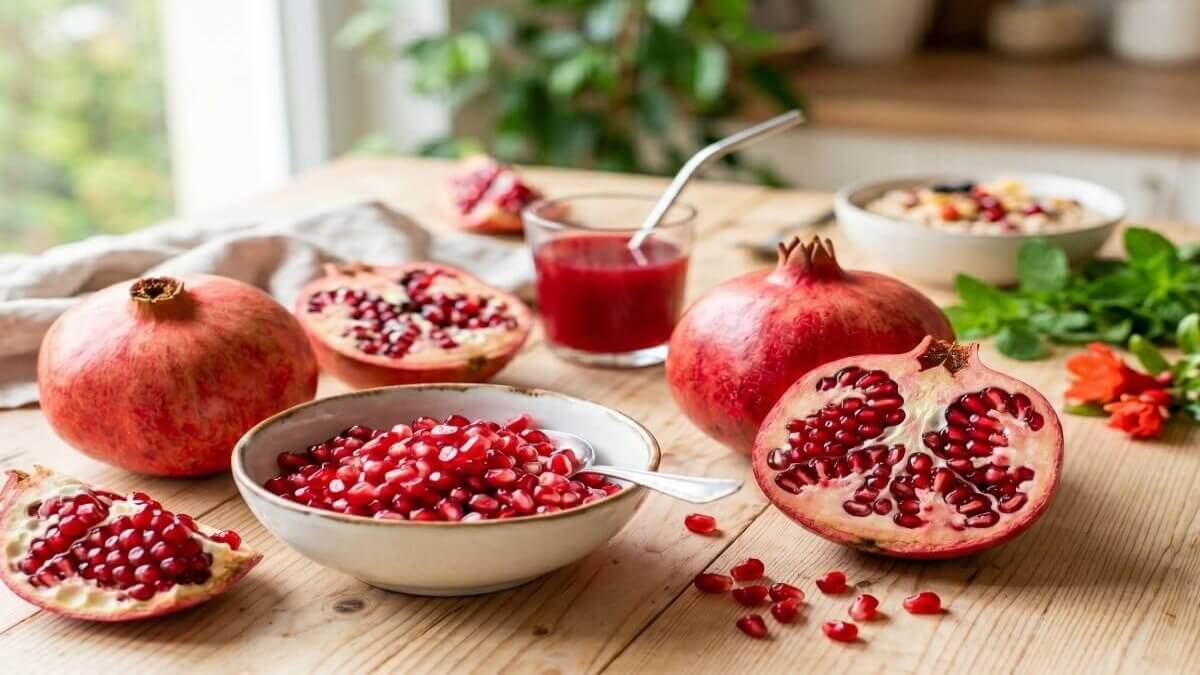
Botanically, the pomegranate is a berry. It belongs to the Lythraceae family and has the characteristic features of berries: numerous seeds enclosed in a juicy pulp. Unlike other berries (such as strawberries), the pomegranate has a hard outer shell that protects the seeds within. However, because of its structure and how it’s eaten, the pomegranate is often considered a fruit. Pomegranate varieties:
- Pomegranate “Oriental.” Pomegranates have a bright red or orange skin. The seeds inside are a rich red color, with juicy, sweet flesh.
- Charoli pomegranate. A variety prized for its large fruits and sweet seeds. They have beautiful pink-red skin and large seeds with a sweet flavor and subtle tartness.
- Ak-Dona pomegranate. The fruit is distinguished by its lighter skin with yellowish and pinkish hues. The pomegranate seeds are white with translucent flesh, giving it a more neutral flavor—less rich and sweet than other varieties;
- The Crimean Striped pomegranate has an unusual appearance: striped skin that combines light and dark shades of red and yellow.
Another popular variety is the “Asian” pomegranate, with dark red skin and bright red seeds. Known for its intense, rich flavor, it is often eaten raw and juiced.
Where and How Pomegranates Grow
Pomegranates thrive in warm, sunny regions with moderately hot climates, including South Asia, the Middle East, the Caucasus, southern Europe, and parts of North Africa. The plant prefers well-drained, slightly acidic or neutral soils and requires full sunlight for proper growth.
The pomegranate is a drought-resistant tree that can withstand high temperatures and light frosts, but to produce large, tasty fruit, it needs long periods of warmth and few severe winter frosts. Pomegranates typically grow as small trees or shrubs up to five meters tall, and their fruits ripen in late summer or early fall.
Pomegranate Calories, Vitamins, and Minerals
Calorie Count per 100g and Whole Fruit
According to the U.S. Department of Agriculture, 100 grams of pomegranate contain about 83 calories, making it a relatively low-calorie food. A single pomegranate, typically weighing about 250 grams, contains approximately 208 calories.
Pomegranate is a rich source of vitamins and minerals important for overall health. Regular pomegranate consumption benefits both women and men by strengthening the immune system, improving metabolism, and supporting healthy heart and vascular function.
Key Vitamins and Minerals in Pomegranate
| Vitamins and Minerals | |
| Name | Effect on the body |
| Calcium | It helps strengthen bones and teeth and supports normal muscle and nerve function. A calcium deficiency can lead to osteoporosis and dental problems. |
| Sodium | Regulates water balance in the body and supports cell and tissue function. Sodium is essential for normal nervous system and muscle function, but excess sodium can lead to high blood pressure. |
| Vitamin C | It strengthens the immune system, promotes wound healing, improves iron absorption, and acts as a powerful antioxidant that protects cells from damage. It also supports healthy skin and blood vessels, making pomegranate beneficial for inflammatory skin conditions and age-related changes. |
| Magnesium | It helps maintain normal heart, nervous system, and muscle function. Magnesium is also essential for protein synthesis and cellular energy, and a deficiency can cause fatigue and cramps. |
| Potassium | Regulates water-salt balance and supports normal heart, kidney, and muscle function. It helps normalize blood pressure and maintains normal nervous system function. |
| Phosphorus | Essential for strong bones and teeth, it supports cell formation and energy production. Phosphorus supports normal cell function, including in the brain and nervous system. |
| Folic acid | Essential for normal cell division, especially during pregnancy, it supports healthy fetal nervous system development. Folate deficiency can lead to neural tube defects in infants. |
| Choline | Supports liver health, improves memory and mental performance, and aids in fat metabolism. Choline is essential for cell membrane function and nerve cell function. |
Top Health Benefits of Pomegranate
Pomegranates benefit various body systems, including the cardiovascular and urinary systems, as well as the skin and joints. Pomegranates benefit men through their antioxidant properties, which support heart health, improve prostate function, and help normalize testosterone levels. Research from the University of California confirms that pomegranate juice can inhibit prostate cancer cell growth and help slow cancer progression, especially when combined with a plant-based diet.
Heart Health, Circulation, and Blood Support
Pomegranate helps improve blood composition, stimulates red blood cell production, and improves circulation, which can benefit low hemoglobin levels. Pomegranate helps increase hemoglobin levels thanks to its high iron, vitamin, and antioxidant content.
Skin Health and Anti-Aging Properties
Pomegranate face masks can improve skin condition thanks to their antioxidant and anti-inflammatory properties, which may help slow the aging process, improve elasticity, and reduce wrinkles. Pomegranate also helps moisturize and improve skin texture thanks to its high vitamin C content, making it beneficial for skin conditions such as psoriasis.
Joint Comfort and Anti-Inflammatory Support
Pomegranate has anti-inflammatory properties that can help with joint conditions, including arthritis and gout. It reduces inflammation, relieves pain and swelling, and improves joint mobility.
Pomegranate for Diabetes and Blood Sugar Control
Pomegranate can benefit people with diabetes because of its low glycemic index and antioxidant properties, which help control blood sugar levels. It contains polyphenols, which help improve insulin sensitivity and reduce inflammation. Moderate pomegranate consumption, especially with high blood sugar, supports metabolism and helps prevent diabetes-related cardiovascular complications.
Pomegranate for Weight Loss and Keto Diets
Pomegranate can support weight loss because it is low in calories and high in fiber, which helps maintain satiety and supports metabolism. The antioxidants in pomegranates promote metabolism and help detoxify the body. Moderate pomegranate consumption can support weight loss by providing vitamins and minerals.
When dieting, avoid eating pomegranate at night, as its natural sugars can stimulate appetite and disrupt digestion while you sleep. Consume pomegranate with caution on the keto diet, as its carbohydrates can disrupt ketosis—the state in which the body begins to use fat for energy.
Immune Support During Seasonal Colds
Pomegranate can help with colds thanks to its high vitamin C content, which strengthens the immune system and helps the body fight viruses. Pomegranate also has anti-inflammatory and antiseptic properties, which may help reduce inflammation in the throat and nasopharynx associated with acute respiratory viral infections. Pomegranate may also help reduce fever thanks to its antioxidants and vitamin C, and it can help maintain hydration.
Pomegranate and Digestive Health (Gastritis, Diarrhea & Constipation)
Gastritis, Ulcers, and Food Poisoning
Pomegranate may pose risks for gastrointestinal conditions, including gastritis and stomach ulcers, because its high acidity can irritate the mucous membrane and contribute to exacerbations. Eating pomegranate when stomach acid is high can lead to pain, heartburn, and increased inflammation. For stomach ulcers, pomegranate’s acidity can worsen the condition, causing discomfort and delaying ulcer healing.
Pomegranate can help with diarrhea thanks to its astringent properties, which can reduce stool frequency and volume, reduce inflammation, and restore normal digestive function. However, consume pomegranate in moderation, as concentrated juice can increase stomach irritation. A decoction of pomegranate peels can help with diarrhea, but use it only after consulting a gastroenterologist or physician to rule out any contraindications.
If you have food poisoning, avoid pomegranate for the first few days, as it can increase irritation of the stomach and intestines. Eating the fruit can slow down the body’s elimination of toxins and worsen the condition.
Diarrhea vs. Constipation (Why Seeds vs. Juice Matter)
Pomegranate can help with constipation because of its high fiber content, which stimulates intestinal peristalsis and promotes digestion. Pomegranate juice has a mild laxative effect, helping eliminate toxins and prevent stool retention.
Liver and Pancreas Considerations
Pomegranate’s benefits for the liver stem from its antioxidant and anti-inflammatory properties, which help protect cells from damage and improve detoxification. However, if you have liver diseases, including hepatitis or cirrhosis, pomegranate should be consumed with caution, as its acidic content can increase inflammation and stress on the organ.
If you have pancreatitis, consume pomegranate only with a doctor’s advice, as its acidity can irritate the pancreas. Avoid it during an exacerbation, but during remission, you can include it in your diet in small quantities, preferably as diluted juice.
Pomegranate During Pregnancy, Breastfeeding, and Childhood
Eating Pomegranate During Pregnancy
Pomegranate is beneficial during pregnancy because it’s rich in vitamins and minerals that support the health of both mother and baby. Vitamin C and folate in pomegranates help strengthen the immune system, while potassium and magnesium help maintain normal blood pressure and reduce the risk of preeclampsia. The calcium and phosphorus in pomegranates support the development of strong bones and teeth in the baby, help prevent placental problems, and help normalize blood circulation.
Eating Pomegranate While Breastfeeding
Pomegranate is safe to eat while breastfeeding, as it’s a healthy food rich in vitamins and antioxidants that support the health of both mother and baby. During breastfeeding, pomegranate helps strengthen the immune system and improve digestion.
When and How to Introduce Pomegranate to Children
You can introduce pomegranate into children’s diets from six months, starting with small portions (such as juice) and carefully removing the seeds to reduce choking risk. Pomegranate is beneficial for children because it is rich in vitamins, minerals, and antioxidants, which help strengthen the immune system, improve digestion, and maintain healthy skin. However, because of its high acidity, give pomegranate with caution; if signs of an allergy appear, schedule an appointment with a pediatrician.
How to Choose, Peel, Juice, and Store Pomegranates
How to Pick a Ripe, Juicy Pomegranate
When choosing a pomegranate, check its appearance and weight. The peel should be firm, slightly shiny, and free of visible damage, cracks, or soft spots. The peel color can range from deep red to pink or yellowish depending on the variety, but the coloring should be uniform.
A ripe pomegranate feels heavier than it looks, as this weight indicates the large number of juicy seeds inside. When lightly tapped, the pomegranate should sound hollow (indicating ripeness). Avoid fruits with a dried-out stem, as this can indicate prolonged storage.
Best Time of Day to Eat Pomegranate
You can eat pomegranate at any time of day, but it’s best to avoid it on an empty stomach, as its high acidity can irritate the stomach lining. It’s best to eat pomegranate in the morning, as it stimulates metabolism and helps improve digestion. Avoid eating pomegranate at night to prevent overloading the body, as the fruit can stimulate intestinal activity and disrupt sleep.
Step-by-Step Guide: How to Peel and Deseed a Pomegranate
Before peeling and cutting a pomegranate, wash it under warm running water to remove dirt, pesticides, or chemicals on the peel. Pomegranates are often grown in areas where fertilizers and pesticides are used, so peel them thoroughly before eating.
Warm water helps remove dirt and wax residue that may coat the peel, improving appearance and storage. Washing the fruit also helps prevent contaminants from getting on the seeds during peeling and cutting. Recommendations for properly peeling a pomegranate:
- Place the pomegranate on a flat, stable surface to prevent slipping, and use a sharp knife.
- Cut off the top of the pomegranate, leaving about one to two centimeters from the top. This step lets you see the fruit’s internal structure and where the seeds are located. A proper cut will make the next steps easier.
- Inspect the pomegranate and find the natural lines that divide it into segments (usually about six to eight). Lightly cut along the lines, being careful not to cut too deeply and damage the seeds inside. These cuts will create small pockets that will make it easier to separate the pomegranate.
- Carefully open the pomegranate, following the cuts. Gently lift the peel and separate the pomegranate into sections. Once opened, the fruit will reveal segments filled with brightly colored seeds.
There are two ways to remove the seeds. The first involves carefully removing the peel and pulp segments by hand. The second involves placing the pomegranate in a large bowl of water and carefully removing the seeds. With the second method, the pomegranate seeds sink to the bottom, while the membranes and remaining pulp float to the surface.
How to Make and Dilute Fresh Pomegranate Juice
To get enough juice, start by selecting a ripe, juicy pomegranate. Then rinse the pomegranate thoroughly with warm water, cut it in half or quarters, and carefully separate the seeds from the peel without damaging them.
Place the seeds in a clean, zip-lock plastic bag. Then crush them by hand or with a rolling pin until the seeds release their juice. You can also make pomegranate juice using cheesecloth. To extract the juice, fold the cheesecloth in several layers, pour the pomegranate seeds onto it, wrap it, and roll it over a clean container. To extract more juice, use a hand juicer, being careful not to squeeze out the peels or membranes, which can make the juice bitter.
Pomegranate juice is highly acidic, so it’s recommended to drink it diluted. Dilute the juice with water at a 1:2 ratio to reduce stomach strain and prevent irritation of the mucous membrane. The optimal daily dose is about 250 milliliters, which helps improve cardiovascular function and normalize blood pressure.
Storage Guidelines for Whole Fruits, Arils, and Juice
Store pomegranates in a cool, dry, well-ventilated place, away from direct sunlight. You can refrigerate whole fruits for up to two months. Store pomegranate seeds and natural pomegranate juice in airtight containers in the refrigerator; they will stay fresh for up to five days. For longer storage, freeze the seeds and juice to preserve flavor and color (unlike canning).
Culinary Uses: What Can You Make with Pomegranate?
Pomegranate seeds are often added to salads and pair well with greens, nuts, and cheeses. You can also make pomegranate juice naturally and drink it neat or use it as a base for sauces, marinades, and desserts. Pomegranate is also used in desserts, including yogurts, pies, and mousses. Below are simple pomegranate recipes suitable for everyday and festive meals.