Melissa (Lemon Balm) Tea: Health Benefits, Recipes, Side Effects, and Brewing Guide
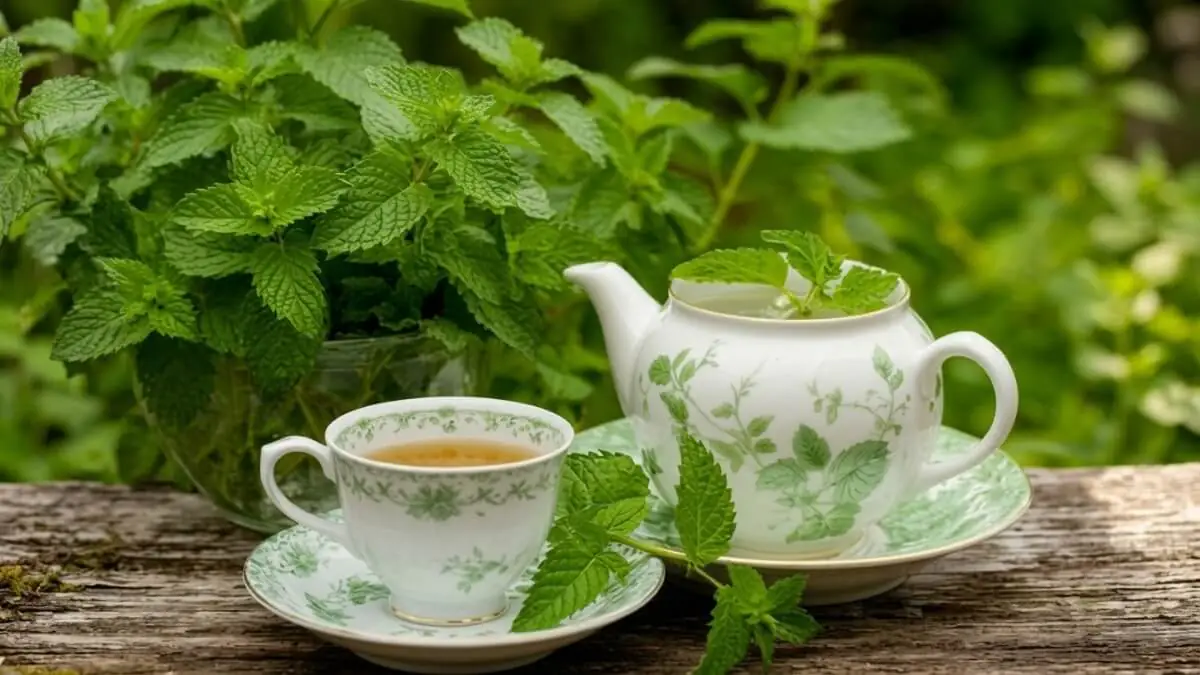
Let’s look at a drink long believed to have miraculous medicinal properties.
Melissa tea: benefits and harms, composition, brewing options, positive properties, and contraindications.
We also suggest finding out how much you can enjoy and what the dangers of excessive consumption are.
What is Melissa (Lemon Balm)?
Melissa is a perennial herb used in medicine for over 2,000 years, primarily in folk medicine, though it also has scientific applications.
For example, it is in demand in aromatherapy and cosmetology today: it is added to masks and creams, creating pleasantly scented, soothing mixtures.
It has also found a niche in cooking: it is a frequent addition to desserts and a popular garnish for prepared dishes.
Plant Description and Uses
Essentially, it is a “sister” of mint – a close relative with a very similar appearance and smell of leaves.
The taste and aroma hint at lemongrass, giving the bouquet a rich, fresh, distinctive character.
Melissa blooms in the summer, usually from June to August, and its fruits, which are large, shiny black nuts, ripen until September.
It is distinguished by relatively low winter hardiness and also resembles catnip visually.
Incidentally, to distinguish the herb from other similar essential oil plants, simply smell it—this is the most reliable method. It’s most often used to brew hot drinks, but it’s also used to make decoctions and tinctures.
Chemical Composition and Active Nutrients of Melissa
What’s important to us now is the plant’s leaves, which contain the following components:
- essential oils rich in monoterpenes, which include linalool, geraniol, myrcene, nerol, geranyl acetate, citronellal, and others;
- bioflavonoids – luteolin, apigenin, rhamnocitrin, cynaroside, cosmosin;
- organic acids – rosmarinic acid, para-coumaric, caffeic, ferulic, chlorogenic, sinapic;
- vitamins A (beta-carotene), B1, B2, and C;
- tannins and aromatic lactones (coumarins);
- microelements – iron, calcium, potassium, zinc, selenium, magnesium.
When harvesting, cut off the top portion and dry it in a ventilated area away from direct sunlight. Discard the stem, then crush the leaves and store them in a suitable container (glass jar, canvas bag) for use as needed.
Health Benefits of Melissa (Lemon Balm) Tea
This drink has a cumulative effect: the benefits of regular consumption won’t become apparent immediately, but over time. Generally, it will have the following positive effects:
- sedative – calms nerves, relieves stress, gets rid of depression;
- antispasmodic – will relieve severe headaches or even eliminate migraine conditions;
- gentle diuretic – fights excess weight with a healthy weight loss method;
- decongestant – removes excess fluid from the body;
- mild laxative – normalizes the functioning of the gastrointestinal tract;
- anti-allergic – works well against rashes, skin redness, itching, dermatitis and similar reactions;
- anti-inflammatory – will help with both respiratory diseases and problems of the genitourinary system.
This herb promotes the healing of abrasions, scratches, and shallow wounds, and relieves mild cold discomfort and cold sores (topically).
With such complex properties, a hot drink made from it has been widely used to treat rheumatism, arthritis, thrombophlebitis, colds, viral infections (including influenza, herpes, and measles), neuroses, and stress.
Its regular use is also recommended for problems with the digestive system, hypertension, tachycardia, insomnia, weakened immunity, emerging eczema, and painful trophic ulcers.
Benefits of Melissa Tea for Women
Melissa helps not only expectant or nursing mothers, but also women of any age.
Its regular use helps normalize the menstrual cycle and relieve unpleasant symptoms of PMS, as well as balance psycho-emotional and hormonal levels.
Those who are pregnant or expecting a child should drink this decoction to relieve symptoms of toxicosis and hypersensitivity – it will reduce nausea and excessive irritability.
Add to this the positive effect on digestion and metabolism.
We’ve already written about extending the lactation period. Still, there’s another benefit, which is reducing anxiety—a common feeling for nursing mothers that can lead to a decrease in milk supply.
Pediatricians recommend enjoying a cup of an aromatic drink half an hour before breastfeeding.
The plant’s importance is hard to overstate for those going through menopause.
At this stage of life, the herb helps to relax the nerves and relieve muscle tension, making it easier for the body to adjust.
For genitourinary issues, its anti-inflammatory effect is invaluable.
Is Melissa Tea Safe During Pregnancy and Breastfeeding?
The expectant mother should rest assured, as her attending physician will likely not only allow, but even recommend this tea for her to:
- stabilize hormonal levels;
- reduce the unpleasant sensations of toxicosis;
- normalize the functioning of the gastrointestinal tract, relieve diarrhea or constipation;
- strengthen the immune system by harmlessly increasing the body’s resistance to infections;
- reduce possible swelling;
- improve overall emotional state, ensure good sleep.
Drinking it is generally safe for most people, but to be on the safe side, it’s best to consult your doctor and get their approval.
During breastfeeding, mothers are also recommended to enjoy a cup or two of this delicious herbal infusion daily (unless there are contraindications). It not only helps stabilize hormone levels but also speeds up metabolism. Activating metabolism will prolong lactation.
The positive effects on the female body indirectly benefit the child by improving digestion and sleep and calming them down.
At What Age Can Children Drink Melissa Tea?
Experts are divided on this issue.
Some doctors believe that after 4 months of life, it is already acceptable to introduce various decoctions (including this one) into the infant’s diet.
Others argue that a baby up to six months should be fed only with mother’s milk, since it contains all the necessary nutrients, and everything else is unnecessary.
Others generally believe that herbal drinks can only be included in a child’s menu after they reach 3 years of age.
The simple conclusion is this: parents should consult a pediatrician. A responsible family doctor will thoroughly examine the individual case and provide their expert advice.
After 3 years, herbal tea can be consumed regularly. It can benefit a hyperactive child by gently affecting the nervous system, calming them, promoting healthy sleep, normalizing digestion, and strengthening the immune system (especially during vitamin deficiency and acute viral infections).
Plus, it can help improve a student’s memory, increase concentration and perseverance, and improve learning and memorization.
How to Harvest, Dry
It’s quite easy to stock up for the winter:
- Harvest the plant in June, when it has already reached biological maturity. Cut the leaves and stems in the first half of the day (when the dew has dried but the sun is not yet hot) and in clear, dry weather.
- Rinse the harvest under running water and spread it thinly but evenly on a board (or another suitable wide, flat, level surface). Alternatively, tie it into small bundles and hang it.
- Dry it either in the air (always in the shade, and only if the outside humidity is not too high) or in a warm, ventilated room.
You can also cut the collected ingredients into small pieces, place them on a baking sheet, and bake them in the oven (keep the door open) for a couple of hours.
Store Melissa Leaves
Store your prepared herb in a hermetically sealed glass container or a canvas bag. This will help the herb retain its flavor and aroma for longer.
Just check it periodically for mold. If you notice the first signs of rot on the leaves, throw it away immediately—it’s dangerous to drink such tea.
Therefore, it is best to store the crushed and dried plant in separate containers, so high room humidity or insect pests don’t leave you with only part of the collected medicine.
How to Brew Melissa Tea Properly (Classic & Decoction Methods)
Several methods work for brewing lemon balm tea, depending on the type of tea you are using.
For example, “Crimean tea,” a black tea blend with lemon balm, mint, and lavender, is best brewed the classic way: steep it for no more than 6 minutes.
However, if you want to brew lemon balm to add to other drinks, use the second method.
Therefore, we offer two options.
It is also important to consider what kind of tea is used as the base of the blend – black or green.
Brew black tea with boiling water at 100 degrees, and green tea with water cooled to 85-90 degrees.
Classic Infusion Method (Black, Green, and Herbal Blends)
- Pour 1.5-2 small spoons of lemon balm into hot water;
- Let it brew in a closed container for 10 to 15 minutes;
- If necessary, dilute the resulting brew with hot water (to taste and strength) and enjoy.
Concentrated Herbal Decoction Method
- Repeat the first step completely, but prepare any required volume (in the proportion of 20 g of mixture per 250 ml of liquid);
- Simmer this mixture in a water bath for up to three minutes, remove from heat, wrap it up, and leave for two hours;
- Warm it up to a suitable temperature before drinking, adding lemon, honey, and perhaps even cinnamon if desired.
Try both methods – it will be easier to decide which one is closer and more convenient for you.
Best Melissa (Lemon Balm) Tea Recipes
Calming Lemon Balm Tea for Stress and Insomnia
An effective recipe for those who suffer from insomnia, irritability, and are often nervous with or without reason.
The recipe is as simple as possible:
- Pour one small spoon of dried and crushed herbs into a cup (you can buy it at any pharmacy);
- Pour in 250 ml of hot water (do not use boiling water, but liquid with a temperature of 75-80 degrees);
- Brew for 10 minutes, no more.
That’s it; you can enjoy it with honey and lime juice, or without any sweeteners or acidifiers.
Another beauty of the drink is that it tastes good both warm and chilled, so it is suitable year-round.
The only limitation is possible contraindications, such as arterial hypotension.
Gentle Evening Melissa Tea for Pregnancy
The recipe is very simple:
- Take two small spoons of dried or fresh lemon balm leaves (the second common name for this wonderful herb);
- Pour 200 ml of water at 80°C over them, cover, and let it brew for 12-15 minutes, then strain.
This yields enough tea for two servings.
Fill a 100 ml cup, dilute with boiling water, add natural honey to taste (you can also add a couple of drops of freshly squeezed lemon juice, if there are no contraindications), and enjoy.
Prepared this way, the product offers all the benefits a future mother needs: it calms the nerves, keeps hormones in check, aids digestion, and more.
Take it once a day, at night, before bed. The taste will be delicate and quite pleasant.
Green Tea with Lemon Balm for Weight Management
Since lemon balm has a diuretic and laxative effect (note: a delicate one), it can help fight excess weight effectively and safely.
Both women and men can lose several kilograms in a month if they arm themselves with the following simple recipe:
- Take Sen Cha, Gunpowder, or any other good green tea that you personally like;
- Add crushed and dried herbs to it at the rate of 1-2 tablespoons per pack;
- Pour boiling water over the mixture and let it steep; drink 4-5 cups (up to 1 liter) daily to burn off extra inches from your hips and waist.
Naturally, obesity can only be overcome with a comprehensive approach. Therefore, combine this herbal therapy with a diet (discussed with your doctor) and a healthy, active lifestyle.
Yes, at the same time you need to eat right and exercise, get rid of bad habits – only then can you hope for good results.
Growing Melissa at Home and Other Uses
From dried or fresh plants, you can make:
- Tea – mix lemon balm with your favorite green or black tea and brew as described above.
- Decoction – bring the crushed leaves to the desired state in a steam bath using the method described above.
- Tincture in vodka – pour the prepared raw materials into alcohol at a ratio of 150-200 ml per 50 g.
Moreover, you can even grow your own grass bushes – it’s easy.
Take regular long flower boxes – in the spring, best at the beginning of March.
Cover them with soil, but make sure it is neutral in acidity, loose, and well-drained; you can even add vermiculite or perlite.
Prepare an even layer of soil, make shallow holes 5 cm apart, and plant the seeds.
Wait 10-20 days for germination, and water regularly while maintaining a stable temperature of +10 degrees.
Just be prepared for the fact that the plant will only develop suitable leaves in the second year, and before that, it needs to be looked after: provide sufficient lighting, natural sunlight or a lamp, water frequently and generously in the summer (but do not allow water to stagnate in the boxes in winter, so that the roots do not rot).
Side Effects and Contraindications: Who Should Avoid Melissa Tea?
Now that you know the benefits of lemon balm and how to brew tea from it, let’s look at those cases in which you shouldn’t do this.
So, doctors prohibit the use of lemon balm for those who have at least one of the following problems:
- chronic low blood pressure (hypotension) or autonomic sensitivity;
- significant disturbances of the central nervous system;
- ulcer of the duodenum and/or stomach;
- allergy, hypersensitivity, individual intolerance.
It should be noted separately that abuse leads to weakness, loss of strength, dizziness, and decreased concentration.
Frequently Asked Questions About Melissa Tea
Can You Drink Melissa Tea If You Have Gastritis?
Yes, an infusion made from this plant can relieve painful symptoms by relaxing smooth muscles, protecting mucous membranes, and soothing the central nervous system. However, keep in mind that this is only a supplement, not a cure for stomach inflammation.
The recipe is extremely simple: pour 250 ml of boiling water over three small spoons of the herb, let it steep for 20 minutes, and strain. Take 100 ml daily, following your doctor’s recommendations.
Is Melissa Tea Good for Diabetes?
Yes, modern nutritionists believe it can help by accelerating metabolism, stimulating red blood cell and lymphocyte renewal, cleansing the body overall, and normalizing blood pressure and gastrointestinal function. By promoting proper digestion and improving health, this herb will help fight the sugar plague of the 21st century.
Melissa (Lemon Balm) vs. Peppermint: Which is Better?
There is no universal answer, as the two plants are used in different situations.
The first has a calming effect, while the second has a tonic effect.
You can combine both herbs in mixtures, as long as you don’t exceed the recommended dosages.
Conclusion: Making Melissa Tea Part of Your Routine
Now that you know what lemon balm tea is, its benefits, and its contraindications, you have all the information you need to decide whether it’s worth drinking. Personally, we’re in favor of drinking it regularly, as long as it doesn’t conflict with doctor recommendations.