Traditional vs Modern Education: Which is More Effective?
Introduction
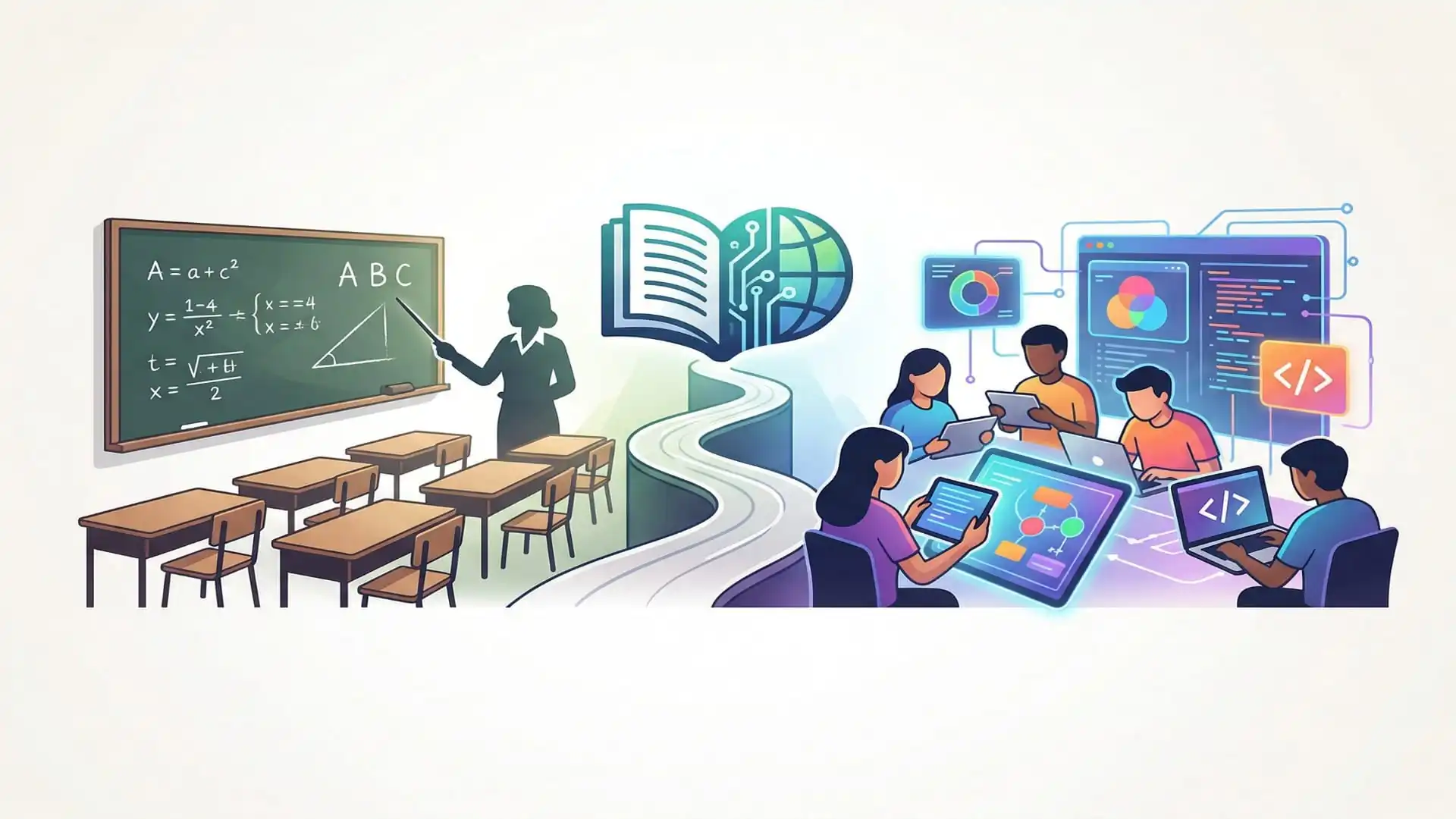
Education is the fundamental pillar of our society. It teaches us how to think and prepares us for the future. Over time, however, the way we learn has changed significantly. There is a massive difference between the blackboards of the past and the smartboards of today.
This transformation has brought a major question to the forefront. Between traditional education and modern education methods, which is truly more effective? Parents, teachers, and educators are constantly discussing this topic.
In this blog post, we will explore the depths of both systems. We will discuss their advantages, disadvantages, and real-world applications in detail. Our goal is to provide you with a clear and unbiased perspective.
Why the Education Debate Matters Today
Today’s world is more competitive than ever before. Technology has changed almost every aspect of how we live. Therefore, the debate over educational methods is highly relevant right now.
We need to prepare our children to face the unknown challenges of the future. Traditional education has given us a strong foundation. The modern world, however, constantly demands new skill sets.
According to the World Economic Forum, skills like analytical thinking and creativity will be most in demand in the future job market. Knowing which education system can best teach these skills is absolutely crucial for us.
How Learning Methods Are Changing Rapidly
Just a decade ago, the primary sources of learning were textbooks and teacher lectures. Students would sit in classrooms, listen carefully to their teachers, and take notes. It was primarily a one-way process.
The easy availability of the internet has completely changed this scenario. Information is no longer confined to the pages of a book. Anyone can acquire knowledge on any subject from anywhere in the world using the internet.
Smartphones, tablets, and laptops have now become essential parts of education. Online courses, educational videos, and interactive apps make the learning process much more engaging. This rapid shift in learning forces us to rethink our conventional ideas.
What is Traditional Education?
Traditional education is the system we have been observing for decades. It mostly operates within the specific structure of a school or college.
A defined curriculum is followed in this system. Teachers teach according to this syllabus, and students are evaluated through end-of-year exams. It is a highly disciplined and systematic approach.
Definition and Key Features
Traditional education is often referred to as conventional or customary learning. Its main goal is to provide students with knowledge on specific subjects and help them pass their examinations.
Its primary features include a fixed schedule and designated textbooks. Discipline and punctuality are highly valued here. Students are generally the same age and sit together in a specific classroom to learn.
Rote memorization is a significant part of this method. The strongest emphasis is placed on theoretical knowledge.
Explaining Teacher-Centered Learning
The traditional education system is fundamentally teacher-centered. This means the teacher is the primary source of knowledge and the controller of the classroom.
The teacher decides what the students will learn, when they will learn it, and how they will learn it. Students mostly play the role of listeners here. They follow the teacher’s instructions and absorb the information provided.
In this setup, students have limited opportunities to express their own opinions or interests. The quality of education relies heavily on the teacher’s knowledge and experience.
The Traditional Classroom Structure
The image of a traditional classroom is very familiar to all of us. It usually features rows of benches or desks arranged neatly.
All desks face forward toward the teacher. The teacher stands at the front of the classroom to speak and uses a blackboard or whiteboard when necessary.
The main purpose of this layout is to keep all students focused on the teacher. It prioritizes individual discipline over group work or open discussion among students.
What is Modern Education?
Modern education is a new learning approach that has evolved with time. It attempts to eliminate many of the limitations found in traditional education.
The extensive use of technology is visible in this method. It believes in connecting education to real life rather than confining it to textbooks. Modern education is highly flexible and adaptable.
Definition and Key Features
The modern education system is an approach built on the current and future needs of students. Its core objective is to enhance learners’ problem-solving skills.
One of the main features of this system is its flexibility. Students are allowed to learn at their own pace. Alongside theoretical knowledge, a heavy emphasis is placed on practical application.
Additionally, modern education helps develop students’ critical thinking and creativity. It is a continuous process that does not rely solely on exam results.
Explaining Student-Centered Learning
The biggest shift in modern education is its student-centered nature. The teacher is not just a knowledge provider here but rather a facilitator or guide.
Lessons are planned based on the students’ interests, needs, and learning styles. Students actively participate in the classroom. They ask questions, engage in discussions, and express their viewpoints.
This method makes students much more interested in learning. They realize that their opinions hold value and become a major part of their own learning journey.
The Role of Technology in Modern Classrooms
It is almost impossible to imagine a modern classroom without technology. Smartboards, projectors, and internet connections are now integral parts of modern classrooms.
Students can gather information directly through laptops or tablets. Various educational software and apps help them understand complex subjects easily. Multimedia presentations make classes much more lively and engaging.
International organizations like UNESCO are strongly advocating for the integration of technology in education worldwide. The proper use of technology can exponentially improve the quality of education.
Key Differences Between Traditional and Modern Education
The differences between these two education systems are quite clear. Their philosophies, methodologies, and goals are significantly different from one another.
Below, we will categorize and discuss these key differences in detail. This will help you understand the overall picture of both methods.
Teaching Methods and Learning Styles
In traditional education, the teaching method is largely lecture-based. The teacher speaks, and the students listen. There is a high tendency to memorize information.
In modern education, interactive methods are used. Students learn through projects, group work, and presentations. They try to find solutions to problems on their own.
The learning style in the traditional method is generally passive. In the modern method, however, students are actively involved in the learning process.
Classroom Environment and Interaction
Maintaining silence and discipline is prioritized above all else in a traditional classroom. Students rarely get the chance to talk to each other. Their primary interaction is strictly with the teacher.
The environment of a modern classroom is much more open and collaborative. Desks are arranged in circles or divided into small groups. This encourages discussion and teamwork among students.
The relationship between teachers and students is much friendlier here. Students can share their questions or opinions with the teacher without hesitation.
Assessment and Grading Systems
The primary tool for assessment in the traditional system is the written exam. Students’ merit is judged by the marks they earn at the end of the year or semester.
Assessment is a continuous process in modern education. It does not rely solely on exam scores. Students are also graded on their presentations, project work, assignments, and classroom participation.
This method paints a clearer picture of a student’s overall development. It also helps reduce exam anxiety among learners.
Access to Information and Resources
Previously, students had to rely mainly on textbooks and libraries for information. The opportunity to acquire knowledge outside the syllabus was quite limited in the traditional system.
Today, thanks to the internet, there is no shortage of information. Students in the modern system can access data from anywhere in the world instantly. E-books, educational videos, podcasts, and online journals have vastly expanded their learning universe.
This easy access to information is generating an interest in self-learning among students. They can now learn many things beyond their standard textbooks.
Advantages of Traditional Education
Despite facing considerable criticism, the traditional education system has several strengths. This system has survived for hundreds of years precisely because of its own merits.
These benefits help build a solid foundation for students. Let us explore these advantages in more detail.
Strong Institutional Structure and Discipline
The biggest advantage of traditional education is its well-defined structure. Going to school at a specific time, attending classes, and following rules build a strong sense of discipline in students.
This sense of discipline serves them well later in life. Punctuality and rule-following are also highly essential in the workplace. Traditional education gets students accustomed to these concepts from a young age.
Furthermore, attending school every day creates a social routine for students. It teaches them to be responsible individuals.
Emphasis on Theoretical Knowledge
Before mastering any skill, knowing its core principles is incredibly important. Traditional education plays an outstanding role in building a solid foundation of theoretical knowledge.
The core concepts of subjects such as mathematics, science, and history can be taught very effectively through this method. Topics are presented in detail, step by step, through textbooks.
For those who wish to pursue higher education or research, this theoretical knowledge is indispensable. It gives them a profound understanding of the subject matter.
Consistent Curriculum Standards
In the traditional system, all schools in a specific region generally follow the same curriculum. As a result, all students get the opportunity to receive the same standard of education.
This also makes the evaluation system much easier. Since all students take exams on the same topics, judging their merit becomes much more objective and fair.
Because of a consistent curriculum, students can easily adapt when they transfer between schools. This maintains equality within the education system.
Disadvantages of Traditional Education
Alongside its benefits, traditional education has several major drawbacks. In the present context, these limitations are becoming increasingly apparent.
Many believe this system hinders students’ true potential. Let us discuss these disadvantages.
Limited Creativity and Flexibility
Creativity is not highly valued in the traditional education system. Everyone is forced to learn under the same rules and through the same methods.
If a student solves a problem using a different approach, it is often not accepted. This reduces the students’ interest in thinking outside the box.
Additionally, this system is inflexible. Not everyone learns at the same pace, but in the traditional method, everyone has to move at the same pace. This causes weaker students to fall behind.
Less Focus on Practical Skills
A primary criticism of this system is that it emphasizes memorization over practical skills. Students might score well on exams, but they often cannot apply that knowledge in real life.
Employers today place more importance on working skills than on academic book knowledge. Traditional education is failing to fully prepare students for the modern workplace.
Even when there are practical classes or lab work, they are often mere formalities. Students have very few opportunities for hands-on learning.
One-Size-Fits-All Teaching Approach
Every human being is different. Their learning styles, interests, and talents vary. In traditional education, however, everyone is measured by the same yardstick.
The famous scientist Albert Einstein once said that everybody is a genius, but if you judge a fish by its ability to climb a tree, it will live its whole life believing that it is stupid.
This system destroys the self-confidence of many students. Those who cannot perform well in traditional exams begin to think of themselves as incompetent.
Advantages of Modern Education
The modern education system has successfully eliminated many flaws of traditional education. It is much more effective at meeting the demands of the current era.
Several of its modern aspects have opened new doors of possibility for students. The main advantages are highlighted below.
Personalized and Flexible Learning
The most beautiful aspect of modern education is its personalization. Importance is given to each student’s learning style and pace.
Students can choose subjects according to their own interests. They can choose to learn quickly or take more time to understand a complex topic.
This flexibility significantly reduces mental stress for students. They begin to enjoy the learning process, which is absolutely vital for their long-term success.
Integration of Technology and Digital Tools
The use of technology has greatly enriched modern education. Difficult concepts are easily understood through visual learning, such as images and videos.
Through interactive simulations, students can virtually conduct complex science experiments. This makes their understanding much clearer.
Moreover, digital tools have made educational materials much more affordable and accessible. It is now possible to carry a digital library of thousands of books in your pocket.
Focus on Practical and Skill-Based Learning
Modern education does not just provide students with knowledge; it also makes them skilled. A lot of emphasis is placed on project-based learning here.
Students are tasked with solving various real-world problems. As a result, they learn how to work in teams, communicate effectively, and think analytically.
These skills are incredibly important for their future careers. They acquire the competence to join the workforce directly after leaving school or college.
Disadvantages of Modern Education
Any new system will have some negative aspects. Modern education is no exception. Overreliance on technology and the introduction of new structures are causing some problems.
If these issues are not resolved, the main objectives of modern education could be disrupted. Let us look at these challenges.
Overreliance on Technology
Modern education is heavily dependent on technology. Consequently, students are spending far too much time staring at screens.
Excessive screen time can lead to health issues like eye problems, neck pain, and physical inactivity. Additionally, if there is no internet connection or if a device breaks down, the learning process can come to a complete halt.
This extreme dependence on technology can also reduce students’ ability to think independently. They begin to rely too quickly on the internet for answers.
Lack of Structure in Some Systems
The flexibility of modern education can sometimes yield negative results. Giving students too much freedom can often lead them astray.
Without the strict discipline of traditional education, many students lose focus on their studies. A defined structure is especially crucial for younger students.
Due to a lack of proper guidance, students often do not understand where they should focus. This can result in a massive waste of their time.
The Digital Divide and Accessibility Issues
The biggest challenge facing modern education is the digital divide. Not everyone has the financial ability to buy high-quality internet access or smart devices.
Students in rural or remote areas are frequently deprived of the benefits of modern education. This creates a gap in educational quality between wealthy and poor students.
If governments and relevant organizations cannot eliminate this inequality, modern education will leave a large segment of society behind. This is a major obstacle to building an inclusive society.
The Role of Technology in Education
Technology has not only made education easier but also changed its entire methodology. In the modern world, education and technology have become complementary
Below, we discuss a few groundbreaking roles technology plays in education.
Online Learning Platforms and E-Learning
Platforms like Coursera, edX, and Khan Academy have brought education to everyone’s doorstep globally. Now, anyone can take courses from universities like Harvard or MIT for free or at a minimal cost.
E-learning has helped students overcome geographical barriers. Working professionals or homemakers can also learn new skills during their free time.
These platforms have built complete educational systems through video lectures, quizzes, and peer-reviewed assignments. This has popularized the concept of lifelong learning.
Artificial Intelligence in Education
Artificial Intelligence (AI) has brought a new revolution to education. AI-driven tools can understand individual students’ learning styles and create lesson plans accordingly.
Various AI chatbots or virtual tutors can answer students’ questions at any time. This also frees teachers from time-consuming tasks like reviewing papers and grading.
In the future, AI will become even more advanced, creating a personal virtual teacher for every student and taking the quality of education to an unimaginable level.
Virtual Classrooms and Digital Resources
During the COVID-19 pandemic, we came to understand the importance of virtual classrooms. Teachers and students were able to conduct classes from home using Zoom, Google Meet, or Microsoft Teams.
Virtual classrooms offer almost all the facilities of a standard classroom. Interactive sessions can be managed through screen sharing, digital whiteboards, and breakout rooms.
In addition, by using digital resources like 3D animation or Virtual Reality (VR), students can explore historical sites or view the internal parts of the human body in three dimensions. This takes the learning experience to a whole new dimension.
How Students Learn Differently in Both Systems
Due to methodological differences, major changes can be observed in students’ mindsets and learning perspectives across both systems. How they receive and process information is completely different.
Memorization vs Critical Thinking
In the traditional system, students primarily focus on memorizing information. They practice writing it exactly as it is on their exam papers. While this improves their memory, they often fail to understand the reasoning behind the data.
Conversely, modern education teaches students to ask questions. Words like “why” and “how” develop their critical thinking skills.
They analyze any piece of information before blindly believing it. This quality helps them make the right decisions in their real lives.
Passive Learning vs Active Participation
As mentioned earlier, students are passive listeners in traditional education. They only receive the information given by the teacher. They have no opportunity to provide their own input.
In modern education, students are in the driver’s seat of the learning process. They debate, give presentations, and directly participate in various activities.
Because of this active participation, whatever they learn stays in their memory longer. They feel a sense of connection with the subject they are studying.
Solo Study vs Collaborative Learning
To score good grades in traditional education, students have to compete with one another. They usually study alone and keep their notes to themselves.
Modern education encourages collaborative learning. Students share knowledge with each other through group projects.
They learn to understand that by working as a team, any major problem can be solved. This develops empathy and leadership qualities within them.
The Future of Education
The education system is not a static entity. It adapts itself to the changes in society. The future of education will be extremely exciting and technology-driven.
We can already see clear indicators of what the future of education will look like.
Blended Learning Models
The blended learning model will become the most popular in the future of education. This is a system where the traditional classroom and online learning work together.
Students will be able to learn theoretical concepts online from home. When they come to the classroom, they will participate in discussions with teachers, practical work, and group activities.
This model ensures the proper use of time and resources. It combines the best aspects of both methods.
Hybrid Classrooms Combining Both Methods
In a hybrid classroom, students can choose to be physically present or join the class online. Classrooms will be equipped with state-of-the-art cameras and audio systems.
If a student cannot come to school for any reason, they will not miss their class. This will be especially useful during severe weather or illness.
This setup will make educational institutions much more flexible and student-friendly.
Lifelong Learning in a Digital World
In the past, it was believed that finishing school or college meant the end of one’s educational life. That concept has completely changed now. To survive in a rapidly changing world, one must constantly acquire new skills.
People can now learn throughout their lives via online courses and micro-credentials. This has become absolutely essential for professional development.
In the future, your skills and learning mindset will be valued much more highly than your degrees or certificates.
Which Education System is More Effective?
After all this discussion, let us get to the real question. Which method is truly more effective? There is no simple or single-word answer to this.
Effectiveness depends on multiple factors. Let us analyze them.
Comparing Effectiveness Based on Goals
Which method is best for you depends on what you want to achieve from your education. If your goal is to build a strong theoretical foundation and stay disciplined, traditional education is a good fit.
On the other hand, if your goal is to acquire creativity, problem-solving skills, and technological knowledge, modern education is undoubtedly more effective.
Looking at the demands of today’s workplace, modern education certainly seems more necessary.
The Importance of Context and Learning Needs
Effectiveness also depends on the student’s age, environment, and personal needs. Young children need traditional structures because it is important for them to learn routine and discipline.
However, for university-level students, modern and flexible methods are much more effective. They are capable of making their own decisions.
Furthermore, in rural or underdeveloped regions where technology is lacking, improved traditional education remains the primary hope. Therefore, considering the context is absolutely vital.
Finding a Balanced Approach
The most effective solution is not to discard either method entirely, but to strike a balance between the two. The flexibility and technology of modern education must be combined while maintaining the discipline and foundation of traditional education.
Teachers must learn to use modern technology, but the human touch or interpersonal relationships must also be preserved. A machine can never be an alternative to a good teacher.
This excellent combination of the two methods can provide the best possible education for our next generation.
Real-World Examples of Both Methods
Seeing how these two methods operate in different parts of the world will make the topic even clearer. These real-life examples will help us understand better.
Traditional School Systems Around the World
Many features of traditional education can still be seen in schools in countries such as Japan and South Korea. A heavy emphasis is placed on strict discipline, long classroom hours, and teaching respect.
As a result, students from these countries perform exceptionally well internationally in subjects like mathematics and science. The negative side, however, is that students face immense mental pressure.
This proves that while structured traditional education aids in cognitive development, it is equally necessary to pay attention to mental health.
Modern Online Learning Platforms
On the flip side, Finland’s education system is an excellent example of modern education. Students there face no exam pressure, have minimal homework, and learn a great deal through play.
Moreover, global platforms like Udemy or Skillshare are helping people learn about their hobbies or acquire new professional skills.
People are now learning modern skills like coding, graphic design, or digital marketing outside traditional institutions and building successful careers.
Universities Adopting Hybrid Models
Currently, almost all top-tier universities have adopted hybrid models. They use their own Learning Management Systems (LMS) alongside classroom teaching.
Students submit assignments online, conduct peer reviews, and utilize digital libraries. This saves them time andbroadens their learningg.
This shift proves that blending modern technology into higher education is no longer just a luxury, but an absolute necessity.
Challenges Facing Today’s Education System
No matter how much we talk about modern or traditional education, the education sector today faces massive challenges. If these are not addressed, no system will succeed.
Adapting to Rapid Technological Changes
Technology is advancing at a pace that the education system cannot keep up with. The technology that is modern today becomes outdated tomorrow.
Teachers are struggling to adapt to these new technologies. Often, there is a lack of proper training for educators.
Updating a curriculum is a lengthy process. However, in the age of technology, we must find ways to update curricula rapidly and continuously.
Preparing Students for Future Jobs
A major concern is that the jobs we are preparing students for today might not even exist ten years from now. Automation and AI are taking over many jobs.
Therefore, building the ability to learn is much more important than training for a specific job.
The education system needs to be structured so that students can quickly adapt to new environments and learn new skills on the go.
Closing the Educational Inequality Gap
This is arguably the greatest challenge. There is a massive difference in educational quality between urban and rural areas.
The educational disparity between developed and developing nations is also very high. Until quality education can be ensured for every child, global development is impossible.
Governments, non-governmental organizations, and tech companies must work together to make education more accessible and affordable.
How to Choose the Right Learning Method
As a student or parent, how do you determine which method is right? You can follow a few steps to make this choice.
Understanding Personal Learning Styles
First, you must understand how the student prefers to learn. Do they understand better by looking at pictures or watching videos? Or do they learn better by reading books or listening?
If the student is self-motivated and enjoys technology, the modern method will work wonders for them. If they require discipline and struggle to maintain focus without guidance, the traditional method is better.
Identifying the student’s strengths and weaknesses is extremely important.
Setting Educational Goals
Consider what the student wants to become or which career path they want to take in the future. If they want to be a doctor or researcher, they might need the long-term structure of traditional education.
If they wish to enter technology entrepreneurship, freelancing, or creative professions, focusing on modern skill-based education would be the smart choice.
When the goal is clear, choosing the path becomes much easier.
Combining Traditional and Modern Methods
The best approach is to combine the two. If traditional education is provided at school, allow them to learn new things at home online using modern methods.
Encourage them to do various projects. Keep them engaged in activities such as reading storybooks outside the syllabus, watching educational documentaries, or learning to code.
This mixed approach will best support their overall development.
Frequently Asked Questions (FAQs)
What is the difference between traditional and modern education?
Traditional education is primarily teacher-centered, focusing heavily on textbooks and memorization. It operates within a strict structure. Modern education is student-centered. It places higher importance on technology, practical knowledge, and flexibility. It helps boost students’ creativity.
Which education system is more effective?
Which system is more effective depends on the student’s needs and goals. Traditional education is great for building discipline and a theoretical foundation. Modern education is more effective for acquiring current workplace skills and technological knowledge. A combination of both yields the best results.
How has technology changed education?
Technology has spread education globally, breaking past classroom walls. With smartphones, the internet, online platforms, and AI, education can now be accessed anytime, anywhere. This has made the learning process much more engaging and personalized.
Is online education better than classroom education?
Both have their own advantages. Online education is highly flexible and cost-effective. Classroom education, however, enhances students’ social skills and face-to-face communication abilities. While physical classrooms are better suited to younger children, online learning often proves more effective for adults.
What is the future of education?
The future of education is blended or hybrid learning, which will fcombineclassroom and online education. The use of technology will increase, and the trend of lifelong learning will grow. Practical skills will be valued much more than mere degrees or certificates in the future.
Conclusion
In this long debate of traditional vs modern education, we have seen that no system is entirely perfect. Traditional education is our root, providing us with a solid foundation. Modern education represents our wings, helping us fly into the skies of the future.
Key Takeaways About Education Systems
We have come to understand that surviving in today’s competitive world is not possible just by reading textbooks. At the same time, it is difficult to achieve goals without discipline or guidance.
The primary objective of education should be the complete development of a human being. It should build them not just as employees, but as thoughtful and responsible citizens. We must select the best elements from both systems.
Why a Balanced Approach Could Be the Future
The education of the future will be a beautiful bridge between both methods. We must combine the discipline, ethics, and theoretical knowledge of traditional education with the technology, flexibility, and practical skills of modern education.
Leaving one out makes the other incomplete. We need to build a system that teaches students how to succeed not just in academic exams, but in every test of real life. Only a balanced education can gift us a beautiful and enlightened future.