
Isaac in Different Religions: Beliefs & Perspectives Explained
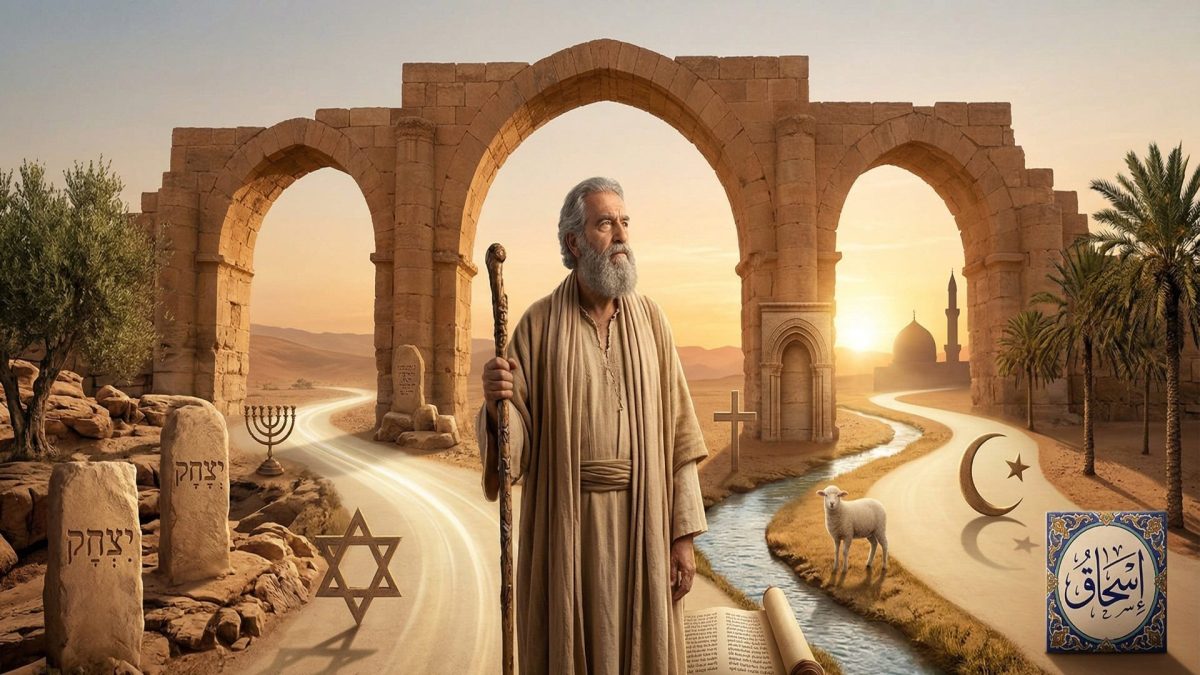
Isaac holds a highly respected and important position in the world’s three major monotheistic religions. Judaism, Christianity, and Islam view him as a unique symbol of faith. We call these three faiths the Abrahamic religions. They developed through the descendants of Prophet Abraham. Isaac remains an inseparable part of that great lineage.
His life story offers more than just a historical account. It serves as a living document of human faith, obedience to God, and divine promise. Theologians, scholars, and everyday believers have drawn inspiration from his life throughout the ages. In this blog, we will discuss various aspects of Isaac’s life through the lens of different religions.
Who Was Isaac?
Isaac was the son of Abraham and Sarah. Religious texts tell us that Sarah did not have a child for many years. God promised them a child. Isaac was born as the miraculous result of that divine promise. Believers consider his birth one of the greatest miracles in human history.
The name Isaac translates to “he will laugh” or “laughter” in Hebrew. Abraham and Sarah laughed in astonishment when God told them they would have a child in their old age. They named him Isaac to carry the memory of this event.He was not just a son. He stood as living proof of God’s promise.
He carried forward his father’s religious teachings and spiritual legacy. Later, he became the father of Jacob and Esau. The nation of Israel emerged from Jacob. Therefore, Isaac represents a monumental patriarch from a historical and genealogical perspective.
Why the Story of Isaac is Important in Different Religions
The story of Isaac plays a central role in various religions. His profound faith and obedience to God form the main reason for this importance. His life story teaches us how to trust God even during extreme trials. This lesson has provided spiritual strength to people for centuries.
The command to sacrifice him remains the most discussed event of his life. God instructed Abraham to sacrifice his beloved son. This event stands as the ultimate example of human sacrifice and unconditional love for God. Judaism, Christianity, and Islam interpret this event differently, but the core melody remains the same.
He also carried and transmitted God’s covenant. God transferred His words and blessings to the next generation through him. The history of the Abrahamic religions remains incomplete without him. According to Encyclopedia Britannica, he is one of the most vital figures in religious history.
Isaac in Judaism
Judaism honors Isaac as one of the founding fathers of their nation. The Hebrew Bible, or Tanakh, contains many detailed descriptions of his life. Jewish people revere him as their spiritual and physical ancestor. His life and work occupy a significant place in Jewish theology.
Isaac as One of the Three Patriarchs of Israel
Jewish tradition refers to Abraham, Isaac, and Jacob as the three patriarchs of the nation of Israel. God made special covenants with these three men. Jewish prayers still mention the names of these three together today. Isaac acts as the bridge between these three generations.
He followed the path shown by his father.He solidified the foundation of monotheism that Abraham established.He faced many obstacles in his life. He remained steadfast in his land despite famines and conflicts with neighbors.
His stability and determination provide great inspiration for the Jewish nation. He did not live a nomadic life like Abraham. God instructed him to stay in the land of Canaan, the promised land. He followed that instruction to the letter.
The Sacrifice of Isaac (Akedah) in Jewish Tradition
The most important chapter of Isaac’s life in Judaism is the “Akedah” or the binding event. Genesis 22 contains a detailed description of this event. God told Abraham to sacrifice Isaac on Mount Moriah to test his faith. Both Abraham and Isaac surrendered themselves to this command.
Jewish rabbis state that Isaac was not a small child at that time. He was a full-grown young man. He could have easily stopped his elderly father. Instead, he willingly surrendered himself to God’s will. Judaism establishes this sacrifice as the ultimate example of devotion.
Synagogues specifically read the story of the Akedah during Rosh Hashanah, the Jewish New Year. Jewish people believe that God will forgive and protect them because of Isaac’s sacrifice. The memory of the Akedah forms an inseparable part of their daily prayers and religious rituals.
Isaac’s Role in the Covenant with God
Isaac plays a unique role in the covenant with God. The blessing God gave to Abraham reached fulfillment through Isaac. God appeared directly to Isaac and renewed the covenant with him. This covenant included promises of land, descendants, and divine protection.
According to the biblical account, God told Isaac that He would stay with him and bless him. Jewish people believe they are God’s chosen nation because of this promise. God proved that He keeps His promises through Isaac’s life.
This covenant was not merely spiritual. It formed the core foundation of the Jewish nation’s existence. The covenant reached the next generation, Jacob, through Isaac. In this way, God’s blessing continued to flow through a specific lineage.
Isaac in Christianity
Isaac holds a special and symbolic position in Christian theology. Christians accept the Old Testament as part of their scriptures. Therefore, the biblical story of Isaac remains highly sacred to them as well. However, Christians interpret Isaac’s life in the light of the New Testament and the life of Jesus Christ.
Isaac as a Foreshadowing of Faith and Sacrifice
Christianity views Isaac as a “type” or foreshadowing of Jesus Christ. Just as Isaac had a miraculous birth, so did Jesus. Isaac was the child of promise, and Jesus is God’s promised Savior. These similarities carry immense weight in Christian theology.
Furthermore, Isaac carried his own wood for the sacrifice to Mount Moriah. Similarly, Jesus carried his own cross to Mount Golgotha. Christian believers view this historical parallel as proof of God’s predetermined plan. They believe that Old Testament events fundamentally point to New Testament truths.
Abraham stood ready to sacrifice his only beloved son for God. Christians believe God similarly sacrificed His only son, Jesus, on the cross for the salvation of mankind. Christian sermons and literature extensively feature this comparative discussion.
Theological Interpretation of the Akedah
Christians interpret the Akedah, or the sacrifice of Isaac, as a foreshadowing of the crucifixion of Jesus. This event is not just a story of a test for Christians. It represents a miniature model of God’s infinite mercy and His salvation plan for humanity.
The Apostle Paul mentioned Isaac multiple times in the New Testament. Paul described Isaac as the child of God’s promise. Paul demonstrated that faith in God, rather than mere genealogical identity, makes a person worthy of true blessings.
The Epistle to the Hebrews praises Isaac’s faith. The text states that Abraham believed God could raise people even from the dead. This belief is closely connected to the concept of Jesus’ resurrection.
Isaac in the Genealogy of Jesus Christ
Another major identity of Isaac for Christians is his place in the genealogy of Jesus Christ. The Gospels of Matthew and Luke both provide genealogies of Jesus. Both lists mention Isaac’s name with great honor.
The Bible frequently addresses Jesus as the son of “the God of Abraham, Isaac, and Jacob.” This identity proves the historical and religious legitimacy of Jesus. It shows that Jesus did not suddenly appear on earth. He arrived as part of a long divine plan.
God started a covenant through Isaac. Christians believe Jesus brought that covenant to fulfillment. Therefore, Isaac is not just a historical figure. He serves as a sturdy pillar of Christian faith.
Isaac in Islam
Islam highly reveres Isaac as Prophet Ishaq. Muslims believe that he was a true prophet sent by God. His father, Prophet Ibrahim, and his son, Prophet Yaqub, are also great prophets in Islam. Islamic belief states that Allah sent prophets and messengers throughout the ages to guide humanity, and Ishaq is one of them.
Prophet Isaac (Ishaq) in the Quran
The Holy Quran mentions the name of Prophet Ishaq in multiple verses. The Quran describes him as a righteous, virtuous, and great Prophet. Allah granted him special knowledge and wisdom. The Quran notes that he was born as a special gift from Allah during Prophet Ibrahim’s old age.
In Surah As-Saff, Allah says that the angels gave Ibrahim the good news of a wise son. This son is Ishaq. The Quran recognizes him as a guiding leader who, by Allah’s command, directed people to the righteous path.
Muslims honor him as an ideal human being. He remained constantly steadfast in obeying Allah’s commands. His life story teaches Muslims faith and patience.
Isaac’s Role in the Lineage of Prophets
A major part of Ishaq’s identity in Islam is his status as the ancestor of countless prophets. His son Yaqub had another name, Israel. The descendants of Yaqub are known as Bani Israel. Allah sent numerous prophets and messengers among the Bani Israel, such as Dawud, Sulayman, Musa, and Isa.
For this reason, believers also call Ishaq the father of prophets. Allah continued the line of prophethood on earth through both of Ibrahim’s sons, Ismail and Ishaq. The final Prophet of Islam, Prophet Muhammad, was born in the lineage of Ismail. Meanwhile, many previous prophets were born in the lineage of Ishaq.
Therefore, he is not just a prophet of the past to Muslims. He represents a vital part of that holy lineage through which Allah sent His messages to earth.
Differences Between Islamic and Biblical Narratives
We find some subtle and fundamental differences between the narratives of the Bible and the Quran. The biggest difference revolves around the event of the sacrifice. The Bible clearly states that God told Abraham to sacrifice his son, Isaac. However, Islamic scholars and most commentators maintain that the son chosen for the sacrifice was Ismail, not Ishaq.
The Quran does not directly mention the name of the son chosen for the sacrifice. However, Islamic scholars analyze the sequence of events and surrounding verses to prove that it was Ismail. The Quran mentions the good news of Ishaq’s birth immediately after the sacrifice.
Despite this, Ishaq’s honor in Islam is no less. He is a chosen servant and Prophet of Allah. Both religions equally acknowledge his honesty and devotion to God.
Comparative Perspectives on Isaac Across Religions
We find many interesting facts when we discuss Isaac comparatively across Judaism, Christianity, and Islam. All three religions respect him. The events of his life serve as a source of inspiration for the followers of all three faiths. However, each religion emphasizes different aspects of his life.
Common Concepts of Faith and Obedience
All three religions agree entirely on one point. That point is Isaac’s profound faith and unquestioning obedience. He never disobeyed God’s command. Like his father Abraham, he showed extreme patience and devotion.
Judaism views him as the carrier of the covenant. Christianity views him as the foreshadowing of Jesus. Islam views him as a great prophet. But his flawless character lies at the root of all these identities.
He endured much hardship in his personal life. But he never lost faith in God. This unwavering faith offers a universal lesson for believers of all three religions.
Key Differences in Interpretation and Emphasis
We notice some fundamental differences in interpretation. Jewish people view the event of Isaac’s Akedah, or sacrifice, as a means of absolution for their nation. They think God remains kind to them because of Isaac’s sacrifice. Here, Isaac’s role connects directly to the existence of the Jewish nation.
Christians interpret this exact event as a model of Jesus’s sacrifice. To them, Isaac’s story serves as a trailer or preview of the story of Jesus. They judge Isaac under the light of Jesus.
On the other hand, Islam considers Ismail the main character in the sacrifice. However, Muslims regard Ishaq as a major progenitor of the prophets. Islam focuses more on his prophethood and his devotion to obeying Allah’s commands.
Isaac as a Symbol of Divine Promise
Isaac symbolizes a miraculous and divine promise in all religions. He did not arrive through normal human rules. Isaac serves as the greatest example of God making the impossible possible.
His birth proves that human calculations mean nothing against divine plans. God can execute whatever He wants. This deep spiritual lesson sparks hope in the hearts of believers across every religion. Believers remember the story of Isaac’s birth and find optimism even in the darkest despair.
He does not belong exclusively to a specific nation. He stands as an immortal sign of God’s promise for all of humanity.
The Historical and Cultural Significance of Isaac
Isaac’s influence does not stay confined to the pages of religious texts. His presence covers a massive part of human history, culture, law, and art. He has influenced human thought from ancient times up to the modern era.
Impact on Abrahamic Theology and Law
Jewish and Christian theology have adopted many legal and moral foundations from the events of Isaac’s life. For example, Isaac’s life clearly influenced the concepts of inheritance law and covenants in Judaism. He provides major proof of how God chooses the inheritance of wealth and promises.
Christian theology uses Isaac’s example to explain the relationship between faith and works. His life established the fact that God looks at the human mind and devotion. This forms a core foundation of Christian moral teaching.
Islamic Sharia also adopts many moral lessons from the lives of previous prophets. The honesty and justice of Prophet Ishaq serve as an ideal standard for the Islamic social system.
Isaac in Arts, Literature, and Tradition
The world’s greatest painters and writers have created countless artworks based on Isaac’s story. Famous painters like Rembrandt, Caravaggio, and Marc Chagall brought the scene of Isaac’s sacrifice to life on canvas. Famous museums around the world preserve these paintings today. You can find detailed information about this on Wikipedia.
Western literature also features many poems and plays written about Isaac’s sacrifice. These stories explore the inner conflicts, fears, and ultimate limits of faith in the human mind. The philosopher Søren Kierkegaard analyzed in depth the mental states of Isaac and Abraham in his book “Fear and Trembling.”
We also notice his presence in ancient folktales and songs. He has become an inseparable part of human culture, not just religion.
Modern Relevance of Isaac’s Story
The story of Isaac’s life remains equally relevant in the modern era. When people face various forms of instability and doubt today, their lives teach us to think anew. The lessons of his life apply to all eras, not just ancient times.
Lessons of Belief, Trust, and Obedience
We often suffer from depression in modern life. We lose faith when we face minor dangers. Isaac’s life teaches us to trust God even in extreme uncertainty. He remained calm even when standing face-to-face with death.
We can apply this extreme trust to our daily lives. This story helps us stay mentally strong when making difficult life decisions or facing danger. We can learn that a good solution hides right behind the hardship.
The respect and understanding we see between father and son here provides a highly educational model for family relationships. In a modern society where family bonds often weaken, the relationship between Abraham and Isaac serves as a beautiful example.
Contemporary Moral and Spiritual Interpretations
Modern theologians are interpreting Isaac’s life from new angles. They show that this is not just a story of blind obedience. It is a story of abandoning ego and the sense of entitlement. Abraham was prepared to give up his most beloved possession.
This lesson of sacrifice carries immense urgency in today’s materialistic society. We frequently become blind to the illusion of power, wealth, or favorite objects. The story of Isaac reminds us that nothing is our permanent property.
Moreover, modern scholars view this event as a major milestone that abolished the ancient practice of human child sacrifice. God proved through this event that He does not want human blood. He wants a pure human heart. This represents a massive victory for human rights and morality.
Frequently Asked Questions (FAQs)
Is Isaac the same person in all religions?
Yes. From historical and theological perspectives, the Isaac or Ishaq described in Judaism, Christianity, and Islam is the same person. He is the son of Ibrahim (Abraham) and Sarah. However, each religion prioritizes and interprets different events and aspects of its spiritual significance in its own way.
What is the significance of the sacrifice of Isaac?
In Judaism, this sacrifice, or Akedah, represents the ultimate test of faith and a means of gaining God’s mercy. In Christianity, it acts as a historical foreshadowing of Jesus Christ’s sacrifice for the salvation of mankind. Believers consider this event the ultimate example of human sacrifice and unconditional love for God.
How is Isaac viewed differently in Islam and Christianity?
Christianity views Isaac as a symbol or foreshadowing of Jesus ‘ arrival and sacrifice. Conversely, Islam views him as an honored and independent prophet. Allah created a long lineage of prophets for the Bani Israel through him. Islam generally considers Ismail the main character in the story of the sacrifice, which differs from the biblical account.
Conclusion: Isaac’s Enduring Legacy Across Religions
We see that Isaac acts as a wonderful connecting link among the world’s three major religions. Every step of his life, starting from his birth, proves the miraculous power of God. Jewish people love him as the carrier of their covenant. Christians revere him as a part of their salvation plan. And Muslims respect him as a great and righteous prophet.
His story has awakened hope in people’s minds generation after generation. He taught us how to stay steadfast in faith even after losing everything. His sacrifice, obedience, and stability remain equally necessary in today’s modern world.
Even though differences of opinion exist among the different religions, everyone unites in their respect for Isaac. His life story reminds us that we all belong to the same spiritual family. We can build peace and harmony in the world by respecting this common heritage. Isaac’s enduring legacy calls us precisely toward that path of unity.