Traditional Bobotie Recipe: A Taste of South Africa
South African cuisine is diverse and full of delicious ingredients. Among them, one of the most well-known and popular dishes is Bobotie. This is a meal that brings the whole family together at the dining table.
If you want to try a new dish, Bobotie can be a wonderful choice. It is as easy to make as its taste is incomparable.
In this blog, we will learn in detail about the complete process of making Bobotie. We will also explore its history. Let us find out how to make this delicious dish right at home.
Before we start the recipe, let’s answer an important question: What is Bobotie?
Bobotie is a traditional baked meat dish from South Africa. It is primarily made with spiced minced meat and topped with a creamy egg custard layer.
Although the dish resembles meatloaf or shepherd’s pie, it has a unique taste. The curry powder and other spices give it a wonderful aroma.
The main attraction of Bobotie is the blend of sweet and savory flavors. The sweet taste of raisins or chutney and the meat’s spiciness create an excellent balance.
The History and Origin of Bobotie in South African Cuisine
The history of Bobotie is quite old, dating back to the seventeenth century. During the Dutch East India Company era, people from the Cape Malay community, who came from Indonesia, brought this recipe to South Africa.
It is said that the name Bobotie originated from the Indonesian dish “Bobotok.” Bobotok was originally a dish made with coconut milk and meat.
Over time, local South African ingredients and Dutch cooking techniques merged into this recipe. As a result, modern Bobotie was created. It has since been recognized as South Africa’s national dish. You can check the Wikipedia page on South African cuisine for more information.
Why Bobotie is a Beloved Comfort Food
When we say comfort food, we mean food that makes us feel good. Bobotie is exactly that kind of dish.
Its soft, juicy meat layer melts right in your mouth. The top custard coating of egg and milk makes the dish even more tender.
Eating warm Bobotie with family on a winter night or a holiday is truly special. The familiar aroma of its spices makes the room feel warmer and more cheerful.
Essential Ingredients for Traditional Bobotie
Using the right ingredients is very important to make a perfect Bobotie. The main ingredients for making traditional Bobotie are discussed below.
Minced Meat (Beef or Lamb)
The main ingredient of Bobotie is minced meat. Traditionally, beef or lamb is used for it.
Using lamb gives a deep and robust flavor. Many people prefer beef because it is widely available.
It is better if the minced meat is not too fatty. This prevents excess oil from oozing out during baking.
Bread and Milk Mixture
Bread and milk play a key role in Bobotie. Before cooking, soak a few slices of bread in milk.
Mixing this soaked bread with the meat mixture keeps the meat soft. It prevents the meat from drying out while baking.
Using white bread gives the best results in this case. The bread slices should be torn into small pieces.
Egg and Custard Topping
The topmost layer of Bobotie is made with eggs and milk. This layer is called the custard topping.
This custard gives Bobotie a beautiful golden color. It also helps to retain the moisture inside.
The custard must set properly to maintain a beautiful shape when sliced.
Spices and Flavoring (Curry Powder, Turmeric, etc.)
The real taste of Bobotie lies in its spices. Mild curry powder is mainly used in it.
Turmeric powder gives Bobotie a bright color. Coriander and cumin powders enhance the flavor.
The use of bay leaves and cinnamon is also seen in some recipes. These further enrich the food’s aroma.
Raisins or Chutney for Sweetness
The mixture of sweet and spicy flavors is a very common feature in South African food. Raisins or sultanas are used to bring a sweet taste to Bobotie.
Many people also add apricot jam or Mrs. Ball’s chutney. This balances the spicy meat.
If you do not like raisins, you can simply use chutney.
How to Make the Bobotie Filling
Making the filling is very important in cooking Bobotie. This is when all the flavors and aromas blend.
First, onions and garlic must be lightly fried. Then, the minced meat must be cooked thoroughly with the spices.
While cooking, you must ensure the meat does not become too dry. After that, the filling is prepared by adding the other ingredients.
Step-by-Step Guide to Making Bobotie
Now we will learn step by step how to make a perfect Bobotie. Follow each step carefully so your Bobotie is as delicious as a restaurant’s.
Soaking and Preparing the Bread Mixture
First, take two slices of white bread. Take half a cup of milk in a bowl and soak the bread in it.
Wait until the bread has absorbed the milk and become soft. Then squeeze out any extra milk from the bread with your hands.
Save this milk for making the custard. Keep the bread ready for the meat mixture.
Cooking the Spiced Meat Filling
Heat a little oil or butter in a large pan. Add a medium-sized chopped onion and a teaspoon of garlic paste and fry until golden.
Add two tablespoons of curry powder and one teaspoon of turmeric powder. Stir for a few seconds. Then add 500 grams of minced meat to the pan.
Cook the meat over medium heat. Keep stirring until the meat turns brown.
Mixing Ingredients for Flavor Balance
Once the meat is well fried, add salt and pepper to taste. Add the soaked bread to the pan.
Mix in two tablespoons of raisins and two tablespoons of apricot jam or chutney. Add a tablespoon of lemon juice for a fresher taste.
Mix all ingredients together well and cook for a few more minutes. Remove from the stove and let the mixture cool down.
Building the Bobotie Base
Take an ovenproof baking dish or container. Brush it with a little butter or oil so the Bobotie does not stick.
Pour the prepared meat mixture into the baking dish. Spread the meat evenly with a spoon or spatula.
Make sure there are no empty spaces. Press lightly so the custard will not seep inside when poured.
How to Make the Custard Topping for Bobotie
Making the custard topping is easy. It has a huge impact on the appearance and taste of the Bobotie.
Whisked Egg and Milk Mixture
Crack two large eggs into a bowl. Whisk with a cup of milk.
You can also add the leftover milk squeezed from the bread into this mixture. Add a pinch of salt and pepper and stir the mixture well again.
Make sure the mixture is perfectly smooth with no lumps. This will help the custard set evenly and slice neatly after baking.
Pouring the Custard Over the Meat Layer
Carefully pour the custard mixture over the meat in the baking dish. Make sure the custard spreads evenly over the meat.
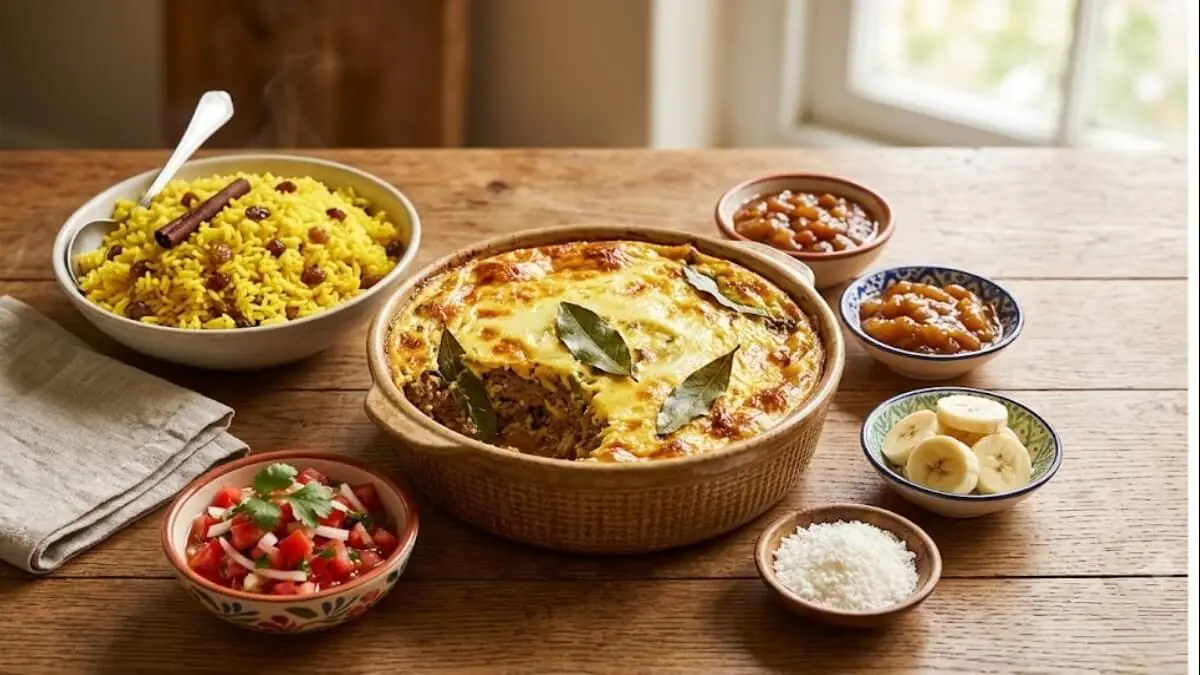
To get a traditional look, tuck a few bay leaves on top of the custard. This adds a wonderful aroma while baking.
How to Bake Bobotie Perfectly
Bobotie is at its best when baked in the oven. Keeping the correct temperature is crucial.
Oven Temperature and Timing Tips
Preheat the oven to 180 degrees Celsius or 350 degrees Fahrenheit.
Place the baking dish on the middle rack of the oven. Bobotie usually takes 35 to 40 minutes to bake completely.
Bake until the custard layer is set and firm. Check the oven occasionally so the top does not burn.
Achieving a Golden Glow on the Custard
When the custard sets and turns golden, the Bobotie is ready.
It looks very attractive and appetizing. Let the Bobotie cool for at least 10 minutes after removing from the oven.
This helps you cut the Bobotie into neat slices. The custard will not break.
Traditional Ways to Serve Bobotie
There is a specific way to serve Bobotie in South Africa. The right accompaniments make it even tastier.
With Yellow Rice
Bobotie is usually served with yellow rice. This rice is cooked with turmeric powder and raisins.
The rice’s sweet taste and yellow color pair well with Bobotie. You can also use regular white rice if you want.
With Chutney or Sambal
Serve Bobotie with chutney or sambal to enhance the taste. Sambal is a fresh salad of tomatoes, onions, and cilantro.
Mango or tamarind chutney balances the spicy and sweet flavors of Bobotie.
Some Garnishing Ideas
Garnish the Bobotie nicely before serving. Place a slice on a plate and arrange the rice beside it.
Sprinkle fried onions or fresh cilantro on top. This makes the dish more appealing.
Variations of Bobotie You Can Try
There are many variations of Bobotie besides the basic recipe. Try different ones to match your preferences or dietary habits.
Chicken Bobotie
If you want to avoid red meat, chicken Bobotie is a great alternative. Use minced chicken breast instead of beef.
Chicken takes less time to cook. Its taste is as good as regular Bobotie.
Vegetarian Bobotie
Vegetarians can enjoy Bobotie too. Use lentils, soy mince, or mushrooms instead of meat.
Lentils and mushrooms together create a meat-like texture. You can use all the regular Bobotie spices.
Low-Carb Bobotie
If you follow a keto or low-carb diet, use almond or coconut flour instead of bread.
Use a small amount of sugar-free jam instead of raisins. This way, you can enjoy Bobotie without compromising your health.
Tips for Making the Perfect Bobotie Every Time
Even if you are making Bobotie for the first time, following a few tips will make it perfect.
Always try to use fresh and high-quality spices. You cannot get the real aroma from old curry powder.
Do not use excess oil while cooking the meat. It can be cooked well with the meat’s own fat.
Before pouring the custard, make sure the meat mixture is even and flat.
Common Mistakes to Avoid When Making Bobotie
Many people make some common mistakes while making Bobotie. Drying out the meat too much is a big mistake.
If the meat is not juicy, the Bobotie will taste dry and hard.
Another mistake is rushing while whisking the custard. If the custard is not whisked well, it might crack while baking or will not set evenly.
Nutritional Value of Bobotie
Bobotie is a nutritious food packed with protein and essential vitamins. A good amount of iron and protein is found in beef or lamb.
Calcium and vitamin D are obtained from eggs and milk.
Turmeric, a spice, is a powerful antioxidant. However, since the calorie count is somewhat high, it is best eaten in moderation. You can find more information about proper nutrition on Healthline or other nutrition websites.
Is Bobotie Healthy? Benefits and Considerations
Bobotie can be considered a balanced meal. It contains all three elements: carbohydrates, proteins, and fats.
Turmeric and other spices have anti-inflammatory properties that benefit the body.
However, those who want to lose weight should be aware of the calories and fat. It can be made healthier by using lean meat and sugar-free chutney.
How to Store and Reheat Bobotie
Leftover Bobotie can be stored very easily. It can be kept fresh in the fridge for three to four days by putting it in an airtight container.
When reheating, it is best to heat it in the oven rather than the microwave. This keeps the texture of the custard intact.
Heating it on low heat for 15 to 20 minutes makes it ready to eat again.
Frequently Asked Questions About Bobotie
Can Bobotie be made ahead of time?
Yes, Bobotie can be made ahead of time. You can cook the meat layer a day earlier and keep it in the fridge. Before serving, you can make the custard, pour it on top, and bake it directly. This saves a lot of time.
Can I freeze Bobotie?
It is possible to store a fully baked Bobotie in the freezer. However, the custard layer might become slightly watery after defrosting. It is best if you freeze only the meat mixture and bake it with the custard later.
What can I use instead of raisins?
Many people do not like raisins. In that case, you can use dried cranberries or finely chopped dried apricots. If you do not want the sweet taste of fruit at all, you can make up for the lack of sweetness with a little brown sugar or extra chutney.
Final Thoughts on Traditional South African Bobotie
Bobotie is not just a dish; it is a reflection of a culture. The history of South Africa and the blend of different cultures can be felt in every layer of this food.
Making it is not too much of a hassle, and its ingredients are easily found in our kitchens.
Why You Should Try This Dish
If you are tired of eating the same kind of food, Bobotie will add a new dimension to your taste buds. Its distinct flavor and the excellent balance of sweet and spicy win everyone’s heart. It can be a great surprise for a family or friend’s gathering.
A Taste of South African Comfort at Home
You can enjoy the taste of South Africa right at your dining table without going there. Follow the recipe above to make delicious Bobotie today. The joy of learning a new recipe and creating memories by enjoying new food with family will be a wonderful experience for you. To learn more about fun cooking and healthy living, you can read our other recipe blogs.
Cooking is an art. I hope this Bobotie recipe makes your cooking experience even more joyful. Best wishes on your culinary journey.