Baozi Recipe: Traditional Chinese Steamed Buns at Home
What is Baozi (Chinese Steamed Bun)?
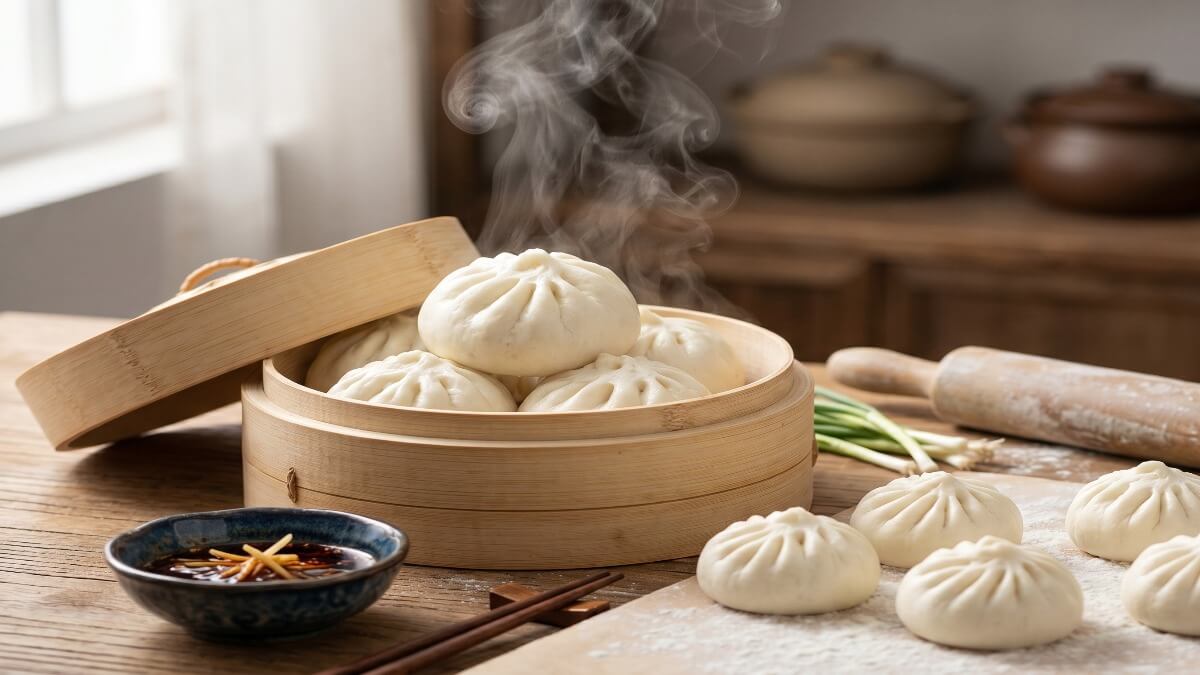
Baozi, commonly known simply as “bao”, is a traditional Chinese dish. It is essentially a fluffy, soft steamed bun filled with a variety of savory or sweet fillings. The exterior of this bun is slightly sweet and soft like a cloud. The filling inside can be spicy, savory, or sweet.
Baozi is made using a yeast-leavened dough. It is then stuffed with meat, vegetables, or sweet paste and steamed. Because it is steamed, it does not become hard like baked bread; instead, it achieves a moist, fluffy texture.
This is an extremely popular food in Chinese cuisine. It is typically eaten as breakfast. However, it also fits perfectly as a light snack at any time of the day. Baozi is now a familiar name in Asian restaurants worldwide.
History and Cultural Significance of Baozi in Chinese Cuisine
The history of baozi dates back thousands of years. According to legend, during the Three Kingdoms period (220-280 AD), the famous military strategist Zhuge Liang invented this dish. To save his soldiers from illness and provide them with nutrition, he ordered meat to be stuffed inside dough and steamed.
Since then, baozi has become an integral part of Chinese culture. It is not just a food but a symbol of family bonding and celebration. Different regions of China vary in size and fillings.
Making baozi together with family is a tradition, especially during festivals like the Lunar New Year. If you want to learn more about the history of Chinese cuisine, you will see how this food has blended into the daily lives of ordinary people over hundreds of years.
Why Baozi is a Popular Breakfast and Snack in China
If you go out on the streets of China early in the morning, you will catch the aroma of hot baozi. From small street-side stalls to large restaurants, baozi are prepared in bamboo steamers everywhere. The main reason for this is that it is very easy to carry.
Busy people can easily buy one or two baozis on their way to work in the morning and eat them on the way. It acts as a great source of carbohydrates, protein, and vitamins all at once.
Moreover, eating it requires no plates or spoons. Because it is steamed, it is also quite good for health. Due to its versatile taste and accessibility, it has gained recognition as a popular snack not only in China but all over the world.
Essential Ingredients for Making Baozi Dough
The main secret to making perfect baozi lies in its dough. To make a soft, fluffy bun, you will need a few simple yet essential ingredients.
| Ingredient Category | Recommended Options | Purpose |
| Flour | All-purpose flour or Bao flour | Provides the structure; lower protein yields softer buns. |
| Leavening | Active dry yeast or instant yeast | Makes the dough rise and become fluffy. |
| Liquid | Warm water | Activates the yeast (must not be too hot or too cold). |
| Flavor & Texture | Sugar, salt, and neutral oil | Sugar feeds yeast; oil adds smoothness; salt balances flavor. |
All-Purpose Flour or Baozi Flour
For the best results, medium-gluten or all-purpose flour should be used. Special “baozi flour” or “Hong Kong flour” is available in many Asian supermarkets. These flours have lower protein content, which helps make the bun whiter and softer.
Yeast and Warm Water
Active dry yeast or instant yeast is essential for leavening the dough. The water temperature is very important for activating the yeast. If the water is too hot, the yeast will die, and if it is too cold, the dough will not rise. Therefore, using slightly warm water is the safest approach.
Sugar, Salt, and Oil
Sugar not only adds a slightly sweet taste to the bun but also acts as food for the yeast. Salt strengthens the flour’s gluten and balances the flavor. Adding a small amount of cooking oil (such as canola or soybean oil) to the dough makes the bun’s outside very smooth and soft.
Traditional Baozi Filling Ingredients
What goes inside the baozi depends entirely on your taste. However, certain specific fillings are very popular in traditional recipes.
Pork and Cabbage Filling
This is the most classic baozi filling in China. It requires minced pork, finely chopped Chinese cabbage (Napa cabbage), soy sauce, oyster sauce, sesame oil, ginger, and scallions. It is crucial to squeeze the water out of the cabbage; otherwise, the baozi can become excessively soggy during steaming.
Chicken Filling Alternatives
For those who want to avoid pork, minced chicken is an excellent alternative. Mixing chicken with mushrooms, soy sauce, a little black pepper, and ginger-garlic paste creates a wonderful flavor. Chicken can be a bit dry, so it is good to add a little chicken broth or oil to the filling.
Vegetarian Baozi Fillings (Mushroom, Tofu, Vegetables)
For vegetarians, a great filling can be made with shiitake mushrooms, firm tofu, carrots, glass noodles, and bok choy. Soy sauce and sesame oil bring a wonderful smoky flavor to this vegetarian filling. It is as healthy as it is delicious.
How to Make Soft and Fluffy Baozi Dough
The first condition for making a soft dough is mixing the ingredients in the right proportions. The ratio of flour to water is usually 2:1. First, mix warm water, sugar, and yeast in a bowl and let it sit for 5 minutes until it becomes frothy.
Then, gradually mix this liquid with the flour. Knead the dough by hand or with a stand mixer. The dough needs to be smooth and elastic. If the dough feels too dry while kneading, add a little water.
You must knead well for at least 10 to 15 minutes. Then place the dough in a clean bowl lightly coated with oil. Cover the bowl with a damp towel or plastic wrap. Let it rise in a warm place for at least one to two hours.
Step-by-Step Guide to Making Baozi at Home
Making baozi at home takes a bit of time, but the results will impress you. For your convenience, the entire process is divided into a few simple steps.
Preparing and Proofing the Dough
Prepare the dough as described above, then wait until it doubles in size. To check if the dough has risen properly, press lightly in the middle with your finger. If the indentation does not bounce back immediately, the dough is ready.
Making the Filling
While the dough is rising, you can prepare your preferred filling. Mix all the filling ingredients well in a bowl.
Important Tip: Always stir the filling mixture in one direction (like clockwise). This makes the minced meat very sticky and prevents the filling from falling apart.
Shaping the Baozi (Folding Techniques)
Take out the risen dough and lightly knead it to release the air inside. Now divide the dough into equal small pieces. Roll each piece into a circle using a rolling pin. Make sure the middle part remains slightly thicker while the edges are somewhat thinner.
Place a tablespoon of filling in the center. Now hold the dough with one hand and start folding with the thumb and index finger of the other hand. Continue folding until the entire opening is closed, and finally, gently twist the top to seal it. This may take some time to master.
Second Proofing for Softness
Once the baozis are shaped, place them on small square pieces of parchment paper. Now place the baozis in the steaming vessel and cover with a lid. Leave them like this for 15 to 20 minutes. This is called the second proofing. If you skip this step, your baozi will not be fluffy.
How to Steam Baozi Perfectly
The method for steaming baozi is very simple, but a few small mistakes can cause them to collapse. Follow these tips to get perfect buns.
Using a Traditional Bamboo Steamer
Try to use a bamboo steamer for the best results. Bamboo naturally absorbs excess moisture. As a result, condensed water from the lid does not drip onto the baozi. Let water boil in a wok or pan under the steamer.
Steaming Time and Temperature Tips
Once the water is boiling vigorously, place the steamer on the pan. Baozi should be steamed over medium-high heat. Meat fillings will take 12 to 15 minutes. For vegetarian fillings, 10 minutes is enough. Steaming for too long can make the baozi tough.
Preventing Sticky or Collapsed Baozi
The biggest mistake after the steaming time is up is opening the lid immediately. Remove the steamer from the stove after turning off the heat. Wait 5 minutes without opening the lid. If cold air enters suddenly, the baozi will collapse and wrinkle. This 5-minute wait allows the baozi to retain its beautiful round shape.
How to Serve Baozi Like a Chinese Restaurant
As with a restaurant, baozi should always be served piping hot. Serving it directly in the bamboo steamer makes it look very traditional. In China, baozi is usually served with warm tea. Jasmine tea or Oolong tea pairs very well with it.
If serving baozi for breakfast, you can pair it with a bowl of rice congee or hot soy milk. This makes the whole meal very nutritious and satisfying.
Popular Dipping Sauces for Baozi
Baozi can be eaten on its own, but a great dipping sauce enhances its taste manifold. You can easily make a sauce at home.
Mix 2 tablespoons of dark soy sauce, 1 tablespoon of rice vinegar or black vinegar, and a little chili oil in a bowl. Add finely chopped garlic and minced ginger to this. If you prefer a slightly sweet taste, you can mix in a little sugar. This sour, spicy, and sweet sauce tastes extraordinary with any meat or vegetarian baozi.
Different Types of Baozi You Can Try
There is no single specific recipe for baozi. You can make baozi in various flavors to suit your preferences. Below are a few famous types of baozi.
Char Siu Bao (BBQ Pork Buns)
This is one of the most famous baozis in Cantonese cuisine. It is filled with sweet and savory barbecue pork, known as char siu. The dough for this baozi is made so that it splits open into three or four sections on top during steaming. Its taste is incredibly captivating.
Sweet Red Bean Baozi
This is a dessert or a sweet type of baozi. It is filled with sweet red bean paste. If you want something sweet with your afternoon tea, this is a great choice.
Custard-Filled Baozi
For those who love sweets, Custard Baozi (Nai Wong Bao) is very popular. Inside, there is a thick custard made of eggs, milk, and butter. It is very soft and melts directly in the mouth.
Tips for Making Perfect Baozi Every Time
When you make baozi for the first time, it might not be perfect. But if you keep a few things in mind, you can make great baozi every time.
-
Measure all ingredients very accurately. Using a kitchen scale is the best approach.
-
Ensure your yeast is fresh. If you use old yeast, the dough will never rise.
-
Do not rush while kneading the dough. If gluten does not develop properly, the baozi will not be soft.
-
Keep the science of steaming food in mind to control the steamer’s humidity.
Common Mistakes to Avoid When Making Baozi
-
Using water that is too hot: This will kill the yeast instantly.
-
Overstuffing the buns: Adding too much filling makes it impossible to seal the bun, and it may burst during steaming.
-
Skipping the second proof: This results in dense, bread-like buns instead of fluffy ones.
-
Opening the steamer lid immediately: A rush of cold air causes the delicate buns to shrink and wrinkle.
Nutritional Value of Baozi
The nutritional value of baozi depends primarily on its filling and dough. A medium-sized meat baozi contains about 200 to 250 calories. Carbohydrates are obtained from the outer dough, providing the body with instant energy.
Essential proteins and fats are obtained from the filling inside. Using vegetable fillings drastically reduces calorie intake and increases fiber and vitamin content.
Is Baozi Healthy? Benefits and Considerations
Since baozi is steamed, it is much healthier than fried foods. No extra oil is required in the steaming process. However, its health benefits depend entirely on what filling you are putting inside.
Using lean minced chicken or plenty of vegetables instead of high-fat meat turns it into a balanced meal. However, for those suffering from diabetes or high blood pressure, it is better to consume it in moderation because its dough contains a lot of carbohydrates.
How to Properly Store and Reheat Baozi
You can easily make large batches of baozi at home and store them. After cooling, pack the baozis in an airtight container or a ziplock bag and refrigerate. They stay good for 3 to 4 days in a regular fridge. If kept in the deep freeze, they can be stored for up to 2 months.
To reheat from the fridge, it is better to use a steamer rather than a microwave. Boil water and steam the baozis for 5 minutes. If you want to use a microwave, wrap the baozi in a damp paper towel and heat for 1 minute. This will prevent the baozi from drying out.
Frequently Asked Questions About Baozi
Many people have common questions when making baozi. Answers to a few such questions are given below.
Can Baozi Be Frozen?
Yes, baozi can be frozen very easily. After steaming, you can let them cool completely, then put them in ziplock bags and keep them in the deep freeze. There is no need to defrost them before eating; steaming them for 10 minutes will make them as fresh as new.
Why Did My Baozi Turn Out Dense?
There could be several reasons for the baozi turning out dense or hard. First, your yeast might have expired or been inactive. Second, you did not knead the dough well enough. Third, you might not have given them a second proof after shaping.
Can I Use Instant Yeast?
Yes, you can certainly use instant yeast. Active dry yeast needs to be mixed with water to activate, but instant yeast can be mixed directly with the flour. This saves some time, and the results are identical.
Final Thoughts on Making Traditional Baozi at Home
Making baozi at home is an art. It is not just mixing a few ingredients together; rather, it is a creative and joyful experience. Although folding may seem difficult at first, it becomes very easy through practice.
Why Learning to Make Baozi is Worth It
Homemade baozi tastes infinitely better than store-bought ones. This is because you can use fresh ingredients of your choice. Made without any artificial flavor enhancers or preservatives, this food is safe for everyone in your family. Once you learn this, you will no longer feel the need to buy them from outside.
Bringing Authentic Chinese Flavors to Your Kitchen
By making baozi, you can bring the traditional taste of China straight into your kitchen. The satisfaction of serving fragrant baozi fresh out of a hot steamer is truly wonderful. Try this recipe today and share the joy of authentic Chinese food with your loved ones.