Noah in Different Religions: Beliefs and Perspectives
The story of Noah and his ark is one of the oldest and most fascinating tales in human history. This story is remembered with deep reverence across various religions, cultures, and traditions worldwide. Let us dive into a detailed discussion about the historical and religious significance of Noah and his legendary narrative.
To understand the significance of the story of Noah, we must first ask: Who is Noah?
Noah was a righteous and honest man chosen by God for a special mission. He lived when society was deeply engulfed in sin, corruption, and lawlessness. For many, he is not just a historical character. He stands as a symbol of faith, obedience, and patience. In Abrahamic religions, he is a prophet or messenger of God who built a massive ark to save humanity and the animals of the earth from a devastating Great Flood.
Why Noah is Important in Multiple Religions
Noah is not limited to just one religion. He holds a significant status in Judaism, Christianity, and Islam. In these faiths, he is seen as a devoted servant of God. He never backed down from following God’s commands despite obstacles and public mockery. His story teaches us to stay honest even when others go astray. This message builds unity among followers of different religions.
Understanding Religious Perspectives on Noah
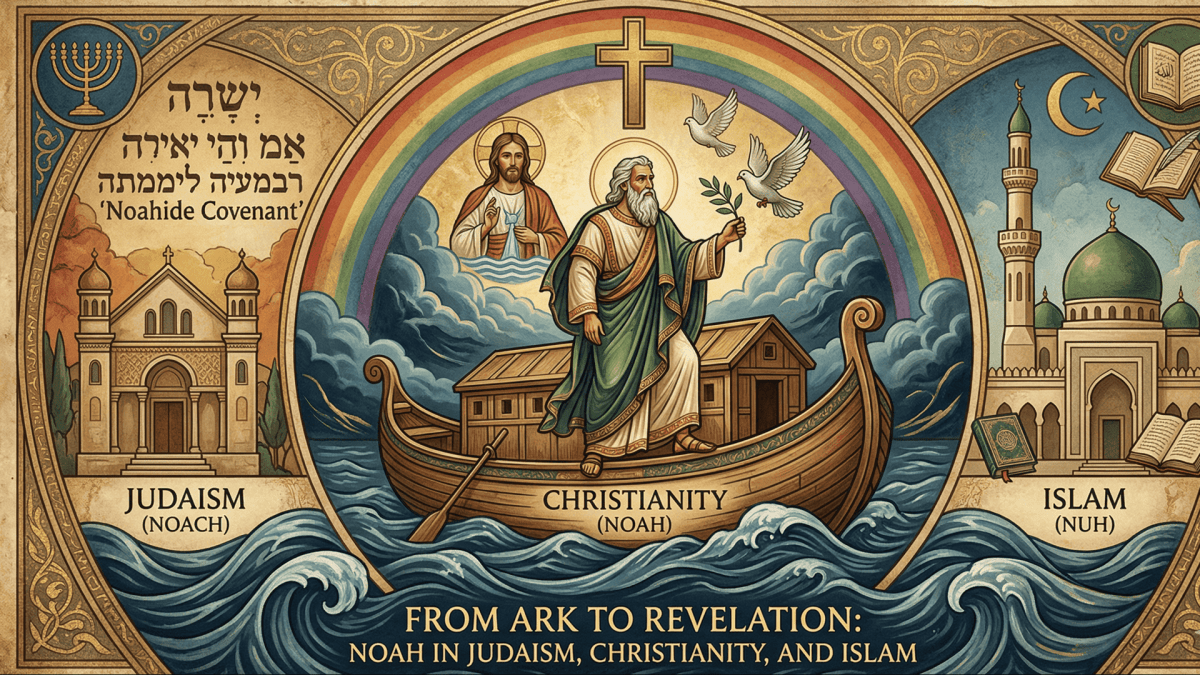
While the story of Noah is similar across religions, each interprets it differently. Judaism emphasizes the covenant. Christianity focuses on faith. Islam highlights Noah as a steadfast prophet. Understanding these views helps us see many aspects of human character, divine justice, and mercy.
Noah in Judaism
In Judaism, Noah is a highly significant character. A detailed account of his story is found in the Book of Genesis in the Hebrew Bible.
How Judaism Describes Noah
Judaism describes Noah as the only righteous person of his generation. According to the Torah, when the earth was filled with sin, God decided to destroy it. Noah found favor with God because he was just and walked with God. Jewish scholars debate whether Noah was only good in his time or a great man in any era. In general, he is known as an honest man who kept his purity during moral decay.
Noah and His Ark in the Hebrew Bible
The Hebrew Bible gives a clear description of Noah’s ark. God told Noah to build an ark out of gopher wood with specific measurements. The ark was not just for Noah’s family. It was a safe haven to ensure the survival of all animal species. Jewish tradition says Noah spent many years building the ark. This gave sinners time to repent, but sadly, people only mocked Noah.
The Covenant Between God and Noah
After the Great Flood, God made a covenant with Noah. This is the first covenant in the Bible. God promised never to destroy the entire earth with a flood again. In return, God set basic moral rules for humanity. These are the “Noahide Laws.” Followers of Judaism believe these seven laws apply to all people and build the foundation of a civilized society.
The Symbolism of the Rainbow in Jewish Tradition
God placed a rainbow in the sky as a sign of His covenant. In Jewish tradition, the rainbow is more than natural beauty. It symbolizes God’s mercy and promise. When a rainbow appears, it reminds us that God loves His creation and has promised to protect humanity rather than destroy it.
Noah in Christianity
The story of Noah is deeply rooted in Christianity, and his name is mentioned frequently in the New Testament.
How Christianity Describes Noah
Christians see Noah as a symbol of faith and salvation. He trusted God’s word completely, even without proof. In Christian theology, Noah is considered a “type” of Jesus Christ because he saved humanity from destruction.
Noah as a Symbol of Faith and Obedience
In the Epistle to the Hebrews (Hebrews 11:7), Noah is a hero of faith. He built an ark in holy fear after being warned about things unseen. His faith and obedience inspire Christians. He ignored others’ mockery and made following God his life’s purpose.
The Story of the Great Flood in the Bible
The Great Flood in the Bible is seen as an act of God’s justice and holiness. It shows God does not tolerate sin but always allows a path for the righteous. The floodwaters symbolize cleansing the earth of sin.
Christian Lessons from Noah’s Ark
Christian tradition sees Noah’s ark as a symbol of the Church. Those who entered the ark were saved from the flood, just as those who seek refuge in Christ avoid spiritual death. Floodwaters are compared to Baptism, which washes away sins and marks a new start in life.
Noah in Islam
In Islam, Noah is addressed with the respectful title ‘Nuh’ (Peace Be Upon Him). He is one of the five greatest prophets (Ulul’ Azm) in Islam.
How Islam Describes Noah (Nuh)
Islam sees Noah as a patient and steadfast prophet. He was sent to preach the oneness of Allah. In Islam, his main role was not boat building. Instead, he was a preacher who called his people to truth for centuries.
Prophet Nuh in the Quran
Prophet Nuh’s story is told in many chapters of the Quran, including one named after him (Surah Nuh). The Quran says he called his people toward Allah for 950 years, but only a few believed. He did his best to call people to the right path day and night, in secret and in public.
The Story of Noah and the Great Flood
When people reached the limit of disobedience, Allah told Nuh that no one else would believe. Nuh built the ark as Allah commanded. The flood began with water from the ground and heavy rain from the sky. One heartbreaking event in the Quran is the fate of Nuh’s son. His son did not believe, refused the ark, and tried to find safety on a mountain, but drowned. This shows that before God’s judgment, only faith and actions count, not lineage.
Noah’s Call to Monotheism in Islamic Tradition
Islamic tradition centers Noah’s story on Tawhid, or monotheism. He urged his people to stop idol worship and worship only Allah. ..He struggled against societal false beliefs. He is honored in Islam as a great warrior for truth.
Differences Between the Quranic and Biblical Flood Accounts
The Quranic and Biblical flood stories are similar but differ in some respects. The Bible describes the flood as global. Many Islamic scholars, however, believe Noah’s flood may have been regional. The Quran mentions Noah’s disobedient son, a detail missing from the Bible. The Bible says all eight of Noah’s family members were saved. For more information, you can visit the Wikipedia page on Noah.
Noah in Other Traditions
Noah or similar figures are found in other cultures beyond the Abrahamic religions. This shows the story has a universal appeal.
Noah in the Baha’i Faith
In the Baha’i faith, Noah is a “Manifestation” of God. To Baha’is, his story is symbolic. Noah’s ark represents God’s teachings. The Great Flood is a metaphor for spiritual ignorance and decay. Those who accepted Noah’s teachings were saved from the spiritual flood.
Flood Stories in Ancient Religions and Myths
Many ancient civilizations mention a great flood. The ‘Epic of Gilgamesh’ is one example of Mesopotamian mythology. It tells the story of Utnapishtim, which is similar to that of Noah. Hinduism tells the story of Manu and a giant fish (Matsya Avatar); Manu was told to build a boat to survive the world’s destruction. These stories show that flood memories are deeply embedded in human civilization.
Symbolic Interpretations of Noah in Different Cultures
Cultures interpret Noah’s story in different ways. Some see it as nature’s terrifying power and the struggle to survive. Others view it as a symbol of starting over and building a new world.
Comparing Religious Perspectives on Noah
The story of Noah and the flood offers an opportunity to compare different religions.
Similarities Between Jewish, Christian, and Islamic Accounts
In all three religions, Noah is an honest and God-fearing person. He builds an ark under the command of God or Allah. The Great Flood occurs because of humanity’s sins, and Noah and his family, along with some animals, are saved. All three religions teach that God protects the righteous and punishes the wicked.
Key Differences in the Story of Noah
The differences largely depend on religious perspectives and philosophies. Judaism emphasizes the law and the covenant (Noahide Laws). Christianity focuses on salvation and faith (the ark symbolizes the Church). Islam focuses on Noah’s prophethood and the preaching of Tawhid. Additionally, there are some differences in the story’s historical details, as discussed earlier.
Why Noah is a Unifying Spiritual Figure
Noah is a figure who brings everyone together, bridging religious divides. He has shown that a person’s true identity lies not in their religious label but in their genuine faith and honesty toward God. For this reason, he remains an ideal figure for people of all ages.
The Ark and the Great Flood
The most thrilling part of the story is Noah’s massive ark and the devastating Great Flood.
Why Noah Built the Ark
Noah did not build the ark out of his own free will or as a hobby. He built it entirely under divine command. It was a massive project. Building a giant boat in a dry, desert-like area was entirely illogical from a normal perspective. But Noah judged the situation with faith, not logic. His action was a preparation for impending danger and the ultimate proof of his trust in God.
The Animals on Noah’s Ark According to Religious Tradition
Preserving the animals on the ark is an important aspect of this story. God instructed Noah to take a pair (male and female) of every animal onto the ark. This indicates that God cares not only for humans but also for the protection of all the earth’s biodiversity. This aligns perfectly with modern concepts of environmental conservation and protecting biodiversity. It is as if Noah were the earth’s first environmentalist, saving all creatures from extinction.
The Significance of the Great Flood Story
The Great Flood is not merely a story of destruction; it is a story of purification. When the earth became filled with injustice, oppression, and sin, God cleansed the world through the flood. It is an opportunity for a new beginning. The floodwaters washed away the old sins, giving birth to a new, pure world.
The Post-Flood Covenant
When the flood ended, the land dried up, and Noah exited the ark, God made a new covenant with humanity. God promised that He would never again completely destroy the human race in such a manner. This covenant is a testament to God’s kindness and forgiveness.
Historical and Symbolic Perspectives
In modern times, there has been extensive discussion about the story of Noah from the perspectives of science, history, and archaeology.
Was Noah a Historical Figure?
To believers, Noah is undoubtedly a real historical figure. However, secular historians suggest that in ancient times, there might have been an honest man who survived a large local flood, and the story was later spread by word of mouth, taking on epic proportions. According to Encyclopedia Britannica, the story of Noah is related to ancient Mesopotamian flood narratives.
Archaeological and Historical Debates Regarding the Great Flood
Geologists and archaeologists have not found scientific proof of a single, global Great Flood. However, some theories, like the Black Sea deluge hypothesis, propose that massive local floods occurred in and around the Middle East in ancient times, leaving a deep impression on the human mind. Many scientists believe that the memories of these local floods evolved into the stories of the Great Flood over the ages.
The Symbolism of the Ark and the Story of Survival
Regardless of the history, the symbolic value of Noah’s ark is immense. The ark symbolizes hope, safety, and rebirth. Amidst the storms and floods of life, Noah’s ark is a wonderful metaphor for humanity’s indomitable will to survive.
Moral and Spiritual Lessons
Even after thousands of years, the story of Noah remains highly relevant today. It holds some invaluable moral and spiritual lessons.
Lessons of Faith and Obedience from Noah
The biggest lesson from Noah’s life is his unwavering faith in God. When there was no ray of hope around him, and people called him crazy, he remained steadfast in his duty. In our own lives, when we walk the right path and others mock us, Noah’s example can give us courage.
Patience and Perseverance in the Story of Noah
According to Islamic accounts, Noah called people to the path of truth for nearly a thousand years. Even after enduring rejection and insults for years, he never gave up. This extraordinary patience and perseverance teach us not to expect quick results in noble endeavors. Our job is to try relentlessly and leave the outcome to God.
Why the Story of Noah Still Inspires Humanity Today
In today’s world, we face numerous threats like climate change, wars, and moral decay. In such situations, the story of Noah reminds us that even in the face of extreme danger, it is possible to be saved with proper preparation and deep faith. It inspires us to be responsible and to build an “ark” or a safe haven for the future.
Frequently Asked Questions (FAQs)
Which religions mention Noah?
Noah is mentioned in detail in Judaism, Christianity, and Islam. Additionally, the presence of Noah or similar characters can be found in the Baha’i faith and several other ancient cultures.
Do the Quran and the Bible mention Noah?
Yes, both the Holy Quran and the Hebrew Bible contain detailed accounts of the story of Noah. In the Quran, there is a separate chapter, Surah Nuh, revealed for him, and his description is found in the Book of Genesis in the Bible.
What is the difference between the story of Noah in Islam and Christianity?
In Christianity, Noah is primarily seen as a believer and a devoted servant of God, whose ark symbolizes the Church and salvation. On the other hand, in Islam, Noah is a great prophet who preached Tawhid (the oneness of Allah) for hundreds of years and opposed idol worship.
Did Noah really build an ark?
Followers of Abrahamic religions firmly believe that Noah actually built a massive ark under God’s command. From a scientific and historical perspective, many view it as a symbolic narrative of an ancient, massive flood.
What moral lessons can be learned from the story of Noah?
From the story of Noah, we learn patience, unwavering faith in God, perseverance, and the courage not to lose hope in times of danger. It teaches us that if we stay on the path of justice and honesty, victory is ultimately inevitable.
Conclusion
Final Thoughts on Noah in Different Religions
In conclusion, Noah is a central and highly significant character in various religions. The life story detailed across the pages of religious texts is not just an ancient narrative but an eternal guide for human life. Noah is universally revered as a symbol of moral law in Judaism, the hope of salvation in Christianity, and a devoted preacher in Islam.
Understanding a Common Religious Narrative Through Noah
The story of Noah shows that, despite external differences, there is a deep spiritual harmony among the world’s major religions. Everyone unanimously agrees that the consequences of sin are terrible and the reward for honesty is guaranteed. This common narrative helps us increase mutual respect and harmony.
Why the Story of Noah Still Matters Today
In today’s complex world, the story of Noah is more relevant than ever. Whether dealing with personal frustration or global crises, the lesson of being patient and faithful, like Noah, can guide us. His historic ark still inspires hope in our hearts that, even after total destruction, it is possible to build a new and beautiful world. Let us learn from Noah’s life and try to make ourselves and the world around us a better place.