Fenugreek Leaves (Methi): Benefits, Uses, and Nutrition Guide
What Are Fenugreek Leaves?
Fenugreek leaves are a popular and aromatic herb. Scientists call this plant Trigonella foenum-graecum. This plant belongs to the Fabaceae family. People worldwide use it as both a cooking ingredient and a medicinal herb.
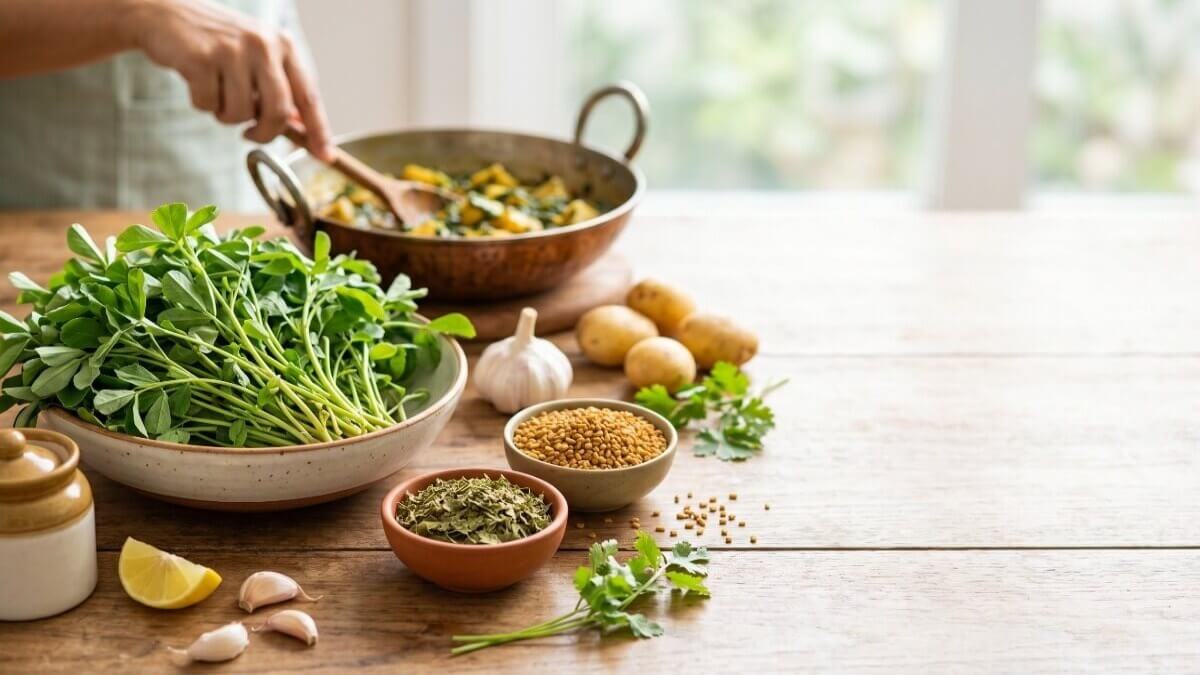
The plant is small. Its leaves are light green. Each branch contains three small leaves. We cook these fresh leaves as a vegetable. We also dry them to use as a spice.
Fenugreek leaves add a unique taste and beautiful aroma to food. They do more than just enhance flavor. They provide essential nutrients for our bodies.
History and Traditional Uses of Fenugreek Leaves
The use of fenugreek is not a recent discovery. Its history spans thousands of years. Ancient Egyptian, Greek, and Roman civilizations valued fenugreek. Egyptians used fenugreek in the mummification process. Romans cultivated it as animal feed and a medicinal plant.
Fenugreek plays an important role in traditional medicine in India and China. Doctors used it to cure digestive issues, fevers, and breathing problems. Its use in the culinary arts is well established since ancient times. It has become an integral part of cooking in Asian countries. Fenugreek leaves have spread worldwide over time.
Why Fenugreek Leaves Are Popular in South Asian Cuisine
Fenugreek leaves are a highly popular ingredient in South Asian countries. Bangladesh, India, and Pakistan use them extensively. The main reason is fenugreek’s unique taste and aroma. Fenugreek leaves make any ordinary dish extraordinary.
People in this region love delicious and aromatic food. Fenugreek leaves create a great balance of mild bitterness and sweetness in food. You can grow it easily. Local markets sell an abundance of fresh fenugreek leaves during winter. Its affordable price and extraordinary nutritional value make it a fixture in almost every kitchen.
Get to Know Fenugreek Leaves
Fenugreek leaves have different forms and uses. Knowing about them makes proper use in cooking easier. We mainly use it in two ways.
Fresh Fenugreek Leaves
People know fresh fenugreek leaves as a winter vegetable. They look like spinach or coriander leaves. Fresh leaves taste mildly bitter and fresh. We cook delicious stir-fries or curries with them.
Fresh fenugreek leaves contain a lot of water. They soften quickly during cooking. Their fresh aroma makes any food appealing.
Dried Fenugreek Leaves (Kasuri Methi)
People dry fresh fenugreek leaves in the sun to make kasuri methi. Drying makes the taste and smell more intense. Cooks use it as a flavor enhancer or garnish at the final stage of cooking.
You can store kasuri methi in an airtight container for a long time. It brings a great aroma to any vegetarian or non-vegetarian dish.
How Fenugreek Leaves Are Grown and Harvested
Growing fenugreek leaves is very easy. It grows best in cold weather. Farmers sow fenugreek seeds in fertile and well-drained soil. The leaves are ready for harvest within 3 to 4 weeks of planting.
Farmers carefully cut the leaves when the plants are a few inches tall. New leaves grow from the plant after the first cut. You can harvest crops several times from a single plant in this way. Many people grow fenugreek in pots on their roofs or balconies.
Nutritional Value of Fenugreek Leaves
Fenugreek leaves are a great source of nutrition. They provide many essential elements to keep our bodies healthy. We detail its nutritional value below.
Calories and Macronutrients
Fenugreek leaves are a low-calorie food. One cup of fresh fenugreek leaves contains only 13 to 15 calories. This is a great food for people who want to lose weight.
It contains a small amount of protein and healthy carbohydrates. The amount of fat in it is almost zero.
Dietary Fiber Content
Fresh fenugreek leaves contain plenty of dietary fiber. Fiber makes our digestive process easier. It works great to prevent constipation. Fiber keeps the stomach full. This reduces the tendency to overeat.
Vitamins A, C, and K
These leaves are an excellent natural source of vitamins. They contain plenty of vitamin A. Vitamin A keeps eyesight good.
Vitamin C boosts our immune system and brightens the skin.Vitamin K strengthens bone structure. It helps blood to clot.
Iron, Calcium, and Other Essential Minerals
Fenugreek leaves contain adequate amounts of iron. This helps prevent anemia. The calcium in it keeps bones and teeth healthy. It provides essential minerals like magnesium, potassium, and manganese.
Antioxidants and Plant Compounds
Fenugreek leaves are full of antioxidants. They contain powerful plant compounds like flavonoids and alkaloids. These compounds protect our bodies from the harmful effects of free radicals.
Antioxidants reduce the risk of chronic diseases. You can check the Healthline nutrition guide for more detailed information.
Top Health Benefits of Fenugreek Leaves
We can get various health benefits by eating fenugreek leaves regularly. Its medicinal properties keep us away from many diseases.
Boosts Digestion
Fenugreek leaves improve our digestive process. Its dietary fiber helps maintain normal bowel movements. It eliminates gastric and indigestion problems. Eating fenugreek after heavy meals reduces bloating.
Rich in Antioxidants
Antioxidants are crucial for removing toxins from the body. The antioxidants in fenugreek leaves prevent cell damage. It stops premature aging. It keeps the skin fresh. Eating fenugreek regularly keeps the body healthy from the inside.
May Help Maintain Healthy Blood Sugar Levels
Fenugreek leaves are a blessing for patients with diabetes. They increase insulin sensitivity. This keeps blood glucose levels under control. Adding fenugreek leaves to food slows the rapid absorption of sugar into the blood.
Promotes Heart Health
Fenugreek leaves are very beneficial for our heart. They reduce the level of LDL (bad) cholesterol in the blood. They also help increase the level of good cholesterol (HDL). Its potassium keeps blood pressure in check.
Enhances Immune System Function
It strengthens our immune system because of vitamin C and antioxidants. Colds, coughs, and common fevers cannot attack easily if you eat fenugreek leaves regularly. It gives the body the strength to fight against external germs.
Contributes to Overall Well-being
Fenugreek leaves ensure our overall well-being. They do not just target specific diseases. They relieve physical fatigue and increase energy.They help us live an active and healthy life by filling nutritional deficiencies.
Fenugreek Leaves and Digestive Health
Fenugreek leaves are an excellent natural remedy for digestive problems. They contain plenty of soluble fiber. This fiber creates a gel-like layer inside the stomach. It calms the digestive tract. It reduces inflammation.
People with regular constipation will benefit greatly from including fresh fenugreek leaves in their diet. It increases liver function. The digestive process naturally improves when the liver is healthy. Fenugreek works well to reduce the risk of gastric ulcers.
Fenugreek Leaves in Blood Sugar Control: What the Research Says
Science proves the benefits of fenugreek. Various studies show that fenugreek directly helps lower blood sugar levels. You can find evidence of this in many studies published on PubMed.
Fenugreek contains a special fiber called galactomannan. This slows down the absorption of sugar into the blood. It contains an amino acid called 4-hydroxyisoleucine. This increases insulin secretion from the pancreas. Doctors advise both type 1 and type 2 diabetic patients to include fenugreek in their diet.
Fenugreek Leaves in Ayurveda and Traditional Medicine
Ancient Ayurvedic scriptures consider fenugreek leaves very important. Ayurveda says fenugreek balances the ‘Vata’ and ‘Kapha’ doshas of the body. It can slightly increase excess body heat or ‘Pitta’.
Ayurvedic doctors use fenugreek to reduce arthritis pain and joint inflammation. It helps increase breast milk in mothers. People traditionally use fenugreek paste to remove dandruff and strengthen hair roots. It is a versatile herbal ingredient.
What Do Fenugreek Leaves Taste Like?
The taste of fenugreek leaves is quite attractive and exceptional to many. The taste might feel a bit different on first taste.
Taste and Aroma
Fresh fenugreek leaves taste slightly bitter and earthy. They leave a mild, sweet, and nutty flavor in the mouth after chewing. Their aroma is much like maple syrup. Their bitterness decreases significantly after cooking. A beautiful fragrance spreads around.
Fresh Fenugreek vs. Kasuri Methi
The scent of fresh fenugreek is fresh and light. The taste and smell of kasuri methi are much deeper and more intense. Just a pinch of kasuri methi at the last moment of cooking changes the taste of the whole dish. Cooks mainly use fresh fenugreek as a primary vegetable. They use kasuri methi as a spice.
Best Food Combinations
Fenugreek leaves go great with potatoes, paneer, lentils, and chicken. The combination of fenugreek with garlic, ginger, and cumin enhances the food’s flavor. It creates an excellent texture in tomato and onion gravy.
How to Use Fenugreek Leaves in Cooking
Using fenugreek leaves in the kitchen is very easy. You can add it to food in various ways.
In Curries and Vegetable Dishes
Add fresh fenugreek leaves to any ordinary curry or vegetable dish. A stir-fry of fenugreek leaves with potatoes, eggplants, or carrots is very delicious. It adds a beautiful green hue and a wonderful aroma to the curry.
In Breads and Parathas
Mix finely chopped fresh fenugreek leaves with wheat dough. Make methi paratha or roti with this dough. This is a great and nutritious option for breakfast.
In Dal and Bean Recipes
Add a handful of fenugreek leaves while cooking moong or masoor dal. The taste of fenugreek mixes very well with the dal. It increases both the nutritional value and taste of the dal.
As a Flavor Enhancer with Kasuri Methi
Sprinkle a little kasuri methi over the gravy just before cooking ends. Rubbing it slightly with your hands brings out a better aroma. It gives the food a professional, restaurant-like taste.
Popular Recipes Using Fenugreek Leaves
Some recipes made with fenugreek leaves are popular worldwide. We give ideas for a few such recipes below.
Methi Paratha
Knead together flour, salt, a little oil, and finely chopped fresh fenugreek leaves. Make a soft dough using enough water. Cut small balls and roll out parathas. Fry them reddish-brown with ghee or oil in a hot pan. Serve hot methi parathas with yogurt or pickle.
Aloo Methi
Heat mustard oil in a pan and temper with cumin seeds. Add small chopped potatoes and fry lightly.Add turmeric, chili powder, and salt. Add plenty of chopped fresh fenugreek leaves when the potatoes are half-cooked. Cook until the leaves soften and the water dries up. This tastes great with bread or rice.
Methi Dal
Wash red lentils well and boil them. Heat oil in another pan. Fry chopped garlic, dried chilies, and onions. Add the chopped fenugreek leaves and stir for a few minutes, until the onions turn reddish. Pour in the boiled dal. Add salt to taste. Take it off the stove when the dal comes to a boil.
Butter Chicken with Kasuri Methi
Marinate chicken pieces with yogurt and spices. Fry them. Make a smooth gravy with tomatoes, cashews, and butter. Put the fried chicken pieces in the gravy and bring to a boil for a while. Crush a spoonful of kasuri methi with your hands and sprinkle it just two minutes before turning off the stove. Serve with a little fresh cream on top.
Fenugreek Leaves vs. Fenugreek Seeds: Key Differences
Fenugreek leaves and fenugreek seeds come from the same plant. They have differences in use and nutritional value.
Fenugreek seeds look small and yellow. The seeds taste much more bitter than the leaves. Cooks usually use seeds for tempering, pickle spices, or in powdered form. You can eat fenugreek leaves directly as a vegetable.
Leaves contain more vitamins A and C. Seeds have a higher density of fiber and minerals. You should not use these two ingredients as substitutes for each other in cooking.
Fresh Fenugreek vs. Dried Fenugreek: Which Is Better?
Both fresh and dried fenugreek have their own qualities. Which one is better depends on how you want to use it.
Fresh fenugreek is better if you want a larger amount of fiber and water content. It helps fill the stomach as a main meal. Kasuri methi is best for enhancing the taste and aroma of food.
Kasuri methi has a relatively higher concentration of antioxidants because it is concentrated. You can choose either one conveniently for your well-being.
How to Grow Fenugreek Leaves at Home
You can easily grow fenugreek on your balcony or garden.
Seed and Soil Selection
You can grow plants from ordinary kitchen fenugreek seeds. Select good-quality seeds. Prepare a pot by thoroughly mixing loamy soil, coco peat, and organic fertilizer. The soil must be loose to prevent waterlogging.
Planting and Care Tips
Spread the seeds on top of the soil. Cover them with a light coating of soil. Spray water lightly every day. Keep the pot in a place with adequate sunlight. Do not overwater. This can rot the seeds. Seedlings will start sprouting within 3 to 4 days.
Harvesting Fresh Fenugreek Leaves
The leaves will be ready to harvest when the plants are 5-6 inches tall. Carefully cut the upper part of the plant with scissors. Do not cut from the base. New leaves will grow from that same plant. You can harvest fresh fenugreek several more times.
Potential Side Effects and Precautions
Fenugreek leaves are safe for most people. You should eat them with caution in some cases.
Digestive Sensitivities
Fenugreek contains plenty of fiber. Eating excessive amounts of fenugreek can cause digestive issues like gas, bloating, or diarrhea. You should always eat it in moderation.
Allergic Reactions
Some people may have allergic reactions to fenugreek. People with allergies to peanuts, soybeans, or green peas have a risk of developing fenugreek allergies. Consult a doctor immediately if you experience shortness of breath or skin rashes after eating fenugreek.
Who Should Take Precautions?
Pregnant women should refrain from eating excessive fenugreek. It can cause uterine contractions. Diabetic patients who regularly take blood sugar-lowering medication must be careful. Eating excess fenugreek along with medication can dangerously lower blood sugar levels.
How to Choose Fresh Fenugreek Leaves
Keep a few things in mind when buying fresh fenugreek leaves from the market. Always choose bright green leaves. The leaves must be fresh and crisp.
Do not buy leaves that have turned yellow or have black spots. Small holes on the leaves indicate an insect attack. Smell the fresh fenugreek. Leaves with a fresh, mildly sweet scent are best for cooking.
Proper Storage Tips for Maximum Freshness
Fresh fenugreek leaves can wilt or rot very quickly. Storing them properly keeps them fresh longer.
Keeping Fresh Fenugreek in the Fridge
Sort the fenugreek leaves well first. Throw away roots and rotten leaves. Do not wash the leaves. Wrap the leaves with a paper towel. Put them in an airtight plastic bag or box. Keep them in the normal chamber of the fridge. The leaves will stay fresh for up to a week this way.
Freezing for Long-Term Use
Wash the leaves thoroughly and drain them if you want to store them for a long time. Chop the leaves. Put them in a ziplock bag and keep them in the freezer. Put them directly into the pan while still frozen during cooking.
Preserving Taste and Nutrition
Cook fenugreek leaves over low heat to retain their flavor and nutritional value. Overcooking destroys its nutritional value and increases the bitter taste. Repeatedly heating it after taking it out of the fridge reduces its quality.
Frequently Asked Questions About Fenugreek Leaves
Can You Eat Fenugreek Leaves Every Day?
Yes. You can eat fresh fenugreek leaves in moderation every day. It is a healthy vegetable. Eating large amounts every day can cause digestive problems. It is completely safe as part of a normal diet.
Are Fenugreek Leaves Good for Health?
Absolutely. Fenugreek leaves are full of vitamins, minerals, and fiber. It directly helps control diabetes. ..It improves digestion. It keeps the heart healthy. ..It is a great natural source of antioxidants.
What Is the Difference Between Methi and Kasuri Methi?
Methi usually refers to fresh green leaves or fenugreek seeds. Kasuri methi refers to sun-dried fenugreek leaves. Cooks prepare fresh methi as a vegetable. They use kasuri methi as a spice to enhance taste and smell.
Global Culinary Uses of Fenugreek Leaves
Fenugreek leaves are no longer limited to a specific region. Chefs worldwide use it.
Uses in Indian Cuisine
Fenugreek leaves are a core foundation of cooking in the Indian subcontinent. Dishes like aloo methi, methi chicken, and methi matar are made in every home there. Indian chefs use both fresh and dried fenugreek abundantly. It improves the taste and color of food.
Uses in Middle Eastern Food
Middle Eastern and Iranian cuisines highly value fenugreek leaves. Fenugreek leaves are an essential ingredient in making the famous Iranian stew ‘Ghormeh Sabzi’. It brings a distinct and deep flavor to food. This connects closely with Middle Eastern culture.
Applications in Modern Cooking
Modern restaurants around the world are increasingly using fenugreek in fusion cuisine. Many chefs now use kasuri methi in salads, pastas, and soups. The baking industry is using its mild, sweet aroma to make new types of bread.
Final Thoughts on Fenugreek Leaves
Fenugreek leaves are a unique gift of nature. They can be a great addition to our daily diet.
Key Takeaways
Fenugreek leaves are a nutritional powerhouse. It controls blood sugar. ..It keeps the heart healthy. It aids digestion. Both fresh leaves and kasuri methi are extremely beneficial for our health. Growing and storing it is very easy.
Why Fenugreek Leaves Are a Nutritious and Delicious Herb
Very few vegetables or herbs combine so much nutrition and flavor as fenugreek. Its mild bitterness and sweet aroma make any ordinary food feel royal. Vitamins, minerals, and antioxidants play important roles in a healthy lifestyle.
Simple Ways to Add Fenugreek to Your Daily Diet and Cooking
You can easily make fenugreek leaves a part of your diet. Mix fenugreek leaves into your bread or paratha dough in the morning. Cook it with vegetables or dal for lunch. Sprinkle a pinch of kasuri methi over chicken for dinner. These small changes will work great to protect your health and your family’s health.