
How to Set Realistic Goals You Can Actually Achieve
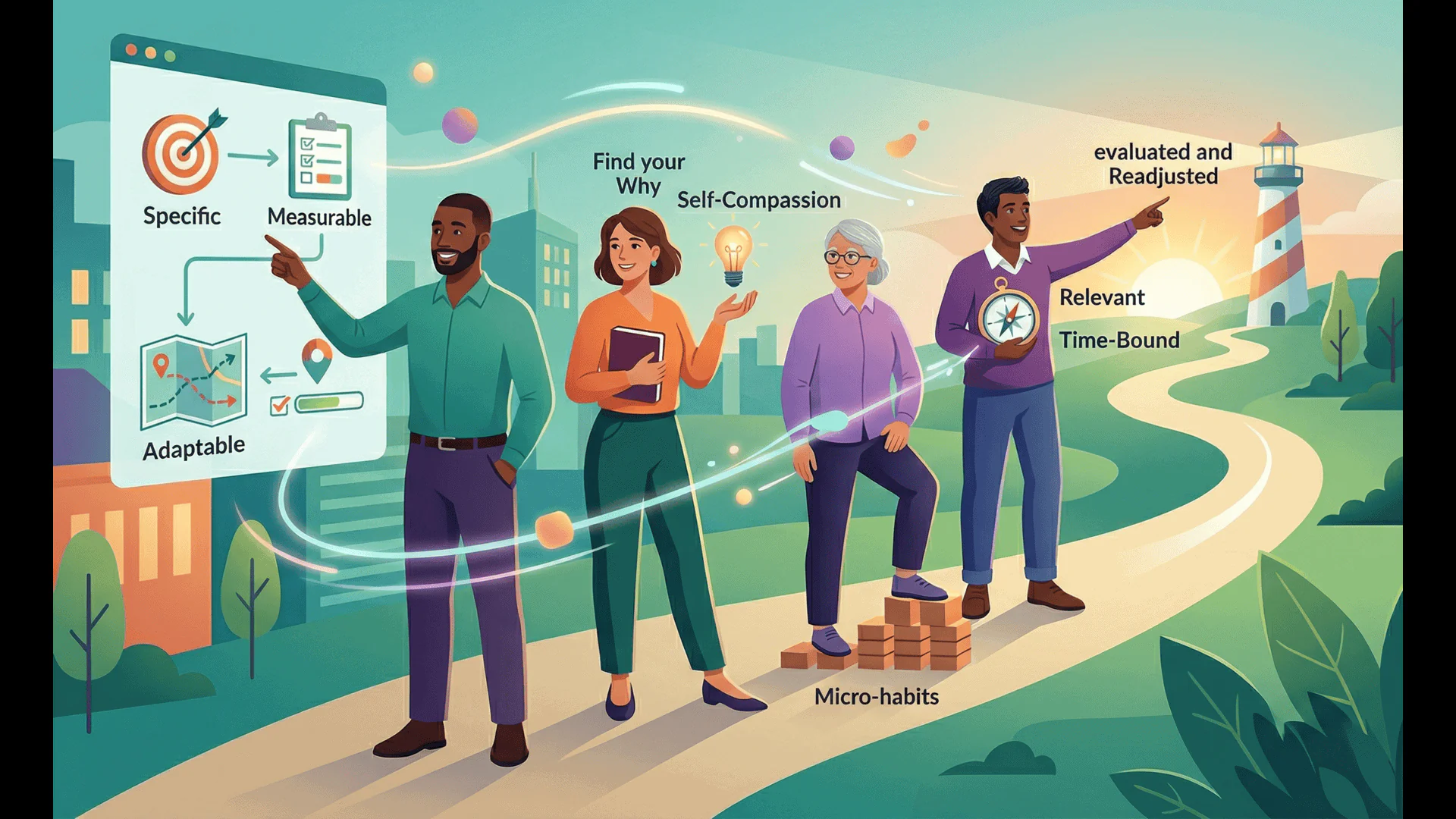
We all want to succeed in life. At the beginning of the year, we make grand promises to ourselves. We create new routines and start working with immense enthusiasm. However, as a few weeks pass, that enthusiasm begins to fade. Eventually, we forget our goals entirely.
This is a familiar scenario for most people. Setting a goal is a very easy task. Actually achieving that goal is a completely different story. The main reason for this is that we often set goals using the wrong methods. Our plans lack a touch of reality.
In this blog post, we will discuss the science and art of goal setting. We will learn how to set goals that are genuinely achievable. This is going to be your comprehensive guide to long-term success.
The Importance of Goal Setting for Personal and Professional Growth
Setting goals gives our lives direction. Without it, we drift like a boat without a steering oar. Having a clear goal helps us understand exactly where we need to invest our energy.
In our personal lives, goals help us become better individuals. They improve our health, relationships, and peace of mind. On the other hand, professional goals drive our careers forward. They inspire us to learn new skills and earn promotions.
Goal setting teaches us how to manage our time effectively. It gives our lives a specific purpose. When we have a clear destination in front of us, the hardships along the journey feel much easier to handle.
What is the Difference Between Realistic Goals and Fantasies?
Many people confuse dreaming with goal setting. Dreaming is a wonderful thing. But a dream only becomes a goal when it is paired with a realistic plan.
A fantasy is something you desire, but you have no concrete path to achieve it. Saying “I want to become a millionaire in a month” is a fantasy. In contrast, saying “I want to increase my business revenue by 20 percent over the next six months” is a realistic goal.
A realistic goal has a specific deadline. It aligns with your current skills, resources, and circumstances. Fantasies lack action plans, while realistic goals force you to take action every single day.
The Psychology Behind Achieving Goals Successfully
Achieving goals is deeply connected to how our brain works. When we set a goal, our brain adopts it as a part of our identity.
According to research by the American Psychological Association, clear goals increase our focus. They help our brain release dopamine. When we take a step toward our goal, dopamine gives us a feeling of pleasure. This joy motivates us to keep working.
Successful people do not rely entirely on their willpower. They create an environment that supports their goals. They can identify psychological barriers in advance and stay prepared to overcome them.
Common Reasons People Fail to Reach Their Goals
There are specific reasons behind failing to achieve goals. If you can identify these reasons, you can significantly reduce your failure rate. Here are the main reasons people fall short.
Setting Unrealistic Expectations
The biggest mistake is setting a goal far beyond your current capabilities. Trying to change your entire life overnight is foolish. When people see they are not getting anywhere near their massive goals, they get frustrated and give up.
Lack of Clear Direction
“I want to be healthier” is a vague goal. It has no specific metrics. Without clear direction, people do not understand exactly what they need to do every day. They remain confused about what actions will move them forward.
Losing Motivation Too Quickly
Motivation is a temporary feeling. It does not stay the same every day. Many people start working based solely on motivation. When that motivation drops, their work stops completely.
Failing to Track Progress
If you do not know how far you have come, the journey becomes difficult. Failing to track progress means you will miss out on noticing small wins. As a result, it feels like there is no improvement at all. This frustration often causes people to abandon their goals.
1. Start with a Clear Vision of Success
Before starting any journey, knowing the destination is the most crucial part. If your destination is unclear, you will get lost repeatedly. The very first step in goal setting is defining exactly what you want.
Define What Success Means to You
The definition of success is not the same for everyone. For some, success means earning a lot of money. For others, it means spending quality time with family. Never measure your life against someone else’s definition of success. Ask yourself where you want to see yourself at the end of your life.
Align Your Goals with Your Values and Priorities
Your goals must align with your core personal values. If you value freedom, do not set a professional goal that will keep you chained to an office desk all day. A mismatch between values and goals will strip away your peace of mind.
Create a Compelling Reason to Stay Committed
Obstacles will always appear on the path to any goal. To hold on during those tough times, you need a strong “Why.” Why do you want to achieve this goal? The more emotional and powerful this reason is, the higher your chances of success will be.
2. Use the SMART Goal Framework
The most proven and popular method for goal setting is the SMART framework. It turns your vague desires into a specific plan.
Specific: Define Exactly What You Want
Your goal needs to be highly specific. Instead of saying “I want to lose weight,” say “I want to lose 5 kilograms in the next three months.” The more specific the goal, the better your brain understands what needs to be done.
Measurable: Track Your Progress Effectively
A goal must be measurable. How will you know when you have succeeded? If your goal is to read books, decide exactly how many books you will read per month. Adding numbers or data makes it easy to track your progress.
Achievable: Set Realistic Expectations
Your goal must be achievable given your current situation. Challenge yourself, but do not ask for the impossible. Consider whether you have the necessary time, money, and skills.
Relevant: Focus on What Truly Matters
Think about how relevant this goal is to your current stage in life. Does it fit into your long-term plans? If a goal is not relevant to your overall life vision, there is no point in pursuing it.
Time-Bound: Create a Sense of Urgency
Every task needs a deadline. Without a time limit, we find excuses to procrastinate. Setting a specific date creates a healthy sense of urgency within us.
3. Break Down Large Goals into Small Milestones
Looking at a massive mountain is naturally intimidating. But if you only focus on your next few steps, conquering the mountain becomes possible. The same rule applies to setting goals.
Why Small Steps Increase Success Rates
Huge goals often exhaust us mentally. Breaking them down into small steps makes the task feel much easier. Starting a small task requires less mental energy. This removes the fear of the work and boosts your self-confidence.
Create Weekly and Monthly Goals
Divide your yearly goal into 12 months. Then, break those monthly goals down into four weeks. Now you have a clear weekly to-do list in front of you. You only need to focus on the tasks for the current week.
Celebrate Progress Along the Way
Reward yourself after achieving every small milestone. This could be eating your favorite food or watching a movie. These small celebrations have a positive impact on your brain and provide energy for the next task.
4. Focus on Systems Instead of Outcomes
Goals determine our destination, but systems help us reach that destination. World-renowned author James Clear emphasized systems in his book Atomic Habits.
Build Daily Habits That Support Your Goals
You cannot lose 5 kilograms in one day. However, you can walk for 30 minutes every day. This daily walk is your system. Forget about the main goal for a moment and focus entirely on this small daily habit.
Create Consistency Through Routines
The biggest secret to success is consistency. Create a specific routine. Try to do the same task at the same time every day. This will turn the task into a habit, and you will no longer have to think hard to get it done.
Why Process-Oriented Thinking Works
Focusing too much on the outcome often leads to frustration because results are not always within our control. The process, meaning the daily work, is entirely in our control. If you remain honest with the process, the results will follow naturally.
5. Write Your Goals Down
If you only keep your goals in your head, there is a high chance you will forget them. To turn a goal into reality, writing it down is absolutely essential.
The Power of Written Commitment
A study by Dominican University found that people who write down their goals have a significantly higher success rate. By writing them down, you are essentially making a contract with yourself. This sends a powerful signal to your brain that you are serious.
Keep Goals Visible and Top of Mind
Keep your written goals in places where you will see them every day. This could be your study desk, your laptop wallpaper, or your bedroom wall. Looking at these goals repeatedly trains your subconscious mind to work toward them.
Use Journals and Goal-Tracking Tools
Use a personal diary or journal. Write down your daily progress there. There are also many great apps and tools available today that you can use for this purpose.
6. Anticipate Potential Obstacles
Any good plan will face hurdles. Those who succeed know in advance what problems might arise and how to handle them.
Plan for Setbacks and Challenges
Before you start working, think about the reasons you might fail. If your goal is to wake up early, staying up late at night could be an obstacle. Write these potential barriers down on a piece of paper.
Develop Backup Strategies
Create an “If-Then” plan for every obstacle. For example, “If it rains today, then I will exercise indoors instead of walking outside.” These backup strategies will prevent you from ever coming to a complete stop.
Build Resilience During Tough Times
Things will not always go according to plan. Sometimes you will fall behind. During these times, learn to forgive yourself instead of feeling guilty. Learning from mistakes and starting fresh is the true definition of resilience.
7. Stay Accountable
When we are only accountable to ourselves, we tend to give ourselves too much leeway. Having to answer to someone else sharpens our focus on the task.
Find an Accountability Partner
Find someone who has similar goals to yours. You can check in on each other’s work. Knowing that someone will ask about your progress makes it much harder to skip the task.
Share Your Goals with Trusted People
Share your goals with your family or close friends. They will provide you with emotional support. Be careful not to share your goals with people who have negative mindsets or those who might discourage you.
Use Progress Reviews to Stay on Track
Set aside some time at the end of every week. Review the work you did over the past seven days. Discuss what went well, what went wrong, and what needs to be done next week with your accountability partner.
8. Eliminate Distractions and Competing Priorities
In today’s world, thousands of elements are scattered around just waiting to destroy our focus. You need to protect yourself from these distractions to achieve your goals.
Protect Your Time and Energy
Your time and mental energy are highly limited resources. Protect them carefully. Reduce your social media usage. Stay away from tasks that do not align with your goals.
Learn to Say No to Unnecessary Tasks
If you try to please everyone, you will never reach your own destination. You must learn to politely say “no” to any request or task that hinders your progress. This will also significantly boost your self-confidence.
Create a Focused Environment
Your work environment has a massive impact on your productivity. Keep your mobile phone away while working. Keep your desk or workspace clean and organized. A beautiful environment keeps your mind calm and increases concentration.
9. Regularly Review and Adjust Your Goals
Nothing is carved in stone. As circumstances change, your goals might need to change as well.
Why Flexibility is Essential
Sticking rigidly to a single plan is often a mistake. You may need to alter your plans based on real-world situations. This flexibility reduces mental stress and helps you survive the long game.
Identify When Goals Need to Change
Ask yourself occasionally whether this goal is still important to you. If a goal no longer matches your current values, do not hesitate to change it. Walking slowly on the right path is much better than running fast in the wrong direction.
Adapt by Refining Instead of Quitting
Changing a plan does not mean giving up. It means adapting to the situation. If you cannot reach your primary goal, make it a bit smaller or easier. Just do not stop working entirely.
10. Maintain Motivation in the Long Run
Everyone can work hard right after the New Year or after watching a motivational video. Maintaining that consistency month after month is the real challenge.
Reconnect with Your Purpose
Whenever you do not feel like working, remind yourself of your powerful “Why.” Remind yourself of the reason you started this journey. Visualize the picture of your ultimate goal in your mind.
Use Rewards and Positive Reinforcement
Do not be overly strict with yourself at all times. Reward yourself for small wins. Talk to yourself positively. Practice saying “I am learning and moving forward” instead of “I cannot do this.”
Keep Going Even When Motivation Drops
Remember that motivation will not be there every day. This is perfectly normal. Successful people do not wait for motivation; they follow their routines. On days when you really do not feel like doing anything, try to do the task for at least five minutes. Doing a tiny bit is always better than doing nothing at all.
Goal Setting Strategies for Different Areas of Life
While the core method of goal setting remains the same, the specific strategies can vary across different areas of life. Here are examples for several important categories.
Career and Professional Development
To advance in your career, you need to focus on acquiring new skills.
-
Goal Example: Complete a professional digital marketing course and earn a certificate within the next six months.
-
System: Watch course videos and take notes for 1 hour every day after work.
Health and Fitness
You should not expect overnight changes in health goals.
-
Goal Example: Lose 3 kilograms and bring blood pressure under control over the next four months.
-
System: Walk for 30 minutes every morning and limit fast food consumption to one day a week.
Financial Improvement
Financial goals should always be number-based.
-
Goal Example: Save $5,000 for an emergency fund within the next year.
-
System: Transfer $400 into a separate savings account immediately upon receiving your monthly paycheck.
Education and Skill Development
Learning has no end. Learning new things keeps the brain active.
-
Goal Example: Learn to speak Spanish fluently within the next three months.
-
System: Listen to a Spanish podcast for 20 minutes daily and practice speaking in front of the mirror for 10 minutes.
Personal Relationships
Conscious goal setting is also necessary for maintaining healthy relationships.
-
Goal Example: Build stronger and more meaningful connections with family members.
-
System: Sit down to eat at least one meal together every day and dedicate weekends to family time while keeping phones away.
Common Goal Setting Mistakes to Avoid
Knowing what not to do is just as important as walking the right path. Here are a few common mistakes to watch out for.
Trying to Change Everything at Once
Many people try to start a new diet, begin reading books, and learn a new language all at the same time. The brain cannot handle so many new tasks simultaneously. Consequently, everything stops after a few days. Focus on one or two habits at a time.
Setting Goals Based on Others’ Expectations
Deciding to become an engineer because your parents want it, or joining the gym because your friends are doing it, never leads to long-lasting success. The goal must come from within you. Never set life goals just to please others.
Ignoring Progress and Small Wins
Many believe they are not successful until they reach their final destination. This is a fatal mistake. Every small step is a success. If you are even slightly better today than you were yesterday, you are successful.
Focusing Solely on the Outcome
The outcome is out of your hands. The only thing you can control is your effort. You can study hard to do well on an exam, but the difficulty of the questions is beyond your control. Focus on the process instead of worrying about the outcome.
Tools and Techniques for Effective Goal Tracking
There are several excellent tools available to help you track your progress. These will make your job much easier.
-
Digital Apps: Applications like Notion, Todoist, or Trello help keep your work organized. You can easily break your goals down into smaller tasks inside these apps.
-
Habit Trackers: You can use a simple calendar to track your daily habits. Put a red cross mark on the days you complete your task. Try to make sure this chain of crosses never breaks.
-
Bullet Journals: For those who love writing on paper, the bullet journal is a fantastic method. You can customize the pages however you like and keep detailed records of your daily tasks.
Frequently Asked Questions About Goal Setting
How many goals should I focus on at once?
Taking on too many goals scatters your focus. According to experts, you should focus on a maximum of 2 to 3 major goals at a time. Once a goal turns into a habit, you can add a new one to your list.
What should I do if I fail to reach a milestone?
Failure is a part of the journey. Do not give up if you fail. Instead, figure out why you failed. Was there a flaw in your plan? Learn from your mistakes and start over with renewed energy. Learn to forgive yourself.
How long does it take to achieve a goal?
There is no specific answer to this. It depends on how big your goal is and how much time you dedicate to it daily. However, research shows that it takes an average of 21 to 66 days for a simple action to become a habit.
Can small goals bring big success?
Absolutely. Just as a massive building is constructed using small bricks, big success is a collection of small goals. Achieving small goals builds your confidence. This confidence will eventually help you achieve much greater things.
Conclusion: Success is Built Step by Step
Goal setting is not a magic wand that will change your life overnight. It is a continuous process. It is a lot like planting a seed and taking care of it. First, you have to select the right seed. Then you must prepare the soil and water it regularly. One day, that tiny seed will grow into a massive tree.
Patience and consistency are the most important requirements for achieving any life goal. Mistakes will happen, obstacles will arise, and sometimes you will feel like you cannot go on anymore. These feelings are completely normal. But those who endure through these difficult times are the ones who smile the smile of success at the end of the day.
Final Thoughts: Clear Goals Create a Clear Future
Your life is like a blank canvas. Your goal is the paintbrush in your hand. You can make random strokes on this canvas if you want. Or, you can paint a beautiful picture. The decision is entirely yours. A specific and clear goal will help you paint a beautiful and clear picture for your future.
Actionable Steps to Set and Achieve Better Goals Today
After reading all of this, it is now time to take action. Grab a pen and paper right now. Ask yourself, what specific improvement do you want to see in your personal or professional life within the next three months?
Organize that goal using the SMART framework. Then break it down into smaller steps and assign yourself a small task for today. Remember, a journey of a thousand miles begins with a single step. Take that first step today. Your successful future self will be grateful to you for what you do today.