The Blueprint of Tomorrow: How Education Shapes Society
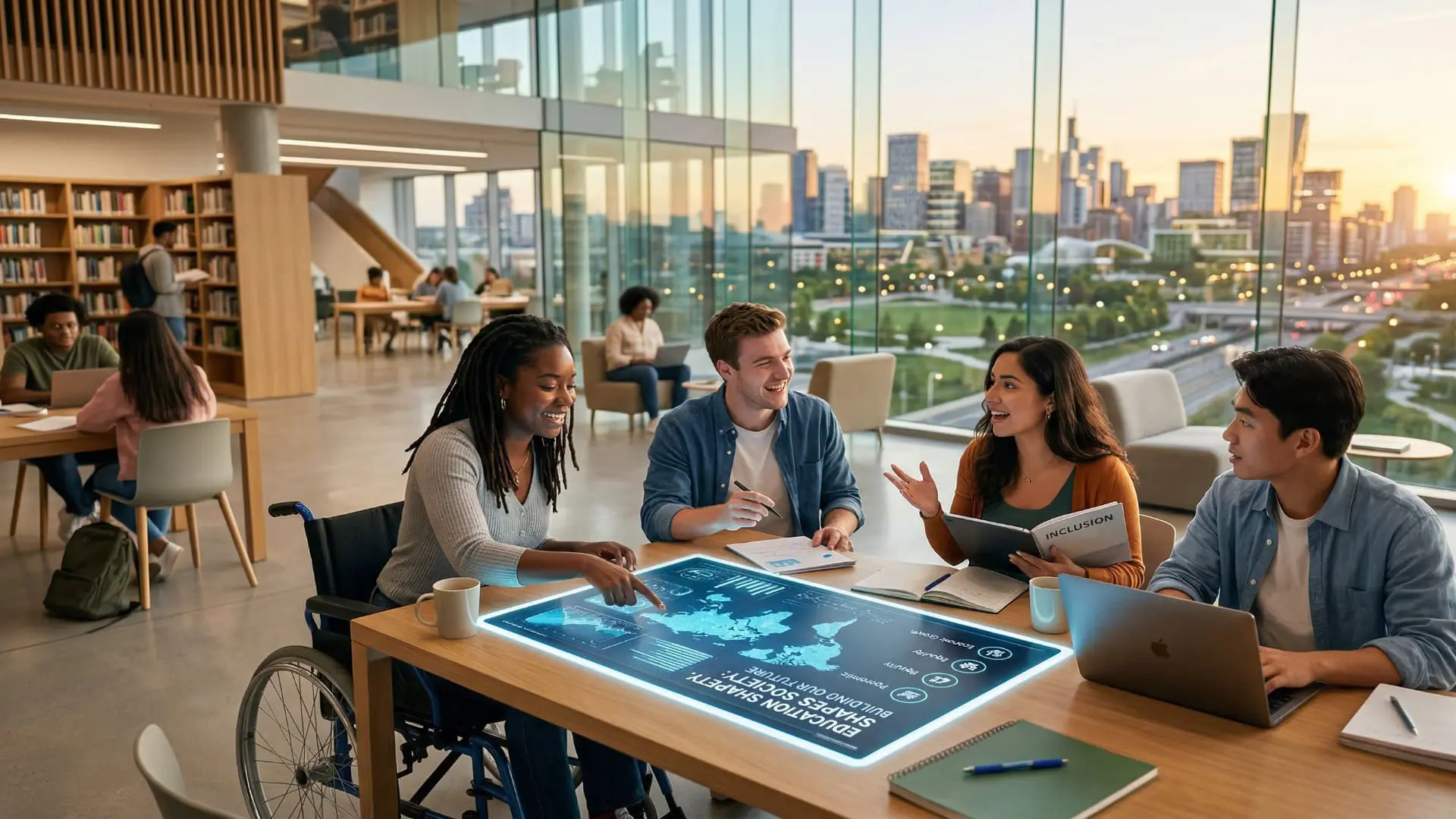
The world around us is constantly changing. To keep pace with this change, we need a strong foundation. That foundation is nothing but education. Education is not just limited to textbooks or exam papers. It is a powerful tool to properly shape our society.
Just as an accurate blueprint is needed for a beautiful and orderly building, education is needed to build an advanced society. Education teaches us to think and inspires us to create something new. It awakens the hidden potential within us.
When we talk about education, we should not just think of schools or colleges. We are constantly learning from our surrounding environment, family, and society. This comprehensive education helps us build a strong society. Let us know in detail exactly what role education plays in shaping tomorrow’s society.
Understanding the Relationship Between Education and Social Development
Education and social development complement each other. It is almost impossible to imagine one without the other. To move society forward, every individual needs to be educated.
What Makes Education a Powerful Social Force?
Education changes people’s perspectives. It moves people away from prejudice and blind faith. An educated person can judge any problem in society through logic.
Moreover, education builds people’s confidence. This confidence gives them the courage to do something new. When every person in society becomes confident, that society prospers rapidly.
Through education, people learn to be empathetic towards each other. It teaches us how to work together harmoniously. This ability to work as a team makes education a powerful social force.
The Historical Impact of Education on Civilization
Looking at history, it is evident that the nations that emphasized education the most are the ones that ruled the world. From ancient Greece to the Renaissance, the spread of education has propelled civilization forward. Education has shown people the path to new discoveries.
In the past, when people did not know how to read or write, their knowledge only spread by word of mouth. But the invention of scripts and education gave people the opportunity to preserve knowledge. This preserved knowledge created a solid foundation for future generations.
The international organization UNESCO believes that there is no alternative to education in building a just world. Behind every major historical change, there were new ideas and education. That trend continues today and will continue in the future.
How Education Builds Aware and Responsible Citizens
The greatest asset of a country is its aware citizens. Education makes people aware of their rights and responsibilities.
Promoting Civic Awareness and Participation
An educated person knows how to contribute to society. They comply with the country’s laws and regulations and encourage others to do the same. Educated people are always at the forefront when it comes to voting or participating in various development activities in society.
Education makes people aware of political and social issues. They understand which decisions will be good for the country and which will be harmful. This awareness helps them build a proper society.
As citizens, we have many responsibilities. Education provides us with the necessary knowledge and skills to fulfill those responsibilities. As a result, it becomes possible to bring positive changes to every level of society.
Encouraging Moral Decision-Making and Social Responsibility
At every step of life, we have to make various decisions. Education teaches us how to make right and moral decisions. It helps us differentiate between good and bad.
Social responsibility is one of the greatest gifts of education. An educated person thinks about other people in society alongside themselves. They step forward to help the disadvantaged people in society.
This morality and sense of responsibility do not develop overnight. It is built in people through proper education from childhood. Therefore, moral education is a highly important part of our social structure.
Education as a Driver of Economic Growth and Innovation
The economy is the backbone of a country. The key to keeping that economy running is education. Economic growth in any country is impossible without educated human capital.
Creating a Skilled and Competitive Workforce
The modern world is highly competitive. Skilled manpower is needed to survive in this competition. Education helps people acquire those necessary skills.
Technical and vocational education plays a major role here. It prepares the youth directly for the workplace. According to the World Bank, education increases people’s income and ensures economic stability.
When the majority of a country’s people are skilled and educated, the country’s productivity increases. As a result, national income grows, and the country’s overall development accelerates.
Supporting Entrepreneurship and Technological Advancement
The economy cannot flourish without new businesses or initiatives. Education gives birth to new ideas or concepts in people’s minds. It helps people become entrepreneurs and create employment for themselves and others.
It is impossible to survive today without technological advancement. Education introduces people to new technologies and teaches them how to use them. From laboratories to industrial factories, educated youth are leading innovation everywhere.
Innovative thinking not only drives economic growth but also solves society’s daily problems. Therefore, investing in education to create innovation and entrepreneurs is extremely important.
The Role of Education in Reducing Poverty and Inequality
Poverty is the biggest curse of a society. The most effective way to escape this curse is education.
Expanding Opportunities Through Education
Education opens doors to new opportunities for people. An educated person can find work according to their qualifications. This improves their financial situation.
The expansion of female education is a great example here. When women are educated, they can join the mainstream of society. They become economically independent and contribute equally to society’s development.
This equality of opportunity helps eliminate inequality in society. Rich or poor, anyone can change their fate through proper education.
Breaking the Generational Cycle of Deprivation
Poverty often spreads from one generation to the next. But if even one person in a family gets an education, it is possible to break that cycle.
Educated parents understand the importance of education for their children. They try to educate their children at any cost. As a result, the next generation is no longer plunged into the darkness of poverty.
This is how education slowly changes the entire face of a society. It not only beautifies the present but also ensures a secure future for generations to come.
Empowering Communities Through Education
A community is the collective of individuals. Education empowers not just one person, but the entire community.
Promoting Social Cohesion and Cultural Understanding
People of different religions, races, and languages live together in our society. Education teaches us how to respect each other’s differences. This increases social cohesion.
When we learn about others’ cultures and customs, misunderstandings among us decrease. Education broadens our minds and fosters an open mindset.
This understanding is very important for maintaining peace and order in society. There is much less room for violence or hatred in an educated community.
Building Stronger and More Resilient Communities
A community needs to stay united during any disaster or danger. Education teaches people how to work together to overcome problems.
Educated people are aware of disaster preparedness. Whether it is a pandemic or a natural disaster, they can analyze accurate information and make quick decisions. This saves the community from massive losses.
Mutual cooperation and empathy are signs of a strong community. These qualities are primarily developed through proper education.
How Education Shapes Values, Culture, and Identity
Education is not just bookish knowledge. It introduces us to our roots and helps us build our own identity.
Preserving Cultural Heritage Through Education
Every nation has its own traditions and culture. Education passes these traditions from one generation to another.
Through the study of history, literature, and art, we can learn about our ancestors. This teaches us to be respectful of our own culture.
Various cultural programs are organized in schools and colleges. Through this, the younger generation can dive deep into their culture and understand the importance of preserving it.
Encouraging Respect for Diversity and Inclusion
Modern society is much more diverse. Education teaches us that this diversity is not a weakness of society, but rather a strength.
Moving forward with everyone is called inclusion. Education ensures that no special group in society is neglected. Physically or mentally disadvantaged people are also being brought into the mainstream of education.
This inclusive education system gifts us a humane society where every person has equal rights and respect.
Education and the Development of Future Leaders
The future of any country depends on its younger generation. There is no alternative to education to prepare these young people to lead properly.
Nurturing Leadership Skills from Childhood
Leadership qualities do not develop in a day. They need to be nurtured from childhood in family and school environments.
Children learn to work in teams through various group projects, sports, and debate competitions in schools. They understand how to value others’ opinions and present their own opinions beautifully.
These small experiences build the foundation of confidence and leadership in children. It prepares them to make major decisions in the future.
Preparing Individuals to Tackle Global Challenges
Today, our problems are not just limited to one country. Problems like climate change, economic recession, or global health are threats to the whole world.
Education makes future leaders aware of these global problems. They understand that the impact of one country’s problems can also fall on another country.
Knowledge of international communication and diplomacy is also acquired through education. By utilizing this knowledge, young leaders will make the world more livable in the future.
The Impact of Digital Transformation on Modern Education
Just as technology has changed our lifestyles, it has also changed the education system. Digital transformation has made education more accessible.
The Role of Technology in the Spread of Knowledge
Thanks to the internet, knowledge from anywhere in the world is now at our fingertips. People can learn new things right from home through online courses or videos.
Various international organizations, including UNICEF, are working to spread digital education. As a result, students in remote areas are also gaining access to quality education.
Technology has not only made the exchange of information easier but also made education much more engaging. The use of multimedia and animation helps people understand complex subjects more easily.
Preparing Society for a Digital Future
The coming days will be completely technology-dependent. Artificial intelligence is changing the way we work. Digital education is essential to adapt to this change.
Subjects like coding, data analysis, and cybersecurity have now become a major part of education. These are preparing the youth for the future workplace.
The further a society advances in digital education, the stronger it will be in the coming world. Therefore, updating the education system to keep pace with technology is the demand of the times.
Environmental Awareness and Sustainable Development Through Education
Protecting the environment is our primary responsibility for keeping the Earth livable. This awareness about the environment is created through education.
Teaching Responsible Resource Management
Our natural resources are limited. If these are used indiscriminately, nothing will be left for future generations. Education teaches us how to use these resources properly.
Topics like recycling, water conservation, and preventing energy waste are now included in textbooks. As a result, students can develop eco-friendly habits from childhood.
These responsible behaviors are bringing major changes not only at the individual level but also at the societal level. People are now refraining from actions that harm the environment.
Inspiring Future Generations to Protect the Earth
Our Earth is facing threats today due to climate change. The younger generation must step forward to save us from this danger. Education provides them with the inspiration for this task.
Education about the use of green or renewable energy is raising awareness. They are understanding the importance of planting trees and conserving forests.
Educated youth are leading this movement to protect the environment. They are showing the world that with a little awareness, we can protect our beautiful earth.
Challenges to Earth the Education System in the 21st Century
Although the importance of education is immense, the current education system faces several challenges. We must address these challenges to build a beautiful future.
Tackling Educational Inequality
Even today, not all children in the world get equal access to education. There is a massive gap between the quality of education in cities and villages. This is a matter of great concern.
Many talented students are forced to drop out midway due to economic hardship. On the other hand, the digital divide is also increasing because technological benefits are not reaching everyone.
Governments and non-governmental organizations must work together to eliminate this inequality. Ensuring quality education for all is crucial.
Balancing Traditional Education with Modern Needs
Our older education system is primarily based on theoretical knowledge. But practical knowledge and skills are needed more in the modern world.
Therefore, the curriculum needs to be updated to meet the demands of the modern era. Alongside this, however, we must also retain our traditional values and moral education.
Creating a perfect balance between the two is not an easy task. Educators need to think deeply about this and find up-to-date solutions.
The Future of Education and Its Impact on Society
The nature of education is constantly changing. The education system of tomorrow will be very different from today. This will have a direct impact on our society.
Emerging Trends That Will Shape Tomorrow
In the future, the education system will become much more personalized. Separate learning methods will be developed based on each student’s talents and interests.
Technologies like virtual reality or augmented reality will change the classroom environment. Students will be able to learn any subject by experiencing it more realistically.
These new trends will make education more enjoyable. As a result, a group of people will be created in society who can easily adapt to any new situation.
Creating a Culture of Lifelong Learning
People used to think that education ends once school or college is over. But in today’s rapidly changing world, this idea no longer works.
People now have to learn new things throughout their lives. It becomes difficult to survive in the workplace without acquiring new skills. Therefore, a culture of lifelong learning is developing in our society.
This culture keeps people active and innovative at all ages. This is extremely important for building a progressive and developed society.
Conclusion: Education as the Blueprint for a Better Future
Considering everything, it is clear that education is not just a right. It is the most effective tool for building a strong society. Education shapes our minds, economy, and culture beautifully.
What the world of tomorrow will look like depends on how we organize our education system today. If we can provide equal opportunities for everyone and ensure access to modern education, our future will be very bright.
Let us all contribute to the expansion and development of education. Because only a well-educated society can build a safe, inclusive, and strong world. This is our best blueprint for tomorrow.
Frequently Asked Questions (FAQs)
Why is education important for society?
Education creates awareness, morality, and logic in people. It removes prejudice and maintains social cohesion. An educated society can progress rapidly and remains stable during any crisis.
How does education contribute to economic development?
Education increases people’s efficiency and fosters innovation. Creating a skilled workforce and entrepreneurs increases the country’s productivity. As a result, national income rises, and the country’s overall economic development progresses.
What role does education play in reducing inequality?
Education provides equal opportunities for employment and advancement to people of all classes. It helps break the generational cycle of poverty and ensures gender equality in society. As a result, social and economic inequality decreases.
How does technology affect modern education?
Technology has made education accessible and interactive. It is now possible to acquire knowledge from anywhere in the world right from home through online classes, educational apps, and digital libraries. This prepares students for the technology-driven workplace of the future.
Why is lifelong learning important in today’s world?
The modern world is changing very rapidly. To adapt to new technologies and work styles, one must constantly acquire new skills. Lifelong learning is essential to survive in the workplace and for personal growth.