Green Cardamom: The Ultimate Guide to Benefits, Uses, and Nutrition
Among the various spices arranged on our kitchen shelves, there is one small but highly aromatic spice: green cardamom. It not only enhances the flavor of food but also brings remarkable health benefits to the table. In this ultimate guide, we will explore this magical spice in great detail.
If you are health-conscious and want to ensure your well-being through natural means, this post is perfect for you. Let us dive deep into the nutritional value, history, and uses of green cardamom.
What is Green Cardamom?
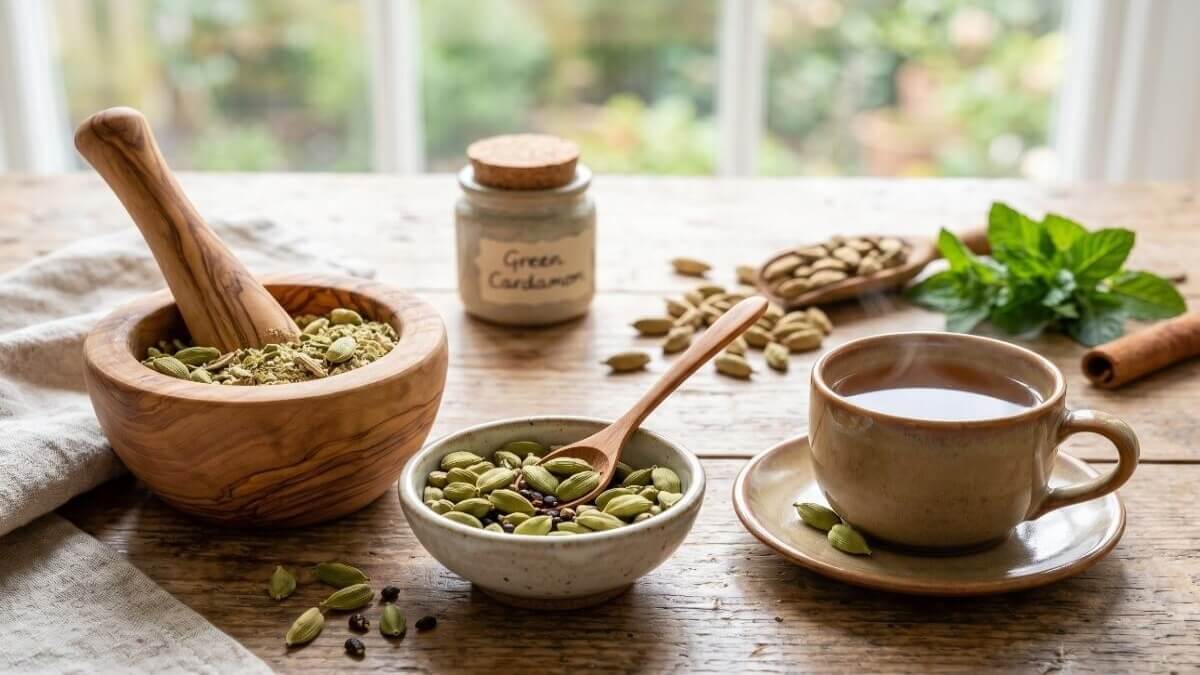
Green cardamom is an aromatic herb belonging to the ginger family (Zingiberaceae). Its scientific name is Elettaria cardamomum. The small, green seed pods harvested from this plant are what we commonly use as cardamom.
Inside each green cardamom pod lie tiny black or dark brown seeds. These seeds hold the true aroma and essential oils. The flavor profile is unique, combining sweetness, a hint of spice, and a refreshing quality all at once.
Its applications range widely from culinary arts to pharmaceutical production. It stands out globally as one of the most expensive and prized spices available.
History and Origin of Green Cardamom
The history of green cardamom goes back thousands of years. Its native home is the Western Ghats mountain range in Southern India, a region historically celebrated for ancient cardamom cultivation.
Over time, this spice traveled across Asia, the Middle East, and Europe along ancient trade routes. The ancient Greeks and Romans were captivated by its fragrance and utilized it to manufacture luxury perfumes. When the Vikings encountered this spice in Constantinople, they introduced it to Scandinavia, where it remains widely popular today.
Currently, Guatemala stands as the world’s largest producer of green cardamom. However, significant amounts are still cultivated in India, Sri Lanka, and Tanzania.
Why Green Cardamom is Called the “Queen of Spices”
If black pepper is crowned the “King of Spices,” then green cardamom rightfully holds the title of the “Queen of Spices.” There are several excellent reasons behind this royal designation.
First, its aroma is incredibly distinct and regal. It possesses the power to transform a simple dish into an extraordinary culinary experience. Its flavor works wonderfully across both sweet and savory recipes.
Second, it ranks as the third most expensive spice in the world, trailing only behind saffron and vanilla. The harvesting process is highly labor-intensive, which explains its premium price. In ancient times, it was a luxury reserved primarily for royalty and the elite.
Nutritional Value of Green Cardamom
Green cardamom is not just packed with flavor; it is also loaded with essential nutrients. It serves as a highly beneficial addition to your daily diet.
Calories and Macronutrients
Green cardamom is exceptionally low in calories. Incorporating a small amount into your daily routine will not impact your weight goals.
One tablespoon (approximately 6 grams) of ground green cardamom provides the following nutrients:
-
Calories: 18
-
Carbohydrates: 4 grams
-
Protein: 0.6 grams
-
Fat: 0.4 grams
The fat content is virtually negligible, and the carbohydrates consist mostly of dietary fiber, which is highly beneficial for the body.
Essential Vitamins and Minerals
Green cardamom is an excellent source of essential minerals. It contains a high concentration of manganese, a mineral vital for bone formation and metabolic health.
Additionally, it provides iron, calcium, potassium, and magnesium. Iron helps prevent anemia, while potassium helps maintain normal blood pressure levels. Trace amounts of vitamin C and B-complex vitamins are also present.
Antioxidants and Plant Compounds
Green cardamom is loaded with powerful antioxidants. These compounds shield our cells from the damaging effects of free radicals.
The primary plant compounds found in cardamom include pinene, linalool, and limonene. These compounds give the spice its signature aroma and help reduce inflammation throughout the body.
Dietary Fiber Content
Dietary fiber is indispensable for a healthy digestive system. Green cardamom contains a generous amount of fiber, offering about 1.6 grams per single tablespoon.
This fiber helps alleviate constipation and promotes the growth of beneficial gut bacteria, keeping your digestive tract running smoothly.
Main Health Benefits of Green Cardamom
The health benefits of green cardamom are extensive. It has been trusted as a natural remedy for generations.
Helps Boost Digestion
Green cardamom works like magic for the digestive system. It is highly effective at relieving bloating, nausea, and general indigestion.
Chewing on a cardamom pod after meals can stimulate the secretion of digestive enzymes. This accelerates the digestive process and prevents uncomfortable gas buildup.
Packed with Antioxidants
When free radicals accumulate in the body, they cause cellular damage and accelerate aging. The antioxidants in green cardamom actively neutralize these free radicals.
Regular consumption helps keep skin looking vibrant and reduces the risk of chronic illnesses. According to research by Healthline, the antioxidant compounds in cardamom play a significant role in cellular defense.
May Help Naturally Freshen Breath
Bad breath can be an embarrassing issue, but green cardamom handles it effortlessly.
Chewing on cardamom seeds eliminates harmful oral bacteria. It acts as a natural mouthwash, leaving you with clean, refreshed breath.
Helps Protect Heart Health
Protecting your heart becomes easier with green cardamom. It has been shown to help lower LDL (bad) cholesterol levels in the blood.
Furthermore, its rich antioxidant profile reduces inflammation within blood vessels, lowering the overall risk of heart attacks and strokes.
May Help Control Blood Pressure
High blood pressure is often a silent health threat. The potassium and magnesium found in green cardamom play a key role in keeping blood pressure within a safe range.
Cardamom also exhibits a natural diuretic effect. This helps the body flush excess water and sodium through urination, which directly helps lower blood pressure.
Enhances Overall Wellness
Green cardamom supports both mental and physical wellness. Its soothing aroma is known to reduce stress and anxiety.
It also strengthens the immune system, helping to protect you from common seasonal issues like colds and coughs.
Green Cardamom for Digestion: How It Works
The impact of green cardamom on digestion is supported by scientific evidence. When you consume cardamom, its volatile oils immediately stimulate your salivary glands.
Increased saliva production ensures the first step of digestion is handled efficiently right inside the mouth. Once it reaches the stomach, it aids in the production of gastric juices and bile.
For those dealing with stomach ulcers, cardamom can offer relief. It helps protect the stomach lining and reduces the harmful effects of excessive acid production.
Green Cardamom and Oral Health Benefits
Maintaining oral hygiene is a vital part of overall health. Green cardamom helps prevent tooth decay and cavities.
Cardamom contains a compound called cineole, which possesses strong antibacterial properties. It targets and eliminates Streptococcus mutans, the primary bacterium responsible for dental cavities.
Keeping a cardamom pod in your mouth after eating acts as a natural breath freshener and helps keep your gums strong.
The Role of Green Cardamom in Traditional Medicine
In Ayurveda and Unani medicine, green cardamom is regarded as a powerful healing agent. It has been utilized for thousands of years to treat various ailments.
Ayurvedic practices value cardamom for its ability to balance the three doshas (Vata, Pitta, and Kapha). It provides a warming effect and helps thin out excess mucus.
Drinking warm water infused with crushed cardamom is an age-old remedy for soothing sore throats, coughs, and respiratory congestion. It supports healthy airflow to the lungs.
How to Use Green Cardamom in Daily Cooking
Green cardamom is an incredibly versatile spice. It enhances everything from sweet delicacies to rich, savory dishes.
Tea and Herbal Drinks
A morning cup of tea feels incomplete without cardamom. It serves as a foundational ingredient in traditional masala chai.
You can also add one or two crushed cardamom pods to your herbal teas or daily detox water to infuse the beverage with nutrients.
In Sweet and Baked Goods
Green cardamom is absolutely essential in desserts like rice pudding, vermicelli, and milk-based sweets. Its sweet fragrance elevates the dessert experience completely.
In Scandinavian baking, cardamom is heavily relied upon to flavor breads, cakes, and pastries, often taking center stage over vanilla.
Rice and Curry Dishes
Cardamom brings a deep layer of flavor to biryani, polao, and rich meat curries. It blends beautifully with other whole spices to create a wonderful base aroma.
Sautéing whole cardamom pods in oil or ghee at the beginning of cooking releases their essential oils perfectly.
As a Flavor Enhancer in Spice Blends
Green cardamom is a primary component of garam masala. It is also widely used in custom curry powders and commercial spice mixes.
You can easily grind cardamom, cinnamon, and cloves together at home to create your own signature flavor enhancer.
Green Cardamom Tea: Benefits and Simple Recipe
Nothing compares to a hot cup of green cardamom tea to wash away the exhaustion of a long day. It revitalizes the body and calms the mind.
This tea aids digestion, soothes throat irritation, and helps flush toxins out of your system.
Simple Recipe:
-
Bring two cups of water to a rolling boil in a saucepan.
-
Lightly crush two green cardamom pods and add them to the boiling water.
-
Add a little minced ginger and your preferred tea leaves.
-
Let it simmer for 2 to 3 minutes, then strain.
-
Mix in honey or sugar to taste and enjoy it warm.
Popular Recipes Using Green Cardamom
Here are a few popular, easy recipes featuring green cardamom that you can try at home.
Cardamom Tea
As mentioned before, cardamom tea is a universally loved beverage. You can easily add milk to this recipe to create a rich, comforting spiced milk tea.
Cardamom Rice Pudding
Traditional rice pudding requires milk, rice, sugar, and cardamom. Sprinkling a pinch of freshly ground cardamom powder as the milk reduces creates a spectacular aroma.
Cardamom-Spiced Cookies
The next time you bake a batch of homemade cookies, mix half a teaspoon of ground cardamom into your flour blend. It introduces a unique, refreshing twist to standard baked goods.
Traditional Biryani and Polao Dishes
When preparing rice for biryani, toss a few whole cardamom pods directly into the boiling water. This ensures every grain of rice absorbs the elegant fragrance.
Green Cardamom vs Black Cardamom: Key Differences
While they belong to the same botanical family, green and black cardamom are distinct spices with entirely different profiles.
| Feature | Green Cardamom | Black Cardamom |
| Color & Size | Small and vibrant green. | Large, rough, and dark brown or black. |
| Flavor & Aroma | Sweet, herbal, with a light minty freshness. | Smoky, bold, and intensely earthy. |
| Best Used For | Desserts, teas, and lighter savory dishes. | Hearty stews, rich curries, and heavy meat dishes. |
Green cardamom offers great versatility across all types of food, whereas black cardamom is strictly reserved for savory and heavy dishes.
Whole Cardamom vs Ground Cardamom: Which One to Choose?
You can easily find both whole pods and pre-ground powder in the market. Your choice should depend on how you plan to use it.
Whole cardamom pods preserve their essential oils and aroma for a very long time. They are ideal for slow-cooking methods where the flavor releases gradually.
Ground cardamom is excellent for quick blending, especially in baking or quick desserts. However, ground spices lose their potency rapidly. Buying whole pods and grinding them fresh as needed is always the best approach.
Potential Side Effects and Precautions
Green cardamom is entirely safe for the vast majority of people. However, as with any ingredient, using it in excessive amounts can cause minor issues.
Allergic Reactions
Though quite rare, some individuals may experience an allergy to cardamom. If you notice skin rashes, itching, or shortness of breath after consuming it, discontinue use immediately and talk to a doctor.
Overconsumption Concerns
Consuming cardamom in massive medicinal doses might lead to mild stomach discomfort, diarrhea, or nausea. Sticking to normal culinary amounts is completely safe.
Who Should Exercise Caution?
Individuals dealing with gallstones should avoid consuming large amounts of cardamom, as it can potentially trigger gallbladder colic pain.
Pregnant and breastfeeding individuals can safely enjoy cardamom in regular food amounts, but they should consult a physician before taking high-dose supplements.
How to Choose High-Quality Green Cardamom
Selecting the right quality makes a massive difference in your cooking. When shopping, look for pods that display a bright, deep green hue.
Avoid yellowed or pale pods, as these are often old or artificially processed. The pods should feel plump, well-formed, and tightly closed.
Give the pods a quick sniff before purchasing. If the aroma is weak or musty, the spice has likely lost its freshness.
Proper Storage Tips for Maximum Freshness
The true value of cardamom lies in its volatile oils. Storing it correctly is essential to keep those oils intact.
Always store your cardamom in an airtight glass container. Keep the jar in a cool, dark, and dry pantry away from direct sunlight or stove heat.
Because ground cardamom loses its flavor quickly, grind it in small batches that you can use within a short timeframe.
Frequently Asked Questions About Green Cardamom
Can you eat green cardamom every day?
Yes, eating green cardamom daily is completely safe and healthy. Enjoying 1 to 2 pods chewed directly or brewed into your daily tea offers excellent digestive and breath-freshening benefits.
Is green cardamom good for digestion?
Absolutely. Green cardamom gently stimulates the stomach lining and encourages the release of essential digestive enzymes. It is a fantastic natural remedy for gas, bloating, and indigestion.
What is the best way to use cardamom in tea?
To extract the maximum flavor from your tea, slightly crush the whole pod before dropping it into the boiling water. This opens up the inner seeds, allowing the aromatic oils to infuse into the brew perfectly.
Final Words About Green Cardamom
We have looked at this spice from many angles. It is clear that green cardamom is far more than a simple cooking ingredient; it is a powerhouse of natural wellness.
Key Takeaways
Green cardamom supports healthy digestion, protects cardiac health, and assists with blood pressure management. It’s rich supply of antioxidants ensures your body gets the cellular protection it needs.
Why Green Cardamom is a Valuable Kitchen Spice
Its ability to seamlessly elevate both sweet desserts and savory main courses makes it a true royalty in the spice world. No kitchen setup is truly complete without it.
Easy Ways to Add More Cardamom to Your Diet and Lifestyle
Bringing more cardamom into your life is incredibly simple. Start your morning with a hot cup of cardamom tea, use it to flavor your weekend meals, or gently chew on a pod after dinner to keep your breath fresh.
Let this small gift from nature bring health and a wonderful aroma to your daily life. Use it consistently in moderate amounts and enjoy all the exceptional benefits it provides.