The Ultimate Guide to Salt: Benefits, Types, Uses, and Health Effects
What is Salt?
Salt is a natural mineral. Scientists call it sodium chloride (NaCl). It is one of the most common and important minerals on Earth. This element is absolutely essential for human survival.
It is a common kitchen ingredient. However, its chemical structure is quite fascinating. It consists of 40% sodium and 60% chloride. Both of these elements help maintain normal body functions.
You can find it in nature as crystals. Seawater contains a massive amount of dissolved salt. Huge underground salt mines exist in various parts of the world.
Why Salt is Essential for Human Health and Survival
The human body cannot produce sodium on its own. Therefore, we must consume salt through our food to survive. Sodium regulates the amount of fluid around every cell in our body.
It plays a vital role in maintaining normal blood pressure. It also works directly in transmitting nerve cell signals. You need sodium every time you move your muscles.
A lack of adequate salt can cause dehydration. Our bodies lose a lot of sodium through excessive sweating on hot days. Drinking salt-infused beverages is crucial to replenish that deficit.
History of Salt and Global Importance
Salt has heavily influenced human life since ancient times. Salting food was the only reliable way to preserve it before the invention of the refrigerator. Ancient Egyptians also used it for mummification.
History shows that salt was once more expensive than gold. The Roman Empire paid a portion of its soldiers’ wages in salt. The English word ‘Salary’ actually comes from the Latin word ‘Salarium’.
It has played a significant role in the economy and trade of various countries. Many nations faced major rebellions over salt taxes. Mahatma Gandhi’s ‘Salt March’ during India’s independence movement is a prime example.
How Salt is Formed and Extracted
People primarily collect salt from two main sources. The first is seawater, and the second is underground salt mines. This element formed naturally over thousands of years.
The extraction method varies based on climate and geographical location. Workers collect it using both ancient methods and modern technology. We will discuss the three main methods of salt extraction below.
Sea Salt Production
Producers make sea salt by evaporating seawater. They trap seawater in large, shallow ponds. The water dries up with the help of sunlight and wind. This leaves salt crystals at the bottom.
This method works best in warm and dry climates. Salt produced here naturally retains some marine minerals. This gives it a slightly different taste than regular salt.
Rock Salt Mining
Miners extract rock salt from dried-up ancient seas or lakes underground. They cut these out from deep inside the Earth using modern machinery.
Sometimes they use explosives to break the salt layers. Workers bring large chunks of salt to factories for crushing. Producers collect Himalayan pink salt from mines in this exact way.
Evaporated and Refined Salt
Companies sometimes inject water into underground salt layers to create a temporary artificial brine. They then pump this brine back up to the surface. Factories use vacuum pans to rapidly evaporate this water.
This process yields very fine and clean salt crystals. The table salt we eat daily comes mainly from this method. Manufacturers add iodine and anti-caking agents during refinement.
Main Types of Salt
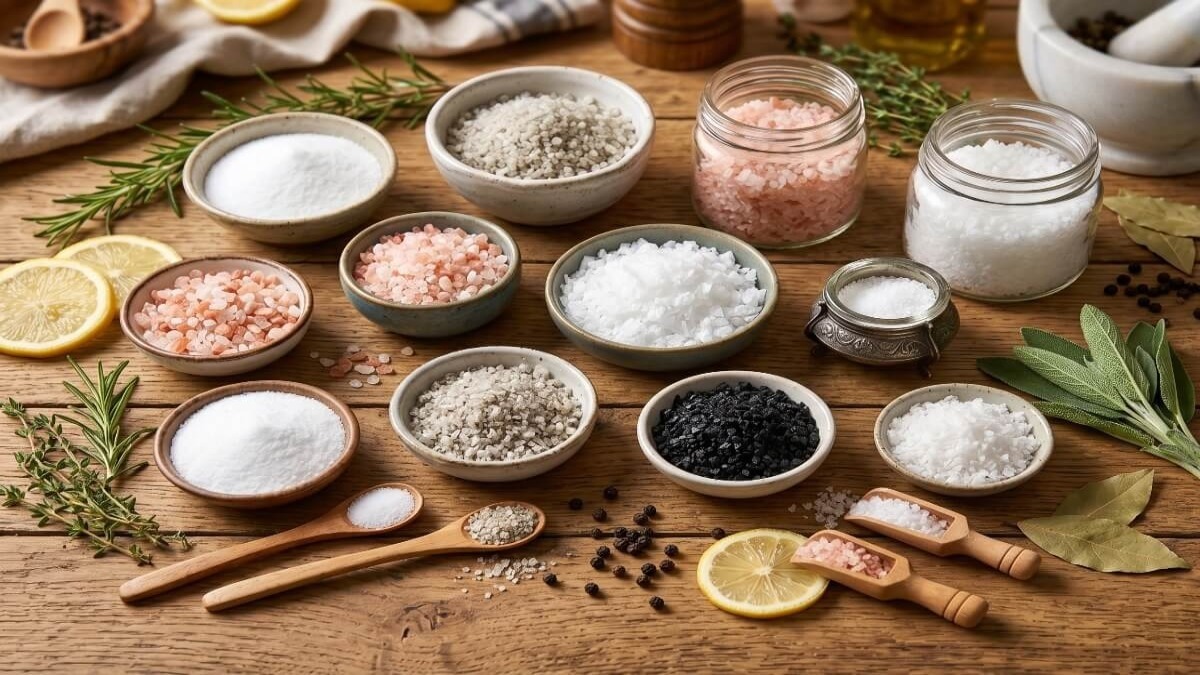
You will see many types of salt packets when you visit a store. Their taste and shape vary based on the source and processing. Each salt has its own unique characteristics.
Using the right salt in your cooking multiplies the flavor of the food. Below is an introduction to some popular salts around the world.
Table Salt
Table salt is the most familiar type. Companies refine it extensively, making the grains very small. They mix special ingredients into it to prevent clumping.
Most table salts contain added iodine. This iodine effectively prevents thyroid problems. People use it mostly for daily cooking and baking.
Sea Salt
Makers create sea salt directly from seawater. They do not refine it very much. Therefore, it retains trace minerals like magnesium, calcium, and potassium.
Its grains are slightly larger than table salt. It has a slightly stronger and more natural flavor. It tastes great sprinkled over salads or grilled meats.
Himalayan Pink Salt
Workers collect this salt from the Khewra Salt Mine in Pakistan. The iron oxide in it gives it a distinct pink color. People know it as one of the purest salts on Earth.
Himalayan pink salt contains about 84 different trace minerals. People use it for spas and lamps, as well as for cooking. It is highly popular among health-conscious individuals.
Kosher Salt
Kosher salt grains are quite large and irregularly shaped. People originally used it to draw blood out of meat according to Jewish religious dietary laws. This practice gave Kosher salt its name.
Chefs absolutely love this salt. The large grains make it easy to measure with their fingers. It usually does not contain iodine or any other chemical additives.
Black Salt (Kala Namak)
Black salt is a widely used ingredient in South Asian cooking. Makers create it by roasting Himalayan salt with various herbs and charcoal. It has a very strong sulfur smell.
This salt adds a unique flavor to boiled eggs or chaat masala. Ayurvedic medicine uses Kala Namak to cure digestive issues. Vegans also appreciate it highly.
Flaky Finishing Salt
Flaky salt looks like tiny pyramids or ice shavings. It is very light and crunchy. Chefs use it to sprinkle over food right at the end of cooking.
It melts quickly on the food, instantly creating an explosion of flavor. Finishing salt perfectly complements desserts, chocolate chip cookies, or expensive steaks.
Nutritional Value of Salt
We do not get any direct calories, protein, or fat from salt. It is primarily an excellent source of minerals. It contains several essential elements for our bodies.
The nutritional value of salt depends entirely on its type. Refined salt has less mineral diversity. However, natural salt contains various minerals.
Sodium as the Main Mineral
Sodium is the most important nutrient in salt. One teaspoon of salt contains about 2300 milligrams of sodium. It helps regulate body fluids and maintain blood pressure.
Our muscles and nerves cannot function properly without sodium. However, consuming too much sodium can harm your health. Therefore, you must eat salt in moderation.
Trace Minerals in Natural Salt
Natural salts like sea salt or Himalayan salt contain other minerals alongside sodium. Potassium, magnesium, calcium, and zinc are notable among these.
These trace minerals are beneficial for the body even in very small amounts. They help keep bones healthy and boost the immune system.
Iodized Salt and the Benefits of Iodine
Manufacturers started adding iodine to salt in the 1920s. Iodine plays a major role in the production of thyroid hormones. A lack of it can cause goiter.
Iodine is extremely important for pregnant mothers. It aids in the brain development of the unborn child. Eating a moderate amount of iodized salt daily prevents many thyroid problems.
Health Benefits of Salt
A common misconception claims that salt is bad for our health. However, consuming salt in moderation is highly beneficial for the body. It plays an important role in keeping us healthy.
Many complex internal body processes depend on salt. We discuss the main health benefits of salt below.
Maintains Body Fluid Balance
Water makes up about 60 percent of our bodies. We need a proper balance of this water inside and outside the cells. Sodium actively maintains this vital balance.
Sodium also helps maintain normal blood volume. A drop in salt levels can cause cells to swell.
Supports Nerve Function
The nervous system maintains communication between our brain and various body parts. This communication requires electrical signals. Sodium helps generate these electrical signals.
Nerves cannot work properly without the right amount of sodium. This can lead to fatigue and weakness in the body.
Helps in Muscle Contraction
Moving muscles requires a specific ratio of sodium and potassium. Sodium provides the stimulus for muscle contraction.
Exercising or doing heavy work puts pressure on the muscles. A lack of adequate salt can cause muscle tension or cramps during these activities.
Essential Balance for Electrolytes
Sodium is one of the main electrolytes in the body. We constantly lose electrolytes through sweat and urine. Salt helps replenish these lost electrolytes.
Diarrhea or vomiting rapidly dehydrates the body. Oral rehydration solutions restore the balance of salt and water in the body during such times.
Aids Healthy Digestion in Small Amounts
Our stomachs need hydrochloric acid to digest food. The chloride component of the salt is the primary ingredient in forming this acid.
Having enough stomach acid is essential for proper digestion. Therefore, moderate salt intake indirectly helps maintain good digestive power.
Salt and Water Balance: Why Electrolytes Matter
Electrolytes are minerals that carry an electrical charge when dissolved in water. Sodium, potassium, calcium, and magnesium are the primary electrolytes. They control the acid-base levels in the body.
Having the right amount of electrolytes is essential for staying healthy. According to the Harvard School of Public Health, sodium and potassium work together to regulate cellular fluid balance.
Intense heat or heavy physical labor causes heavy sweating. A large amount of sodium is lost from the body in this sweat. Drinking lemon water mixed with a little salt quickly replenishes this electrolyte deficit.
Sodium and Blood Pressure: What You Should Know
Sodium directly affects our blood pressure. The body holds onto extra water when sodium levels in the blood rise. This increases blood volume in the vessels and raises blood pressure.
Having high blood pressure for a long time increases the risk of heart attacks and strokes. People with a family history of high blood pressure should be extra careful about salt.
Packaged and processed foods contain a lot of hidden sodium. Therefore, simply reducing the amount of cooking salt is not enough. Checking the nutrition labels when eating store-bought food is a smart move.
Iodized Salt and Thyroid Health
The thyroid is a small gland near our throat. It controls metabolism, heart rate, and body temperature. Iodine is essential for this gland to work properly.
An iodine deficiency causes the thyroid gland to enlarge. Doctors call this goiter. A lack of iodine can also cause fatigue, weight gain, and depression.
Thanks to the World Health Organization, iodized salt is now available in almost all countries. Using iodized salt instead of regular salt in cooking is a great healthy habit.
Uses of Salt in Cooking
It is hard to imagine a single day in the kitchen without salt. ..It does more than just add a salty taste to food. It has a versatile impact on cooking chemistry.
Chefs use salt brilliantly to change the texture and flavor of food. We highlight the main uses of salt in cooking below.
Seasoning and Flavor Enhancement
Salt multiplies the flavor of any food. It helps reduce bitter tastes and makes sweet flavors more distinct. Sprinkling a little salt on tomatoes or watermelon makes them taste incredible.
Adding the right amount of salt at the right time brings out the food’s natural flavors. Marinating meat with salt long before cooking makes it much tastier.
Food Preservation and Pickling
People have used salt to preserve food since ancient times. Salt prevents bacterial growth and helps prevent food from spoiling. People use it widely to preserve fish, meat, and vegetables.
Salt is an essential ingredient in making pickles. It draws out the extra water from inside the vegetables or fruits. This keeps the pickles fresh for a long time.
Baking and Food Chemistry
Salt works like magic when baking. It controls the action of yeast in bread dough. As a result, the bread does not puff up too much and gets the right shape.
A pinch of salt in cakes or cookies perfectly balances the sweetness. It also helps strengthen the gluten structure.
Finishing Salt for Gourmet Food
Expensive restaurants use special types of salt right before serving food. Flaky or crystal salt creates a crunchy texture in the dish.
It looks and tastes great on chocolate, caramel, or grilled steaks. It not only enhances the flavor but also looks beautiful.
Popular Uses of Salt Around the World
Salt usage varies by geographic location and culture. There is immense diversity in cooking techniques and flavor profiles across the globe.
People in every region use salt according to their own traditions. Let us look at some of its popular uses around the world.
Asian Cuisine
Asian cooking heavily uses a variety of salty sauces alongside salt. Soy sauce, fish sauce, and oyster sauce are integral parts of Asian cuisine.
The Japanese use a lot of sea salt in their food. Kala Namak and black salt are very popular in the Indian subcontinent. Maintaining the right salt balance in spicy food is a distinct art in Asian cooking.
European Cuisine
European cooking places a greater priority on natural flavors. They sprinkle high-quality sea salt or flaky salt on top right before serving.
Italians use plenty of salt in the water when boiling pasta. French cuisine shows a wonderful combination of butter and salt.
Middle Eastern and African Cuisine
Middle Eastern food features excellent blends of salt with various spices. They use the perfect amount of salt on kebabs or grilled meats.
African cooking uses plenty of salt to preserve food. Using salt on dried fish or dried meat is very common there.
Salt vs. Sugar: Key Differences in Nutrition and Use
Salt and sugar are both essential ingredients in our kitchens. However, their chemical structures and effects on the body are completely different.
Salt is a mineral element that the body cannot produce. Sugar, on the other hand, is a carbohydrate that gives the body energy. Eating too much sugar causes weight gain and increases the risk of diabetes.
People use both ingredients to preserve food. However, salt requires very small amounts, whereas sugar requires large quantities. Using both in moderation is necessary for good health.
Natural Salt vs. Refined Salt: Which is Better?
There is a lot of debate about which type of salt is best for health. Factories process and clean refined salt. This destroys the natural minerals it contains.
Natural salts like sea salt or Himalayan salt retain their trace minerals. These add extra nutrition to the body. However, they contain very little iodine.
Natural salt might be good for you if you eat a lot of seafood. However, refined iodized salt remains the best choice for meeting daily iodine needs through a regular diet.
Potential Health Risks of Excess Salt
While salt is essential for the body, eating too much of it can cause fatal harm. We unknowingly consume a lot of salt nowadays due to processed foods.
The harmful effects of salt usually appear very slowly. Consuming excessive sodium can lead to various bodily complications.
Risk of High Blood Pressure
The biggest danger of eating too much salt is high blood pressure. According to data from the World Health Organization (WHO), excessive sodium intake increases the risk of cardiovascular disease.
Uncontrolled blood pressure can lead to heart failure. Blood vessels lose their elasticity as we age, making excess salt even more dangerous.
Water Retention and Bloating
Sodium holds onto water in the body. Eating too much salt can cause your hands, feet, and face to swell. Doctors call this water retention or edema.
Eating excessive salt is a major reason for feeling overly full or bloated after a meal. Reducing sodium levels in food solves this problem quickly.
Kidney Health Concerns
Our kidneys are responsible for removing excess sodium from the body through urine. Eating too much salt puts massive pressure on the kidneys.
Kidney function can decline if this continues for a long time. Furthermore, excess sodium also increases the risk of kidney stones.
Recommended Daily Intake
There is a specific limit to how much salt an adult should eat daily. Doctors recommend eating no more than 5 grams (about one teaspoon) of salt per day.
This limit is much lower for children. Packaged snacks, fast food, and canned foods contain lots of hidden salt. You can control your daily intake by avoiding these.
How to Choose High-Quality Salt
You can find many types of salt in the market. Choosing high-quality salt from them is important. You should read the ingredients listed on the packet when buying salt.
Try to buy salt that does not contain anti-caking agents. You can choose natural sea salt or Himalayan salt if you do not have thyroid problems.
Iodized salt is the safest option for daily cooking. Avoid buying wet or clumpy salt. Packaged salt from good brands is usually hygienic.
Proper Tips for Storing Salt
Salt never really goes bad. However, its quality can degrade if you store it incorrectly. Air and moisture are the biggest enemies of salt.
Salt stays good for years if you store it properly. Below are some effective ways to keep salt in good condition.
Keeping Salt Dry and Fresh
You should always keep salt in an airtight container to prevent air from circulating. Glass or ceramic jars are best for storing salt.
Salt tends to melt during the rainy season. Placing a few grains of raw rice in the container helps absorb excess moisture. This keeps the salt free-flowing.
Avoiding Contamination
You should never scoop salt with a wet spoon or wet hands. This allows bacteria to grow inside the salt.
Always keep your salt container away from the stove’s heat or direct sunlight. Excessive heat can damage the salt’s structure.
Guidelines for Long-Term Storage
You can use a thick plastic bucket if you want to buy a lot of salt at once. Line the inside of the bucket with a plastic bag and place the salt in it.
The iodine in salt can evaporate over time. Therefore, it is much better to buy iodized salt in small quantities and use it quickly.
Frequently Asked Questions About Salt
People have many common questions about salt. Knowing the right information makes it easy to make good decisions in daily life. Here are answers to some common questions.
How Much Salt Should You Eat Daily?
An adult should eat less than 5 grams of salt daily, according to the World Health Organization’s advice. This equals about one flat teaspoon. People with high blood pressure must reduce this amount even further.
Is Sea Salt Healthier Than Table Salt?
Sea salt and table salt contain almost the same amount of sodium nutritionally. Sea salt contains trace minerals that are slightly beneficial to health. However, table salt is more necessary for the thyroid because it contains iodine.
What Happens If You Do Not Eat Enough Salt?
A lack of salt in the body can lead to a condition called hyponatremia. This can cause headaches, nausea, muscle cramps, and extreme fatigue. People can lose consciousness in severe cases.
Salt in History and Culture
Salt’s contribution to the development of human civilization is immense. It was not just food, but a powerful political and economic tool.
The story of salt from ancient times to the modern era is quite thrilling. You will be amazed to learn about its historical importance.
Salt Trade Routes
There were specific trade routes for transporting salt across different countries in ancient times. Traders transported salt through the Sahara Desert using camel caravans.
Many large European cities developed next to salt mines or trade routes. The city of Munich in Germany prospered entirely based on the salt trade.
Salt as Currency
People used salt directly as money at many points in history. Africans used salt disks for shopping.
People called it ‘white gold’ because of this exact value. The Roman Empire paid a portion of its soldiers’ salaries with this valuable mineral.
Cultural and Religious Significance
Various religions consider salt a symbol of purity. Many cultures use salt to drive away evil spirits.
Japanese sumo wrestlers purify the ring by sprinkling salt before stepping in. The Christian faith notes the use of salt during baptism.
Final Thoughts on Salt
Salt is a very simple but indispensable element of our lives. Maintaining a clear understanding of its benefits and drawbacks is crucial for everyone.
We can improve our eating habits by utilizing the right knowledge. Awareness of salt use supports our long-term wellness.
Key Takeaways
Many important functions of our body will shut down without salt. It maintains the balance of nerves, muscles, and fluids. Among the various types of salt available in the market, iodized salt is the most beneficial for the general public.
Why Salt is Essential but Should be Consumed Mindfully
There is no denying the necessity of sodium. However, excess sodium is a threat to our hearts and kidneys. Therefore, we must reduce the amount of hidden salt in our daily meals.
Smart Ways to Use Salt in a Balanced Diet
Do not add too much salt at the very beginning of cooking; add it little by little. Use lemon juice, black pepper, and fresh herbs alongside salt to enhance the flavor of food. Build a habit of eating fresh, home-cooked meals instead of processed foods.