
Methuselah in Different Religions: Beliefs, Views and Interpretations
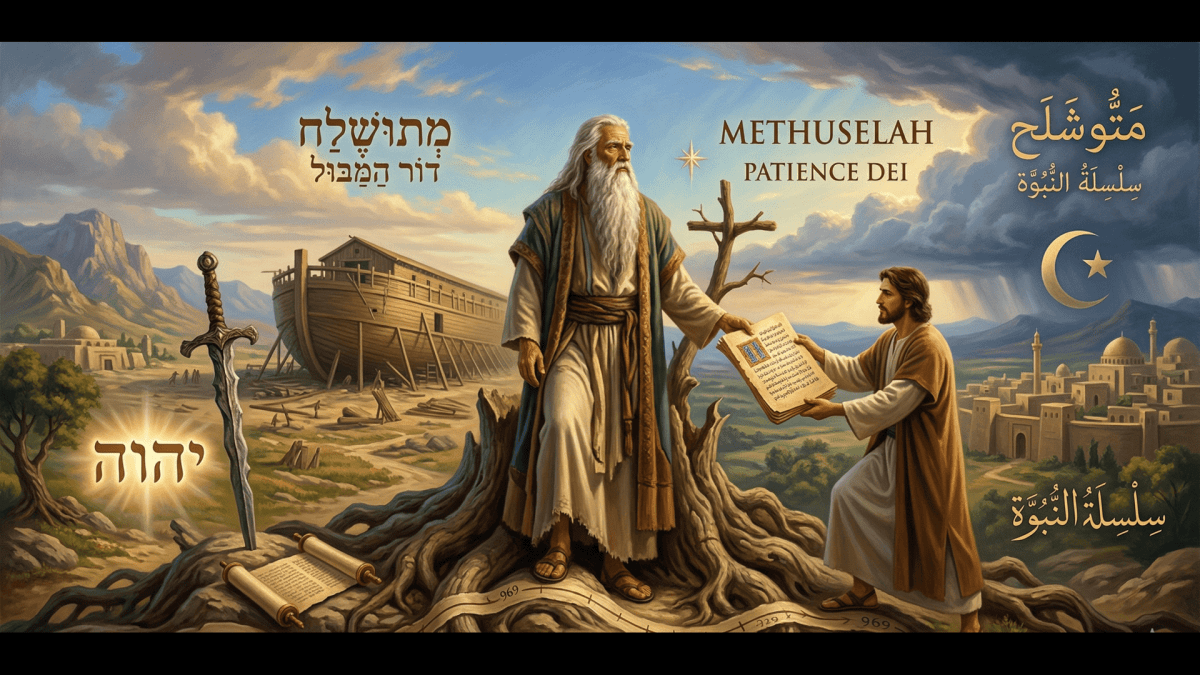
When we look at ancient religious texts and traditions, we find many personalities who have fascinated people for ages. Methuselah is just one such personality. As a symbol of longevity, his name occupies a unique place in human history. In this article, we will discuss Methuselah in detail in different religions. We will know how Judaism, Christianity, and Islam value him.
Who is Methuselah?
Methuselah is one of the oldest figures in the Abrahamic religions. According to the Hebrew Bible (Genesis), he was the son of Enoch and the father of Lamech. His greatest identity is being Noah’s grandfather. However, his most famous identity in religious texts is his age. According to the Bible, he lived for 969 years, which makes him the longest-lived person in human history. His life span dates back to just before the Great Flood, making him an important historical and spiritual link.
Why is Methuselah famous in religious tradition?
Methuselah is famous in religious traditions for two main reasons. First, his unimaginably long life. Second, his status as a righteous and pious man of the generation before the Flood. He is seen as representative of an era when human life expectancy was much longer. His lifespan reminds us that God once allowed humans to roam the earth for a long time. To religious scholars, he is not just a man, but a symbol of the end of an era and the beginning of a new one.
Understanding the religious perspective on Methuselah
To understand the different religious perspectives on Methuselah, we need to consider each religion’s own context. His historical position in Judaism, his genealogical and symbolic meaning in Christianity, and his role in the lineage of the prophets in Islam give us a holistic picture. By understanding these perspectives, we can gain a deeper understanding not only of Methuselah but also of ancient religious beliefs.
Methuselah in Judaism
Methuselah is a highly revered figure in Jewish religious tradition. He is mentioned in the Hebrew Bible or Tanakh, especially the Torah. Jewish scholars do not see his life as simply a number, but rather seek a deeper spiritual meaning behind it.
How Judaism describes Methuselah
In Judaism, Methuselah is considered a righteous man who followed in the footsteps of his father Enoch. According to rabbinic literature and the Midrash (Jewish exegetical texts), he taught his contemporaries religious teachings and urged them to follow the right path. Judaism holds that Methuselah witnessed humanity’s moral decline during his lifetime and sought to warn them.
Methuselah in the Hebrew Bible genealogies
The Book of Genesis, chapter 5 of the Hebrew Bible, contains a genealogy from Adam to Noah. Methuselah is mentioned very clearly there. This genealogy proves that he was part of a righteous lineage blessed by God. Jewish scholars believe that this genealogy is not just a list of names and ages but a documentary record of the development of mankind and of God’s plan. Your Bible Study Tools. You can learn more about the genealogy in the Hebrew Bible from reliable websites like this one.
Why is Methuselah known for his long life?
According to Jewish scholars, Methuselah’s long life was a sign of God’s infinite mercy. God wanted to give sinful humans enough time to repent. As long as Methuselah lived, God held back the Great Flood. His long life proves that God gives people many opportunities to correct themselves before punishing them.
Methuselah’s connection to the narrative of Noah and the Great Flood
Methuselah and the Great Flood are closely linked. According to Jewish tradition (such as the Talmud), Methuselah died just seven days before the Great Flood began. God delayed the Flood to allow for seven days of mourning after his death. This incident demonstrates the importance of Methuselah to Noah’s family. He was the last righteous person of that generation to escape the devastation of the Great Flood by dying a natural death.
Methuselah in Christianity
Methuselah also holds a special place in Christianity. The account of his life in the Old Testament of the Bible is considered by Christian believers to be an important chapter in God’s plan and human history.
How Christianity describes Methuselah
In Christianity, Methuselah is seen as a living example of God’s grace. He lived at a time when the world was filled with sin. Yet he remained steadfast in his faith. Christian theologians honor him as an essential part of Noah’s righteous lineage. Methuselah’s name appears in the genealogy of Jesus Christ (as recounted in Luke 3), making him even more significant to Christians.
Genesis Methuselah
Genesis 5:21-27 contains a brief account of Methuselah’s life. It states that he fathered Lamech at the age of 187 and then lived another 782 years. His total age was 969 years. Christians take these Bible accounts to be literally true. They believe that humans were in much better physical condition when sin first entered the world, which helped them live longer.
The symbolic meaning of Methuselah’s longevity
Many modern Christian scholars also interpret Methuselah’s age symbolically. One possible meaning of his name is “after his death, this will come.” Here, “this” refers to the Great Flood. Thus, his longevity symbolizes God’s patience. God kept Methuselah alive for the maximum amount of time before destroying mankind, so that people would have a chance to turn from their sins.
Christian teachings from ancient biblical patriarchs
From the lives of Methuselah and other ancient patriarchs, Christians learn about God’s faithfulness and the importance of living a holy life. They learn that it is possible to live a righteous life with faith in God, no matter how corrupt the world around us may be. Methuselah’s life is a great example for Christians of patience and steadfast trust in God.
Methuselah in Islam
Although Methuselah is not directly mentioned in the Quran, there are several references to him in Islamic history and early prophetic tradition. In Arabic, he is commonly called Matushalakh or Methuselah.
How Islam views Methuselah
Islamic historians describe Methuselah as the son of Prophet Idris (peace be upon him) and the grandfather of Prophet Noah (peace be upon him). According to Islamic scholars, he was a devout believer and preserved the divine knowledge he received from his father. He is considered one of the righteous men of ancient times who guided mankind to worship one God.
Islamic traditions regarding early prophethood
The renowned Islamic historians Ibn Jarir al-Tabari and Ibn Kathir mention Methuselah in their works on the genealogies of the ancient prophets. According to their account, Methuselah led the followers of Prophet Idris after he ascended to heaven. He used to preach the word of Allah among his people and encourage people to do good deeds. On platforms like Wikipedia, you can get a more general idea of his role in Islamic tradition.
Possible connection between Methuselah and the pre-Flood narrative
The period before the Flood of Noah is of great importance in the Islamic narrative. It was during this time that idolatry began among people. Methuselah upheld the message of monotheism (Tawheed) during that adverse time. His lifetime extended to around the time of the prophet Noah. Many Islamic scholars believe that Methuselah’s death foreshadowed the Flood in Noah’s time.
Methuselah in other traditions
In addition to Judaism, Christianity, and Islam, various ancient cultures describe extremely long-lived people, consistent with the concept of Methuselah.
Methuselah research in comparative theology
Researchers in comparative theology have found similarities between the biblical Methuselah and the long-lived kings of other ancient civilizations. They have studied how different cultures believed in the great longevity of pre-Flood people. Such research helps us understand that the idea of longevity was not limited to a particular religion.
Interpretation of Methuselah in ancient literature
Ancient Mesopotamian literature, particularly the Sumerian King List, mentions many kings who reigned for thousands of years. The stories of these kings’ longevity before the Flood are strikingly similar to that of Methuselah. Scholars believe that, in ancient times, it was customary to exaggerate the age or reign of prominent figures to show respect for them.
Methuselah in cultural and historical tradition
In modern culture, the word Methuselah is used to refer to something very ancient or long-lived. For example, a pine tree in the White Mountains of California, estimated to be about 4,800 years old, is named “Methuselah”. This demonstrates that Methuselah has become a universal cultural symbol of longevity, transcending religious boundaries.
Comparison of religious views on Methuselah
Comparing the views of the three major Abrahamic religions reveals many interesting facts about Methuselah.
Similarities between Jewish, Christian, and Islamic traditions
All three religions agree that Methuselah was the grandfather of Noah and a very long-lived man who lived before the Great Flood. Each tradition recognizes him as an honest, pious, and God-fearing man. His long life is seen in all three religions as a symbol of divine blessing and God’s infinite patience.
The main difference in the description of Methuselah
The differences are mainly in the narrative details. In Judaism, various Midrashic stories about his life depict him as an active teacher. In Christianity, he is more important as part of Jesus’ lineage. On the other hand, in Islam, although he is not directly mentioned in the Quran, he is respected in historical texts as a link between the Prophet Idris and the Prophet Noah.
Why is Methuselah associated with extreme longevity?
The main reason all religions associate him with longevity is to confer special status on memorable figures from the early history of mankind. Ancient people believed that early humans were physically and spiritually strong because of their low level of sin, which enabled them to live for hundreds of years.
Methuselah’s Family and Genealogy
Understanding Methuselah’s lineage is essential to understanding his identity. His family was one of the most sacred and God-chosen families in the ancient world.
Methuselah, the son of Enoch
Methuselah’s father was Enoch (the prophet Idris in the Islamic tradition). According to the Bible, Enoch was a man who “walked with God” and was taken to God without dying. As the son of such a great spiritual father, Methuselah was raised in an environment of religious knowledge and spiritual education from birth. He led his life in the path shown by his father.
Methuselah’s Role in Noah’s Lineage
Methuselah was the father of Lamech and the grandfather of Noah. This lineage was faithful to God during the most critical time in human history. While the rest of the world was immersed in corruption and violence, Methuselah and his family remained steadfast in the path of truth. Because of his righteousness, God chose Noah to build a new human race.
Generations before the Flood
The generations before the Flood are very mysterious in religious texts. Their long life span, physical structure, and way of life are astonishing to modern people. Methuselah is a prominent representative of that generation. His death brought an end to an era, and through the Flood, the world entered a new era, free from sin.
Historical and symbolic perspective
There is much discussion and debate among historians and scientists about Methuselah’s long life, with many seeking a scientific explanation.
Was Methuselah a historical figure?
Many believers accept Methuselah as a real historical figure. However, historians and secular scholars believe that the character of Methuselah may be a combination of ancient myths and folklore. They believe that there were indeed leaders or tribal chiefs at the beginning of human history whose memories have been passed down through generations.
Scholarly opinions about Methuselah’s age
Although the age of 969 seems impossible in the light of modern science, scholars have given various explanations for it. Some believe that the method of counting years was different in ancient times. Perhaps they counted months or seasons as years. If months are counted as years, then his age is close to 80 years in modern terms, which is entirely natural. On the other hand, many scholars believe that these numbers do not indicate the age of a single person, but rather the duration of a dynasty or tribe.
Symbolic interpretation of longevity in ancient texts
Numbers have different meanings from a symbolic perspective. Numerology was particularly important in ancient Near Eastern cultures. Scholars believe that Methuselah’s age of 969 carries a mathematical or sacred numerological meaning. It is a symbol of perfection, longevity, and divine grace.
Moral and spiritual education
The life of Methuselah is not only an ancient story but also contains many lessons for modern people.
Teaching about human life and mortality
The story of Methuselah reminds us that no matter how long a person lives, death is inevitable. Methuselah, after living 969 years, still had to taste death. This is the greatest proof of the mortality of human life. More important than how long we live is how we spend that life.
Wisdom and longevity in religious traditions
In ancient cultures, age was considered synonymous with wisdom. Methuselah’s longevity established him as a possessor of infinite wisdom. He had seen the rise and fall of many generations, and his wealth of experience was immense. Religious traditions teach us that the elderly should be respected because they hold the deepest lessons of life.
Why is Methuselah a symbol of long life?
Methuselah is a symbol of long life because he shows us hope. He proves that in a world where everyone is going astray, it is still possible to live a long and meaningful life by remaining steadfast in one’s faith. He reminds us of God’s infinite mercy that allows people to be corrected time and again.
Frequently Asked Questions (FAQ)
Which religions mention Methuselah?
References to Methuselah are found primarily in the three major Abrahamic religions: Judaism, Christianity, and Islam. His name is directly mentioned in the Hebrew Bible and the Christian Old Testament. In Islam, he is mentioned (as Methuselah) in historical accounts and genealogies of the prophets.
How old was Methuselah according to the Bible?
According to the Bible’s Book of Genesis 5:27, Methuselah was 969 years old. This makes him the longest-lived person mentioned in the Bible.
Is Methuselah mentioned in Islamic tradition?
Yes, in Islamic tradition, he is known as Methuselah. Although his name is not mentioned directly in the Holy Quran, he is described in detail by famous Islamic historians such as Ibn Kathir and Al-Tabari as the son of Prophet Idris and the grandfather of Prophet Noah.
Why is Methuselah famous for his longevity?
He is known as the longest-lived person in human history. His longevity is recognized in various religions as a symbol of God’s patience and the sufficient time given to humans to repent before the Great Flood.
What can we learn from the story of Methuselah?
The story of Methuselah teaches us that no matter how long a person lives, death is inevitable. It also teaches us that it is possible to live with integrity and righteousness even in a corrupt society. His life is a shining example of God’s forgiveness and wisdom.
Conclusion
In conclusion, Methuselah is not just an ancient man; he is an important pillar of mankind’s religious history and spiritual consciousness.
Final thoughts on Methuselah in different religions
Although Methuselah is discussed from different perspectives in Judaism, Christianity, and Islam, the basic theme is the same. He is a devoted servant of God, a guide to the righteous path, and a witness to a turning point in human history. His long life reminds us of God’s infinite forgiveness.
Understanding Ancient Religious Genealogy Through Methuselah
By studying the lineage of Methuselah, we can understand how divine knowledge was passed down from one generation to the next in ancient times. This lineage, from Enoch to Methuselah and finally to Noah, presents a unique history of religious purity.
Why Methuselah continues to fascinate religious scholars
Thousands of years later, Methuselah continues to fascinate researchers, scholars, and ordinary believers. His 969-year life has become a crossroads for science, history, and theology. Methuselah will forever provide us with food for thought on the purpose of human life, the mystery of longevity, and the grandeur of the divine plan.
We hope this blog post has made the perspectives of different religions on Methuselah clearer and easier to understand. You have surely been spiritually and culturally enriched by learning about this amazing figure in religious history.