Darjeeling Tea: History, Harvest Flushes, Health Benefits & Brewing Guide
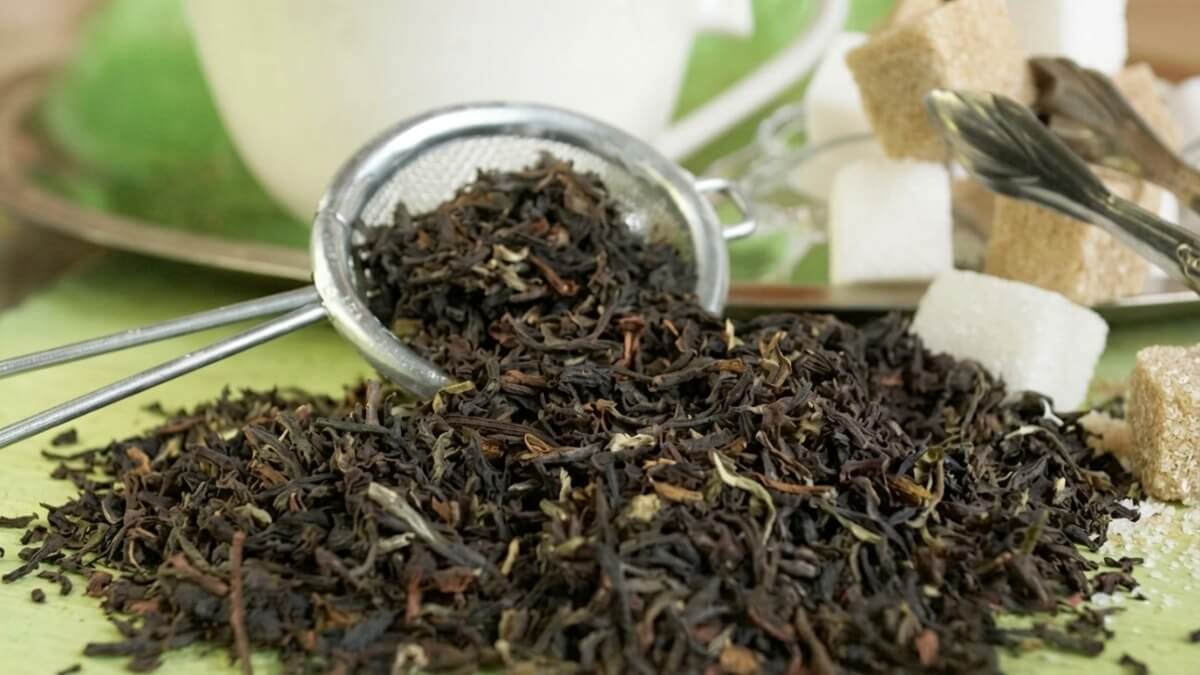
Green Darjeeling. This light green infusion is often called the champagne of tea.
It has a relatively high price, but it’s justified by its unique taste.
In this article, you’ll learn what Indian Darjeeling tea is and how to brew it properly.
Where Darjeeling Tea Grows: Geography and Climate
India’s highest-quality tea varieties are grown on high-altitude plantations.
This tea grows in the northeastern part of the country, on the border with Nepal, Tibet, and Bhutan.
The name Darjeeling comes from the Tibetan: dorje – lightning of enlightenment, indestructible firmness, and divine land.
Mountainous terrain, slopes, favorable sun exposure, mild weather changes, variable cloudiness, and occasional showers—all of this benefits the bushes’ root systems.
In Darjeeling, more than 10,000,000 kg of leaves are collected per year (1% of the total amount of tea products supplied from India).
The area is divided into seven main valleys, containing 87 plantations spread across 19,000 hectares. Each has its own history and bears an English, Nepalese, or Indian name.
Traditionally, the owners of these lands live right in the mountains, and the harvest is collected by hired peasants – residents of a nearby village.
History of Darjeeling Tea
Darjeeling tea originated in West Bengal (southeastern India at the foot of the Himalayan mountain ranges).
In 1835, Dr. A. Campbell was constantly experimenting, trying to plant tea seeds, and in 1847 the bushes began to be grown for sale.
The first gardens in the area were Makaibari and Alubari, planted by English enthusiasts, and by 1866 there were already 39 properties in the area; English entrepreneurs discovered that producing Darjeeling was a profitable business.
Harvesting has always been done by hand, a tradition that continues to this day.
Engineer Double O’Brien Ansel brought this variety to the highest level of quality.
He was the first in India to use a special mechanism for twisting and sorting leaves, and he also developed a local hydroelectric power station system and served as project manager for installing turbines on plantations.
Thanks to this, by 1872 the drink that remains popular today had emerged. By the end of the 19th century, it had gained recognition in most London salons.
After the fall of the colonial system in 1947, British planters, who then constituted about 90%, began to hastily get rid of their Indian holdings.
Production passed to inexperienced Indians who sought to improve on old standards and restore the tea supply.
The most famous of these figures were C. W. Emmett and T. J. Hardingham, who raised Darjeeling tea to the highest quality again.
By 1980, the drink’s popularity worldwide had declined. Chinese varieties replaced it and established a strong presence in the global market.
Many plantation owners went bankrupt, and their gardens fell into disuse.
Those who survived this difficult period came out on top: in the 1990s, people began talking again about the taste characteristics of tea leaves from northeast India.
Currently, approximately 70% of plantations have international “Organic” status, confirming their refusal to use chemicals and pesticides.
The ecological properties of tea from this mountain valley are recognized by authoritative institutes, including Demeter certification (Germany) and IMO (Switzerland).
Darjeeling is most beloved by the British, true tea connoisseurs. The British originated the tradition of drinking the infusion with milk, revealing its luxurious, velvety flavor in its fullest form.
How Darjeeling teas are produced
In terms of value, this drink is comparable to expensive collectible champagne.
Only local tea leaves have an intoxicating muscat aroma, created by several factors: the soil’s unique properties, the microclimate, and the painstaking work of Indian workers.
The final taste, aroma, and color depend on the place and time of harvest and the production technology.
The Tea Plant and Hand-Plucking (“Two Leaves and a Bud”)
This tea is made from Chinese camellia bushes, which sets Darjeeling apart from other Indian and Ceylon bushes (most of which are of Assamese origin).
The leaves are collected by hand, separating only the upper parts of young shoots with two leaves and a bud from the branches.
Such carefully selected raw materials are called “flush”.
It is no coincidence that Darjeeling is such an expensive product: one hectare of land produces only 500 kg of tea, which is almost 3 times less than other tea varieties.
Hilly terrain makes the manual labor process even more difficult and time-consuming.
Women usually work on plantations.
Around 150,000 people are employed in production every season.
Darjeeling Harvest Seasons (Flushes)
The harvest is collected over several periods:
- Early spring (late February, March, April). This is the first tea harvested, and it’s in high demand. Spring tea has a soft, fresh aroma and a light-colored infusion. It’s a rare and expensive product with a short shelf life, and it quickly loses quality.
- In May-June. This infusion is more viscous and strong, and its hue ranges from amber to reddish. It can be stored longer, and the muscat notes are more pronounced.
- Autumn. Leaves harvested in October-November are larger. Late-harvest grapes are much less refined than the first varieties. The flavor is spicy, and the infusion color is closer to copper.
- Collection is not carried out in winter.
Step-by-Step Production Stages
After harvest, the leaves are withered, rolled, and fermented.
The last process is the main one.
At this point, the dried leaves are imbued with aromatic properties. But this only applies to Darjeeling black tea.
Darjeeling green tea does not undergo fermentation: drying and roasting stop oxidation of the withered leaves.
Withering occurs as follows: the raw materials are evenly spread out on troughs and periodically exposed to hot and cold air currents.
Moisture leaves the leaves very slowly (within 14-16 hours).
There are two methods of rolling the tea: manual and industrial. In the latter method, automated rollers replace hired labor, and the tea is dried in an oven rather than on concave pans.
Careful monitoring is essential to ensure the leaf structure is not damaged by overheating.
Next, the future tea is spread in a thin layer in a cool, humid room, where it ferments for 2-4 hours, developing its unique flavor. Then, experts place the leaves in a drying oven for 20-30 minutes—the roasting stage that gives the tea leaves their final appearance.
Famous Darjeeling Tea Gardens and Estates
Only certified Indian farms can distribute products under the Darjeeling brand.
There are several varieties of tea, depending on the growing area:
- Badamtam is a 150-year-old winery producing a clear, honey-amber wine with a rich, slightly tart flavor and a sweet, muscat aftertaste.
- Puttabong is where the golden-amber infusion with fruity notes is produced.
- Nepalese Darjeeling has even deeper flavor and aroma characteristics.
Several dozen gardens are located in the mountains. Depending on the microclimate and altitude, tea leaves acquire particular qualities.
Darjeeling Tea Varieties by Harvest and Leaf Grade
Darjeeling is classified by harvest time and the quality characteristics of the raw material.
An experienced taster can identify a specific garden, the weather conditions at the time of plucking, and the nuances of production, all of which directly impact the product’s flavor.
First Flush (Spring Harvest)
Around the end of February, the ‘banghi’ period begins: plantations are exposed to north-westerly winds, and massive thunderclouds hang over the valley’s hills.
These are the harbingers of the first wave of camellia shoot germination. This stage lasts until mid-April.
Tea leaves picked in early spring carry a delicate peach flavor.
This fresh, invigorating drink resembles green tea. The finished infusion is translucent.
Second Flush (Summer Muscatel Harvest)
In summer, the valley comes alive: everything around is in bloom, and animals, insects, and birds awaken. In May, a second wave of growth begins and ends in June.
The infusion made from the tea leaves obtained during this period acquires a grape-like aftertaste and a spicy aroma. This is the champagne flavor Darjeeling is known worldwide for. The leaf itself has a burgundy hue.
Autumn Flush and Leaf Quality Grades
Then comes the rainy season, which lasts until mid-September. During this period, tea is not produced: the bushes fill with life-giving moisture, ready to produce the coveted shoots again in November.
Third-wave leaves are richer than earlier ones, and the tea they produce is stronger. They are typically not steeped on their own, but added to tea bags or blends.
According to quality, Darjeeling varieties are classified as follows:
- Supreme – whole leaf tea, collected exclusively from the top part of the camellia.
- The first is “tops,” which are also used in production but are damaged, so the value of the leaves and the infusion decreases.
- The second is tea crumbs, which are packaged in tea bags.
Chemical Composition and Health Benefits of Darjeeling Tea
Catechins are considered the most valuable elements contained in the drink. They have antioxidant and protective properties.
Caffeine gives the infusion its energizing properties. It’s absorbed and eliminated more slowly than the caffeine found in coffee. So, a cup of strong Darjeeling tea in the morning can provide an energy boost for almost the entire day.
Other Health Benefits of Darjeeling Tea
- normalizes metabolism;
- has a preventive effect, prevents cancer;
- cleanses from waste and toxins;
- slows down the aging process;
- strengthens the immune system;
- neutralizes pathogens of eye, skin, and intestinal infections;
- A strong infusion will help with poisoning or diarrhea.
How to Brew Darjeeling Tea Properly
To fully appreciate the flavor of tea leaves, follow the steeping instructions. A ceramic, porcelain, or glass teapot is suitable.
Clean spring water is preferable. Filtered, purified water is also acceptable. Bring it to a boil and cool to 90-95°C.
Before brewing, warm the teapot with boiling water. Next, pour the tea leaves into the warm vessel at a ratio of one teaspoon per 150–200 ml. Let it steep for about 3 minutes.
Within half an hour, you can brew the same leaves 3-4 more times.
How to Buy Authentic Darjeeling Tea (and Why It Is Expensive)
The popularity of such an expensive drink also has a downside.
High demand among connoisseurs has led to many unscrupulous producers counterfeiting the product or selling low-grade goods under the guise of Darjeeling.
In 1983, the planters’ association registered a special logo specifically to combat counterfeiting – a kind of quality mark.
By 2000, pure Darjeeling tea (which means “pure tea”) had become a certified trademark, granted only if the product meets several criteria.
To buy a truly reputable infusion, look for the brand logo on the packaging.
The high cost of the product is due to the following factors:
- Rarity. This variety accounts for only 1% of total Indian tea production.
- The harvest is labor-intensive. The entire crop is hand-picked, and the rugged, hilly terrain slows down the women on the plantations. Moreover, the tea leaves are much smaller in size than those grown in other regions. The leaves grown here are significantly smaller in both weight and size than those from other regions.
- Strict production stages. They were developed in the 19th century and require a lot of time and energy from workers.
How to Store Darjeeling Tea for Maximum Freshness
Like many other Indian varieties, this species is extremely sensitive to external conditions. It quickly absorbs foreign odors and loses its beneficial properties when exposed to sunlight and moisture.
Store it in vacuum-sealed, airtight glass or ceramic containers. Store it at 5°C to 10°C (preferably in the refrigerator).
The product’s shelf life generally cannot exceed two years. After this time, the tea leaves will simply lose their full bouquet. This does not apply to vintage autumn teas, which are more aged and can be stored longer without losing their rich qualities.
Conclusion: Experiencing the Champagne of Teas
No matter which variety of elite tea from the Darjeeling region you choose – green spring or rich autumn – its taste characteristics are sure to surprise you.
Nature has ensured that infusions made from leaves collected in India’s highland regions have become famous worldwide.
Just one cup a day can lift your mood, clear your thoughts, and benefit your overall well-being.