Cardamom Tea: Health Benefits, Best Recipes, Side Effects, and Brewing Guide
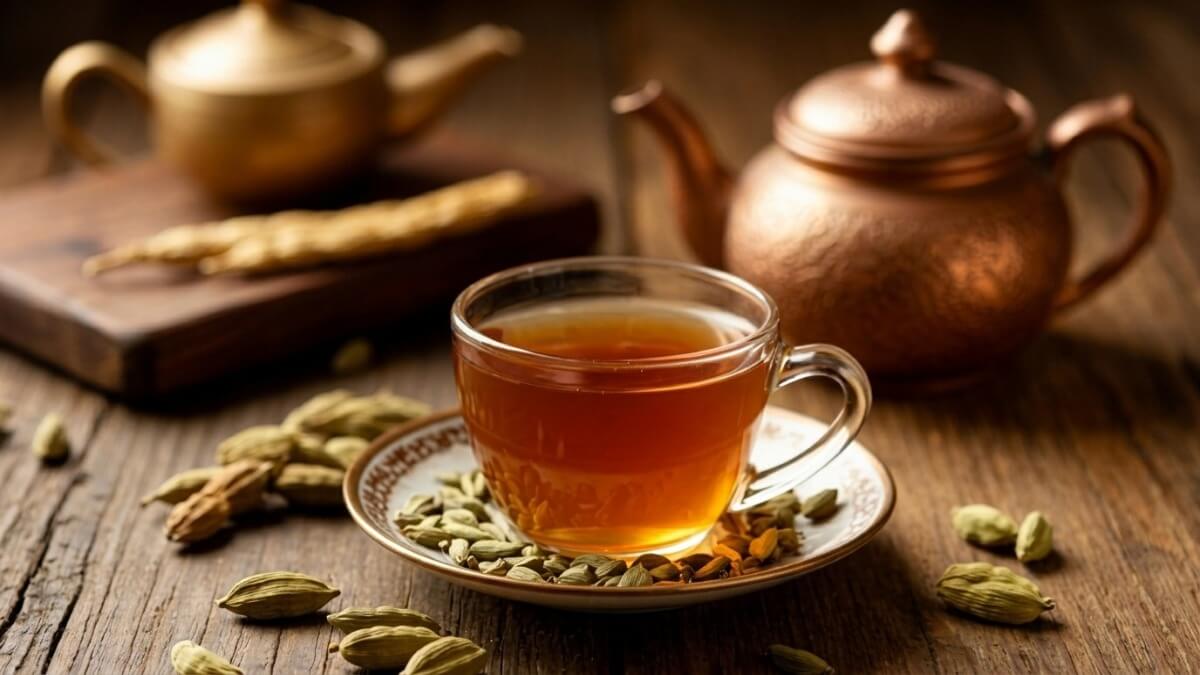
Its strong aroma and gingery flavor have made cardamom popular in both cooking and as a beverage additive.
In this article, we’ll discuss black Indian tea and green tea with cardamom—the benefits and downsides of these recipes.
What is Cardamom? Origins and Background
Elettaria cardamomum Maton – this is what cardamom is called among biologists.
It originates in India, but even before our era, the spice reached Ancient Egypt, from where it was supplied throughout Europe.
Today, cardamom seeds and essential oil are mainly used.
They are used both in seasoning and in the production of medicinal preparations based on natural herbs.
Nutritional Profile and Chemical Composition of Cardamom
In production, cardamom fruits are dried and ground into a fine powder.
Nutritional value per 100 grams of spice:
- 11% – protein;
- 7% – fats;
- 68% – carbohydrates;
- 6% – ash;
- 8% – moisture.
The seeds themselves and their shells contain essential oils. They have a very pleasant aroma and help calm the nervous system and heal wounds.
One drop of oily juice contains:
- Amidone is an analgesic and also has a mild sedative effect.
- Borneol. Its main function is to eliminate bacteria, infection, and contamination. It reduces swelling in the inflamed area.
- Camphor – gently relieves pain and inflammation.
- Linalool is a pain reliever and affects the nervous system, making it effective for stress.
- Cineole is a powerful antiseptic with an additional macrophage-removing effect.
- Bornyl acetate reduces pain and is often added to arthritis medications.
- Nerolidol is effective due to its expectorant and bronchodilator properties.
- Terpineol – helps relieve inflammation of the mucous membranes in diseases of the upper respiratory tract.
Moreover, most elements have their own unique aroma; they are used to create aromatic compositions, which is why a drink with added spices is so aromatic and attractive.
Among the microelements beneficial for health are present:
- iron,
- B vitamins,
- calcium,
- magnesium,
- phosphorus,
- zinc.
Such a rich composition contributes to:
- improving digestion;
- beneficial effects on the cardiovascular system;
- enrichment of bone and muscle tissue, and blood with elements;
- raising the mood;
- strengthening the immune system.
Types of Cardamom: Pods, Seeds, Powder & Green vs. Black
Cardamom Forms (Whole Pods, Seeds, and Ground Powder)
Seasoning can be found in three types:
- Ground powder is more affordable and easier to use, but it cannot be guaranteed that no cheaper fillers were added during grinding to increase weight.
- Seeds – these can be found both packaged and loose. They’re easy to use and often used in baking.
- The pods are the most valuable for nutrients and aroma. They are the preferred choice. Just before use, you can peel the skins or grind them in a mortar or coffee grinder. The pods themselves are odorless but serve as airtight containers for the aromatic seeds and membranes, which contain valuable aromatic oils and trace elements.
Green Cardamom vs. Black Cardamom: Flavor and Aroma Differences
There are also two different types, differing in taste and aroma:
- Black cardamom is soft and delicate, with a smoky flavor. It’s suitable for making sauces and adding to main dishes and desserts. It’s rarer, so you’re more likely to find the latter variety in stores.
- Green – has a vibrant bouquet of rich sweetness and spiciness, rivaling pepper with peppery, gingery undertones, which is unsurprising, as the plant belongs to the same family as ginger. It is most often used in beverages.
Since the aromatic properties are revealed gradually, to achieve maximum results, it is best to add the spice to dishes at the initial stage of cooking – when first steeping the tea leaves with boiling water, and add all other ingredients later.
How can you describe the taste and smell of the plant’s fruits?
As a member of the ginger family, it already suggests a specific, rather rich aroma.
The spiciness only becomes noticeable with larger quantities. The initial impression is floral, with hints of eucalyptus and fennel. Then you can detect hints of smoke and camphor.
Top Health Benefits of Cardamom Tea
The spice has a medicinal history of over five thousand years.
Of course, most recommendations from ancient “doctors” would greatly surprise modern specialists, but the positive effects on many organs and overall vitality are unequivocal.
Now biologists and doctors note the following positive properties:
- Accelerating Metabolism. Excessive or improper nutrition, as well as certain medical conditions, can disrupt a person’s metabolism. Cardamom, like many other spices, can affect metabolism and boost it, especially when consumed on an empty stomach in the morning with a cup of tea. This can lead to weight loss.
- Improved well-being and overall mood, thanks to toxin and waste removal, an invigorating effect, and a gentle calming effect from essential oils.
- Relieving toothache and eliminating bad breath. The seeds were once chewed, and the decoction was used as a mouthwash to improve gum health.
- Strengthening the cardiovascular system – blood vessels become stronger and more elastic.
- Eliminates inflammation and disinfects, making it ideal for the first signs of a cold.
- A preventive measure for many genitourinary and gastrointestinal diseases.
- Relieves fatigue, has a mild sedative effect – ideal for evening use.
How to Buy, Store, and Brew Cardamom Tea Properly
First, a few words about purchasing and storage.
For the best results, choose dried cardamom pods rather than cardamom powder.
The pods retain all the seeds’ properties. They should have a delicate pistachio hue – if they are dark or brown, they have been stored for a long time, spoiled, or treated with chemicals. Conversely, if they are too white, they are unripe.
The pods should be hermetically sealed and should make a crunching sound when squeezed.
If you choose powder, it is good enough to impart aroma, but it contains significantly less of the beneficial volatile oils.
Store the spice in an airtight container—glass or ceramic. When preparing it, grind or crush some of the seeds just before brewing.
Unlike some other spices, cardamom takes longer to steep, so steep it in boiling water for a while before using.
Choose your water carefully – it should be clean, with minimal impurities. It’s best to buy distilled or spring water, but if you use tap water, it needs to undergo multi-stage purification.
Choose your tea carefully. It should be whole tea leaves, never tea bags. You can choose green or black tea. Green tea is a great tonic and should be drunk in the morning, as it gives you energy.
9 Best Cardamom Tea Recipes (Black, Green & Spiced Blends)
You can add cardamom alone or combine it with other aromatic herbs and spices. Here are the most successful combinations.
1. Cardamom and Cinnamon Metabolism Tea
You can use cinnamon powder or sticks.
The second option is more natural and fresh. We recommend crushing them in a mortar just before use or grinding them in advance and storing them in an airtight container. For the drink, you’ll need either 1 whole stick (for enhanced flavor and aroma) or 1/2 teaspoon of powder.
For 1-1.5 liters of water, you’ll need one teaspoon of black tea leaves. Choose large-leaf or small-leaf varieties, depending on your preference.
First, to make the cardamom-cinnamon tea, grind the cardamom pods (8-10 pieces), pour boiling water over them, and let them brew for 5-10 minutes.
Then pour this infusion over the remaining ingredients. During this time, the temperature will drop from 100°C to 85-90°C, which is ideal for brewing.
This drink can be enjoyed hot or chilled; it not only tones and strengthens but also helps improve metabolism, “jump-starting” it in the morning and helping with weight loss.
2. Classic Indian or Ceylon Black Tea with Cardamom
Indian or Ceylon tea is suitable at a ratio of one tablespoon per teapot.
The brewing procedure is the same: first, infuse cardamom pods or powder (no more than a teaspoon) in boiling water, then add the tea leaves to the infusion.
The spice has a sweet taste, so it doesn’t require sugar or honey and suits people on a diet or with diabetes.
3. Green Tea with Cardamom
The brewing method is slightly different, as this variety requires a short steeping time of 3-5 minutes. However, you can rinse the leaves with hot water (no more than 80 degrees) several times, and the drink will not lose its aroma and beneficial properties.
The proportions remain the same, but the technology changes.
First, you need to pour boiling water into the container – prepare the teapot and drain it.
Then, place 1 tablespoon of green tea in a ceramic or glass teapot, pour in the water, and discard immediately. Add the ground cardamom powder only after the second steeping.
4. Spiced Cardamom, Ginger, and Cinnamon Tea
This is an excellent fat burner. You can drink it cold; it is very refreshing, especially with lemon and a few ice cubes.
Recipe:
- 0.5 l of boiling water;
- 1-2 teaspoons of tea;
- 2-3 cardamom pods, pre-crushed;
- a small slice of ginger root;
- 1 cinnamon stick.
First, brew the cardamom and tea leaves using the cardamom infusion described above. Then add the remaining ingredients, either crushed or whole. Strain the resulting drink before serving.
5. Energizing Rosemary, Cardamom, and Orange Tea
Rosemary leaves (we’ll need two sprigs) pair beautifully with a variety of cocktails and lemonades. Ginger has long been a popular combination. Why not pair it with cardamom (two pods should be enough to avoid overwhelming the aroma)?
You can use any tea leaves you like. We recommend using a moderate amount—1-1.5 tablespoons.
Pour boiling water over the teapot, then add all the ingredients at once, and pour in 750 ml of hot water. After 2-3 minutes, finely chop half an orange and add it.
The drink’s main effect is tonic; it suits early mornings, the workday, and pre-workout.
6. Star Anise, Cinnamon, and Cardamom Masala Blend
Star anise (Illicium verum) belongs to the Schisandraceae family, so it has the same sourness as Schisandra leaves and fruit.
It’s also called star anise. It pairs well with almost any spice. We recommend adding the following to a half-liter teapot:
- 1 tbsp. tea leaf;
- 2-3 cardamom fruits;
- 2-3 star anise;
- 1 cinnamon stick;
- half a spoon of cloves.
Brew everything at once with boiled water at no more than 90 degrees.
Then strain it, and add a few star anise leaves directly to the cup for decoration, along with a cinnamon stick.
7. Creamy Cardamom Milk Tea (Chai Style)
Adding milk to the classic cardamom tea recipe results in a more delicate flavor. It significantly softens the spiciness and adds sweetness.
We recommend warming it up a little first, and then adding it directly to the cup – to taste.
8. Refreshing Citrus and Cardamom Tea
If you want to make a fruit mix, you can add several ingredients to the classic recipe – lemon, grapefruit, orange, or tangerine.
Peel citrus fruits first (the zest can be bitter), cut them into pieces, and add them to the prepared tea along with the juice.
9. Custom Warming Masala Spice Blend
Depending on your preference, you can add cinnamon, star anise, cloves, dried ginger, and even pepper. Experiment with seasonings to create an unforgettable flavor.
Best Time of Day to Drink Cardamom Tea
For the best health effects, drink it on an empty stomach in the first half of the day.
This way, you will strengthen your immune system, get energized, and kick-start your metabolism.
You can consume it during the day, but no more than twice a day.
Side Effects and Contraindications: Who Should Avoid Cardamom Tea?
It is not recommended to drink if:
- Individual intolerance or allergy.
- Hypertension – components contribute to increased blood pressure.
- Pregnancy and breastfeeding – use with caution, in small doses, and only if there are no problems.
- Gastric ulcer and other chronic gastrointestinal diseases.
Even healthy people should stick to moderate consumption.
Conclusion: Enjoying Cardamom Tea Safely
In this article, we discussed cardamom tea, its beneficial properties, and contraindications. If you have any chronic conditions, we recommend consulting a doctor before consuming it.