
How Major Religions View Jethro
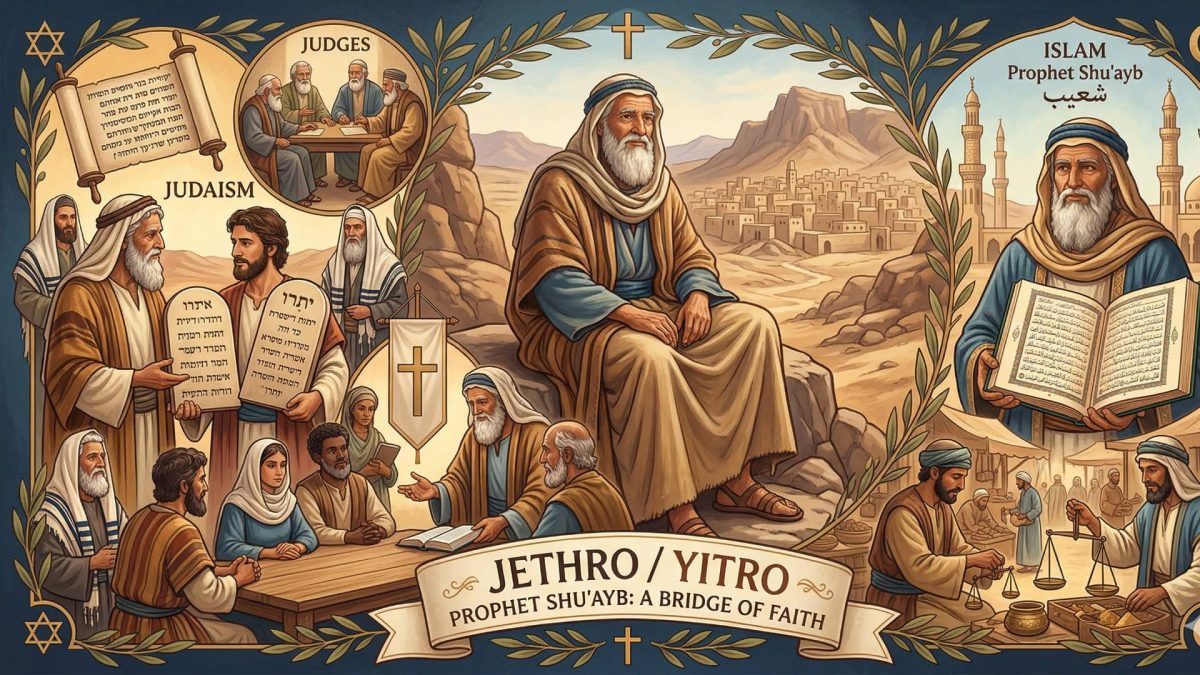
Have you ever wondered if there is a figure in religious history whom multiple faiths respect equally? Jethro is exactly that kind of unique personality. He holds a special place in Judaism, Christianity, and Islam. We will discuss the life of this great man in detail today.
Learning how different religions view him is a fascinating subject. It helps us understand the bridges between various cultures. Let us gain a deeper knowledge of Jethro’s life and teachings.
Introduction to Jethro: Who Was He?
Jethro was an extremely important figure in ancient history. He was primarily a respected priest in the region of Midian. Religious texts describe him as a wise and visionary leader.
Historical and Biblical Context of Jethro
Historically, Jethro lived in the region surrounding the Sinai Peninsula. According to the Hebrew Bible, he was the father-in-law of the prophet Moses. When Moses fled from Egypt, he sought refuge with Jethro.
Jethro gave his daughter Zipporah in marriage to Moses. He also gave Moses the responsibility of tending his flocks. This period was a crucial preparation phase in Moses’s life.
Why Jethro Matters in Theology Today
In modern theology, Jethro stands as a symbol of wisdom and good governance. He showed how people from different cultures can help one another. His story teaches us the importance of mutual respect.
He gave vital advice to the leader of the Israelites despite being a foreigner. This proves that knowledge and wisdom are not confined by borders. This lesson is highly relevant in today’s globalized world.
Jethro in Judaism
Jethro holds a special and honored position in Judaism. The Torah and Hebrew Bible mention his name with great respect. Jewish scholars praise his wisdom and devotion to God.
Jethro as Moses’ Father-in-Law in the Hebrew Bible
We find Jethro’s introduction in the Book of Exodus in the Hebrew Bible. The text primarily identifies him as Moses’s father-in-law and the priest of Midian. He was overjoyed to hear the news of the Israelites’ liberation from Egypt.
He came to the desert to meet Moses, bringing Moses’s wife and children. There, he praised the God of Israel and offered sacrifices. This demonstrates his deep spiritual realization.
Mentoring Moses and His Role in Early Governance
Jethro’s greatest contribution was providing administrative advice to Moses. He observed Moses handling all the people’s judicial matters single-handedly. Jethro realized that this method was exhausting for both Moses and the people.
He gave Moses a brilliant suggestion for decentralizing power. Jethro told Moses to appoint honest and capable men as judges. Moses gladly accepted this excellent advice from his father-in-law.
Jewish Interpretations and Rabbinic Commentary on Jethro
Jewish rabbis have studied Jethro extensively. Many texts in the Midrash describe him as a man searching for the truth. They believe Jethro abandoned all the idol worship of his time and began worshipping the one God.
According to the rabbis, the Torah names a portion after him because of his righteous advice. This is a rare honor for a non-Jewish person in Judaism.
Jethro in Christianity
Christianity also views Jethro’s character from a highly positive perspective. Christians consider him an ideal mentor and a part of God’s plan. Modern church leadership takes many lessons from his life.
Jethro’s Appearance in Old Testament Narratives
The Old Testament of the Christian Bible portrays Jethro as a righteous man. He believed in God after seeing His works. He acknowledged that the God of Israel was greater than all other gods.
His acknowledgment carries significant weight in Christian theology. It shows that God’s grace is not just for one specific nation. Anyone can find God’s path if they seek the truth.
Christian Views on His Wisdom and Leadership Advice
Christian leaders highly value Jethro’s administrative model. They believe Jethro’s principles are still effective in church management today. One leader cannot do all the work alone.
Church pastors follow Jethro’s model to distribute responsibilities. They assign various congregation tasks to capable individuals. This keeps the work organized and prevents excessive pressure on the leader.
Theological Significance of Jethro in Christian Thought
From a theological standpoint, Jethro is a symbol of unity among nations. He helped Moses, God’s chosen leader, even though he was not an Israelite. This reminds Christians that God can use anyone for His work.
He set a wonderful example of hospitality and justice. His story encourages Christians to be kind and helpful to others.
Jethro in Islam
Islam considers Jethro an honored prophet. The Quran mentions his name as Prophet Shu’ayb. In Islam, he is not just an advisor but an independent messenger sent by God.
Jethro as Prophet Shu’ayb in Islamic Tradition
The Holy Quran describes Prophet Shu’ayb as the prophet sent to the people of Midian. He called his people to worship the one God. He was highly eloquent and a beautiful speaker.
People call him the most eloquent of the prophets because of his excellent speaking skills. He tried to guide his misguided nation to the path of truth with great patience and compassion.
His Message of Justice and Moral Reform
A major part of Prophet Shu’ayb’s message was business honesty and justice. The people of Midian were notorious for giving short weight and cheating others. Prophet Shu’ayb strictly instructed them to stop these dishonest practices.
He explained to them that a little wealth earned honestly is much better than wealth acquired dishonestly. His teaching remains highly relevant in the fields of business and commerce, even in the modern era. He set an outstanding example of social justice.
Differences Between Islamic and Biblical Accounts
There are clear differences between the Biblical and Quranic accounts regarding Jethro or Shu’ayb. The Bible primarily presents him as Moses’s father-in-law and a priest. It does not provide detailed accounts of his preaching to his own nation.
On the other hand, Shu’ayb is an independent prophet in Islam. The Quran places more emphasis on his prophethood and his struggles with his own community. However, both religions recognize him as a wise and righteous man.
Comparative Analysis of Jethro Across Religions
If we look at the major religions, we see many similarities and differences among them, as well as in Jethro’s character. This comparative discussion helps us understand religious history more clearly.
Common Themes: Wisdom, Justice, and Guidance
All religions portray Jethro as a symbol of wisdom and justice.He always provided the right guidance. He stood against injustice and spoke for the truth.
He taught people honesty and morality. Despite the differences among the religions, people praise these basic qualities of Jethro everywhere. He possessed the qualities of an ideal leader.
Key Differences in Identity and Role
We can notice some differences in his identity among the religions. In Judaism and Christianity, he is primarily a helper and advisor to Moses. His identity there depends heavily on his relationship with Moses.
But Prophet Shu’ayb has an independent identity in Islam. He received the responsibility of preaching God’s message himself. His role there is much broader and more direct.
How Each Tradition Shapes His Legacy
Each religion has embraced Jethro’s legacy from its own perspective. Jews view him as a respected non-Jewish partner of the Torah. Christians have adopted him as a model for church management.
Muslims respect him as a preacher of business honesty and monotheism. This is how Jethro’s character has remained relevant to people across different cultures throughout the ages.
Historical and Cultural Impact of Jethro’s Story
Jethro’s life story did not remain confined to religious texts. It has profoundly impacted various cultures and social systems in human history. His teachings have played a role in the development of human civilization.
Influence on Religious Law and Governance
Jethro’s advice serves as the foundation of modern governance systems. The concept of decentralization of power that he introduced is used in all democratic countries today. The system of appealing from lower courts to higher courts in the judicial system reflects his ideas.
This ancient administrative model has influenced both religious and secular law. It proves that the rules of good governance are effective for all eras.
Jethro’s Role in the Model of Ethical Leadership
Jethro created a unique example of ethical leadership. He taught that a leader must be capable, truthful, and free from the greed of bribery. It is impossible to provide proper leadership without these qualities.
People still use his model in leadership training today. It reminds us that intellect alone cannot make a successful leader without honesty.
Modern Relevance of Jethro’s Teachings
The teachings Jethro provided thousands of years ago are equally necessary today. His wisdom can show us new paths in this fast-changing world.
Leadership Lessons from Jethro for Today’s World
Leaders in today’s world often get exhausted from work pressure. Jethro teaches us how to trust others and delegate responsibilities. Trying to do all the work alone ruins the quality of work and damages personal life.
Working as a team and valuing capable individuals are great lessons from Jethro. A successful leader can create new leadership.
Applying His Wisdom in Modern Organizational Structures
Jethro’s model works wonderfully in modern corporate or business organizations. Human Resources (HR) policies consider his suggested qualities when selecting the right employees. The concept of appointing managers at different levels in an organization is a modern version of Jethro’s ancient method.
Prophet Shu’ayb’s teaching of honesty is also crucial in business and commerce. Doing business honestly without cheating customers ensures the long-term success of an organization.
Frequently Asked Questions (FAQs)
Are Jethro and Prophet Shu’ayb the Same Person?
Yes, many historians and theologians agree that the Biblical Jethro and the Quranic Prophet Shu’ayb are the same person. However, the two religious texts emphasize different aspects of his life.
What Advice Did Jethro Give Moses?
Jethro advised Moses not to do all the judging alone but to distribute the responsibilities. He told Moses to choose honest and God-fearing men and appoint them as leaders over thousands, hundreds, fifties, and tens.
Why is Jethro Important in Religious History?
Jethro is important because he helped the Israelites despite belonging to a different culture and acknowledged the one God. Furthermore, his administrative wisdom and teachings on justice have contributed massively to the governance systems of human civilization.
Conclusion: Jethro’s Enduring Legacy Across Faiths
Jethro or Prophet Shu’ayb remains a shining star in religious history. His respected presence in the three major religions of Judaism, Christianity, and Islam is a unique example. He showed us how wisdom, honesty, and justice make a person immortal.
We learn from his life that knowledge and honesty can cross any boundary. Modern societies and state structures still use the honest advice he gave Moses. The model of business honesty and ethical leadership he left behind is a great inspiration for us today.
Jethro’s legacy teaches us to be respectful to one another. Our society will become much more beautiful and orderly if we apply his teachings in our personal and professional lives. In this world of religious division, Jethro stands as a wonderful symbol of unity and wisdom for us.