10 Surprising Similarities Between the World’s Largest Religions

Introduction
Our beautiful world is full of diversity. Alongside diverse cultures, languages, and lifestyles, many religions coexist. On the surface, the customs, prayer methods, and external rituals of the world’s largest religions might seem different, but deep down, there is an incredible connection. These surprising similarities among major religions prove that the desire for humanity and peace exists in everyone. Today, we will discuss in detail the 10 surprising similarities found among the world’s largest religions.
Why Comparing Religions Matters
Comparing religions does not mean we are trying to prove one religion is superior or inferior to another. Instead, comparative theology helps us understand each other’s beliefs more deeply. Research from projects such as the Harvard Pluralism Project shows that learning about the commonalities among religions increases mutual respect in society. When we learn that, regardless of what religion our neighbor follows, the core teachings of their faith are also peace and love, the distance between us decreases. Knowing these comparisons and similarities is crucial for building a peaceful and harmonious world.
Common Misconceptions About World Religions
Many people think that the world’s religions are completely opposite to one another and share no common ground. This is a very common misconception. Because history and the media frequently highlight religious conflicts, people may come to believe that religion only creates division. However, a deep study of religious texts reveals that the primary goal of every religion is the spiritual development of humanity and the betterment of society. Due to differences in external rituals or culture, we often fail to see these internal similarities.
Understanding Common Human Values Across Religions
Every religion is fundamentally built upon certain common human values. Speaking the truth, not stealing, respecting elders, and helping the helpless are actions praised in every society and mandated in every religion. These common human values serve as the core foundation of religious teachings. When we identify these values, we realize that, regardless of our religious identity, we are all one from a human perspective.
1. Belief in Compassion and Kindness
Compassion, or the ability to feel the pain of others, is one of the greatest qualities of human character. Every major religion emphasizes compassion and kindness.
How Major Religions Teach Compassion
There is a universal rule of compassion known in English as the Golden Rule. The core message of this rule is to treat others exactly as you would expect them to treat you. In Islam, it is said that no one can be a true believer until they love for their brother what they love for themselves. ..In Christianity, Jesus Christ taught people to love their neighbors as themselves. In Hinduism, the principle of Ahimsa, or non-violence and the avoidance of hurting anyone, is highly important. Buddhism also teaches compassion toward all living beings.
Loving Others in Different Religious Traditions
The teaching to love everyone regardless of race, religion, or color, rather than just one’s own community, exists in every religion. Islam speaks of serving the creation. Judaism has strict instructions to be kind to strangers and the helpless. Hinduism features the beautiful concept of “Vasudhaiva Kutumbakam,” meaning the whole world is one family. These traditions prove that showing love to others is a universal religious duty.
2. The Importance of Prayer and Worship
Expressing gratitude to the Creator and praying to draw near to Him are integral to every religion. Although the forms of prayer differ, the main purpose is the same everywhere.
Prayer Rituals in Various World Religions
Muslims perform Namaz five times a day in a specific manner that connects them directly to Allah. In Hinduism, worship and mantra recitation are performed before deities in temples or at home. Christians pray to God in churches or privately. Buddhists calm their minds through meditation to achieve spiritual realization. Jews pray three times a day in their place of worship, the synagogue, or privately. Even though the external methods differ, human concentration and devotion during prayer are equally expressed in all religions.
Why Spiritual Connection is Important in Religious Traditions
Prayer is not just a physical exercise or the chanting of words. Its main goal is to establish a spiritual connection with the Creator or a higher power. Modern science has also proven that regular prayer or meditation reduces human stress and brings spiritual peace. The spiritual connection in religious traditions keeps people away from worldly greed and helps them become better individuals. Through prayer, people acknowledge their limitations and seek help from God, thereby building humility and modesty.
3. Moral Codes and Ethical Living
There is no alternative to moral rules or guidelines for building a beautiful and disciplined society. Every religion has set specific moral rules for its followers.
Common Ethical Teachings in Major Religions
The ethical teachings of the world’s major religions are almost identical. Judaism and Christianity speak of the Ten Commandments, which include instructions not to kill, not to steal, and not to bear false witness. Buddhism has the Panchashila, which instructs followers to stay away from killing, stealing, lying, sexual misconduct, and intoxicants. In Islam, the Quran and Hadith guide people to walk the path of honesty, protect trusts, and refrain from all kinds of sinful acts. Hinduism has moral codes called Yama and Niyama that help shape a person’s character.
Honesty, Respect, and Responsibility in Different Faiths
Honesty is seen as the key to success in every religion. Maintaining honesty in business transactions, not giving short weight, and keeping promises are fundamental teachings of every faith. Alongside this, maintaining respect in society is highly emphasized. A beautiful society is built by loving the young and respecting the elderly. Every person has certain responsibilities towards their family, society, and state, which religions encourage them to fulfill.
4. Charity and Helping the Poor
The equitable distribution of wealth and the support of marginalized people in society are major goals of religion. All religions instruct their followers to stand beside the poor and the helpless.
Ways of Giving in Christianity, Islam, Hinduism, and Buddhism
In Islam, giving Zakat is mandatory, requiring the wealthy to distribute a specific portion of their assets to the poor. Additionally, Sadaqah, or voluntary charity, is widely practiced. In Christianity, charity is considered one of the greatest virtues. Judaism has the rule of giving Tzedakah, or charity, as an act of justice. In Hinduism, donating is seen as a highly virtuous act. In Buddhism, Daana, or generosity, is considered the first step to achieving perfection or Paramita.
Why Charity is a Core Religious Value
Charity removes greed and selfishness from the human mind. When a person spends their hard-earned money to help others, spiritual purification occurs. Religions hold that wealth is not merely for consumption but a trust given by the Creator to be used for the welfare of humanity. According to the Pew Research Center, religious individuals worldwide participate more in charitable and volunteer activities. Charity reduces inequality in society and increases brotherhood among people.
5. Fasting and Self-Discipline
The practice of fasting for physical and mental purification is found in almost every major religion worldwide.
The Tradition of Religious Fasting Worldwide
In Islam, fasting (Sawm) is observed for a whole month during the holy month of Ramadan, where one must abstain from food and drink from dawn until sunset. Christians observe Lent by fasting or abstaining from certain foods for 40 days before Easter. Jews observe a strict fast on the holy day called Yom Kippur. In Hinduism, there are rules for fasting on Ekadashi, Navaratri, and before various Pujas. In Buddhism, monks also abstain from eating at certain times, called Uposatha.
The Spiritual Benefits of Self-Control and Discipline
Fasting is not just about staying hungry. It teaches people self-control and discipline. During a fast, a person tries to control their anger, greed, and other negative instincts. This self-control makes a person spiritually stronger. Furthermore, through fasting, a person can experience the pain of the hungry and the poor, thereby fostering empathy. Physically, fasting also helps the body eliminate harmful toxins.
6. Respect for Parents and Family
The family is the foundation of society. A healthy society cannot be imagined without a strong and loving family. Therefore, every religion places special importance on the family.
Family Values in Major Religions
In Islam, showing respect to parents is placed right after the worship of the Creator. The Quran states that one should never speak harshly to parents and always treat them kindly. In the Ten Commandments of Judaism and Christianity, there is a clear instruction to honor one’s father and mother. ..In Hinduism, parents and elders are revered as if they were deities. In Confucianism, devotion to parents, or filial piety, is considered the most important virtue.
Why Family Ties are Spiritually Significant
The family is the place where a person first learns love, sacrifice, and empathy. From a religious perspective, the family is a sacred institution. Family relationships teach people to be responsible. By serving parents and caring for family members, a person’s selfless love leads them towards spiritual growth. A happy family fosters a healthy mind, which is extremely helpful for practicing religion.
7. Belief in the Afterlife or Spiritual Existence
The belief that death is not the end of life and that the human essence survives in some form after death exists in almost all religions.
Heaven, Reincarnation, and Spiritual Continuity in Different Faiths
Islam, Christianity, and Judaism have clear concepts of the afterlife, Judgment Day, and heaven or hell based on sins and virtues. These religions believe that a person’s afterlife will be determined based on their actions on Earth. On the other hand, Hinduism and Buddhism believe in reincarnation. According to them, the human soul returns to Earth repeatedly, in accordance with its Karma, until it achieves Moksha or Nirvana.
How Different Religions View Life After Death
Although the nature of life after death varies across religions, the underlying message is clear and uniform. This belief in the afterlife encourages people to do good deeds on Earth and refrain from evil deeds. When a person believes they must give an account for every action or that their actions have inevitable consequences, they become more focused on living a moral life. This belief helps people remain patient during difficult times and avoid despair.
8. Sacred Texts and Divine Teachings
Every religion has its own written or oral texts that serve as guidelines for its followers’ lives.
Holy Books of the World’s Largest Religions
The holy book of Islam is the Al-Quran, which is a complete code of life for Muslims. ..The holy book of Christians is the Bible, divided into the Old and New Testaments. The holy book of the Jews is the Torah. The major sacred texts of Hinduism include the Vedas, Upanishads, and the Bhagavad Gita. The holy book of Buddhists is the Tripitaka. The holy book of the Sikhs is the Guru Granth Sahib. Each of these books contains the rules, history, and spiritual guidelines of its respective religion.
Why Sacred Scriptures Guide Religious Life
Sacred books are not just collections of historical stories. They provide solutions to various problems in human daily life. When a person becomes confused during a moral crisis, they turn to their holy book. These scriptures help people know the will of the Creator and guide them from the path of darkness toward the light. Reading religious texts regularly calms the human mind and strengthens faith.
9. Pilgrimage and Sacred Spaces
Traveling to sacred places or going on pilgrimages for religious reasons is a common feature of the world’s major religions.
The Tradition of Religious Journeys and Pilgrimages
Muslims travel to Mecca, Saudi Arabia, every year to perform Hajj, a mandatory pilgrimage for those who can afford it. Christians travel to sacred places like Jerusalem, Vatican City, or the Camino de Santiago in Spain. Hindus go on pilgrimages to Kashi, Vrindavan, or the Kumbh Mela. Buddhists visit places in India such as Bodh Gaya, Lumbini, and Sarnath, where Gautama Buddha spent important periods of his life.
Holy Sites Around the World
These holy sites are not just geographical locations; they are connected to the spiritual emotions of millions of people. During a pilgrimage, a person gives up all the comforts of daily life and accepts hardships purely in the hope of spiritual gain. Visiting these pilgrimage sites allows one to meet people from diverse languages and cultures from all over the world, fostering a universal sense of brotherhood. The atmosphere of holy places helps people achieve self-realization.
10. The Search for Inner Peace and Purpose
Finding the true purpose of life and maintaining a peaceful mind are the main goals of all religions.
Spiritual Growth in Various Religions
The meaning of human life cannot be limited only to eating, wearing clothes, and acquiring wealth. Religion helps people understand that their lives have a greater purpose. Sufism, yoga practice, Zen meditation, or Christian mystic traditions are all different paths of spiritual development. These help people discover their inner soul and rise above material desires. Through spiritual growth, people realize that true peace does not lie in the external world, but within their own minds.
How Religions Encourage Living a Meaningful Life
When a person places faith in God and follows religious disciplines, a goal or purpose is created in their life. Religion teaches people to be patient without breaking down in times of danger and to be humble rather than arrogant in times of success. By serving others, speaking the truth, and standing up for justice, a person can live a meaningful life. Religion makes a person part of a community, so they never feel entirely alone.
Comparative Section
From the discussion above, we have seen several common features of the world’s religions. Now, we will discuss comparisons on some more specific topics.
Similarities Among the Abrahamic Religions
Islam, Christianity, and Judaism are collectively known as the Abrahamic religions because they all honor Prophet Abraham as a major patriarch. The belief in monotheism, or a single Creator, is extremely strong in all three of these religions. They all believe that God created the universe and that He watches over every human action.
Shared Beliefs in Christianity, Islam, and Judaism
Faith in prophets and messengers is a central tenet in all three of these religions. The concepts of angels, the afterlife, Judgment Day, and heaven and hell are also almost identical among them. The importance of prayer, charity, and reliance on holy books is a common feature of these religions. According to BBC Religion, the historical and theological similarities among these religions are so vast that researchers believe they share a common root.
Prophets and Shared Religious Narratives
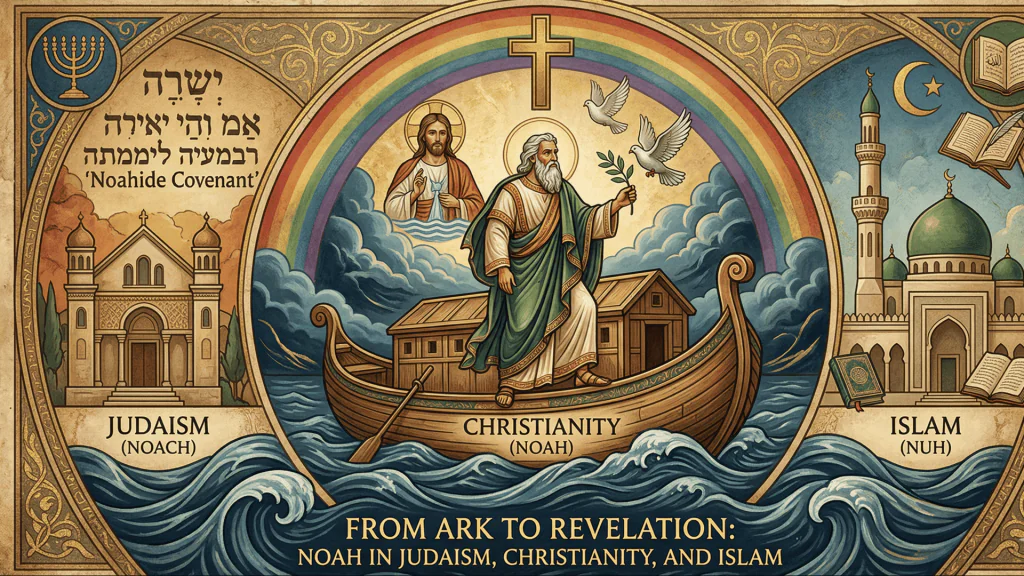
The scriptures of the Abrahamic religions mention many shared prophets and stories. Figures such as Adam, Noah, Abraham, Moses, and David are mentioned with great respect in the Quran, the Bible, and the Torah. Events like the story of the Great Flood or the test of Abraham’s sacrifice of his son are described almost identically in all three religions, with only minor differences.
Religious Connections Between East and West
Although Eastern religions like Hinduism, Buddhism, and Jainism seem different on the surface from Western or Middle Eastern religions, they have deep connections. Eastern religions emphasize Karma and reincarnation, whereas Abrahamic religions emphasize the afterlife and Judgment Day. However, the core philosophy in both cases is that a person must inevitably face the consequences of their actions, whether good or bad.
Shared Moral Teachings Across Cultures
Even though cultures and geographical locations differ, certain fundamental aspects of human nature are the same everywhere. No religion or culture in the world supports stealing, murder, or deception. Similarly, qualities like love, kindness, and sacrifice are respected everywhere. This proves that religious morals are consistent with normal human conscience and intellect.
Meditation, Prayer, and Spiritual Reflection
Eastern religions place great emphasis on meditation. Hindu Yoga or Buddhist Vipassana meditation are acclaimed worldwide. On the other hand, Abrahamic religions offer opportunities for spiritual reflection alongside prayer. In Islamic Sufism, the mind is stabilized through Dhikr or Muraqabah. While the methods differ, the goal of all religions is to free the mind from external noise and find inner peace.
Why Religions Share Common Values
The main reason religions share common values is human nature itself. Every human being inherently desires peace, security, and love. Religions essentially fulfill humans’ deep psychological and social needs.
Human Nature and Universal Moral Principles
The Creator has made humans with a conscience that can distinguish between right and wrong. Universal moral principles are not confined to any specific geographical boundary. To sustain society, the practice of these moral principles is essential, and religions have given these principles an institutional form.
Historical and Cultural Impacts on Religion
Over time, followers of different religions have mingled through trade and travel across various countries. As a result, the good aspects of one religion have influenced another religion or culture. Historically, through the Silk Road or spice trade routes, not only goods but also philosophies and religious thoughts were exchanged, which is another major reason for the similarities among religions.
Frequently Asked Questions (FAQ)
What is the most common similarity among the world’s largest religions?
The biggest similarity among the world’s largest religions is that they all teach compassion, kindness, moral living, the protection of others’ rights, belief in an afterlife or Karma, and prayer to a Creator or higher spiritual power.
Which religions have the most similarities?
Islam, Christianity, and Judaism have the most similarities. They are called Abrahamic religions, and their concepts of monotheism, prophets, scriptures, and the afterlife are almost identical. Additionally, there are deep similarities between the philosophies of Hinduism and Buddhism.
Why do religions teach similar moral values?
Religions primarily work for human welfare and the building of a peaceful society. To keep society disciplined, actions like murder, theft, or lying must be avoided. These universal truths apply to all religions, so their moral teachings are identical.
Are all religions basically the same?
No, all religions are not fundamentally the same. Their theology, worship practices, historical contexts, and certain beliefs differ significantly. However, there is a deep similarity in their core human and moral teachings.
Can religious similarities increase peace and understanding?
Absolutely. When a person learns that peace, forgiveness, and brotherhood are advocated in other religions as they are in their own, their respect and empathy for others increase, helping reduce religious conflicts and establish peace.
Conclusion
These 10 surprising similarities found among the world’s largest religions confront us with a profound truth. And that is, no matter how different we are on the outside, from the inside, we are all one.
Final Thoughts on Religious Similarities
Instead of creating division by focusing on differences in religious rituals and clothing, we should focus on the religions’ core messages. Every religion tries to enlighten people. These similarities teach us that even though the paths to reach the Creator are different, the destination is essentially the same.
Why Shared Values Matter in a Diverse World
In today’s era of globalization, people of various religions are living side by side. To maintain peace in a diverse world, we must practice shared values. No society can survive without mutual respect.
Understanding Humanity Through Common Spiritual Teachings
Above all, religion teaches us to be true humans. Only by following common spiritual teachings like empathy, charity, honesty, and love will we be able to truly understand and embody humanity. Let us forget our differences and accept the good teachings of all religions to build a beautiful and habitable world.