The Hidden Physics of Life: Everyday Energy Transfer
Introduction
Why Energy Transfer is Everywhere Around You
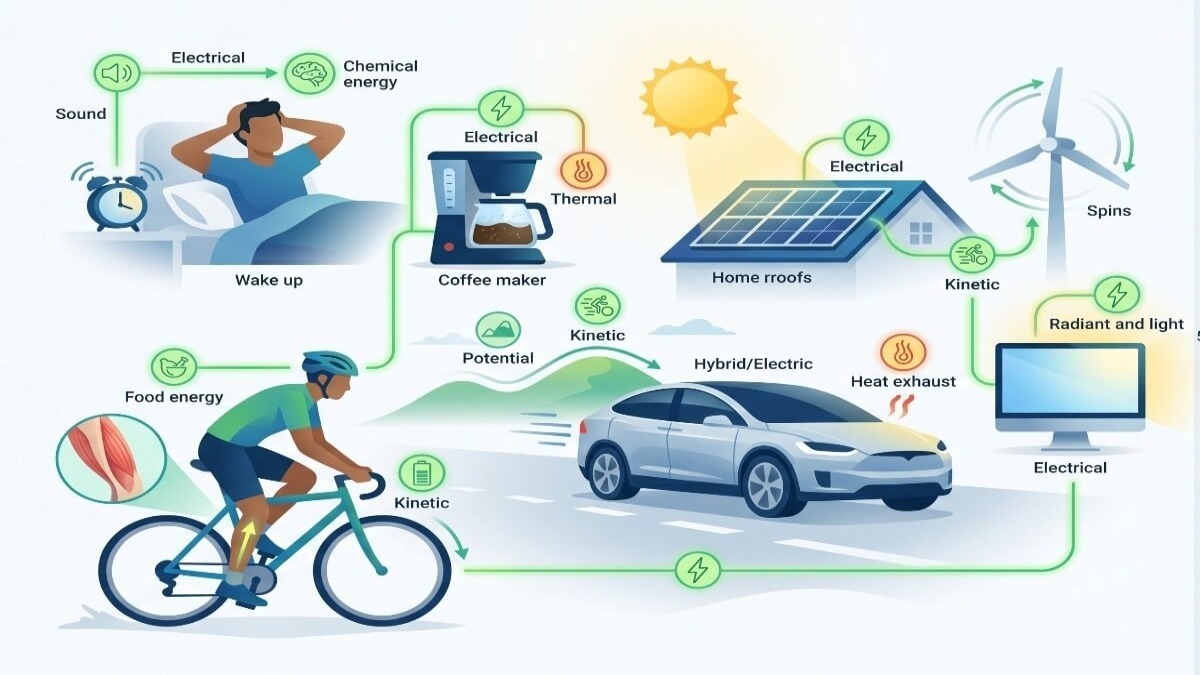
Think about the moment you wake up in the morning. A magical process begins the exact second you open your eyes and get out of bed. The name of this process is energy transfer. From every speck of dust around us to the massive planets and stars, everything is bound by this rule of energy.
Energy never stays still in one place. It is constantly changing its form. When you drink tea or scroll through your smartphone, you are actually witnessing energy transforming from one form to another. Without this invisible flow, our world would come to a standstill in an instant.
There is a fascinating game of science happening behind every action in our daily lives. We often do not notice it. But if you look closely, you will understand that every single thing around us depends on this continuous movement of energy. It is the universal language that keeps the entire cosmos running.
How Physics Powers Everyday Life Without You Knowing
Many of us think physics is just confined to textbooks or laboratories. In reality, it is mixed into every task we do every single day. Your muscle contractions while walking in the morning or the heat from the stove while cooking are excellent examples of physics at work.
When you perform any task, your body converts the chemical energy obtained from food into mechanical energy. Similarly, the ceiling fan in your room turns electrical energy into rotational energy. All of this happens completely without you realizing it.
Even when you are sitting quietly, the exchange of energy continues inside your body. The beating of your heart or the process of breathing is entirely dependent on energy transfer. It is impossible to imagine a single day without physics.
What is Energy Transfer?
A Simple Definition of Energy Transfer
Energy transfer is the process by which energy moves from one object to another or from one place to another. In simple terms, when energy changes its location, it is called energy transfer.
For example, when you hold a hot cup of tea, the heat transfers from the cup to your hands. Here, heat is a form of energy that flows from an object with a higher temperature to one with a lower temperature. This is the most common form of energy transfer.
This applies not only to heat but also to sound, light, and electricity. When you speak, the sound waves generated from your vocal cords reach someone else’s ears through the air. Here, too, energy is being transferred through a very beautiful set of rules. To dive deeper, you can review the basic concepts of energy from Khan Academy’s physics courses.
Different Forms of Energy in Physics
In the language of science, energy is not bound to any one specific form. To accomplish all the work in the universe, energy presents itself to us in various ways. We can see some of these forms, but we can only feel others.
The primary forms of energy include mechanical energy, thermal energy, light energy, sound energy, and electrical energy. There is also chemical energy and nuclear energy. Each form has its own characteristics and capacities for work.
These different forms of energy are deeply interconnected. Through specific processes, they can constantly change into one another. This versatile nature of energy is what makes our Earth so diverse and habitable.
Types of Energy
Kinetic Energy of Motion
Kinetic energy is the energy generated due to the motion of an object. This energy exists within any moving object in the universe. The amount of kinetic energy depends on the object’s mass and velocity.
Consider a moving car or a flying bird. The energy that is used by the car as it speeds down the road is kinetic. The higher the car’s speed, the more its kinetic energy increases.
Even the flowing currents of a river or the blowing wind contain massive amounts of kinetic energy. Humans have been using this energy since ancient times to build windmills or hydroelectric plants. Kinetic energy constantly helps us get things done all around us.
Potential Energy Stored in Objects
Potential energy is a type of energy stored within an object due to its position or state. It mostly remains dormant and can transform into other energies when the opportunity arises.
Imagine you are holding a compressed spring. The energy stored within that spring while it is compressed is potential energy. As soon as you let go of the spring, it will turn into kinetic energy and bounce up.
A rock sitting at the peak of a mountain also stores a vast amount of potential energy. This energy resides within it due to the force of gravity. When the rock begins to roll down, that potential energy gradually transforms into kinetic energy.
Thermal, Electrical, and Chemical Energy
Thermal energy is the energy created by the vibration or movement of atoms and molecules in a substance. The faster the molecules of an object move, the higher its thermal energy becomes. When we sit by a fire in the winter, this thermal energy warms our bodies.
Electrical energy, on the other hand, is the flow of electrons. It is one of the most important energies in modern life. The lights, fans, televisions, and refrigerators in our homes all run on electrical energy.
Chemical energy is stored within the chemical bonds of various substances. The food we eat contains stored chemical energy. Similarly, petrol or coal used as fuel for cars contains abundant chemical energy, which is converted into heat and kinetic energy when burned.
How Energy Transfer Works
From One Form of Energy to Another
Energy transfer or conversion is an endless process. Energy never stays static in our environment. It continuously transforms from one form to another.
A very familiar example is an electric bulb. When we turn on the switch, electrical energy flows through the wires to the bulb. There, this energy transforms into light and thermal energy.
Another example would be a solar panel. When sunlight falls on a solar panel, the panel directly converts it into electrical energy. This is how energy is constantly transformed around us.
A Simple Explanation of the Law of Conservation of Energy
One of the most important rules in physics is the law of conservation of energy. According to this principle, the total amount of energy in the universe is always fixed and unchangeable.
This means you cannot create energy from scratch. Also, it is impossible to completely destroy or wipe out any energy. Energy can only change from one of its forms to another.
For instance, when a piece of wood is burned, the chemical energy inside it is not destroyed. It simply transforms into heat and light energy and mixes into the environment. If you calculate the total transformed energy, you will see that the total energy has not changed.
Energy Transfer in Everyday Life
Cooking Food and Heat Transfer
The kitchen is a wonderful laboratory for energy transfer. When we turn on the stove, the chemical energy in the gas is converted into heat. This fire is essentially a form of heat and light energy.
The heat from the stove first transfers to the cooking pot. Once the pot gets hot, that heat spreads into the food inside. Here, thermal energy travels through solid and liquid substances to turn raw food into a delicious meal.
There is no energy waste in this entire process. Some of the heat emitted by the stove enters the food, and the rest mixes with the surrounding air, slightly increasing the room’s temperature.
Walking, Running, and Human Movement
There is also a fascinating calculation of energy behind our daily movements. The food we eat every day is stored as chemical energy in our bodies.
When we walk or run, our body muscles convert that chemical energy into mechanical energy. Because of this mechanical energy, we can move our arms and legs and push ourselves forward.
However, the muscles cannot convert 100% of the chemical energy into mechanical energy. A large portion of it turns into thermal energy. And that is why our bodies heat up, and we start sweating when we run fast or do heavy exercises.
Driving Cars and Transportation Energy
Modern transportation systems are entirely dependent on energy transfer. Think about a standard petrol-driven car. Liquid fuel or chemical energy is stored in the car’s fuel tank.
When the engine is started, this fuel begins to burn inside the engine. During combustion, chemical energy is converted into intense thermal energy. This thermal energy pushes the engine’s pistons, transforming it into mechanical or kinetic energy.
Eventually, this kinetic energy is transferred to the car’s wheels, propelling the car forward. Here, a perfect transformation of energy happens from chemical energy to heat, and from heat to kinetic energy.
Charging Phones and the Flow of Electrical Energy
Smartphones have become an inseparable part of our lives. Keeping a phone active requires constant energy transfer.
When you plug your phone in to charge, electrical energy from the outlet travels through the cable and enters the phone’s battery. There, the electrical energy is converted back into chemical energy and stored.
Later, when you use the phone, the chemical energy stored in the battery is converted back into electrical energy. That electrical energy is then converted into light energy on the screen and into sound energy in the speakers, reaching us.
Heat Transfer in Daily Tasks
Conduction in Solids
Heat can travel from one place to another primarily in three ways. The first of these is conduction. This mostly happens in solid materials.
Suppose you leave a metal spoon submerged in a hot cup of tea. After a while, you will feel the spoon handle has also become hot. Here, the heat from the tea has been conducted from one end to the other through the molecules of the spoon.
The molecules inside a solid object sit very close to each other. When they receive heat, they start vibrating and bump into the neighboring molecules. This is how thermal energy slowly spreads through a solid object.
Convection in Air and Water
For liquids and gases, the primary process of heat transfer is convection. In this method, the heated molecules themselves move and carry the heat with them.
Think about boiling water on the stove. The water at the bottom of the pot receives heat first and gets hot. The hot water becomes lighter and rises to the surface, while the relatively colder water at the surface sinks.
This creates a circular current within the water. Heat transfers in the exact same way through the air. Hot air becomes lighter and rises, and cold air takes its place. This is what creates wind flow in nature.
Radiation from the Sun
The third and fastest method of heat transfer is radiation. In this process, no medium is required to transfer the heat.
Heat and light from the sun reach the Earth in exactly this way. There is no air or medium across vast stretches of space. Yet the sun’s heat penetrates the vacuum via radiation and reaches our Earth.
When we stand in the sun on a winter morning, the comforting warmth we feel comes directly from this radiation. We also absorb heat through radiation when sitting by a campfire.
Energy Transfer in the Human Body
How Food Converts to Energy
Our body is an extremely complex and precise biological machine. Like any machine, our body requires energy to run. And the only source of this energy is our daily food.
When we eat carbohydrates or protein-rich foods, our digestive system breaks them down into glucose. This glucose reaches every cell of our body through the bloodstream. The mitochondria in cells use oxygen to burn glucose and produce energy-rich molecules called ATP.
This chemical process is called cellular respiration. ATP is the primary energy currency of our body. Whenever we need energy, ATP is broken down, releasing energy that helps us perform our daily tasks. To learn more about this complex field of human nutrition science, you can read nutrition guidelines from reliable health websites or the World Health Organization (WHO).
Muscle Movement and Biological Energy Conversion
When you lift a heavy object or walk up the stairs, your body muscles do a wonderful job. The energy required for this work comes from those ATP molecules.
When the brain sends commands to the muscles to contract via the nerves, the muscle fibers take in chemical energy from ATP. Then that chemical energy is directly converted into mechanical energy.
This process of muscles doing work is not 100% efficient. A lot of energy is released as heat during the conversion to mechanical energy. This is why our bodies become extremely hot during continuous physical labor.
Energy Technology
How Batteries Store and Release Energy
One of the greatest blessings of modern technology is the battery. It is essentially an excellent container for storing chemical energy. Everything from your laptop to electric cars relies on batteries.
Inside a standard lithium-ion battery, there are layers of two different chemical substances. When the battery is charged, electrical energy causes a specific change in these chemicals, storing the energy.
During use, this chemical reaction happens in reverse. The stored chemical energy then turns back into electrical energy, flows through the wires to our devices, and keeps them running.
The Flow of Electricity in Appliances
Every electrical appliance used in our homes is a brilliant example of energy transfer. The stream of electrons flowing through the power lines brings these machines to life.
Think about an electric motor. The motor inside a fan or blender machine receives electrical energy. Then the magnetic field inside the motor converts electrical energy into rotational (mechanical) energy.
For televisions, the process is slightly different. There, electrical energy transforms into light and sound energy. Every machine converts energy in a specific way to make human tasks easier.
Renewable Energy Systems Like Solar and Wind
The modern world is increasingly leaning towards renewable energy. Due to the limitations of fossil fuels and environmental pollution, the use of solar and wind energy is growing.
Solar panels use photovoltaic cells to turn sunlight directly into electricity. Here, a silent transfer from light energy to electrical energy occurs without any moving parts.
On the other hand, windmills, or wind turbines, harness the wind’s kinetic energy. The flowing wind spins the massive blades of the turbine. This rotational energy is converted into electrical energy by a generator and then joins our power grid.
Energy Transfer in Nature
Photosynthesis in Plants
The most magical energy conversion in nature happens in the green leaves of plants. The name of this process is photosynthesis. Without it, no living creature could survive on Earth.
The chlorophyll in plant leaves directly absorbs light energy from the sun. Then, using that energy, it combines carbon dioxide from the air and water from the soil to produce glucose and other carbohydrates.
Here, the sun’s light energy is converted into chemical energy and is stored in the plant’s leaves. This is the absolute first step of the Earth’s food chain.
Wind, Water, and Natural Energy Flows
The weather and climate of our Earth are fundamentally dependent on the energy coming from the sun. The sun’s heat does not fall equally on all parts of the Earth.
The sun’s heat warms the air in the equatorial regions, making it lighter and causing it to rise. Then, the relatively colder air from the polar regions rushes in to fill that void. This is how wind flow is created on Earth.
Similarly, the sun’s heat drives massive ocean currents. Solar thermal energy gets transported through the water and helps regulate the temperature of the entire planet.
Energy Chains in Ecosystems
Every living being in nature is connected to one another through food. This is called a food chain. Essentially, a food chain is a clear path for energy transfer.
In the beginning, a plant takes energy from sunlight to make food. When a deer eats that grass or leaf, the plant’s chemical energy is transferred to the deer’s body.
Again, when a tiger hunts and eats that deer, a portion of that energy moves into the tiger’s body. This is how energy flows from one level to another in an ecosystem, maintaining nature’s balance.
Real-Life Examples of Energy Conversion
Slowing Down a Moving Car
Have you ever wondered where the kinetic energy goes when a speeding car hits the brakes? According to the law of conservation of energy, this energy cannot be destroyed.
When the driver presses the brake pedal, immense friction is generated between the car’s brake pads and the disc brakes. Because of this friction, the car’s massive kinetic energy is directly converted into thermal energy.
If you bring your hand near the car’s wheels after a long journey, you will feel a lot of heat. Here, the energy of motion turns into heat through friction and dissipates into the air.
Boiling Water on the Stove
Heating water for a bath on a winter morning is a daily chore. But even within this simple task lie some extraordinary rules of physics.
When a pot filled with water is placed over the stove’s fire, heat enters the water through the bottom of the pot via conduction. Then, through convection, the hot water rises to the top.
When water begins to boil, it is no longer a liquid. By absorbing a large amount of thermal energy, the water molecules turn into steam and rise into the air. Here, thermal energy changes the water’s state, turning it into a gas.
Jumping and Landing
Jumping while playing in a field is common. But behind it, a perfect conversion of energy takes place.
When you bend your knees and jump upwards from the ground, the chemical energy in your body’s muscles turns into kinetic energy. The higher you rise, the more your kinetic energy decreases and your potential energy increases.
When you reach the maximum height, your kinetic energy is zero, and your potential energy reaches its peak. Then, while falling down due to the pull of gravity, that potential energy turns back into kinetic energy and brings you back to the ground.
Turning on a Light Bulb
The light bulbs we use to illuminate our rooms in the evening are a very familiar example of energy conversion. Modern LED bulbs are much more efficient in this regard.
When electricity passes through a traditional filament bulb, the filament creates resistance. Because of this resistance, electrical energy turns into intense heat.
The filament gets so hot that it eventually starts radiating light. However, a large portion of the energy here is simply wasted as heat. This is why people nowadays prefer using energy-saving LED bulbs much more.
The Law of Conservation of Energy
Energy Cannot Be Created or Destroyed
A very strict rule of our universe is that the total amount of energy will always remain fixed. You cannot just create new energy out of thin air if you want to.
Similarly, you can never completely destroy or erase any energy you possess. This is also known in physics as the first law of thermodynamics.
This wonderful rule of science tells us that we can only borrow energy from one form to another. We are not consumers of energy; we are merely converters of energy.
Why Energy Only Changes Form
Energy is fundamentally a medium for nature to do work. ..When a task is completed, energy leaves one form and enters another.
When you hammer a nail, the chemical energy from your arm muscles turns into the hammer’s kinetic energy. When the hammer strikes the nail, the energy is converted into sound and thermal energy.
Changing forms in this entire process is essential. Because without changing forms, no object can exert influence over another object, and no work can be done.
Common Misconceptions About Energy
Energy Is Not “Used Up”; It Is Transformed
We often say in conversation that our battery’s charge has “run out” or that we have “spent” a lot of energy. From a scientific point of view, these statements are not entirely accurate.
Energy never runs out or gets exhausted. When we say energy is depleted, it means that energy has transformed into a form that is no longer useful to us.
A battery running out of charge means that its internal chemical energy has been converted into electrical energy, which is then transformed into light or sound and scattered into the environment. The energy is definitely still in the universe; it has just changed its appearance.
Understanding Efficiency and Energy Loss
When using machinery, we often refer to “energy loss”. This does not mean the destruction of energy.
Whenever an engine or machine operates, it cannot convert 100% of the supplied energy into the desired work. Due to friction or internal resistance, a large portion of the energy spreads into the environment as heat or sound.
Because this heat or sound is of no use for our primary task, we call it energy waste or loss. Engineers always try to build machines where this unnecessary energy loss is kept to a bare minimum.
Applications of Energy Transfer in Modern Technology
Engineering and Machine Design
Modern mechanical engineering is essentially built upon efficient energy management. When designing any car, airplane, or massive factory machine, the main goal of engineers is proper energy transfer.
The design of a good machine is such that energy conversion occurs very smoothly. Lubricants, or oils, are used to reduce friction between machine parts, thereby reducing energy waste in the form of heat.
As a result, the machine lasts longer and can accomplish more work while burning less fuel. The right design makes an engine both eco-friendly and economical.
Smart Devices and Electronics
Our handheld smartphones, laptops, and smartwatches consist of highly complex electronic circuits. The flow of energy within these small devices is controlled with great precision.
Millions of transistors inside a microchip process data using electrical signals or energy. Here, a very microscopic transformation of electrical energy occurs.
Scientists are continuously trying to make these devices even more energy-efficient. This way, after a single charge, the battery can supply its chemical energy for a much longer period.
Transportation and Fuel Systems
Currently, a massive change is taking place in the global transportation sector. The adoption of electric vehicles (EVs) is rapidly increasing, replacing fossil fuels. This is a big example of energy transfer.
Electric cars take electricity directly from the grid and store it in giant batteries. Compared to a petrol engine, an electric motor is far more efficient.
In a petrol engine, about 70 percent of the fuel’s energy is wasted as heat. But an electric motor can directly convert almost 90 percent of the battery’s energy into the car’s kinetic energy. Consequently, it is a much more effective transportation system.
The Future of Energy Science
Cleaner and More Efficient Energy Systems
The progress of our civilization depends on the use of energy. But due to the excessive use of fossil fuels, our planet’s climate is being severely damaged.
Scientists of the future are working to build energy systems that will be completely pollution-free. Thermonuclear fusion is one such dream technology.
Just as two light atoms merge inside the sun to produce immense energy, scientists are trying to produce energy on Earth using the exact same process. If successful, we will have a clean, endless source of energy forever.
Innovations in Renewable Energy
Even though the use of solar and wind energy is increasing, they are fully dependent on the weather. Therefore, the biggest challenge for renewable energy is storing this energy for long periods.
Future technology might completely change the type of batteries we use. New inventions like solid-state batteries or hydrogen fuel cells will multiply energy storage capacity many times over.
Furthermore, research is ongoing on new materials to increase the efficiency of solar panels. The future world might be one where the roofs and windows of every house will be capable of producing the energy they need.
Frequently Asked Questions (FAQs)
What is energy transfer in simple terms?
Energy transfer means energy moving from one place to another or changing from one form to another. For example, when heat goes from the stove’s fire to a cooking pot, it is called energy transfer.
How does energy change form?
Energy changes form whenever any work is done. For instance, when a fan runs, electrical energy turns into rotational or kinetic energy. Also, when coal burns, its chemical energy turns into heat.
Where do we see energy transfer in everyday life?
We can see it in almost everything around us. The work of our muscles while walking in the morning, charging a phone, cooking on the stove, or driving a car are all common examples of energy transfer.
What is the law of conservation of energy?
According to this rule, the total amount of energy in the universe is always fixed. Energy cannot be created from scratch or completely destroyed. It only changes its form.
Why is energy important in physics?
Energy is extremely important in physics because without energy, no object can move and no work can be completed. Energy plays a role in every single event in the universe.
Conclusion
Key Takeaways on Energy Transfer in Daily Life
From the discussion so far, we can clearly understand that energy transfer is intimately intertwined with our lives. From breathing to launching spaceships, we rely on energy in every aspect.
Controlling and understanding this flow of energy is one of the greatest achievements of human civilization. We have learned that energy never gets lost; rather, it changes form and stays right around us.
This knowledge teaches us that we must use natural resources much more consciously. Because wasting energy simply means causing a transformation that is of no use to us.
Understanding the Invisible Physics That Powers Everything
Wonderful laws of physics underlie every ordinary event around us. If you can understand the hidden physics of life, your entire perspective on the world will change.
From the stove in the kitchen to the airplanes flying in the sky, everything is strung together by an invisible thread of energy. When you know these magical rules, even ordinary things become extraordinary to us.
The next time you hold a hot cup of tea or turn on the light switch at night, take a moment to think about this fascinating journey of energy. Because you, too, are an inseparable part of the universe’s continuous energy flow.