Ceylon Tea: History, Leaf Grades, Growing Regions, Benefits & Brewing Guide
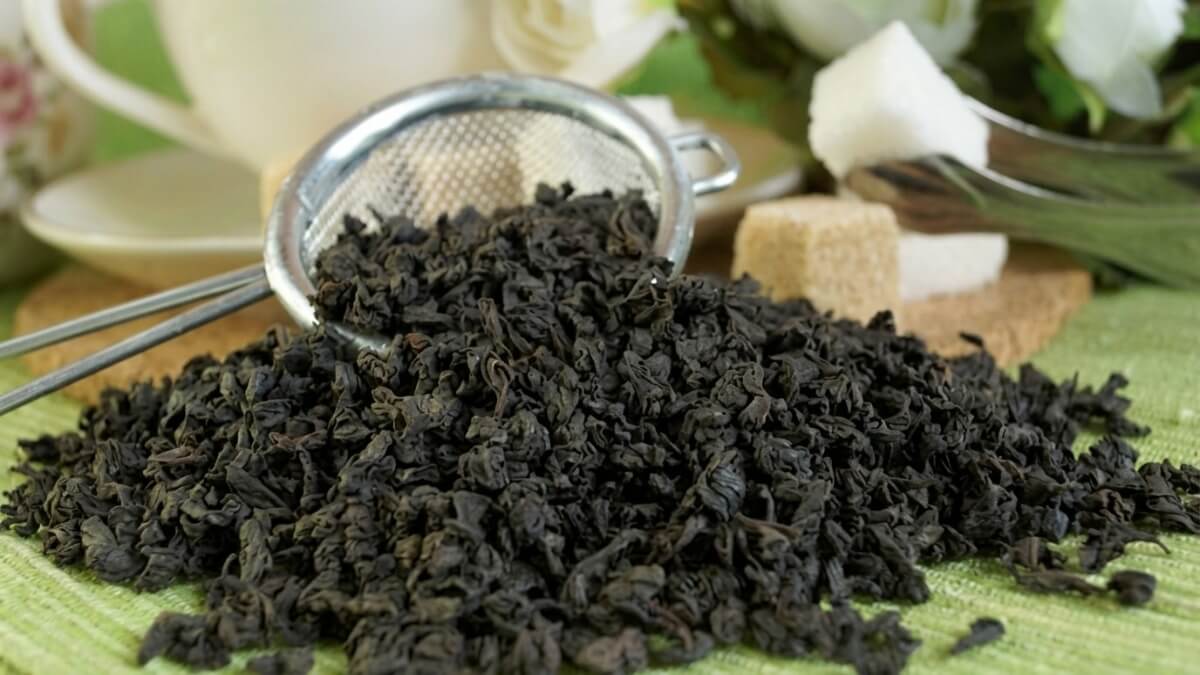
Ceylon tea is the world’s most famous and popular variety; its taste is familiar to generations of black tea lovers worldwide. Ceylon tea has a rich, robust, slightly tart flavor, a hallmark of its quality and a distinctive feature compared to other teas.
Sri Lanka ranks alongside renowned producing countries such as China, Kenya, Indonesia, Taiwan, Japan, and India.
History of Ceylon Tea in Sri Lanka
Tea cultivation is generally believed to have begun in Sri Lanka in 1824. The first seedlings were brought here from China and planted in the Botanical Garden in Paradeniya.
It was only 15 years later, in 1839, that Scottish planter James Taylor brought the next batch of tea trees from the Indian province of Assam and planted them on a new, just cleared of forest, 8 hectares in size in the Nuwara Eliya region and conducted experiments at home to produce the first batches of tea.
He designed a small machine for rolling tea leaves and attracted the attention of London magnates.
The Camellia sinensis bushes introduced to the island were of two varieties. The Chinese Camellia sinensis var. sinensis adapted better to high-altitude areas, while the Indian Camellia sinensis var. assamica adapted well to the lowlands.
By 1875, the plantations covered more than 400 hectares. It was here in Sri Lanka that the slogan “Straight from the tea garden to the teapot” was coined.
By 1965, the island had already become the world’s leading exporter, exporting mainly a variety of black (so-called “orthodox”) teas.
In 1972, all plantations were nationalized, and no more than 20 hectares of land remained in private ownership; the entire business turnover ended up in the hands of the state, and production became industrial.
Around 2000, they began to lease the crops back to private companies, allowing them to market the drink independently. Today, a weekly auction for Sri Lankan-grown varieties is held in Colombo, where multimillion-dollar contracts are signed to sell the drink to various countries.
Where and How Ceylon Tea is Grown
Tea grown and produced on the island of Sri Lanka has the same climatic and optimal characteristics as in India: humidity and warmth.
The island’s climate is tropical and humid, with temperatures remaining relatively constant: up to 32°C on the coast and up to 26°C in the mountains. Two monsoon winds determine the weather: the northeast monsoon, which lasts from October to March, and the southwest monsoon, which lasts from June to October.
The Indian Ocean, which washes the island, offers warm waters (27-29°C) but is rarely calm.
The territory is occupied by coastal lowlands and plains, where lowland plantations grow. However, the entire center of the island is covered by highlands and mountains, home to the most famous highland plantations: Nuwara Eliya and Kandy, as well as the island’s highest peaks – Mount Pidurutalagala (2,524 meters) and Adam’s Peak (2,243 meters).
Types and Leaf Grades of Ceylon Tea
Sri Lanka focuses primarily on black tea production using time-honored orthodox processing stages: plucking, withering, rolling, oxidation (fermentation), and drying. Roughly 4 kilograms of fresh green leaves are required to produce 1 kilogram of finished dry tea.
Ceylon tea is sorted using an internationally recognized grading system developed during the 19th and early 20th centuries based on leaf size and appearance:
Whole-Leaf Grades (OP, OPA, Orange Pekoe)
Whole-leaf grades consist of intact, tightly rolled leaves prized for their nuanced aroma:
-
FFEXSPL and FFSPL (Flowery Fannings Extra Special / Special): High-grade specialty teas rich in golden or silver leaf tips.
-
OPA (Orange Pekoe A): The largest whole-leaf grade (over 1 cm), featuring bold, flat-rolled or loosely twisted leaves.
-
OP (Orange Pekoe): Long, thin, wiry whole leaves (at least 1 cm) tightly twisted lengthwise.
-
OP1 (Orange Pekoe 1): Delicate, tightly twisted, cord-shaped whole leaves up to 1 cm in length.
Leaf tenderness depends on plucking standards: the top bud and first two leaves yield the most delicate, aromatic teas, while the third and fourth leaves produce bolder, fuller-bodied infusions.
Broken-Leaf Grades (BOP, FBOP, Pekoe)
Broken-leaf grades infuse faster and yield stronger color and briskness:
-
FP (Flowery Pekoe): Short, tightly rolled leaves with delicate tips.
-
Pekoe: Shorter, curly whole or semi-rolled leaves plucked slightly lower on the shoot.
-
FBOP (Flowery Broken Orange Pekoe): Medium-sized broken leaves blended with a generous proportion of golden tips (buds).
-
BOP and BOP1 (Broken Orange Pekoe): Smaller broken leaves from the upper shoots that brew into a strong, bright cup (BOP1 is slightly finer than BOP).
-
CTC (Crush, Tear, Curl): Mechanically processed into smooth, uniform granules that brew rapidly and strongly.
Fannings and Dust (Tea Bag Grades)
-
Fannings: Small, flat leaf particles or fine CTC granules that infuse very quickly.
-
Dust: The finest tea particles, primarily packaged in disposable tea bags for instant strength and color.
These grade abbreviations appear on authentic Ceylon tea packaging so buyers know the exact leaf size and style inside.
Ceylon Tea Altitude Zones and Growing Regions
Low-Grown, Mid-Grown, and High-Grown Ceylon Teas
Many connoisseurs are familiar with Sri Lanka’s high-altitude teas. Most plantations are located in the mountainous regions of the southern part of the country, at altitudes ranging from 600 to 2,700 meters above sea level. Quality directly depends on the altitude at which the tea leaves are grown.
The best quality tea comes from the highest plantations, and the harvest time is crucial – the tea must be picked between the end of June and the end of August.
In the eastern regions where plantations are located, harvesting occurs in February, and in the western regions, in early March. Harvesting uses shoots with no more than three leaves and buds.
The rest of the year, the harvest also produces good, high-quality tea, but the lower the plantation, the more average the quality becomes. Compared with each other, black leaf teas in Sri Lanka don’t differ much. This is due to uniform soil and climate conditions.
According to altitude, tea can be divided into:
- low-mountain (up to 600 meters above sea level) – regions of Ruhuna, Galle;
- mid-altitude (600-1200 m) – Dimbula, Kandy;
- highlands (1200 m and above) – regions of Nuwara Eliya, Uva, Uda-pusselawa, Sabaragamuwa.
Famous Tea-Growing Regions of Sri Lanka
There are several growing areas on the island, each with its own distinctive characteristics in the quality of the raw materials they produce.
The seven tea regions located near (east and south) of the capital, Colombo, are Nuwara Eliya, Uva, Dimbula, Kandy, Ruhuna, Galle, and Ratnapura.
Each has its own characteristics.
The most famous and best tea is considered to be that produced on the plantations of the Nuwara Eliya region.
The region is located near Mount Pidurutalagala, at an altitude of 1,800 to 2,700 meters above sea level. Tea leaves are harvested year-round, but the best quality comes from the variety harvested in January and February. This variety is known as “Champagne.”
Tea from the Nuwara Eliya region is considered one of the world’s most elite varieties. It is the world’s highest tea-growing region.
It has a medium-bodied, golden-brown infusion, soft and slightly astringent in taste, with a subtle, amazing aroma of spices, cypress, eucalyptus, and wild herbs that grow nearby and saturate the tea leaf with their aroma.
Here, at an altitude of 1200-1500 meters above sea level, protected from cold, dry winds, the tea plants grow and produce an extra-class drink.
The highest quality tea is obtained from harvesting in the middle of the year, when dry winds blow, namely, from the end of June to the end of September.
Pekoe, Orange Pekoe, and broken teas from this region are always superb. The drink will surprise you with its exotic flavor. It is distinguished by a rich golden-red infusion with a wonderful taste and aroma.
The Dimbula tea plantations are located at an altitude of 1250-1800 meters and are also high-altitude areas with high humidity due to monsoon rains.
The finest, highly rated teas are harvested and produced between January and March, when the weather is dry and cool, and the tea leaves have a particularly strong aroma.
Teas from this region produce a light, golden, sometimes orange-red infusion with full flavor and a slight, moderate astringency. The aroma is distinctive. Light lemon notes can be discerned, and the taste reveals notes of jasmine, rose, and eucalyptus. The drink is refreshing, yet soft and pleasant.
The last three of the six regions listed produce medium-quality tea, which is widely used in tea blends:
- Kandy – the plantations of this region produce a strong, classic tea that reveals its best qualities when paired with milk. The tea leaves are harvested in February.
- Ruhuna is located in southern Sri Lanka, where the local soil has the unique properties that give Ceylon tea leaves their black color. The tea has a strong, rich flavor with floral notes or a pleasant, subtle sweetness.
- Tea contains zero alcohol – here, plantations are distributed between 1600 and 1800 meters. It produces tea with a delicate aroma and flavor, and moderate alcohol content.
- The Galle tea region is located in the south of the island, at an altitude of up to 600 meters. It produces Orange Pekoe and Flowery Orange Pekoe teas. These produce a golden-colored infusion with a magnificent flavor and aroma.
How to Brew Ceylon Tea Properly
Ceylon tea is brewed using the classic English method. In England, drinking tea is a unique form of socialization. For the English, drinking tea is more than just a habit. They drink it up to seven times a day.
The strictly set time of 5:00 PM provides an opportunity to socialize with friends and family. Brewed the English way, the drink is very strong: 30-35 grams of tea per 1 liter of boiling water. The teapot should be dry and warm.
Brew in two 5-minute increments. Meanwhile, warm the cups, fill them ¼ full with milk or cream, and add the tea. In the English method, add the tea to the milk, not the other way around.
In our country, people drink tea this way much less often. We brew it to enjoy the aroma and flavor of the tea leaves, so we haven’t changed the brewing method.
Place 2-3 teaspoons (7-10 grams) of dry tea leaves in a 300 ml teapot. Add hot water (95°C/205°F) and let steep for 3-5 minutes. A second or even a third steeping is acceptable (depending on the quality of the tea leaves).
Interestingly, Sri Lankans prefer to brew finely chopped BOP and FBOP tea leaves, as this allows the drink to brew quickly, imparting full brightness of flavor and aroma to the infusion, invigorating it quickly, and helping maintain the body’s heat exchange.
Chemical Composition and Health Benefits of Ceylon Tea
Tea is a daily drink. Most people drink at least one cup a day, so it’s crucial to understand its effects on the body.
The chemical composition varies widely and depends on the variety, growing methods, processing, and storage.
Black tea contains:
- tannins, which help absorb vitamin C and boost immunity;
- caffeine, which is bound to tannin and has a milder invigorating effect on the body than the caffeine contained in coffee;
- Phenolic compounds help quench thirst;
- catechins, which help strengthen the walls of blood vessels;
- vitamin C, group B, P;
- proteins and amino acids that impart flavor;
- tannins, which impart flavor.
The black variety contains L-theanine, an amino acid that stimulates brain function and improves memory.
Ceylon black tea contains antioxidants called polyphenols (catechins and theaflavins). When consumed regularly, these substances help prevent hypertension, diabetes, and atherosclerosis. The drink also normalizes metabolism, boosts immunity, and cleanses the body.