Top 5 AI Tools Every Small Business Needs in 2026

Introduction
The way businesses operate is changing very rapidly in the modern era. We are now in 2026, and in this age of technological excellence, Artificial Intelligence (AI) is no longer limited to large corporations with massive budgets. Today, AI technology has become equally open and accessible to small businesses. Small business owners face various challenges every day.
Limited budgets, staff shortages, and a lack of time are their constant companions. To overcome these limitations and survive in a competitive market, AI tools are playing a magical role. If you are an entrepreneur and want to take your business to the next level, now is the perfect time to adopt the right technology. In this blog, we will discuss the top 5 essential AI tools for every small business in 2026 and how they can make your business profitable.
Why AI is Essential for Small Businesses in 2026
To survive in today’s competitive market, making quick decisions and providing timely service to customers is crucial. As we enter 2026, AI technology has transitioned from an optional luxury to an absolute necessity for small businesses. Customer demands are much higher than before. They expect fast service and prefer personalized experiences.
Fulfilling these massive expectations manually is almost impossible. AI tools help small businesses automate their operations. As a result, the chances of human error decrease, and the quality of work improves. Small businesses do not have many resources to compete with large companies. However, by using a powerful AI tool, small businesses can also gain the capability to operate on a larger scale. AI analyzes data to uncover hidden insights that help accelerate business growth.
How AI Helps Companies Save Time and Reduce Costs
The two main assets of any business are time and money. AI technology helps make the most of both of these assets. In small businesses, employees usually have to perform many routine tasks. These include data entry, inventory checks, and answering common customer questions. AI can automatically complete these repetitive tasks.
Consequently, valuable employee time is saved, allowing them to focus on more creative and important tasks. This proper use of time indirectly reduces the company’s operating costs. On the other hand, since AI tools operate accurately, businesses are spared financial losses caused by human error. In many cases, hiring additional staff is unnecessary because a single AI system can flawlessly do the work of several people. According to reputable business magazines like Forbes, companies that adopt AI early see a significant reduction in their operational costs.
What to Look for in an AI Tool for Small Businesses
There are countless AI tools on the market right now. New software is being developed every day. Choosing the right tool for your business from all these options can be quite confusing. Not all tools may be suitable for your business. Therefore, it is highly important to verify a few key factors before investing in any AI software.
Key Features: Providing the Best ROI
When you invest in an AI tool, you need to ensure it provides a good Return on Investment (ROI). The primary feature of a good AI tool is ease of use. If your employees need days of rigorous training just to use the tool, it will waste time. Additionally, you need to check its integration capabilities.
Your business might already be using certain software. It is crucial to ensure that the new AI tool can easily integrate with your older systems. Another major feature is data security. You must select a reliable tool that can protect your business’s confidential information and customer data. Customization capability is also a sign of a good tool.
Choosing AI Solutions Compatible with Your Business
The need for AI tools can vary depending on your business’s size and type. A tool that provides magical results for an e-commerce business might not be effective at all for a consultancy firm. First, identify the core problems of your business. Are you struggling with customer support, or do you need to strengthen your marketing? After pinpointing the problem areas, you need to look for solutions accordingly.
Ensure that the AI solution aligns with your business’s future goals. As your business grows, the tool should ideally be scalable enough to handle increased workloads.
1. AI Chatbots for Customer Support
Customer satisfaction is the key to the success of any business. When customers come with a question, they want an immediate answer. AI chatbots have revolutionized this space. In 2026, having an AI chatbot for customer support is almost mandatory for every small-business website.
Providing 24/7 Customer Support
It is not possible for a human to work 24 hours a day and 7 days a week. But visitors can come to your website at any time. A potential customer might want to know about your product late at night. The AI chatbot acts as your business representative exactly during these times. It never sleeps and never gets tired. Whenever a customer asks a question, the chatbot provides relevant answers in an instant. As a result, customers feel valued. This constant availability multiplies customer trust in your business.
Reducing Response Time and Support Costs
A major complaint from customers is that companies take too long to answer their questions. If they are kept waiting for a long time, many customers become frustrated and switch to another company. AI chatbots can answer thousands of customers simultaneously within seconds.
This brings the response time down to near zero. The chatbot answers common, frequently asked questions. Human intervention is only needed to solve complex issues. This reduces pressure on the customer support team and eliminates the need to hire a large support workforce. Consequently, the company saves a massive amount of money.
2. AI Content Creation and Marketing Tools
Content is king in today’s digital age. It is impossible to expand a business online without good content. However, creating high-quality content regularly is time-consuming and expensive. AI content and marketing tools have made this task extremely easy for small businesses.
Creating Blog Posts, Social Media Content, and Emails
A small business owner has to juggle many tasks at once. Writing new blog posts daily, creating attractive captions for Facebook or Instagram, and sending beautifully crafted emails to customers can be quite a hassle. Generative AI tools like ChatGPT by OpenAI or Jasper can create wonderful pieces of writing in just a few seconds. You simply provide the AI with your core idea, and it will write a complete article or social media post while maintaining your brand’s language and tone. As a result, the hours previously spent on content creation are now completed in moments.
AI for Improving Marketing Efficiency
Artificial intelligence does not just help with writing; it also helps perfect your entire marketing strategy. AI tools analyze data such as the types of content your target audience prefers, when they are most active online, and which emails have the highest open rates. Based on the insights gained from this analysis, AI advises you on how to structure your marketing campaigns. As a result, every dollar spent on marketing reaches the right place, and your brand awareness grows rapidly.
3. AI-Powered CRM and Sales Automation Tools
Customer Relationship Management (CRM) is a means of maintaining relationships with customers. AI-powered CRM tools are designed to simplify and accelerate the sales process.
Managing Leads More Effectively
Collecting information on leads or potential customers and tracking them is a complex task. Often, due to poor management, many good leads are lost. AI-powered CRM tools automatically collect all leads from website visitors, social media, and emails, and assign them scores based on their potential. This allows the sales team to easily understand which leads to prioritize and who is most likely to make a purchase. This massively increases the efficiency of the sales team.
Automating Customer Follow-ups and Sales Workflows
Calling or emailing a potential customer just once is not enough. Regular follow-ups are required to successfully sell a product. When doing manual follow-ups, there is often a chance of forgetting. AI tools can automatically send personalized follow-up emails or messages to customers at specific intervals. Furthermore, AI organizes the entire sales process or workflow so that no step is missed. Modern CRM tools like HubSpot are providing small businesses with the remarkable advantage of sales automation.
4. AI Accounting and Financial Management Tools
Accounting is a source of fear for many small business owners. A slight mistake in the ledger can bring a major disaster to the entire business. In 2026, AI financial management tools will help conquer this fear.
Automating Bookkeeping and Expense Tracking
Keeping daily income and expense records, collecting receipts, and creating ledgers are highly tedious tasks. AI accounting tools connect with your bank accounts and credit cards to automatically update all transaction records. Whenever you scan a receipt, the AI reads the information within it and logs the expenses into the correct categories. As a result, there is no room for discrepancies in the accounts, and you face no hassle when filing taxes at the end of the year.
Improving Financial Forecasting and Reporting
The future of a business depends on its proper financial planning. AI tools can give you an idea about future cash flow by analyzing your past transactions and current spending trends. The AI creates a forecast of your business’s financial health over the coming months. These data-driven reports help you to be cautious in advance and make investment decisions at the right time.
5. AI Analytics and Business Intelligence Platforms
Data is the most valuable asset of our time. But just having data is not enough; extracting the right information from that data is the real work. Hiring data scientists for small businesses is very expensive. This is exactly where AI analytics tools work like magic.
Turning Data into Actionable Insights
A massive amount of data is generated daily from your website, social media, and sales channels. AI analytics platforms analyze this messy data and present it on a beautiful, easy-to-understand dashboard. The AI brings you crucial information, such as which page on your website customers spend the most time on, which product sells the most, and which area brings in the most buyers. These actionable insights help you understand the true internal state of your business.
Making Smarter Business Decisions with AI
The days of making guesswork decisions are over. To succeed now, decisions must be made based on data. When AI analyzes all the intricate data of your business for you, decision-making becomes much easier. You can easily understand which part of the marketing budget is working and which part is being wasted. Smart decisions made based on AI-provided data help small businesses expand quickly and stay ahead of competitors.
How Small Businesses Benefit from Adopting AI
AI is not just for large companies; it can bring significant improvements to the daily operations of small businesses. With proper use, it can improve almost every department of a business.
Increased Productivity and Efficiency
When routine and monotonous tasks are automatically completed by AI software, employees’ work speed increases manifold. They can do more work in less time. As employee efficiency increases, the company’s overall productivity rises. It becomes possible to achieve big goals even with a small team.
Enhanced Customer Experience
Customers love personal attention. AI tools can analyze customers’ past purchase history and preferences to recommend specialized products. Fast customer support and this personalized experience increase customer satisfaction. Satisfied customers keep coming back and speak highly of your business to others.
Better Decision Making and Growth Opportunities
Accurate, data-driven information creates new opportunities for business expansion. Through AI, you can understand new market trends in advance. Consequently, major decisions such as launching a new product at the right time or starting a business in a new area can be made with greater confidence.
Common Challenges When Implementing AI
Although using AI has countless benefits, small businesses face some common challenges when implementing it. Knowing about these challenges in advance makes it easier to solve them.
Data Privacy and Security Concerns
AI tools work with massive amounts of data. This includes customers’ personal information and the company’s financial data. Therefore, ensuring the security of this data is the biggest challenge. There is always a fear of cyberattacks or data leaks. That is why when choosing an AI tool, its security protocols should be thoroughly verified.
Employee Training and Adoption
Employees often show reluctance to adopt new technology. They might have a fear that AI could take away their jobs. Besides, learning to operate new software also takes some time. Therefore, providing employees with proper training and explaining that AI is not their enemy but a helpful work assistant is a major challenge.
Managing AI Costs and Expectations
Not all AI tools are cheap. The subscription fees for some advanced tools can be quite high. Meeting this expense can be difficult on a small business’s limited budget. Additionally, AI is not a magic wand that will change the face of the business overnight. Maintaining realistic expectations and patiently ensuring proper use of the tools are extremely important.
Best Practices for Using AI in Small Businesses
To get the maximum benefit out of AI technology, a specific strategy should be followed. Using AI randomly can cause more harm than good.
Start with High-Impact Use Cases
Do not try to apply AI in all departments of the business at once. Find the weakest spot in your business where using AI will yield the fastest and best results. That could be customer support or lead generation. Starting with a specific area lowers the risk and makes it easier to measure success.
Measure Performance and Return on Investment (ROI)
After starting to use any new tool, its performance must be tracked regularly. You should keep a record of how much time you are saving, how much customer satisfaction is increasing, and how much costs are dropping due to the use of the AI tool. If the return or profit exceeds the cost of the tool, it is wise to continue using it.
Combine AI with Human Expertise
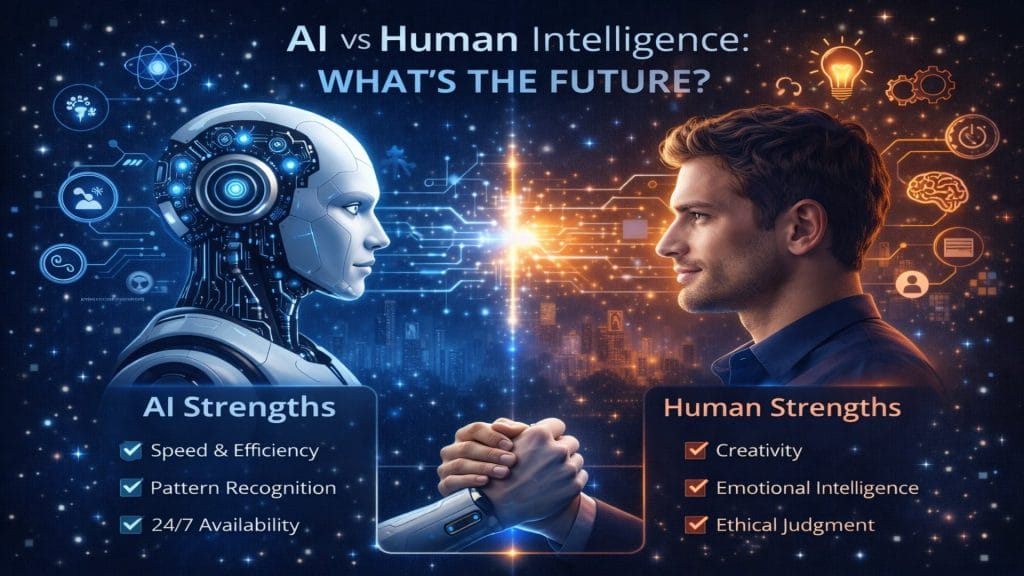
AI can never be a complete substitute for humans. AI lacks human empathy, creativity, and the ability to handle complex situations. Therefore, AI must be used as a complement to human work. AI will handle routine tasks, while humans will handle final decision-making and relationship-building. This combination brings the highest success to a business.
Future AI Trends for Small Businesses in 2026 and Beyond
Technology is changing at an extremely fast pace. Beyond 2026, AI technology will bring even more new and groundbreaking possibilities for small businesses. One should have an idea about these future trends in advance.
Generative AI for Daily Operations
Generative AI will not be limited to creating just text or images. It will be widely used for daily administrative tasks such as summarizing meetings, creating project plans, and automatically generating presentations. This will make daily office tasks much smoother and faster.
AI Agents and Workflow Automation
In the future, AI tools will not just follow instructions; they will acquire the capability to work independently. AI agents will be able to complete tasks by communicating with various systems independently. For example, if inventory runs low, an AI agent can place an order with the supplier on its own. This type of workflow automation will make small businesses much more dynamic.
Hyper-Personalized Customer Experiences
Providing hyper-personalized experiences for customers will become even easier. AI will analyze every click, every search, and a customer’s emotions to offer the perfect product or service with absolute precision. As a result, customer relationships will reach new heights, resulting in significant profitability for the business.
Frequently Asked Questions (FAQs)
What is the best AI tool for a small business?
There is no single best tool for small businesses, as the choice depends on your business needs. If you want to write content, ChatGPT might be the best. Then again, for customer support, Intercom or Chatfuel will work well. Identifying your core problem and choosing a tool accordingly is the wisest approach.
Are AI tools affordable for small companies?
Yes, as we move into 2026, many AI tools are built with small companies’ budgets in mind. Most good tools have free versions or very low-cost basic plans that you can easily start working with. In the long run, these save your time and manpower costs, making the business more cost-effective.
Can AI replace employees in a small business?
No, AI cannot completely replace employees. AI basically helps with monotonous, repetitive tasks quickly. There is no alternative to human presence for creative thinking, emotional communication with customers, and complex problem-solving. AI is merely a tool to enhance employee efficiency.
How do I choose the right AI tool for my business?
To choose the right tool, first figure out which task in your business is wasting the most time. Then make a list of what AI tools are available in the market for that task. Read user reviews of the tools, try out free trials, and check if they fit your budget. Select the tool that is the easiest to use and integrates well with your other software.
Conclusion
To survive in the modern competitive market, keeping pace with the times is essential. In this era of technological revolution, there is no room to push AI away. Rather, by gladly adopting it, small businesses can reach their desired goals.
Key Takeaways on the Best AI Tools for Small Businesses
In this blog, we have seen how AI can bring about unimaginable changes in crucial tasks across customer support, marketing, sales, accounting, and data analysis. AI tools not only reduce business costs but also increase employee productivity and deliver excellent customer experiences. Technologies like chatbots, generative AI, and CRM automation help small businesses think and operate on a larger scale.
Preparing Your Business for an AI-Driven Future
To prepare your business for the future, start using AI today, even on a small scale. Apply an AI tool in the area of your business where it is most needed. Encourage employees to use new technology and arrange training for them. Remember, AI is not magic; it is a powerful tool. If you can combine AI with the right strategy, patience, and human expertise, your small business can one day grow into a massive enterprise. Do not fear technology; embrace it as a friend and harness its boundless possibilities for your business.