Black Pepper (Kali Mirch): A Complete Guide to Health and Flavor
Look at the shelves of any kitchen, and you will surely find one specific spice. That is black pepper. This spice is essential in the cuisines of almost every country in the world. These tiny black peppercorns do not just add wonderful flavor to food. They also offer many health benefits.
People have used this spice in various medicinal treatments since ancient times. Modern science also acknowledges its many benefits today. Do you know how this spice works inside our bodies? Today, we will discuss everything about black pepper in this article. You will learn the details about its history, nutritional value, health benefits, and proper uses in cooking.
What Is Black Pepper?
Black pepper is basically the fruit of a flowering vine. Scientists call this plant Piper nigrum. Farmers dry these fruits to prepare them as a spice. The fruits remain green in their raw state. After drying, they wrinkle and turn dark black. We call these dried fruits whole black pepper or peppercorns.
People use this spice in cooking, either ground or whole. Its strong, pungent, and slightly sharp taste can make any ordinary dish extraordinary. We experience its distinctive taste and heat thanks to a chemical compound called piperine. It stands as one of the most heavily traded spices in the world.
History and Origin of Black Pepper
The history of black pepper is very ancient and exciting. The original home of this plant is the southern coastal region of India, specifically the Malabar Coast of Kerala. In ancient times, people called this spice black gold. Its price equaled gold’s back then. Merchants crossed the seas to come to India in search of this spice.
This spice had massive demand in ancient Greece and the Roman Empire. Historians state that the Romans accepted black pepper as a tax. This spice was so valuable in the Middle Ages that people used it as an alternative currency. The Portuguese, Dutch, and British fought many wars to control their trade. Vasco da Gama discovered a sea route from Europe to India to make trade in this spice easier.
Why Is Black Pepper Called the “King of Spices”?
We call black pepper the “king of spices” because it is the most popular and widely used spice in the world. You will see salt and pepper shakers on tables in restaurants anywhere in the world. It blends perfectly with all types of food.
Its strong aroma and taste leave no room for any alternative spice. People gave it the title of the king of spices in ancient times due to its economic value and its necessity in culinary arts. It holds that royal position even today. ..It not only enhances the taste of food but also helps absorb other nutrients. It truly is the king of spices because of its versatility.
How Black Pepper Is Cultivated and Processed
Black pepper cultivation requires a warm and humid climate. It grows best primarily in tropical regions. Farmers take great care of these plants.
The Black Pepper Plant
The black pepper plant is essentially a climbing vine. It cannot stand straight on its own. Therefore, farmers plant these vines around large and sturdy trees. The vines cling to those trees and grow upwards. One plant can grow up to 10 to 15 meters tall. Its leaves are broad and dark green.
Harvesting and Drying Black Pepper
Small, round fruits start to appear after the plant flowers. Farmers harvest the fruit when it is partially mature and green. Then they boil these green fruits in hot water for a short time. Boiling them in hot water breaks down the fruit’s cell walls and speeds up the drying process. Afterward, farmers dry these fruits under the strong sun for a few days. The fruits wrinkle and turn dark black while drying in the sun. This is how black pepper is made.
Major Black Pepper Producing Countries
Currently, Vietnam is the largest black pepper-producing country in the world. Farmers in Vietnam supply almost half of the black pepper in the global market. Alongside Vietnam, India, Brazil, and Indonesia produce this spice in large quantities. Sri Lanka and Malaysia also cultivate this spice commercially. The soil and weather of these countries are perfectly suitable for this climbing vine.
Types of Black Pepper
You will see different colors of peppercorns in the market. Even though the plant is the same, differences in processing create variations in its color and taste.
Black Pepper
Black pepper is the most common and familiar type. As we learned earlier, farmers make it by drying unripe green fruits in the sun. Its taste is the most intense, and its aroma is quite strong. People use it in almost all types of cooking. You can store it for a long time.
White Pepper
Farmers collect fully ripe red fruits to make white pepper. Then they soak the fruits in water. This softens the fruit’s outer skin. Farmers rub the fruits to remove the skin. They then dry the inner white seed in the sun. Its taste is slightly milder and less pungent compared to black pepper. Cooks use it mostly in light-colored sauces or dishes.
Green Pepper
Green pepper is actually the raw fruit. Farmers collect unripe green fruits and artificially dry them. They preserve the fruits using freeze-drying methods or sulfur dioxide. This preserves the fruit’s green color. Its taste is fresh and light. People really like it in Thai and other Asian cuisines.
Red Pepper
Red pepper is quite rare to find. We get red pepper when farmers dry fully ripe fruits using special processes without ruining the color. These taste sweet and slightly spicy. Their price is usually much higher in the market.
Main Differences Between Pepper Varieties
The main difference among these four types lies in the harvesting time and the processing method. Black pepper is the most pungent. White pepper looks clean and tastes mild. Green pepper gives a fresh-fruit taste. Red pepper is slightly sweet and rare. You can choose any type according to your cooking needs.
Nutritional Value of Black Pepper
Black pepper is famous not only for its taste but also for its nutritional value. It contains many essential nutrients that benefit our bodies.
Calories and Macronutrients
The calorie count in this spice is very low. You will get only 6 calories from one teaspoon (about 2.3 grams) of black pepper. It contains very small amounts of protein and fat. However, it contains carbohydrates and dietary fiber. Fiber is extremely necessary for our digestion.
Vitamins and Essential Minerals
You will be surprised to know that this small spice contains several vitamins. You can find Vitamins K, E, and A in it. Vitamin K keeps our bones strong. Besides, it contains plenty of manganese, iron, and calcium. Manganese helps run our body’s metabolic processes properly.
Piperine and Active Compounds
The most important part of black pepper is piperine. This is a bioactive compound. Piperine gives this spice its special taste. According to scientists, piperine can control many important functions of our body. It reduces inflammation and increases the effectiveness of other nutrients.
Antioxidants and Phytonutrients
This spice contains a huge amount of antioxidants. Antioxidants destroy harmful free radicals in our bodies. It also has many volatile oils and phytonutrients. These work wonderfully to boost our immune system.
Top Health Benefits of Black Pepper
You can gain many health benefits by eating black pepper regularly. Medical scientists have conducted extensive research on its properties.
Rich in Antioxidants
Harmful free radicals form constantly in our bodies. Pollution, stress, and unhealthy food cause them to increase. These free radicals damage cells and invite rapid aging. Research shows that the antioxidants in black pepper destroy these harmful substances. You can help protect your cells by eating them regularly.
Helps Boost Digestion
This spice works like magic to remove digestive problems. It sends a signal to your stomach to produce hydrochloric acid when you eat it. This acid helps break down food properly. As a result, problems like gas, constipation, and indigestion decrease.
Nutrient Absorption
This is the most amazing quality of this spice. We often eat nutritious food, but the body cannot absorb it properly. Piperine increases the absorption capacity of other nutrients. Black pepper can increase the absorption of curcumin, a compound in turmeric, by almost 2000%.
Supports Metabolic Health
Black pepper helps increase our metabolism rate. The body can burn calories quickly if the metabolic rate is good. Many dietitians suggest keeping this spice on the menu for weight management. It also helps break down fat cells.
May Enhance Brain Function
Some animal studies have shown that piperine can improve brain function. It helps improve memory and protect nerve cells in the brain. Scientists believe it might play a role in reducing the risk of diseases like Parkinson’s or Alzheimer’s.
Contributes to Overall Wellness
Your immune system becomes stronger if you eat black pepper regularly. It is an excellent home remedy to clear colds and coughs. Drinking warm water or tea mixed with honey and black pepper relieves throat irritation.
Piperine Explained: The Powerful Compound in Black Pepper
We need to discuss piperine in a little more detail. It is an alkaloid compound. It exists mostly in the outer layer of the peppercorn. According to scientists, piperine temporarily blocks some enzymes in our liver. These enzymes usually flush out medications or nutrients from the body quickly.
Nutrients can stay in the blood for a long time when those enzymes are blocked. As a result, the body can utilize those nutrients much better. Piperine also has anti-inflammatory properties. It plays a helpful role in relieving joint pain or arthritis problems.
Black Pepper and Digestive Health
Our stomach produces hydrochloric acid to digest food. Many people do not produce enough stomach acid. Consequently, their food does not digest properly, and gas builds up in the stomach. Black pepper directly instructs the stomach to produce this acid.
Moreover, it helps remove intestinal gas. Ayurvedic texts refer to it as a carminative ingredient. You can relieve stomach discomfort by eating a little black pepper after a heavy meal. It relaxes the intestinal muscles and smooths the digestive process.
Black Pepper in Ayurveda and Traditional Medicine
Black pepper has been widely used in Ayurveda and Chinese medicine since ancient times. Ayurvedic practitioners believe it increases ‘Pitta’ and decreases ‘Kapha’ in the body. They prepare various mixtures of this spice to treat colds, coughs, and fevers.
They often mix ginger, black pepper, and long pepper together to make a medicine called ‘Trikatu’. This works wonderfully for digestion and respiratory problems. Traditional healers also recommend using a mixture of black pepper powder and clove oil to reduce toothaches.
What Does Black Pepper Taste Like?
It is difficult to express the taste of black pepper in words, but it is very familiar.
Taste and Aroma
It has a strong, warm, and slightly earthy smell. You will first get a pungent and bold taste when you put it in your mouth. Then it leaves a warm sensation. You can also find a slight citrusy, lemon-like aroma in freshly ground black pepper.
Heat Level Compared to Other Spices
It does not burn your mouth like green chilies or red chilies. The heat of chilies comes from capsaicin, while the heat of black pepper comes from piperine. The heat of piperine is much more tolerable, and it fades quickly in the mouth. It brings a balanced warmth to the food.
Why It Pairs Well With Almost Everything
Its taste is not overly dominating. It does not ruin the food’s natural taste; rather, it enhances it. You multiply the taste of dishes when you use it in almost all foods like meat, fish, vegetables, soup, or eggs. The culinary world considers the pairing of salt and pepper to be the most perfect.
Ways to Use Black Pepper in Cooking
You can use this spice in various ways in cooking. Each method of use adds a different dimension to the food’s taste.
In Soups and Stews
Sprinkle a little freshly ground black pepper while cooking any soup or stew. It enhances the soup’s warmth and creates a wonderful aroma. People use it the most in tomato soup or chicken stew.
In Curries and Sauces
We almost always use it in Indian and Bengali curries. It brings a thick and deep flavor, especially to meat curries. Chefs use white pepper in various white sauces and cheese sauces to prevent the sauce’s color from turning brown.
As a Seasoning for Vegetables and Salads
You can eat fresh salads or boiled vegetables by sprinkling black pepper and salt over them. It removes the blandness of vegetables and makes the salad more appealing. You can make great salad dressings by mixing them with olive oil and lemon juice.
In Spice Blends and Marinades
It is essential when marinating meat or fish. It removes the raw, fishy smell of meat. Black pepper is a major ingredient in popular spice blends like garam masala, chaat masala, or tandoori masala.
Popular Recipes Using Black Pepper
You can easily make delicious dishes at home with this spice. Below are some popular recipe ideas.
Pepper Chicken
This is a very delicious and spicy dish. Cut the chicken into small pieces. Then marinate the meat in ginger, garlic, soy sauce, and plenty of fresh black pepper. Heat a little oil in a pan and fry the chopped onions. Then add the marinated meat and keep sauteing. Sprinkle a little more black pepper on top once the meat is cooked and take it off the stove.
Pepper Rasam
This South Indian drink is very beneficial for colds and coughs. You prepare this liquid soup by boiling tamarind juice with tomatoes, cumin, garlic, and plenty of black pepper. You can eat it with hot rice or drink it directly from a cup.
Creamy Pepper Sauce
This sauce goes perfectly with steak or fried meat. Heat a little butter in a pan and fry the chopped onions. Then add fresh cream, salt, and freshly ground black pepper. Take it off the heat when the sauce thickens. This is an excellent French-style sauce.
Lemon Pepper Seasoning
You can make lemon pepper seasoning at home. Dry lemon peels or zest. Then blend equal parts black pepper, salt, and dried lemon peels. The taste of the food becomes extraordinary when you use this mixture on fried fish or roasted vegetables.
Black Pepper vs. White Pepper: Key Differences
Many people do not understand the difference between black and white pepper. We already learned that they come from the same plant. The main difference is in the processing.
Black pepper retains its outer shell, so its taste is intense and its smell is stronger. Manufacturers discard the white pepper shell, so its flavor is light and earthy. Chefs usually use white pepper in white sauces, mashed potatoes, or light-colored soups to make them look beautiful. However, black pepper is a bit more nutritious in terms of health benefits because its shell contains many antioxidants.
Whole Peppercorns vs. Ground Black Pepper
There is a massive difference between store-bought ground pepper and fresh pepper ground at home.
Ground spices lose their volatile oils and aroma quickly when exposed to air. You will only get a spicy taste, not the original aroma, if you use old ground spices bought from a store.
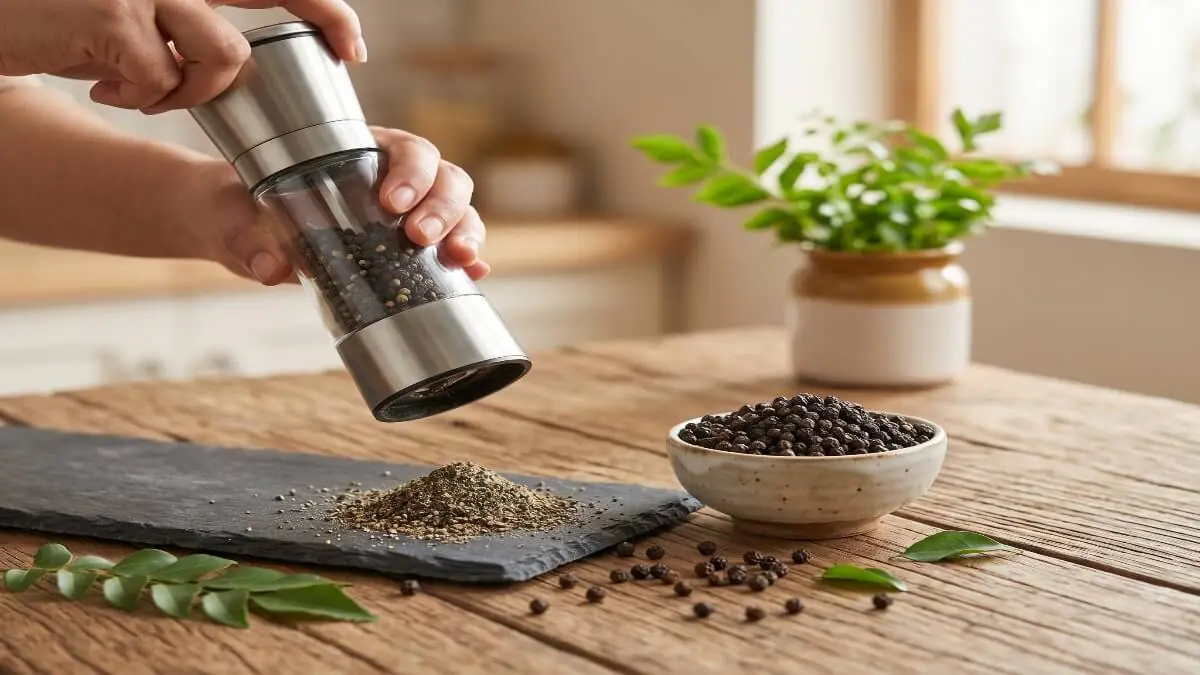
On the other hand, you will get its original intense fragrance and maximum taste if you buy whole peppercorns and grind them fresh in a pepper mill or mortar right before cooking. Chefs always recommend using freshly ground spices.
How to Choose High-Quality Black Pepper
Buying good-quality spices is an art. You have to keep a few things in mind if you want to recognize high-quality spices.
Signs of Fresh Black Pepper
High-quality peppercorns are usually large, heavy, and dark in color. You will feel their firmness when you hold the grains in your hand. You should understand that they are not up to standard if the grains break very easily or feel hollow inside. A beautiful natural fragrance comes out of good-quality peppercorns.
Whole vs. Ground Black Pepper
Always try to buy whole peppercorns. Ground spices often contain adulterated ingredients. Moreover, ground spices lose their smell fast. You will get the best results if you buy whole peppercorns and grind them at home as needed.
General Buying Tips
Buy spices from a trusted shop or brand. People know Tellicherry or Malabar black pepper as the highest quality in the world. You can look for these names on the packet. Make sure the packet is completely airtight.
Proper Storage Tips for Black Pepper
This spice will lose its quality quickly if you do not store it properly. It stays good for a long time if you store it properly.
Best Storage Containers
Glass jars are the best for storing spices. You should try to avoid plastic containers. Ensure that you can close the container lid very tightly. The aroma of the spice gets ruined if air enters.
Protecting Aroma and Potency
Keep the spice container away from direct sunlight, heat, and moisture. You should not keep the spice container right next to the stove because the stove’s heat destroys the spice’s volatile oils. It is best to keep the spices in a cool and dark cupboard or cabinet.
Shelf Life and Indicators of Freshness
Whole peppercorns stay good for three to four years if stored properly. However, ground black pepper begins to lose its original flavor within six months. You should understand that its potency is gone, and it is time to buy new spices if you smell it and find no fragrance.
Potential Side Effects and Precautions
Generally, black pepper is safe for everyone. However, some problems may arise if you consume it in excess.
Digestive Discomfort from Overconsumption
You may suffer from a burning sensation in the stomach or acidity if you use too much of this spice in your food. Excessive piperine can cause discomfort in the stomach’s inner lining.
Interaction with Medications
We learned earlier that piperine increases medication absorption. This can be dangerous even though it sounds good. You should consult a doctor before consuming excessive amounts of black pepper if you regularly take blood thinners or diabetes medication. It can abnormally increase the effectiveness of the medication.
Allergic Reactions
Although very rare, some people may be allergic to this spice. Symptoms such as sneezing, skin rashes, or breathing difficulties may appear if you have an allergy. You should see a doctor quickly if you experience anything like this.
Who Should Exercise Caution?
Pregnant women and breastfeeding mothers should eat this spice in moderate amounts. People who have stomach ulcers or highly sensitive stomachs should avoid it. It is safest to consult a nutritionist before starting any new diet for any health problem.
Frequently Asked Questions About Black Pepper
People have many questions about the king of spices. Here are the answers to some common questions.
Can You Eat Black Pepper Every Day?
Yes, you can eat it every day. However, you must pay attention to the quantity. The amount used to enhance the taste of cooking is completely safe to eat daily. Eating 1 to 2 teaspoons of black pepper a day is safe for an average person.
Is Black Pepper Good for Digestion?
Absolutely. It helps produce digestive juices in the stomach. This breaks down food easily. It reduces intestinal gas and relieves bloating. It is an excellent natural ingredient for improving digestion.
Does Black Pepper Increase Nutrient Absorption?
Yes, this is its biggest quality. The piperine in it multiplies the absorption capacity of other nutrients like curcumin, beta-carotene, and Vitamin B. Therefore, eating nutritious food mixed with a little black pepper is extremely beneficial.
Black Pepper in Global Cuisines
Black pepper is not limited to any specific region. It occupies an important place in the culinary arts of every country in the world.
Uses in Indian Cuisine
We use it in almost every dish in the Indian subcontinent. It is essential in biryani, kebabs, curries, and various lentil dishes. It is a major ingredient of garam masala. Masala chai, made by mixing black pepper and ginger into tea, is a favorite here.
Uses in European and Mediterranean Dishes
Europeans use this spice heavily to roast meat, make steaks, and use it in pasta. Italy’s famous dish Cacio e Pepe is made exclusively with cheese and plenty of fresh black pepper. The French use it to prepare their various classic sauces.
Uses in Asian and International Recipes
You see its extensive use in Chinese cooking, especially in hot-and-sour soups and stir-fried dishes. Green pepper is very popular in Thai culinary arts. It also acts as an important flavor enhancer in various spice blends of Mexican and Middle Eastern cuisines.
Final Thoughts on Black Pepper
This ordinary spice from our kitchen actually possesses extraordinary qualities.
Key Takeaways
Black pepper is not just a flavor-enhancing ingredient. It is a powerful herbal medicine. Its antioxidant and anti-inflammatory properties, along with its nutrient-absorption capacity, help keep our bodies healthy. We can get the most benefits if we use it properly and in moderate amounts.
Why Black Pepper Remains the King of Spices
Its dominance remains intact from the pages of history to the modern kitchen. Its versatility, long shelf life, and incredible health benefits prove that the title “king of spices” is completely justified. It not only makes food delicious but also keeps our lives healthy.
Simple Ways to Add More Black Pepper to Your Daily Diet and Cooking
You can very easily add it to your daily meals. Sprinkle a little black pepper on your fried egg in the morning. Use fresh ground spices in your lunch salad or soup. Mix a pinch of black pepper powder when drinking milk with turmeric. These small changes will play a great role in keeping your body healthy while enhancing the taste of your food.
Buy good-quality whole peppercorns from the market today and enjoy their magical taste in your cooking!