The Ultimate Guide to White Pepper: Benefits, Uses, and Nutrition
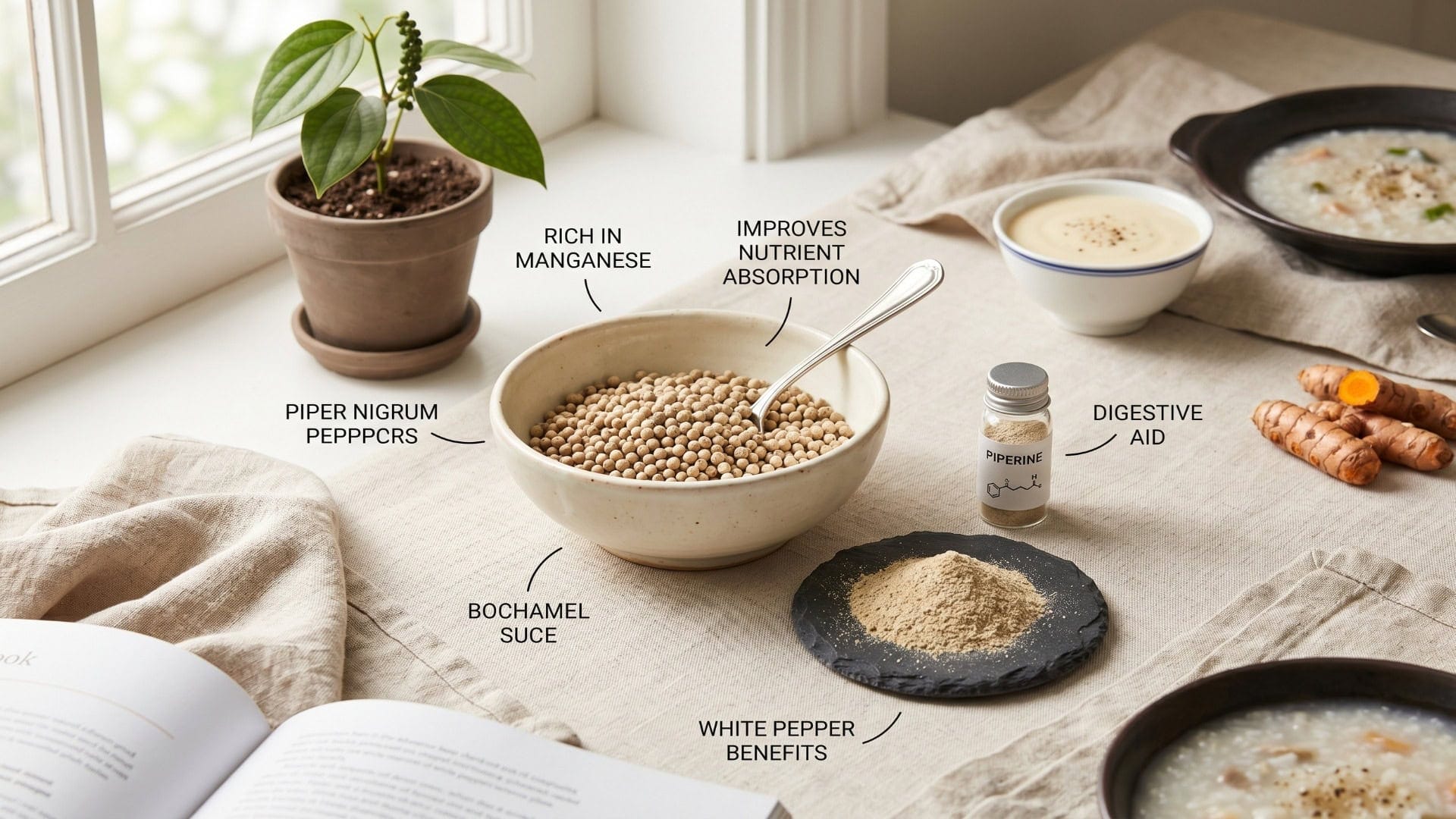
White pepper is a familiar but somewhat overlooked spice on the kitchen shelf. Cooks use this spice in savory dishes all over the world. Many people might not fully know its flavor profile and health benefits.
Today, we will discuss everything about this special spice. This article will help you make your food tastier and healthier.
What Is White Pepper?
White pepper comes from the fruit of the Piper nigrum plant. This is the exact same plant that produces regular black pepper. A difference in processing significantly changes its color and taste.
Producers make this spice from fully ripened peppercorns. They remove the dark outer layer to reveal the light-colored seed inside. Markets sell this inner seed as the familiar white pepper.
How White Pepper Is Made
Farmers first harvest the fully ripe red pepper fruits from the vine. They soak these fruits in water for one to two weeks. Experts call this process retting.
Water causes the fruit’s soft outer skin to decompose slowly. Workers then take them out of the water and scrub them clean. Removing the skin completely reveals the smooth white seed inside.
Finally, workers dry these white seeds in the hot sun. Drying them in the sunlight makes them last longer and creates a wonderful aroma. This entire process requires a lot of time and hard work.
White Pepper vs. Black Pepper: Understanding the Difference
Both spices come from the same plant, but they differ. Farmers harvest black pepper when it is unripe or semi-ripe and dry it in the sun. The outer layer shrinks, turns black, and creates a sharp pungency.
On the other hand, white pepper lacks this outer layer. This makes its taste somewhat milder. It has an earthy or woody aroma. Cooks prefer it in light-colored dishes because it looks visually appealing.
History and Global Uses of White Pepper
Pepper has held a great reputation as the king of spices since ancient times. People have used it as a flavor enhancer and Medicine for hundreds of years. This spice once had a massive impact on global trade.
Origins of White Pepper
Historians consider India and Southeast Asia to be the original home of this spice. Farmers cultivated it extensively on the Malabar Coast of ancient India. Merchants gradually spread it to other parts of the world.
During the Roman Empire, this spice was worth its weight in gold. Traders risked their lives crossing oceans to collect this precious gem.
Traditional Culinary Applications
Traditionally, royal kitchens in various countries used this spice prominently. French chefs chose this smooth spice to avoid black specks in their food. It preserved the beautiful appearance of their sauces and soups.
It was also highly popular in ancient China. The Chinese used this spice in large quantities to keep their bodies warm during winter.
White Pepper in Asian and European Cuisines
It is an essential ingredient in modern Asian cooking. It shines especially in Chinese and Thai food. A touch of this spice adds a unique dimension to fried rice or clear soups. It provides a nice kick without changing the food’s actual color.
Europeans love to use it in Béchamel sauce or mashed potatoes. According to Wikipedia, it has been prized for ages to maintain the pristine look of French cuisine.
Nutritional Value of White Pepper
This tiny spice contains a massive storehouse of nutrition. It does more than just enhance the taste of food. It also helps keep your body healthy. Let us learn about the nutritional elements inside it.
Calories and Macronutrients
Every 100 grams of white pepper contains about 296 calories. It has significant amounts of carbohydrates and dietary fiber. Its fat content is almost negligible.
You can also get a small amount of protein from it. We consume it in very small quantities, so its calories do not heavily impact our daily diet.
Vitamins and Essential Minerals
It is rich in essential minerals such as manganese, iron, and copper. Manganese helps maintain our bone structure and metabolism. Iron plays a special role in treating anemia.
It also contains some vitamin C and calcium. Consuming a small amount regularly allows the body to easily benefit from these minerals.
Piperine and Active Compounds
The most important component of this spice is piperine. This special alkaloid compound is responsible for the familiar pungent taste of pepper. Piperine has many powerful medicinal properties.
Scientists have proven that piperine helps boost brain function. It also enhances the body’s ability to absorb other nutrients.
Antioxidants and Plant-Based Nutrients
It contains plenty of antioxidants to destroy harmful free radicals in the body. Free radicals cause signs of aging and various diseases in our cells. Antioxidants protect the body from this damage.
It contains various phytonutrients or plant-based chemical compounds. These work wonderfully to reduce inflammation in the body.
Top Health Benefits of White Pepper
Adding this spice to your regular meals gives you various health benefits. These small seeds help keep your body healthy from the inside. Below are some of its main benefits.
Supports Digestive Health
This spice works very well to increase gastric juice secretion. This juice helps break down and digest food quickly. It is also quite effective at relieving gas and bloating.
Rich in Antioxidants
As mentioned earlier, the antioxidants in it keep the body healthy. It boosts the immune system by reducing oxidative stress in cells. Eating antioxidant-rich foods is necessary to protect against chronic diseases.
May Help Improve Nutrient Absorption
We often eat expensive, nutritious food, but the body cannot absorb it properly. The piperine in pepper solves this problem. It significantly increases the absorption rate of compounds such as curcumin and beta-carotene.
Aids Metabolic Health
It has a special role in speeding up metabolism. A good metabolism makes it easier to keep body weight under control. It naturally accelerates the fat-burning process.
Can Enhance Respiratory Wellness
It is highly beneficial as a home remedy for colds and coughs. It helps thin out and expel phlegm trapped in the chest. Mixing a little white pepper powder into hot tea helps relieve a scratchy throat.
Contributes to Overall Wellness
Consuming this spice in regular, moderate amounts strengthens the body’s entire immune system. It increases blood circulation and helps relieve body pain.
White Pepper and Digestion: How It Works
When you eat spicy food containing this ingredient, it directly stimulates your taste buds. This stimulation sends a message to the stomach via the brain. The stomach then begins to produce hydrochloric acid.
This hydrochloric acid is essential for digesting protein and other solid foods. Sufficient acid production in the stomach digests food quickly. This saves you from problems like indigestion or constipation.
Explaining Piperine: The Key White Pepper Compound
Piperine is the magical element that gives pepper its special character. It is a natural chemical compound that brings various positive changes after entering the body.
Various studies by the National Institutes of Health (NIH) show that piperine works as an anti-inflammatory and painkiller. It affects liver enzymes and helps expel harmful substances from the body.
White Pepper in Traditional Medicine and Herbal Practices
Its use in ancient Ayurvedic Medicine is very extensive. Ancient healers used its oil or paste to relieve arthritis pain, joint pain, and muscle stiffness. They also advised consuming it to keep the stomach clear.
Traditional Chinese Medicine considers it a warm element. Practitioners relied on this spice to remove internal dampness or cold and restore warmth to the body.
What Does White Pepper Taste Like?
Many people are curious about its taste before using it for the first time. Its flavor is quite distinct, and you can easily distinguish it from other spices.
Flavor Profile and Aroma
Its smell is somewhat earthy and has a fermented quality. It does not hit the nose very sharply like black pepper. Putting it in the mouth creates a mild but long-lasting spicy sensation.
Differences from Black Pepper
The taste of regular black pepper is much sharper and more pungent. The white version is much smoother and more subtle. Discarding the outer layer during processing significantly reduces its sharpness.
Best Foods for White Pepper
It is perfect for creamy or white-colored foods. ..It pairs wonderfully with white sauce, potato soup, mayonnaise, and light-colored pasta. It also pairs well with seafood and chicken.
How to Use White Pepper in Cooking
Knowing how to use it correctly can make your ordinary cooking taste extraordinary. Let us see how to add it to your daily cooking.
In Soups and Broths
Sprinkle a pinch of powder into any clear soup or chicken broth. It will not darken the soup’s color, but it will add a beautiful flavor. Adding it just before taking the pot off the heat preserves the aroma best.
In Creamy Sauces
Using it is almost mandatory when making Alfredo sauce or Béchamel sauce. Chefs always choose it to maintain the sauce’s whitish, smooth texture.
In Stir-Fries and Asian Dishes
It is a main ingredient in Chinese fried rice or vegetable stir-fry. Mixed with soy sauce and garlic, it creates a great Umami taste.
In Marinades and Spice Rubs
Use it to marinate chicken or fish before grilling or roasting. Its mixture with lemon juice and olive oil makes the meat soft and tasty very quickly.
Popular Recipes Using White Pepper
Below are some recipe ideas you can easily make at home. These will win the hearts of everyone in your family.
Hot and Sour Soup
The authentic taste of this famous Chinese soup comes from the excellent mixture of white pepper and vinegar. Adding the right amount of this spice to a soup made with mushrooms, chicken, and tofu doubles its flavor.
Creamy Mashed Potatoes
Mash the boiled potatoes well, then add butter, a little warm milk, and salt to taste. Finally, mix in half a teaspoon of white pepper powder. Your restaurant-style, delicious mashed potatoes are ready.
Vegetable Stir-Fry
Fry carrots, bell peppers, and broccoli in a little oil with minced garlic. Sprinkle salt to taste and this spice powder before taking it off the heat. It is healthy and tastes great too.
Chicken Marinade with White Pepper
Cut chicken breast into small pieces and mix them with yogurt, ginger-garlic paste, and this spice powder. Grill them in a little oil after one hour. This is a great protein-rich food for people on a diet.
White Pepper vs. Black Pepper: Nutrition and Flavor Comparison
In terms of nutritional value, there is not much difference between the two. Both spices are rich in fiber, manganese, and piperine. Black pepper may contain slightly more phytonutrients because it retains the outer layer.
In terms of taste, white pepper is much more refined and smoother. It is an excellent alternative for those who do not like extra black specks and strong pungency in their food.
Ground White Pepper vs. Whole Peppercorns
Stores sell it in two forms. Buying whole seeds and grinding them at home is always best. This keeps the spice’s aroma and quality 100% intact.
Pre-packaged ground spices often lose their flavor in the air. Grinding it fresh right before cooking enhances the food’s flavor.
Potential Side Effects and Precautions
Eating it in moderation is safe for everyone. Excessive use of it can cause some problems, just like anything else.
Digestive Discomfort from Overconsumption
Eating too much can cause a burning sensation or stomach acidity. People who already have severe gastric problems should eat less of it.
Allergic Reactions
Although very rare, some people may have an allergy to this spice. You should consult a doctor quickly if you experience sneezing, skin rashes, or shortness of breath after eating it.
Who Should Exercise Caution?
Pregnant women and nursing mothers should eat it in moderation. You must keep the amount very small when giving it to children. Their digestive systems are highly sensitive.
How to Choose High-Quality White Pepper
Many types of products are available in the market. You need to recognize the best quality item. When buying whole seeds, make sure they are uniform in size and have a nice, light cream color.
If they are too white, they might have been artificially bleached. Good quality seeds will have a natural, sweet, and earthy smell. You must avoid damp or moldy seeds.
Proper Storage Tips for Maximum Freshness and Flavor
Storing the spice properly is crucial to maintaining its quality. You can keep its aroma for a long time with a little care.
Best Containers for Storage
Keeping it in an airtight glass jar or container is safest. You should avoid plastic containers. Plastic can absorb the spice’s natural oils.
Protecting Aroma and Potency
Always keep the container away from direct sunlight and stove heat. A cool and dark kitchen cabinet is the ideal place to store spices. Never put a wet spoon inside the jar.
Shelf Life and Indicators of Freshness
Whole seeds stay good for about three to four years if you store them correctly. Ground spices start to lose their original smell within six months to a year. You will know it is time to replace it if the smell becomes bland.
Frequently Asked Questions About White Pepper
Is white pepper healthier than black pepper?
Both spices are almost equally healthy. Black pepper has slightly more antioxidants. White pepper works wonderfully for digestion. You can choose either according to your taste and cooking style.
Can you use white pepper every day?
Yes, using it in moderation in daily cooking is completely safe. It can supply your body with the necessary manganese and other minerals every day.
Why do some recipes prefer white pepper?
Cooks mainly use it to maintain the visual appeal of food. Adding black pepper to white sauce or creamy soup creates small black specks. These specks do not look good. Therefore, chefs use the white version there.
White Pepper Around the World
This spice has made its own place in the culinary arts of various countries. Let us discuss a few major cuisines.
White Pepper in Chinese Cuisine
Almost every table in a Chinese restaurant holds a small shaker of salt and this spice. They use it generously in their dumplings, noodles, and almost all types of soups. It brings a beautiful warmth to the food.
White Pepper in Thai and Vietnamese Food
Cooks in Thailand and Vietnam prepare various meat dishes using a mixture of garlic, cilantro, and this spice. It is absolutely essential to bring out the authentic flavor of their famous Pho soup.
White Pepper in European Cooking
It is a symbol of elegance in France and Italy. Chefs apply it very subtly in creamy pasta, fish fillets, and even some desserts. They use it to enhance the flavor of the food rather than mask it.
Final Thoughts on White Pepper
We can say that it is not just a spice. It is a wonderful ingredient in the culinary arts that gives a new dimension to food.
Key Takeaways
We learned that it is a processed form of black pepper. It improves digestion and supplies antioxidants to the body. It provides excellent taste while preserving the food’s original appearance.
Why White Pepper Is a Valuable Kitchen Spice
This spice is essential to bring variety to your kitchen. You can give a very simple dish a premium restaurant-like feel with it. Its health benefits make it even more valuable.
Simple Ways to Add White Pepper to Your Daily Cooking
You can start using it by sprinkling a little on a simple fried egg or omelet. You can also try mixing a little powder into salad dressings or chicken stews. Everyone in your family will surely enjoy this new taste.