Terminalia Chebula (Haritaki): Benefits, Uses, and Nutrition Guide
In the world of natural healing and wellness, certain plants have been trusted companions to humans for centuries. One of the most powerful names among them is Terminalia chebula. To most people, it is better known as Haritaki. If you want to add healthy and natural elements to your daily life, Haritaki can be an excellent choice.
In this blog post, we will discuss the incredible benefits of Haritaki in detail, along with its nutritional value and the right ways to use it. Let us find out why this small fruit is so special and how it can elevate your health.
What is Terminalia Chebula (Haritaki)?
Terminalia chebula is a medium to large deciduous tree, and the fruit of this tree is primarily what we call Haritaki. It is a highly recognized and important medicinal plant in South Asia. It has extensive applications in Ayurvedic, Siddha, and Unani medicine.
The Haritaki fruit is green when raw and turns blackish or brown as it dries. Its taste is mainly astringent or bitter. However, after eating it, you will notice a sweet aftertaste. When it comes to keeping the body healthy and warding off various diseases, this fruit has no equal.
This fruit is not just an ordinary fruit. It is known as a wonderful source of natural medicine. From stomach issues to skin care, it plays a magical role in various aspects of health.
History and Traditional Significance of Haritaki
The history of Haritaki goes back thousands of years. Ayurveda was one of the main pillars of medical science in the ancient Indian subcontinent. And in Ayurveda, Haritaki is mentioned with the utmost respect.
Ancient texts like the “Charaka Samhita” and “Sushruta Samhita” describe Haritaki as a life-giving herb. In Tibetan medicine, it is called the “King of Healing.” Sages and monks of ancient times believed that regular consumption of Haritaki could lead to a long life.
Its use was not limited strictly to physical health; it was also used to bring mental peace. Even today, using Haritaki in everyday home remedies is common in many families across Bangladesh, India, and Nepal.
Why Haritaki is Known as the “King of Medicines” in Ayurveda
Haritaki holds a very high status in Ayurvedic texts. It is frequently referred to as the “King of Medicines” or the “Universal Cure.” There is a specific reason behind this title.
According to Ayurveda, the human body has three doshas. These are Vata, Pitta, and Kapha. People fall ill due to an imbalance in these three doshas. The greatest quality of Haritaki is that it naturally helps balance all three doshas.
Moreover, Haritaki flushes out harmful toxins from the body. It can rejuvenate every cell in your system. This is precisely why Haritaki is crowned the supreme among medicinal herbs.
Botanical Profile of Haritaki
From a botanical perspective, Haritaki is a fascinating tree. Learning about its structure and growth process is quite interesting.
Scientific Classification
The scientific classification of Haritaki helps us understand its species lineage.
-
Kingdom: Plantae (Plants)
-
Family: Combretaceae
-
Genus: Terminalia
-
Species: T. chebula
Physical Appearance and Growing Regions
The Terminalia chebula tree can grow up to 30 meters tall. Its leaves are oval-shaped and arranged oppositely on the branches. The flowers are small and dull white or yellowish.
This tree thrives primarily in warm and humid climates. It is abundant in India, Bangladesh, Nepal, Sri Lanka, and southwestern China. They grow naturally in hilly regions and dense forests.
Common Names Around the World
Haritaki is called by different names in various parts of the world.
-
Bengali: Haritaki
-
Hindi: Harad
-
Sanskrit: Abhaya, Pathya
-
English: Chebulic Myrobalan
-
Tibetan: Arura
Nutritional Value of Haritaki
Haritaki is not only rich in medicinal properties but also packed with excellent nutrients. These elements essentially help keep our bodies functioning optimally.
Antioxidants and Polyphenols
Haritaki contains a massive amount of antioxidants. Gallic acid and ellagic acid are among the most prominent. These elements help destroy free radicals in the body.
Free radicals cause the body’s cells to age rapidly. The antioxidants in Haritaki slow down this process. As a result, the skin stays fresh, and the risk of long-term diseases is reduced.
Tannins and Bioactive Compounds
The primary reason for Haritaki’s astringent taste is its high tannin content. It can contain anywhere from 32% to 45% tannins. These tannins act as powerful antibacterial and anti-viral agents.
Additionally, it contains a special compound called chebulinic acid. This plays a highly effective role in reducing inflammation and healing wounds in the body.
Essential Nutrients and Plant Compounds
Haritaki is a rich source of Vitamin C. Vitamin C directly boosts our immune system.
Alongside this, it contains important minerals like iron, copper, magnesium, and potassium. These minerals help prevent anemia and maintain proper muscle function. The amino acids present in it assist in the body’s protein formation.
Top Health Benefits of Haritaki
The list of health benefits associated with Haritaki is quite long. Let us explore some of the most important and proven benefits.
Improves Digestion
When it comes to solving digestion-related issues, Haritaki is unmatched. It increases the secretion of digestive juices in the stomach. As a result, food is digested quickly and efficiently. It works wonders in eliminating problems like indigestion or bloating.
Aids in Regular Bowel Movements
For those suffering from constipation, Haritaki acts as a natural remedy. It keeps bowel functions regular. Its mild laxative properties help keep the stomach clean and clear.
Rich in Antioxidants
As mentioned earlier, Haritaki is a powerhouse of antioxidants. It reduces oxidative stress and keeps the body healthy from the inside out. Experts believe that the role of antioxidants is crucial in reducing the risk of complex conditions such as cancer.
May Boost Immunity
Regular consumption of Haritaki strengthens the body’s immune system. Its anti-microbial properties protect the body from various harmful bacteria and viruses. It is especially beneficial for preventing colds and coughs during seasonal changes.
Promotes Oral and Dental Health
Haritaki is widely used for protecting teeth and gums. Mouthwashes made from it help eliminate bad breath. Gargling with Haritaki-infused water is also highly effective in healing mouth ulcers or sores.
Enhances Overall Wellness
Haritaki helps protect vital organs such as the heart, liver, and kidneys. It helps reduce bad cholesterol levels in the blood. Consequently, the risk of heart disease decreases, ensuring overall well-being.
Haritaki and Digestion: Why It Is So Popular
Whenever improved digestion is mentioned, Haritaki comes up first. But why is it so popular? The main reason is that it works without harming the stomach lining.
Modern medications used to treat constipation often reduce the intestines’ natural capacity over time. But Haritaki strengthens the intestinal muscles. It naturally cleanses the waste inside the gut.
Furthermore, Haritaki creates a favorable environment for the gut flora (beneficial bacteria). When beneficial bacteria thrive, the digestion process naturally improves. This is why it is so highly appreciated for digestive issues.
Haritaki in Ayurvedic Medicine and Traditional Healing
There are specific guidelines for using Haritaki in Ayurvedic treatments. The method of consuming Haritaki varies with the seasons. This practice is known as “Ritu Haritaki”.
For example, Haritaki is eaten with rock salt during the monsoon season. In autumn, it is consumed with sugar. During winter, it is recommended to take Haritaki with ginger juice or long pepper (pippali).
These methods prove how deeply Ayurveda has researched the efficacy of this plant. You can get the maximum benefit from Haritaki by following the right methods under the guidance of an experienced Ayurvedic practitioner.
Haritaki’s Antioxidant Properties Explained
Our bodies are constantly exposed to environmental pollution, unhealthy diets, and mental stress. This creates oxidative stress within the body. This stress can damage cellular DNA.
The powerful antioxidants present in Haritaki act as a shield against this process. They enter the bloodstream and neutralize harmful free radicals.
Several studies by the National Center for Biotechnology Information (NCBI) have shown that Haritaki extract helps prevent premature cell death. It is also remarkably effective at reducing the signs of aging.
Different Forms of Haritaki
Haritaki is available in various forms on the market. You can choose any one based on your convenience and needs.
Whole Dried Haritaki Fruit
This is the most natural form of Haritaki. You can buy whole dried Haritaki from the market. You can bring them home, dry them slightly in the sun, or fry them lightly in ghee before use. Chewing a whole Haritaki piece for a long time helps soothe a dry, scratchy throat.
Haritaki Powder
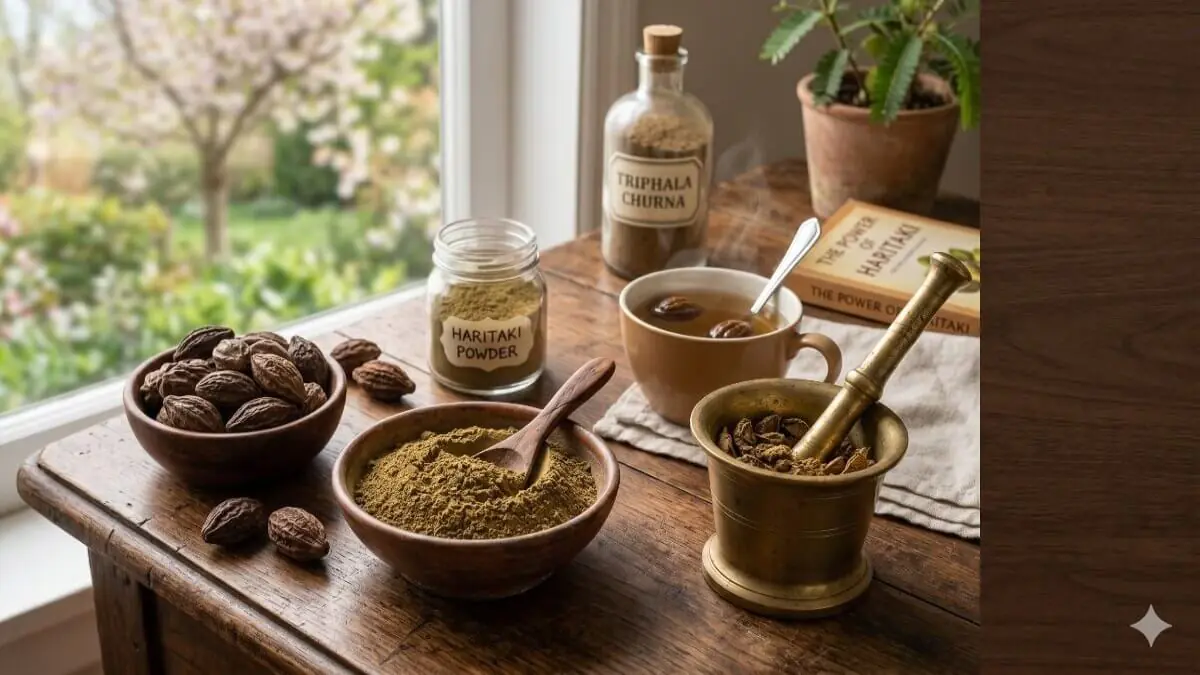
Haritaki powder, or churna, is the most commonly used form. It is made by thoroughly crushing the whole fruit. It is very easy to consume by mixing it with warm water or honey.
Haritaki Capsules and Supplements
In today’s busy life, using whole fruits or powder is not always feasible for everyone. For them, Haritaki capsules are available in the market. Since these are prepared in precise doses, they are highly convenient to take.
Herbal Formulations Containing Haritaki
Haritaki is often combined with other herbs to enhance its benefits. The most famous example of this is “Triphala”. Besides that, Haritaki is a key ingredient in popular Ayurvedic blends such as Chyawanprash.
How to Use Haritaki Safely
Every medicinal herb should be consumed following proper guidelines. Haritaki is no exception.
Traditional Methods of Consumption
Traditionally, it is advised to consume Haritaki with warm water. You can mix half a teaspoon of Haritaki powder into a glass of lukewarm water. You may add a little honey to improve the taste.
Tips for Using Haritaki Powder
If the Haritaki powder tastes too bitter or astringent, you can lightly roast it in a little ghee. This alters the taste slightly and makes it easier to digest. Always store the powder in an airtight container.
Best Time to Take Haritaki
To relieve constipation, it is best to take Haritaki at night before going to bed. This helps clear the stomach in the morning. If you want to improve your digestion or appetite, you can take a small amount of Haritaki half an hour before lunch or dinner.
Haritaki vs. Triphala: What is the Difference?
Many people get confused and think Haritaki and Triphala are the same. But there is a clear difference between them. Haritaki is a single fruit (Terminalia chebula).
On the other hand, Triphala is an equal blend of three different fruits. These three fruits are Haritaki, Amla (Amalaki), and Bahera (Bibhitaki).
Haritaki primarily works on the digestive system and on detoxification on its own. Triphala, enriched with the properties of three fruits, promotes overall balance throughout the body. Because Triphala is much milder, it can be consumed safely every day for long periods.
Haritaki vs. Amla: Comparing Popular Ayurvedic Herbs
Haritaki and Amla are both priceless gems of Ayurveda. However, they function differently. Amla is the best source of Vitamin C and has a cooling effect on the body. It works primarily to calm the Pitta dosha.
In contrast, Haritaki generates slight warmth or heat in the body. It primarily regulates the Vata dosha and is highly effective at expelling waste from the body. Amla is more popular for glowing skin, while Haritaki is preferred for maintaining digestion.
Potential Side Effects and Precautions
Haritaki is generally a safe herb. However, using it incorrectly or in excessive amounts can cause some issues.
Digestive Discomfort from Overuse
Consuming Haritaki in excessive doses can lead to stomach cramps, diarrhea, or nausea. Since it is a laxative, taking too much can drain excess water from the body, leading to dehydration.
Who Should Avoid Haritaki?
Severely underweight individuals should avoid Haritaki. Also, those already suffering from diarrhea or extreme physical weakness should not consume it. Patients taking medication to lower blood sugar levels need to be cautious as well.
Pregnancy, Breastfeeding, and Medical Considerations
Pregnant women should never consume Haritaki without a doctor’s advice. It can stimulate uterine contractions, making it risky during pregnancy. The same precaution applies to breastfeeding mothers. If you are taking medication for any chronic illness, be sure to speak with your doctor first.
How to Choose High-Quality Haritaki Products
To get the maximum benefit from Haritaki, selecting a high-quality product is essential. When buying, check if the product is certified organic.
When buying whole Haritaki, make sure the fruits are plump and free of blemishes. Do not buy fruits that are too old or moldy. When purchasing powder or capsules, choose reliable and trusted brands. Read the expiration date and ingredient list on the packaging carefully.
Proper Storage Tips for Maximum Freshness
Knowing the proper storage method is necessary to keep Haritaki fresh. Always keep the whole fruit or powder in an airtight container.
Store it in a cool and dry place, away from direct sunlight and moisture. Never use a wet spoon to scoop out Haritaki powder. When stored correctly, Haritaki powder remains fully fresh for 6 to 12 months.
Frequently Asked Questions About Haritaki
Can you take Haritaki every day?
Yes, Haritaki can be taken every day in the right dosage. However, it is good to take a short break after taking it continuously for several months. This helps maintain the body’s natural functionality.
Is Haritaki good for digestion?
Absolutely. Haritaki is one of the best natural ingredients for improving digestion. It increases stomach enzyme activity and is highly effective at relieving constipation.
What is the best way to consume Haritaki?
Mixing half a teaspoon of Haritaki powder with lukewarm water before bed is the best and easiest way to consume it.
Scientific Research on Terminalia Chebula
Modern science has also acknowledged the qualities of Haritaki. Various research papers published in PubMed show that Terminalia chebula extract acts as an antibacterial and antifungal agent.
Researchers have found that Haritaki plays a special role in controlling diabetes and protecting the liver. More extensive research is currently underway on its bioactive compounds. Modern medical science believes that Haritaki, in the right dosage, could be a natural, side-effect-free alternative to many conventional medicines.
Traditional and Modern Uses of Haritaki
In ancient times, Haritaki was used not only as medicine but also as a raw material in the dyeing industry. Its tannins were used in leather processing.
Today, the demand for Haritaki has increased in the modern cosmetics industry. Haritaki extracts are used in anti-aging creams, face packs, and hair care shampoos. This means the medicinal herb from thousands of years ago has become a part of our daily lives today, wrapped in modern science.
Final Thoughts on Terminalia Chebula (Haritaki)
Haritaki is not just an ordinary herb; it is a unique blessing from nature. Its versatile properties are extremely important for protecting our physical and mental health.
Key Takeaways
From this blog, we learned that Haritaki improves digestion, removes harmful toxins from the body, and boosts the immune system. Using it at the right dose and in the right manner can solve many of our daily health problems.
Why Haritaki Remains a Cornerstone of Ayurveda
Many things have been lost over thousands of years of changing societies and medical systems. But Haritaki has retained its uniqueness. This is because it targets the root causes of disease without side effects. It survives as an integral part of Ayurveda precisely due to its natural ability to keep the body healthy and vibrant.
Easy Ways to Incorporate Haritaki into Your Wellness Routine
Adding Haritaki to your daily routine is not difficult. You can drink Triphala-infused water in the morning. Alternatively, you can drink a little Haritaki powder with warm water before bed. This simple habit can bring about a massive change on your path to overall wellness. However, it is always wise to consult a specialist before starting any new habit.
May this extraordinary gift of nature make your life healthier and more joyful.