
Why Ants Climb Trees: Behavior, Purpose, and Survival
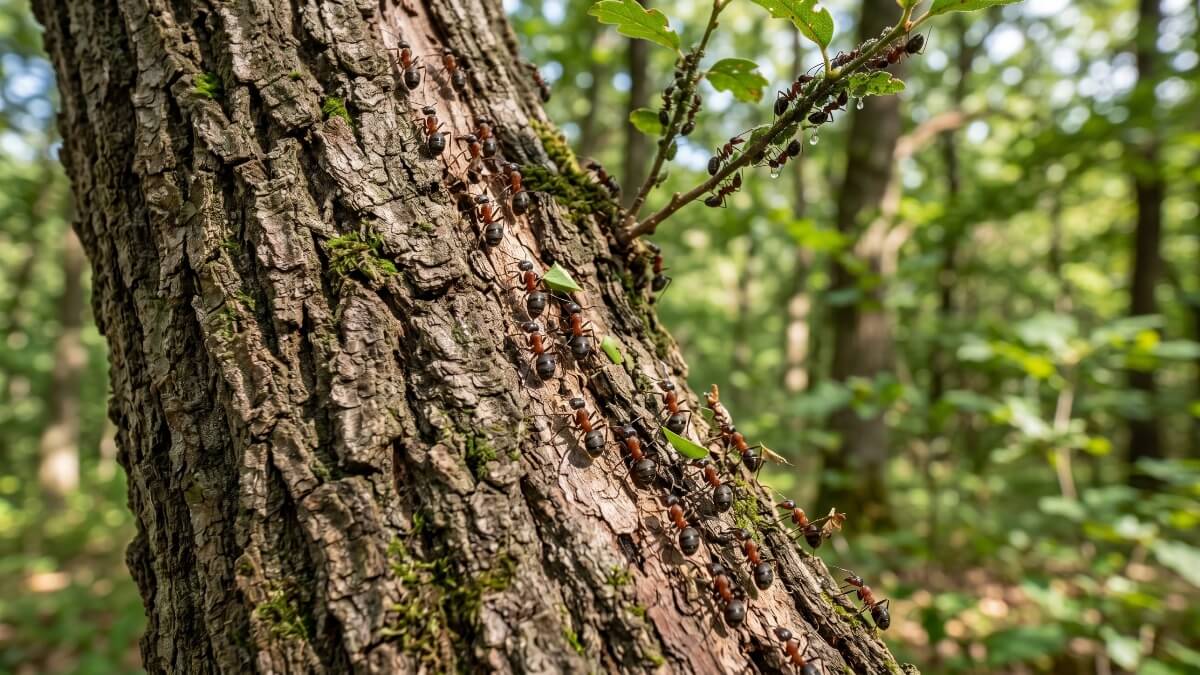
Have you ever stopped during a walk in the park or a quiet moment in your garden to observe the bustling activity on the trunk of a tree? If you look closely, you will likely see a tiny, highly organized highway of ants moving purposefully up and down the bark. This common sight often sparks curiosity. What exactly are these industrious insects doing so high off the ground? Are they searching for food, looking for a new home, or simply exploring their surroundings?
Understanding why ants climb trees requires us to look into the intricate world of ant behavior, their survival strategies, and the complex ecosystems they inhabit. Ants are incredibly social and highly adaptable creatures. Their presence on a tree is rarely an accident. Instead, it is the result of millions of years of evolution, carefully honed instincts, and a relentless drive to support their colony. In this comprehensive guide, we will explore the fascinating reasons behind this vertical migration, the benefits and potential drawbacks for the trees involved, and the incredible biological tools that allow ants to defy gravity.
The Fascinating World of Ant Navigation and Communication
Before we can understand why ants climb trees, we must first understand how they organize such massive vertical expeditions. Ants do not simply wander aimlessly. They are part of a highly structured society that relies on sophisticated communication networks.
The Power of Pheromones
The secret to an ant colony’s success lies in chemical signals called pheromones. When an explorer ant leaves the nest and discovers a valuable resource located high in the branches of an oak or maple tree, it needs a way to tell the rest of the colony exactly where to find it. As the ant journeys back to the nest, it leaves behind a microscopic trail of pheromones.
Other ants possess highly sensitive antennae that can detect these chemical markers. When they encounter the trail, their instincts compel them to follow it. As more ants follow the path and return successfully with food, they lay down even more pheromones. This strengthens the chemical signal and transforms a faint scent trail into a bustling superhighway. This is exactly why you see ants moving in such straight, organized lines up the side of a tree trunk.
Sensory Perception and Memory
Ants also use visual landmarks and the position of the sun to navigate their environment. While their vision varies greatly among species, many ants can remember specific routes and recognize familiar structures, such as the distinct ridges of a tree’s bark. By combining chemical trails with environmental cues, ants can navigate complex three-dimensional spaces with astonishing accuracy. They can remember the exact branch that houses their favorite food source and return to it day after day.
Foraging and Feeding: The Primary Reason for Climbing
The most common reason you will see ants scaling a tree is the never-ending search for sustenance. An ant colony is a massive, hungry entity. Some colonies contain millions of individual insects, all of which require a steady supply of carbohydrates and proteins to survive and thrive.
The Search for Sweet Nectar
Trees are abundant sources of natural sugars. Many tree species produce sweet sap, and some even have special glands called extrafloral nectaries. These glands produce nectar outside of the flowers, specifically to attract beneficial insects like ants. When ants climb trees to harvest this sweet liquid, they get a high-energy meal that fuels their tireless work. In return for the sugary treat, the ants fiercely defend the tree against herbivores and pests, creating a beautiful mutualistic relationship.
Hunting for Protein
While adult ants primarily consume liquid carbohydrates, the growing larvae back in the nest require large amounts of protein to develop properly. Trees are complex ecosystems teeming with life, making them excellent hunting grounds. Ants will climb trees to hunt for smaller insects, caterpillars, insect eggs, and even dead arthropods. By scavenging and hunting in the canopy, ants play a crucial role in controlling pest populations that might otherwise defoliate the tree.
The Marvel of Aphid Farming
One of the most extraordinary behaviors in the animal kingdom is the symbiotic relationship between ants and sap-sucking insects like aphids, scale insects, and mealybugs. If you see a heavy concentration of ants on the leaves or new growth of a tree, there is a very high chance they are tending to a flock of aphids.
Nature’s Tiny Dairy Farmers
Aphids feed by piercing the plant tissue and sucking out the nutrient-rich sap. However, plant sap is very high in sugar and low in amino acids. To get enough protein, aphids must consume massive quantities of sap. They excrete the excess sugar water as a sticky, sweet substance known as honeydew.
Ants absolutely love honeydew. It is an incredibly valuable food source for the colony. Over time, ants and aphids have developed a mutually beneficial relationship. The ants act as diligent dairy farmers. They “milk” the aphids by gently stroking them with their antennae, which stimulates the aphids to release a drop of honeydew.
Protection and Herding
In exchange for this constant supply of food, the ants provide top-tier security for the aphids. Ladybugs, lacewings, and parasitic wasps constantly hunt aphids. When these predators approach, the guardian ants will aggressively attack them and drive them away from the flock. In some cases, ants will even carry aphids to new, healthier leaves on the tree to ensure they have the best possible food source. This level of organization and cooperation is a testament to the highly evolved nature of these tiny insects.
To learn more about the incredible social structures of insects, you can explore resources provided by the National Wildlife Federation, which offers extensive information on insect ecosystems.
Seeking Shelter: Arboreal and Wood-Nesting Ants
While many ants live in sprawling underground cities, several species have evolved to live their entire lives above ground. For these ants, the tree is not just a grocery store. It is their permanent home.
Carpenter Ants and Dead Wood
Carpenter ants are perhaps the most well-known tree-climbing species. A common misconception is that carpenter ants eat wood, much like termites do. In reality, carpenter ants cannot digest cellulose. Instead, they use their powerful mandibles to excavate galleries and tunnels inside dead or decaying wood to create secure nesting sites.
If you see large, black ants climbing a tree, they might be searching for a suitable hollow branch or an area of heart rot to establish a satellite colony. While they prefer dead wood, their tunneling can sometimes exacerbate structural weaknesses in a tree that is already compromised by disease or age.
Weaver Ants and Leaf Nests
In tropical regions, weaver ants take arboreal living to an entirely different level. These incredible insects build their nests directly in the canopy by weaving living tree leaves together. The process is a marvel of biological engineering.
A chain of worker ants will grasp the edges of two adjacent leaves and pull them together using their combined strength. Once the leaves are in place, other workers bring ant larvae to the site. The workers gently squeeze the larvae, which triggers them to produce strong, silk threads. The ants use the larvae like living glue guns, moving them back and forth to sew the leaves tightly together. These aerial fortresses protect the colony from predators and harsh weather conditions, allowing them to dominate the canopy ecosystem.
Gravity-Defying Physiology: How Do They Hold On?
Watching an ant carry a crumb of food twice its size down a vertical surface raises an obvious question. How do they avoid falling? The answer lies in the microscopic anatomy of their feet, which have evolved perfectly for a life of climbing.
Claws and Adhesive Pads
An ant’s foot, known as the tarsus, is equipped with a pair of sharp, curved claws. These claws are excellent for gripping rough surfaces like tree bark. When an ant climbs a tree, these claws hook into the tiny crevices of the bark, providing a secure anchor point.
However, claws alone are not enough to walk upside down on a smooth leaf. For this, ants rely on an incredible biological feature called the arolium. The arolium is a soft, sticky pad located between the claws. When an ant steps on a smooth surface, the claws retract, and the arolium expands and presses against the surface. The pad secretes a specialized fluid that creates capillary adhesion, effectively gluing the ant to the surface. When the ant needs to take its next step, it simply flexes its foot, peeling the pad away effortlessly.
Strength and Stamina
In addition to their specialized feet, ants possess phenomenal strength relative to their body weight. Their lightweight exoskeletons and highly efficient muscles allow them to carry loads that are many times their own body mass. This combination of grip, strength, and endless stamina allows them to navigate the vertical world of trees with absolute ease.
Ecosystem Impact: Are Ants Harmful to Trees?
When homeowners spot a trail of ants on a prized garden tree, their first instinct is often to worry. It is natural to wonder if the ants are damaging the plant. The truth is usually quite nuanced. In most cases, ants are either harmless or actively beneficial to the tree.
The Benefits of Ants
Ants are essential components of a healthy garden ecosystem. When they climb trees to hunt, they often prey on caterpillars and other destructive pests that would otherwise consume the tree’s foliage. Furthermore, the presence of ants can deter larger herbivores from grazing on the leaves.
Underground, ant colonies aerate the soil around the tree’s roots, allowing oxygen and water to penetrate more deeply. They also break down organic matter, returning vital nutrients to the soil that the tree can absorb.
Potential Drawbacks
However, there are scenarios where ants can indirectly cause harm. As mentioned earlier, ants actively protect aphids and scale insects to harvest their honeydew. By shielding these sap-sucking pests from natural predators, the ants allow the pest populations to explode. A severe aphid infestation can stunt a tree’s growth, cause leaves to curl and yellow, and promote the growth of black sooty mold on the honeydew deposits.
Additionally, if carpenter ants decide to nest inside a tree, it is usually a sign that the tree is already suffering from wood rot or internal decay. While the ants did not cause the initial decay, their extensive tunneling can weaken the branches, making them more susceptible to breaking during a storm.
How to Manage Ants on Your Trees
If you determine that the ants on your trees are causing a problem, usually by farming excessive numbers of aphids, there are several humane and environmentally friendly ways to manage the situation.
Using Sticky Bands
One of the most effective and least toxic methods for keeping ants out of a tree is to apply a sticky barrier around the trunk. You can purchase tree banding materials from most garden centers. You simply wrap a protective strip of paper or fabric around the trunk and coat it with a commercially available sticky resin.
When the ants attempt to climb the tree, they encounter the sticky barrier and are forced to turn back. This breaks the connection between the ants and the aphids. Without their ant protectors, the aphids quickly fall prey to ladybugs and lacewings, naturally restoring the balance of the ecosystem.
Addressing the Underlying Pests
Instead of focusing on the ants, you can target the true culprits by treating the aphid infestation directly. A strong blast of water from a garden hose is often enough to knock aphids off the leaves. Since they are very weak climbers, most will not be able to return to the canopy. You can also use insecticidal soaps or horticultural oils, which are safe for the environment and highly effective against soft-bodied insects.
By eliminating the aphids, you eliminate the honeydew. Once the food source is gone, the ants will simply lose interest in the tree and move on to forage elsewhere.
Organizations like the Xerces Society advocate for pesticide-free approaches to managing garden insects, ensuring that beneficial pollinators and predators remain unharmed.
Cultivating a Cohesive Environment
Ultimately, watching ants climb a tree is a window into a highly complex, interconnected world. These tiny insects are not mere pests. They are farmers, hunters, architects, and vital players in the environment. They help control destructive insect populations, aerate the soil, and participate in intricate symbiotic relationships that have evolved over millennia.
By understanding their behavior and their purposes, we can foster a deeper appreciation for the natural world right outside our doors. The next time you see a line of ants boldly marching up the bark of a towering tree, you will know exactly what is driving their incredible journey. They are working tirelessly to secure the future of their colony, one tiny, gravity-defying step at a time.
Frequently Asked Questions (FAQ)
Do ants damage the bark when they climb trees?
No, ants do not cause direct damage to the bark when they climb. Their feet are equipped with microscopic claws and soft adhesive pads that allow them to grip the surface without harming the tree tissue. They are simply using the bark as a textured highway to reach the canopy.
Why do I only see ants on my trees during certain times of the year?
Ant activity is heavily influenced by temperature and the availability of food. In the spring and summer, tree growth is rapid, leading to higher populations of sap-sucking insects like aphids. This creates an abundance of honeydew, which draws ants out in large numbers. During the colder months, ants become less active and retreat to their nests to conserve energy.
Will carpenter ants kill my tree?
Carpenter ants do not kill healthy trees. They nest exclusively in wood that is already dead, decaying, or softened by moisture. If you find carpenter ants nesting in a living tree, it is an indicator that a section of the tree is suffering from rot or fungal disease. You should consult a certified arborist to assess the overall health and structural integrity of the tree.
Should I spray chemical pesticides to keep ants off my trees?
It is generally not recommended to use broad-spectrum chemical pesticides to treat ants on trees. Harsh chemicals can kill beneficial insects, including pollinators like bees and natural predators like ladybugs. Instead, consider using physical barriers like sticky bands or addressing the underlying aphid populations with insecticidal soap.
How do ants find their way back to their nest from the top of a tree?
Ants use a combination of chemical trails, visual landmarks, and the position of the sun to navigate. When an ant successfully finds food in a tree, it secretes a pheromone trail on its way back to the nest. This creates a chemical path that other ants can easily follow up the tree and safely back home.