Best High-Protein Foods for Muscle Growth, Strength, and Endurance
Protein and amino acids are essential for muscle growth. This list of easily digestible foods will help diversify your diet if you want to increase muscle mass, strength, and endurance.
Recent studies show that a vegetarian diet can support a healthy lifestyle if certain guidelines are followed. Contrary to popular belief, a meat-free diet does not hinder muscle growth, including for heavyweight athletes. Choose alternative protein sources, such as grains, legumes, and plant seeds. Furthermore, consider the digestibility of protein from different foods.
To assess digestibility, the PDCAAS (Protein Digestibility Corrected Amino Acid Score) is used. It indicates how well nutrients meet the body’s needs. The highest score is 1; foods with this score are ideal for building and maintaining muscle mass. However, consuming such foods without exercise, particularly tailored strength training, will not lead to muscle growth.
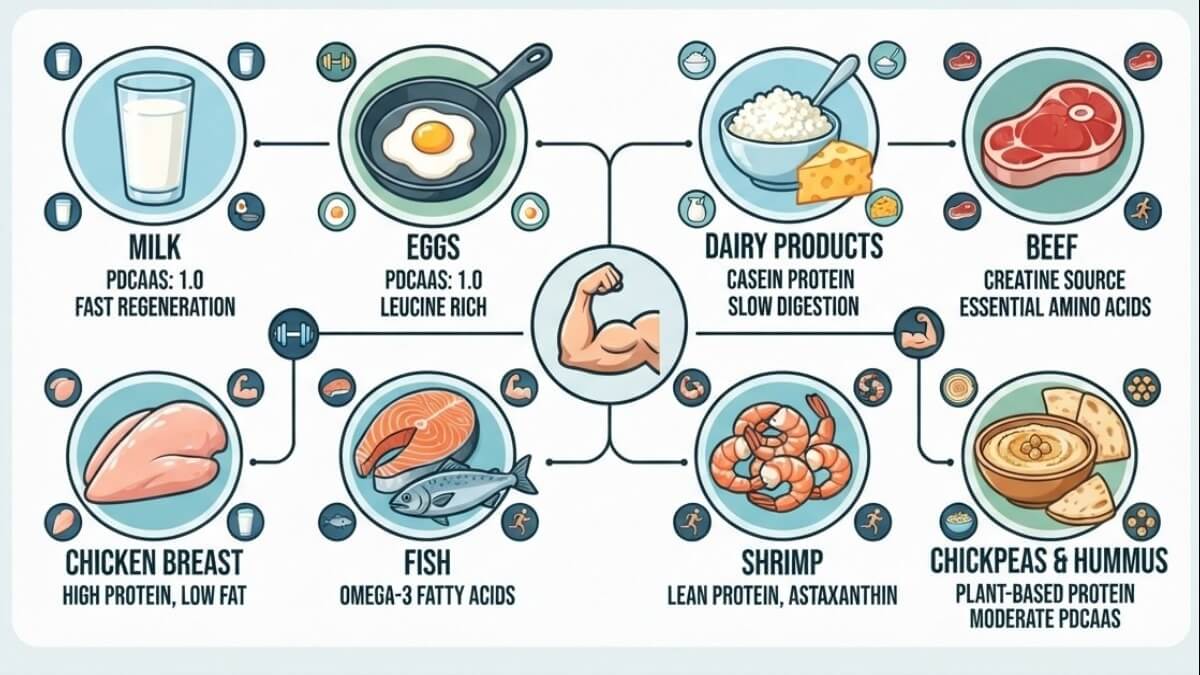
1. Milk
100 g of 1% fat cow’s milk contains 43 kcal and over 3 g of protein. Its digestibility score (PDCAAS) is 1. Milk promotes muscle tissue regeneration and enhances protein synthesis. Research shows that whole milk provides the body with an average of 80% more phenylalanine than skim milk; this amino acid is a component of body proteins. Full-fat milk also contains roughly 2.8 times more threonine, an amino acid involved in protein formation.
2. Eggs
100 grams of eggs contain 158 kcal and 13 grams of protein. They also contain about 1,300 mg of leucine, an amino acid the body cannot synthesize and that can only be obtained from food sources. Eggs support muscle growth and are highly digestible, with a PDCAAS score of 1. Leucine also reduces muscle protein breakdown and maintains a high anabolic response in skeletal muscle, thereby helping maintain muscle strength over time. Athletes add eggs to their diets for another reason: they contain zinc, which scientists have shown supports muscle growth and recovery alongside insulin-like growth factor-1 (IGF-1).
3. Dairy Products (Cottage Cheese, Cheese, and Greek Yogurt)
Fermented milk products formed through curdling contain casein, a slowly digestible protein. 100 grams of 1% fat cottage cheese contains over 16 grams of protein and 79 kcal. Cheese is also rich in casein but is less beneficial nutritionally for daily fat intake: most varieties are higher in fat and calories. However, both products help maintain muscle mass: casein slowly raises blood amino acid levels, and these levels remain elevated for several hours. This property makes many fermented milk products very filling, making them ideal for snacking if a full meal is still a while away. Not all dairy products are high in protein. Greek yogurt has roughly twice as much protein as regular yogurt.
4. Beef
Meat is considered a primary contributor to muscle growth, although its PDCAAS score is slightly lower than that of milk or cottage cheese, at around 0.92. However, beef contains essential amino acids that effectively support muscle mass. It is naturally rich in creatine, which also promotes muscle gain, increases high-intensity endurance, and is suitable for dietary use. Lean-to-medium beef is moderate in calories: 100 g contains about 187 kcal, 18.9 g of protein, and 12.4 g of fat. Research confirms that its digestible protein, combined with resistance exercise, stimulates muscle protein synthesis and muscle growth in people of all ages.
5. Chicken Breast
Some sports nutritionists recommend chicken breast over beef because of its low fat content—about 1.9 g per 100 g—and its moderate calorie content, around 165 kcal. Interestingly, chicken breast also contains more protein per 100 g than beef—around 23.6 g. Scientists have found that chicken protein peptides/hydrolysate can provide a lean foundation for muscle growth without excess fat intake. Like beef, this type of meat, when combined with exercise, can increase endurance and improve strength training performance. Choose breast over other cuts of poultry that are higher in fat and cholesterol. For example, a roasted skinless chicken thigh contains roughly 83 mg of cholesterol per 100 g, while skinless chicken breast contains around 64–85 mg (often lower than fatty dark-meat preparations depending on skin and portion).
6. Fish
Contrary to popular belief, expensive salmon isn’t the only fish suitable for building muscle mass. Cod, trout, tuna, chum salmon, pink salmon, and mackerel are all rich, easily digestible protein sources. Most fish score very high on amino acid quality (around 0.8–1.0 on PDCAAS/DIAAS scales). A particular advantage of fatty fish is its content of long-chain omega-3 fatty acids (EPA and DHA), along with omega-6. Research suggests these fatty acids can support overall health and longevity.
Studies show they can support muscle protein synthesis and help reduce muscle protein breakdown. If you’re looking for minimal calories, choose lean fish like cod or light tuna. However, the fattier the fish, the more omega-3 it contains: 100 g of light tuna contains around 0.2–0.3 g of omega-3, while salmon often contains around 1.5–2.5 g of omega-3. Keep in mind that large predatory fish that live longer can accumulate mercury and other contaminants, so large tuna or other heavy predatory fish shouldn’t be the mainstay of your diet.
7. Shrimp
These seafood products are practically pure lean protein. 100 grams of shrimp contain about 95–100 kcal, almost 19–20 grams of protein, and only about 1–2.2 grams of fat. Adding them to your diet is an easy way to get your protein intake without adding excess calories. Shrimp provides complete, highly digestible protein comparable to eggs and dairy. .Shrimp also contains omega-3 and omega-6 fatty acids, the antioxidant astaxanthin, and numerous vitamins and minerals. Shrimp contains tropomyosin, a major shellfish allergen that can cause allergic reactions in sensitive individuals. If you’re considering adding shrimp to your diet, start with small portions and consult your doctor if you have any allergy concerns.
8. Chickpeas
In terms of protein quality, chickpeas are a helpful plant-based protein source with a moderate PDCAAS score (typically around 0.65–0.78 depending on preparation). However, they can take longer to cook and may cause gas or bloating in some people because of fermentable fibers (FODMAPs/raffinose). A popular way to consume chickpeas is as hummus—a puree of cooked chickpeas with tahini or oil, lemon, and spices. 100 grams of hummus contains roughly 166 kcal, about 9.6 grams of fat, and about 7.9–8 grams of protein. Chickpeas also provide essential branched-chain amino acids (BCAAs)—valine, isoleucine, and leucine. While animal foods are richer in leucine per serving, plant foods like chickpeas still contribute valuable leucine alongside other amino acids. These legumes also contain zinc, glycine, methionine, and arginine—nutrients that support protein synthesis and endogenous creatine production alongside adequate exercise.