Stepper Exercise for Women: Benefits, Muscles Worked, Weight Loss, and Contraindications
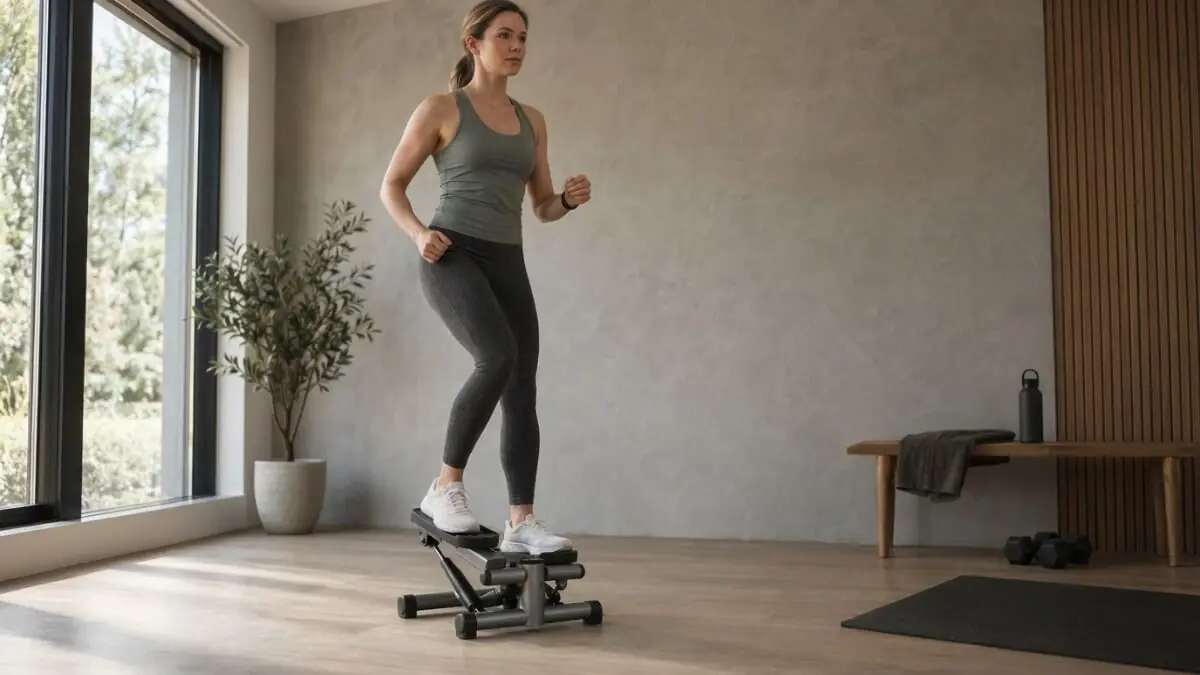
The stepper is rightfully considered one of the most effective lower-body workout machines. We’ll discuss how it works and whether it helps with weight loss with a doctor and a trainer.
Benefits of a Stepper for Women
The stepper simulates walking up stairs, creating a natural yet active workout. Regular stepper exercise has a comprehensive positive effect on the female body and figure.
-
This is an excellent tool for toning the muscles of the legs and buttocks, two of the main problem areas for many women. Regular exercise helps slim and tone the thighs and firm the buttocks. Improved circulation and muscle tone can also reduce the appearance of cellulite.
-
Like any other cardio equipment, a stepper trains the heart muscle and blood vessels. During exercise, your heart rate increases, and your heart pumps blood faster. This process strengthens the cardiovascular system and promotes endurance. Regular stepper exercise can be an effective non-drug measure for helping control blood pressure.
-
During training, the body expends energy, and if the athlete is in a calorie deficit, weight will decrease.
-
Although the main load falls on the legs, the core muscles (abs and back) are actively engaged to maintain balance on the stepper. Maintaining correct posture during the workout (a straight back, tight abs) helps strengthen the core muscles.
-
A stepper is a great way to increase your daily activity level, especially for those who spend a lot of time sitting. It’s a compact piece of equipment that you can use at home.
Harmful Effects of Steppers and Contraindications
Despite these advantages, the stepper isn’t suitable for everyone. Dr. Md. Sazzad Hossain listed the main contraindications:
-
acute injuries;
-
severe or decompensated cardiovascular diseases;
-
uncontrolled arterial hypertension;
-
acute respiratory infections;
-
pronounced degenerative changes in the musculoskeletal system;
-
severe form of diabetes mellitus;
-
diseases of internal organs in the acute period.
The doctor says it’s especially important to consider the condition of your knee and ankle joints, spine, and feet. Therefore, before starting regular exercise, it’s a good idea to consult a doctor or orthopedic specialist: they can assess your musculoskeletal system and help determine a safe exercise level.
What Muscles Does a Stepper Work for Women?
The stepper provides a comprehensive load on the muscles of the lower body:
-
Quadriceps (front of the thigh). This is the main muscle group that works when you straighten the leg and press on the pedal.
-
Gluteal muscles. These muscles are actively engaged when pushing off the pedals. Regular exercise helps shape the buttocks.
-
Hamstrings (back of the thigh). These are used when bending the leg and returning the pedal to the starting position.
-
Calf muscles. The calf muscles constantly work to stabilize the foot on the pedal.
How to Use a Stepper Correctly for Women
Trainer Dr. Md. Sazzad Hossain explained in detail how to train:
-
To start, 10–15 minutes two to three times a week is enough. As you adapt, you can increase the duration to 45–60 minutes.
-
For general health, aim for at least 150 minutes of moderate aerobic activity per week, plus strength training at least twice a week.
-
It’s better to exercise in sports shoes—they reduce injury risk and improve stability.
-
As with any cardio workout, monitor your well-being. If you experience pain in your knees, hips, or lower back; chest pain; shortness of breath; dizziness; or blurred vision, stop the workout.
Does a Stepper Help You Lose Weight?
Stepper exercises aim to increase muscle tone, reduce circumference, and create a toned appearance. They are primarily cardio workouts that burn calories. However, a common myth is that such workouts lead to excessive muscle growth in the legs.
With regular stepper training, this risk is low, explains Dr. Md. Sazzad Hossain.
Dr. Md. Sazzad Hossain: “This is primarily a cardio workout that mimics walking and is aimed at increasing endurance, improving cardiovascular and respiratory function, and maintaining muscle tone. While the exercises do work the leg and gluteal muscles, moderate stepper work alone usually doesn’t lead to significant increases in muscle size. Significant hypertrophy requires other factors—primarily systematic strength training with progressive loads and a proper diet. Therefore, with moderate exercise, the stepper is more likely to help strengthen muscles and make them more resilient than significantly increase their size.”
When it comes to losing weight, several factors are also important to consider.
Dr. Mustafiz M. Rahman: “The stepper doesn’t have any special ‘fat-burning’ effect. Any physical activity increases energy expenditure. If you create a sustained calorie deficit through dietary control and physical activity, your weight will decrease over time. If your goal is to improve your physical fitness, you should focus first on changing your diet and gradually increasing your exercise routine. Therefore, the stepper can be used for weight loss, especially if you enjoy this type of cardio and can exercise regularly.”
According to the trainer, the stepper trains muscles and increases energy expenditure. However, where the body primarily mobilizes fat depends on individual characteristics.
Expert Q&A: Steppers Over 50 and Calories Burned
We learned more from experts about the stepper and why women should add it to their workouts.
How Is a Stepper Beneficial for Women Over 50?
Dr. Md. Sazzad Hossain: “After age 50, maintaining regular physical activity is especially important. With age, muscle mass declines, mobility deteriorates, and a sedentary lifestyle increases the risk of musculoskeletal and cardiovascular problems. A stepper can be a convenient way to stay active, especially if you can’t get outside regularly.
Regular exercise improves circulation and metabolism, trains the cardiovascular and respiratory systems, and helps maintain muscle and musculoskeletal health. Movement activates the venous pump, improving venous blood flow and reducing venous congestion. Therefore, moderate physical activity can also help prevent varicose veins.
Moreover, such activities help manage weight, maintain mobility, and generally offset the effects of a sedentary lifestyle. Physical activity also supports emotional well-being: exercise stimulates endorphin production, which helps reduce stress and maintain a positive mood. After age 50, it’s especially important not to chase intensity. If you have joint, spinal, or heart problems, or other chronic conditions, it’s best to choose your exercise routine after consulting a doctor.”
How Many Calories Are Burned in 30 Minutes of Walking on a Stepper?
Dr. Md. Sazzad Hossain: “There’s no exact figure for everyone. Burn rate depends on body weight, pace, resistance, and fitness level. As a guide, 30 minutes on a stepper at moderate or high intensity can burn approximately 150–300 kcal, but the numbers can vary greatly from person to person. Therefore, it’s best to use the machine’s readings as a guide rather than a precise calculation.”
Key Takeaways: Benefits and Harms of Steppers for Women
-
A stepper is a compact cardio machine that simulates walking up stairs.
-
The main muscles worked on the stepper are the quadriceps (front of the thigh), hamstrings (back of the thigh), glutes, and calves.
-
The stepper helps correct problem areas: regular exercise can make your legs slimmer and your buttocks firmer and more toned.
-
To lose weight, you need to exercise on a stepper three to five times a week for 30–45 minutes and stick to a healthy diet with a calorie deficit.
-
The main rules for effective training: keep your back straight, lean slightly forward, step on the pedal with your whole foot (heel to toe), avoid fully straightening (locking) your knees, breathe evenly, and don’t lean heavily on the handrails unless needed.
-
Contrary to popular belief, the stepper does not bulk up your legs.