How to Turn Your Passion Into a Profitable Business
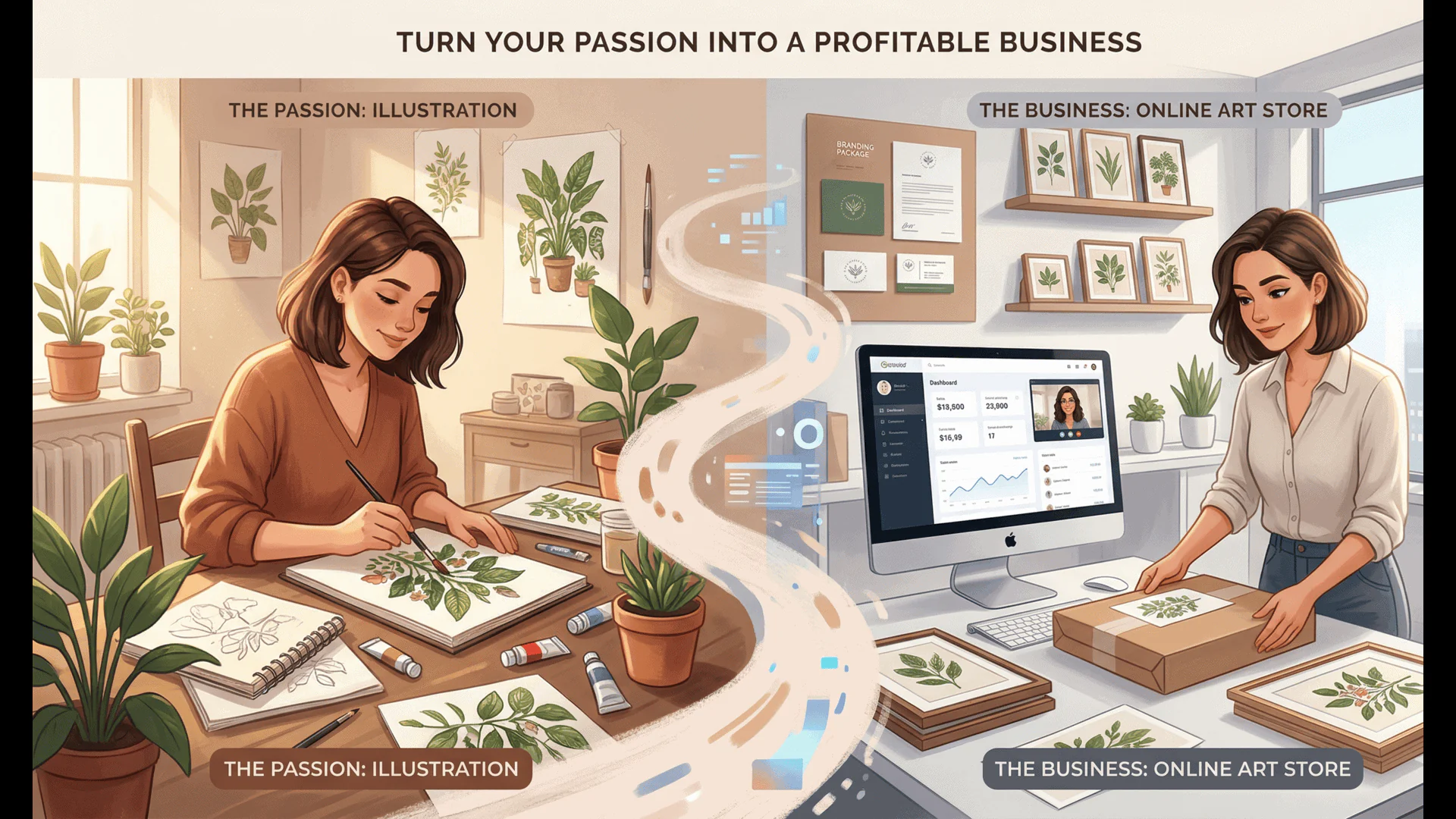
We all dream of a life where work no longer feels like work. Waking up every morning to do exactly what you love and earning a high income from it is a massive goal for many.
However, the path to converting your hobby or favorite subject into a successful business is not always easy. It requires proper planning, patience, and realistic thinking.
In this detailed guide, we will discuss exactly how you can step by step transform your passion into a profitable and sustainable business.
Introduction: Can a Passion Really Become a Business?
The short answer is yes, it is absolutely possible. Many people have successfully turned their hobbies into thriving careers. But behind that success lies a lot of hard work and proper guidance.
When the things you love doing solve a problem for someone else, that is when it can take on a business form. If your skills benefit others, they will be more than ready to pay for them.
Why Passion Alone Is Not Enough for Success
Passion is the fuel for your business. It will help you keep moving forward during tough times. But it is impossible to sustain a business on emotion alone.
To run a business, having financial knowledge, marketing strategies, and an understanding of customer service is essential. Alongside passion, you need a strong business structure.
Furthermore, market demand is a huge factor. The subject you are highly passionate about might not have any demand in the market. Therefore, instead of blindly following your passion, you need to be practical.
Finding the Balance Between Passion and Profitability
The key to success is finding a sweet spot between what you love and what the market demands. In Japanese philosophy, this concept is called ‘Ikigai’.
You need to find a space where your skills, your love for the work, the world’s needs, and the opportunity to earn all intersect.
When you find this perfect balance, your business will not only be profitable, but it will also give you deep mental satisfaction.
Step 1: Identify a Passion with Market Demand
You might have many different hobbies or interests. But it is not possible to make money from every single one of them.
First, you need to select the passion that actually has commercial potential. To do this, you must analyze market conditions very carefully.
Understanding What People Are Willing to Pay For
People generally spend money for two main reasons. First, to solve a specific problem, and second, to make their lives easier or more enjoyable.
Can your passion solve a specific problem for people? If your answer is yes, then your idea has great potential.
You need to understand what types of products or services people are currently spending money on. Understanding their spending habits will make your decision-making much easier.
Researching Trends and Real Customer Problems
To understand current market conditions, you must do your research. You can use tools like Google Trends to see how frequently people are searching for your favorite topic online.
Additionally, visit various social media groups, forums, and Q&A sites to see what kinds of problems people are discussing.
If you can identify real customer problems, you can tailor your product or service accordingly. Proper research will solidify the foundation of your business.
Step 2: Validating Your Business Idea
Investing all your money and time as soon as an idea pops into your head is not a wise move. First, you need to validate your idea.
Validating an idea simply means testing to see if there are actual buyers for your proposed product or service.
Testing Demand Before Investing Time or Money
You can test your idea on a small scale. For example, if you love baking, instead of opening a massive shop right away, you can start selling cakes to your acquaintances.
If they love your food and want to buy it repeatedly, you will know your idea has genuine demand.
This initial test will save you from major financial losses. Only consider large investments once you succeed on a smaller scale.
Gathering Feedback from Real Potential Customers
Speak directly with your potential customers. Ask them how they feel about your idea.
You can create a short survey using Google Forms. Through this survey, you can learn about people’s opinions and their willingness to pay.
Accept critical feedback with an open mind. Customer feedback is exactly what will help you improve your product.
Creating a Simple MVP (Minimum Viable Product)
An MVP or Minimum Viable Product is the most basic and initial version of your product.
If you want to create a massive online course, do not spend months shooting videos right away. Instead, you can create a small e-book or checklist first.
If people buy that small e-book, you can be confident that they will also be interested in the larger course. Building an MVP is a critically important step in business.
Step 3: Defining Your Target Audience
Everyone is not your customer. If you try to please everyone, you will ultimately satisfy no one.
Defining a specific customer group or target audience is absolutely essential for your business.
Who Will Benefit Most from Your Passion?
You need to figure out who needs your product or service the most.
Find the answers to questions like how old they are, where they live, what their professions are, and what their core problems look like.
The people who need your service the most will be your primary customers. You must build your entire marketing strategy around them.
Creating Customer Profiles and a Niche
Create a fictional profile of your ideal customer, often called a buyer persona. This will help you understand consumer psychology.
At the same time, choose a specific niche or sub-category. For example, if you want to work in fitness, instead of saying “fitness for everyone,” you can choose a specific niche like “fitness for working mothers.”
Working within a specific niche lowers your competition and makes it much easier to build customer trust.
Step 4: Choose the Right Business Model
To convert your passion into money, you need to select the right business model.
Based on your skills and interests, you can choose from several different models. Below are some of the most popular options.
Service-Based Business
If you are skilled at a specific task, you can offer that service to others.
For example, if you are a great writer, you can start freelance writing. If you love coding, you can offer web development services.
You do not need a lot of capital to start with this model. Your skill is the primary product here.
Digital Products and Online Courses
You can spread your knowledge to others through digital products.
You can create and sell e-books, templates, printable designs, or detailed online courses.
The biggest advantage of a digital product is that it only needs to be created once, but it can be sold repeatedly. This is a fantastic source of passive income.
Content Creation and Monetization
If you love making videos, recording podcasts, or writing blogs, content creation might be the best path for you.
You can earn money from your content through advertisements, sponsorships, and affiliate marketing.
However, succeeding in this model requires some time and consistency. You will need to publish high-quality content on a regular schedule.
E-commerce and Physical Products
If your passion involves creating physical goods, like making jewelry, designing clothes, or crafting, you can start an e-commerce business.
You can sell your creations to people across the country by building your own website or using various marketplaces.
In this scenario, things like product manufacturing, packaging, and delivery must be handled with great care.
Step 5: Build Your Personal Brand
In today’s digital age, people do not just buy products. They buy stories and personalities.
Your personal branding is what will set you apart from your competitors.
Why Your Story Matters in a Passion-Based Business
Share the story behind why you started this business with your audience.
Your passion, your struggles, and your values will connect people to you emotionally.
When people can relate to your story, they will spontaneously buy products from you and recommend you to others.
Creating a Strong Online Presence
Create a professional and engaging online profile. Stay active on social media platforms alongside your website.
Choose the right platforms based on your type of work. Instagram or Pinterest are great for designers, while LinkedIn is much more effective for B2B professionals.
Regularly share your work, thoughts, and experiences online.
Building Trust and Authority in Your Niche
People trust those who possess deep knowledge in their respective fields.
Help people for free to prove your expertise. Share useful tips and answer people’s questions.
If you consistently provide accurate information, people will accept you as an expert in that field. And everyone wants to hire an expert.
Step 6: Start Small and Launch Fast
Many people spend years waiting for everything to be perfect, and ultimately, they never start at all.
Avoid making this mistake. You do not need everything to be absolutely perfect on day one.
Avoiding Perfectionism and Over-Planning
Over-planning stops you from taking real action. Create a simple plan and get to work.
If your website is not incredibly beautiful right now, that is not a problem. If your logo is basic, it will still work.
The real focus should be on providing quality service to your customers. You can refine and beautify the rest of the details as you go.
Testing Your Idea in the Real Market
Bring your product or service to the market as quickly as possible.
When you deal with real customers, you will learn things that are impossible to learn from any book or course.
Real market conditions will reveal the actual flaws in your business model.
Learning from Initial Feedback
Give the highest priority to the opinions of those who buy your product early on.
Listen closely to what they liked and what they disliked.
Make necessary changes to your product or service based on customer feedback. This continuous improvement is what will bring you long-term success.
Step 7: Create Multiple Income Streams
Relying on just one specific income stream at the start of a business can be risky.
Therefore, as your business grows, try to create multiple avenues for revenue.
Diversifying Revenue Sources
Let’s say you are a graphic designer and you earn money by providing services to clients. That is your primary income.
Now, you can also create a design course and sell it. Or, you can build premium templates and sell them online.
By diversifying your income sources this way, your business will not take a massive hit even if one source slows down.
Combining Services, Products, and Content
The most successful businesses usually create a brilliant combination of services, products, and content.
You can teach people through a blog or YouTube channel. You can sell books or courses to those who want to learn in depth. And you can offer direct services to those who do not have the time to do it themselves.
This approach makes every aspect of your business profitable.
Step 8: Build an Online Presence
Today, it is hard to imagine the existence of any business without an online presence.
You need to build a strong digital foundation to reach your audience effectively.
Using Social Media to Grow Your Audience
By using platforms like Facebook, Instagram, or Twitter, you can reach your target customers for free.
Post educational and entertaining content regularly. Reply to your followers’ comments and build relationships with them.
Social media is not just a place to sell products. It is the best medium for building a community.
Starting a Blog, YouTube Channel, or Website
Your business needs a permanent home. A dedicated website works best for this.
You can easily build a professional website using a content management system like WordPress. Paired with a highly customizable theme, you can fine-tune every detail, like adjusting your center body width for the perfect reading experience.
Along with a website, focus on technical SEO to ensure people can find you on Google. Fast load times and ironclad security are also critical. Routing your site through a network like Cloudflare helps you manage caching rules and security at the edge, giving your visitors a seamless, fast experience.
Step 9: Marketing Your Passion-Based Business
No matter how good your product is, it will not reach people without proper marketing.
Marketing is simply informing people about your business and getting them interested.
Organic Marketing Strategies
Organic marketing is about capturing customer attention without spending money.
This includes search engine optimization (SEO), posting regularly on social media, sending email newsletters, and guest posting on other blogs.
While organic marketing takes time, it yields the best results in the long run. It builds deep trust in your brand.
The Basics of Paid Advertising
If you want fast results, you can use paid advertising.
Using Facebook Ads or Google Ads, you can deliver your product’s advertisement to highly targeted customers.
However, before running ads, make sure your sales funnel is working correctly. Start testing with a small budget and increase it once you see success.
Leveraging Word of Mouth and Community
The most powerful marketing tool is word of mouth.
When your customers are amazed by your service and praise you to their friends, you get the best customers absolutely free.
Maintain excellent relationships with your customers and build a loyal community around your brand. You can easily do this by creating a dedicated Facebook group.
Step 10: Scaling Your Business Over Time
When your business starts running well and generating a steady income, you need to think about expansion.
Doing everything single-handedly eventually becomes impossible.
Automating Repetitive Tasks
Automate tasks that need to be done repeatedly using various tools.
For example, you can use automation tools to send emails. You can use different apps to schedule your social media posts in advance.
Automation will save your valuable time, which you can then invest in the core development of your business.
Hiring Assistants and Outsourcing Work
As your business grows, hand over some responsibilities to others.
You can hire virtual assistants for tasks like accounting, data entry, or general customer support.
If you try to do everything yourself, you will burn out quickly. Getting help from others will accelerate your business growth.
Expanding Your Products or Services
Offer new products to your existing customer base.
If you previously only offered web design services, you can now add SEO services to your lineup.
Since your customers already trust your brand, they will gladly accept your new service offerings as well.
Common Mistakes When Turning Passion into Business
Many people make mistakes early on that cause their passion-based businesses to shut down quickly. It is critical to stay aware of these pitfalls.
Ignoring Market Demand
The biggest mistake is creating exactly what you like without thinking about what people actually want.
If your product does not benefit anyone, they will never buy it. Analyzing market demand is the first condition of any business.
Pricing Too Low or Too High
In the beginning, many people drop their prices drastically in hopes of getting work. This can cause people to doubt the quality of your work.
On the flip side, charging unreasonably high prices will drive customers away. Analyze your competitors and set a fair, respectable price.
Not Treating It Like a Real Business
Because it is their passion, many people take it too casually.
Failing to keep accounting records, not having set working hours, or ignoring legal matters is harmful to the business. To turn a hobby into a profession, you must act like a professional.
Real-Life Examples of Passion Turning to Profit
Real-life examples can be incredibly inspiring.
Let’s imagine a person who loves gardening. Initially, they just shared pictures of their rooftop garden on Facebook. People started loving their plant care tips.
Then, they started a blog. Eventually, they began selling rare plant saplings and organic fertilizers online. Today, that hobby has transformed into a highly successful nursery business.
Another example could be a tech lover. They loved learning about website design and speed optimization on their own. They started writing about these topics on their blog. Slowly, various companies started hiring them to fix their website issues, and they eventually became the owner of a successful web agency.
Helpful Tools to Turn Passion into Profit
You can use some excellent online tools to make running your business much easier.
-
For website building: WordPress is the top choice for content management and blogging.
-
For performance and security: Cloudflare will keep your site blazing fast and highly secure from threats.
-
For design: You can easily create professional graphics using Canva.
-
For email marketing: Build a robust customer database using Mailchimp or ConvertKit.
-
For market research: Google Keyword Planner or Google Trends will help you understand exactly what people are looking for.
Frequently Asked Questions (FAQ)
Can all passions be turned into a business?
No, it is not possible to transform every single hobby into a business. To turn a hobby into a business, it must have a commercial market demand. If a hobby does not solve a problem or bring joy to others, making money from it is very difficult.
How long does it take to make money from a passion?
There is no specific timeframe for this. It depends entirely on your work ethic and business model. However, it generally takes anywhere from 6 months to 2 years for a new business to start generating a stable income.
What if my passion is in a highly competitive niche?
High competition means there are plenty of paying customers in that market. You just need to figure out how you can offer something different or better than the rest. By choosing a specific sub-category or niche, it is entirely possible to succeed even in a crowded market.
Do I need money to get started?
This depends heavily on your business model. Starting a content creation or service-based business requires almost zero capital. However, for e-commerce or physical products, you will definitely need some initial funding to get off the ground.
Conclusion: Turning Your Favorite Subject Into a Sustainable Income
The journey of turning your passion into a business is much like a marathon. There is no magical formula here to get rich quickly.
However, if you plan properly, analyze the market, and are always ready to learn, your chances of succeeding are incredibly high.
Obstacles will inevitably come your way, but your pure love for the work is exactly what will give you the strength to overcome them.
Final Thoughts: Building a Business You Truly Enjoy
Life is too short. It is not right to spend every day doing work that you completely dislike.
Take a small step today. Give your passion the priority it deserves. Who knows, perhaps in just a few years, you will have built the exact empire you always dreamed about. Let your new and joyful business journey begin today.